

Quick Summary
Dreadnought acoustic guitars stand out from concert and parlor models thanks to their larger bodies, delivering stronger volume and deeper low-end resonance. They excel in live band settings and chord-driven playing styles. If you are shopping on a budget and want a dependable dreadnought to get started, the Yamaha FG830 is an outstanding choice that balances quality craftsmanship with accessible pricing.
What Is a Dreadnought Guitar?
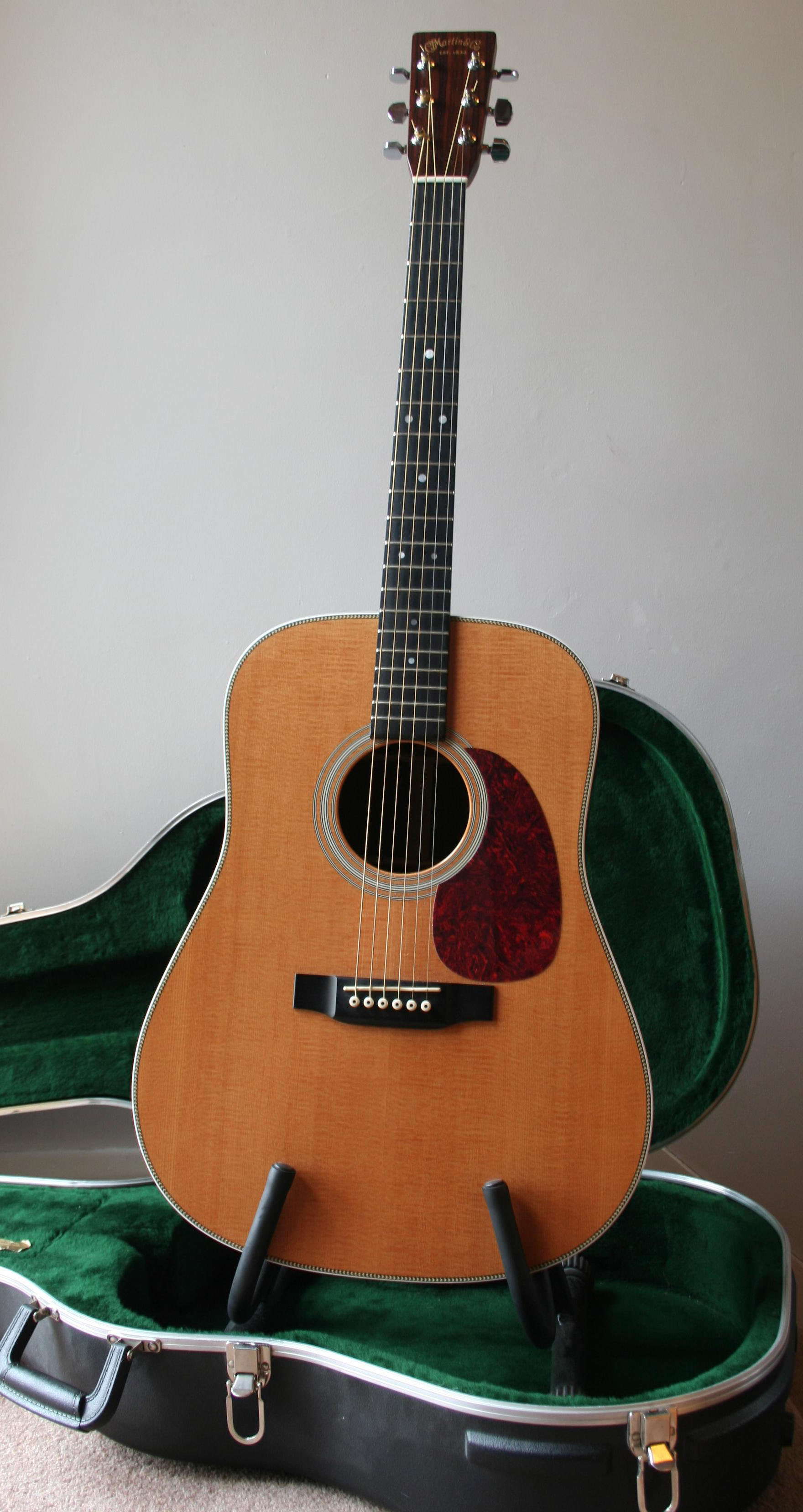
Before diving into what makes one dreadnought better than another, it helps to understand just what this type of guitar actually is. In short, a dreadnought is a style of acoustic guitar that features a notably larger body than most other acoustic shapes. Its wider, deeper frame dwarfs concert and parlor models, and that difference in dimension has a direct impact on how it sounds and feels to play.
Although jumbo acoustics are slightly bigger, dreadnoughts remain one of the most popular large-format guitars available. The size is not merely cosmetic — the expanded body cavity is what gives these instruments their remarkable volume and pronounced low-end character. If you have ever strummed a full-sized dreadnought beside a smaller parlor guitar, the contrast in projection and bass response is immediately obvious.
For brand-new players, a dreadnought tends to feel quite natural from day one. Those who started on a smaller model might notice the extra reach required, but the payoff is a guitar that fills a room without any electronic assistance. Fundamentally, a dreadnought is an acoustic guitar engineered for bold, powerful sound — and that straightforward purpose is exactly what has kept it at the top of the market for over a century.
Why Choose a Dreadnought Acoustic?
If all acoustic guitars look roughly the same to you, you might wonder why anyone would specifically seek out the dreadnought shape. The answer starts with volume. Anyone who has tried to perform live with a standard acoustic knows the struggle of being drowned out by drums, bass, and electric instruments. Dreadnoughts cut through the mix with far more natural projection, making them a go-to for band situations where miking up the guitar is not always practical.
Volume aside, physical comfort is another major factor. There is a common misconception that smaller guitars are meant for children and adults should always play standard-size instruments. The truth is that body size varies widely among players, and for taller or broader individuals, a dreadnought often sits more comfortably on the lap and under the arm than a concert-size guitar ever would. The extra surface area can make extended practice sessions far more enjoyable.
Then there is tone. Larger acoustic bodies resonate at lower frequencies, which translates into a rich, warm sound with plenty of bass depth. Think of the difference between a small room with flat acoustics and a concert hall with natural reverb — the same principle applies when comparing guitar body sizes. Dreadnoughts deliver that full, resonant quality that smaller instruments simply cannot replicate.
That said, the dreadnought is not the ideal choice for every style. Solo fingerstyle players often prefer brighter, more articulate concert or parlor guitars. If you already love the bright clarity of your smaller acoustic and mostly perform solo, a dreadnought might not add much to your setup. The best approach is to try both in person — visit a music shop, spend time with a few different shapes, and let your ears and hands make the final call.
In a Nutshell
Dreadnoughts are perfect for guitarists who need extra volume, deeper bass, and a full-bodied sound — especially in band or live performance settings. If you are a smaller player or prefer bright fingerpicking tones, a concert or parlor guitar may serve you better.
What to Look For in a Quality Dreadnought
You have decided a dreadnought is the right fit — great. Now the real challenge begins: sorting through the enormous range of options on the market. Below are the key factors to evaluate so you can zero in on a guitar that truly delivers.
Size

It might seem odd to worry about size when dreadnoughts are defined by being large, but not all dreadnoughts are created equal. Some lesser-known manufacturers label guitars as dreadnoughts when the actual dimensions fall closer to a concert body. Always double-check the physical measurements before buying, especially when shopping from unfamiliar brands online.
On the other end of the spectrum, many reputable guitar makers produce scaled-down dreadnoughts — typically in 7/8 or 3/4 sizes — that retain the characteristic shape and tonal qualities while being easier to handle for smaller players. These are an excellent option if a standard dreadnought feels too cumbersome but you still want that signature deep, powerful sound.
Tonewoods and Features
Every dreadnought will naturally push out more bass than a smaller guitar, but the specific tonewoods used in construction have a significant influence on the overall character of the sound. Common premium tonewoods include Sitka Spruce for the top (known for clarity and dynamic range), Mahogany for the back and sides (warm and balanced), and Ebony for fingerboards (smooth and durable). Higher-quality tonewoods do cost more, but they reward you with a richer, more nuanced sound that improves with age.
Beyond wood selection, consider whether you need electro-acoustic capability. A built-in pickup system and onboard EQ let you plug directly into an amplifier or PA system, which can be essential for gigging musicians. Look for models that include at least a basic three-band EQ — control over bass, midrange, and treble frequencies gives you significant flexibility in shaping your amplified tone to suit the venue and the mix.
Reviews and Hands-On Testing
Once you have narrowed your options based on size, tonewoods, and features, it is time to validate your choice through real-world feedback. Customer reviews on major retail sites can reveal consistent praise or recurring complaints that product descriptions will never tell you. Pay attention to comments about build quality, out-of-the-box setup, and how the guitar sounds after a few months of playing.
Whenever possible, try to get your hands on the guitar before committing. Visit a local music shop, reach out to friends who play, or even check online communities where players share their experiences. Nothing replaces the feel of an instrument in your own hands, and a brief test session can save you from an expensive mistake or confirm that you have found exactly the right guitar.
Our Top Dreadnought Guitar Pick
Yamaha FG830 Dreadnought Acoustic Guitar
Best Value Pick
The Yamaha FG830 is a standout in the dreadnought category because it delivers far more quality than its price tag suggests. Yamaha has decades of experience crafting reliable acoustic instruments, and the FG830 represents one of the best entry-to-mid-level options in their lineup.
Under the hood, this guitar features a solid Sitka Spruce top paired with rosewood back and sides — a combination that produces a bright, balanced tone with excellent projection. Yamaha's scalloped bracing pattern further enhances the resonance, giving the FG830 a mature, full-bodied sound that outperforms many guitars at twice the price. The nato and okume neck feels smooth and comfortable, making it forgiving for newer players while still satisfying for experienced musicians who appreciate quality craftsmanship.
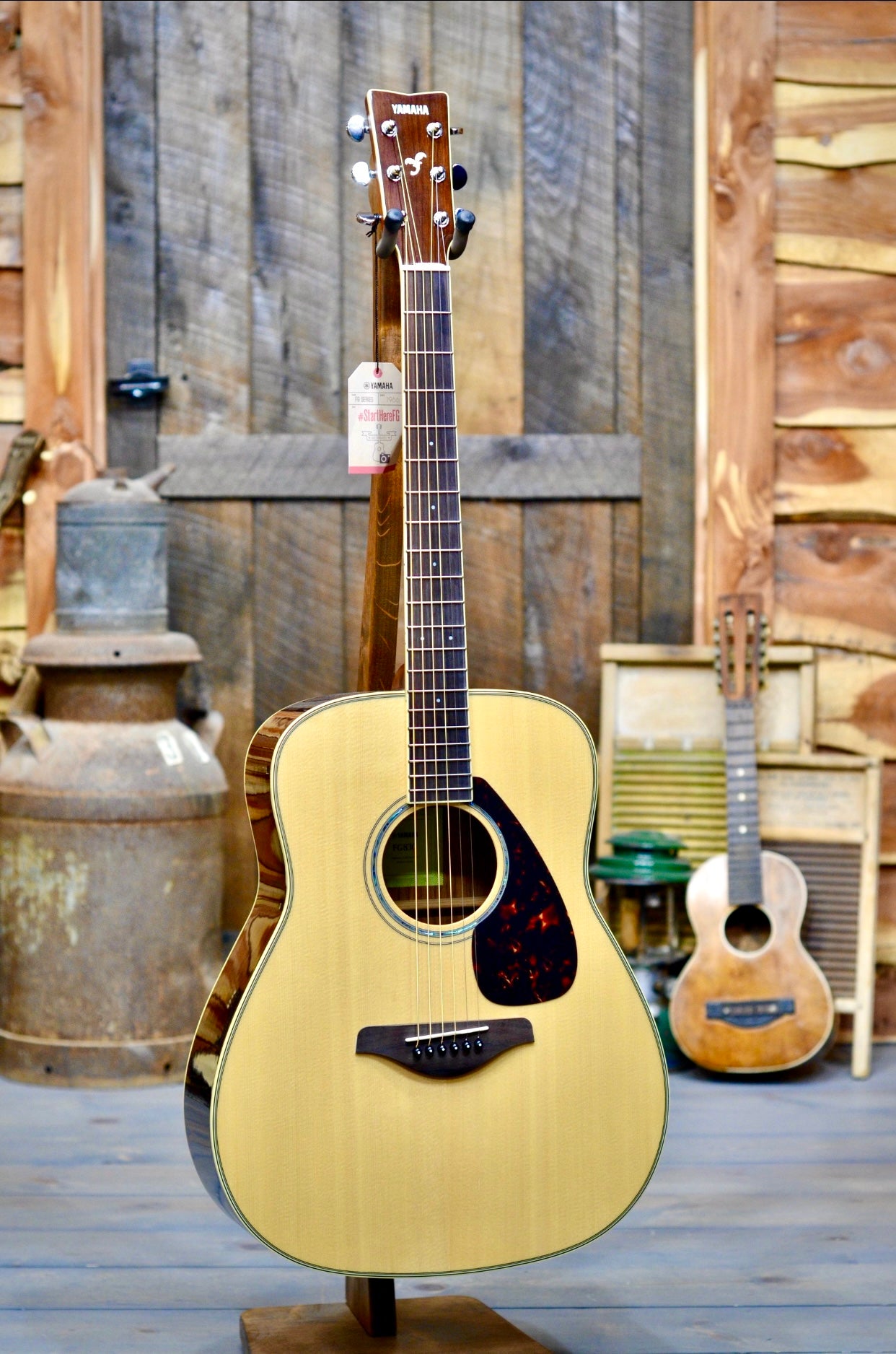
Whether you are a beginner looking for your first serious acoustic or an intermediate player searching for a reliable workhorse, the FG830 checks every important box. It is built to last, sounds fantastic out of the box, and carries the dependable Yamaha name. For the price, it is genuinely difficult to find a better dreadnought acoustic.
✓ Pros
Solid Sitka Spruce top with rosewood back and sides — premium tonewoods at an accessible price.
Yamaha's scalloped bracing delivers impressive resonance and volume for the size.
Comfortable neck profile suitable for beginners and experienced players alike.
Outstanding build quality backed by Yamaha's reputation for reliability.
✗ Cons
No built-in electronics — you will need an aftermarket pickup if you plan to amplify.
The stock strings are serviceable but replacing them can unlock even better tone.
Frequently Asked Questions
What exactly is a dreadnought acoustic guitar?
A dreadnought is a large-bodied style of acoustic guitar designed to produce powerful volume and deep, bass-rich tones. It is larger than parlor or concert models and is one of the most widely recognized acoustic guitar shapes in the world.
Are dreadnoughts the biggest acoustic guitars available?
No. While dreadnoughts are among the largest, jumbo acoustic guitars are bigger still. Dreadnoughts sit in a sweet spot between standard concert models and oversized jumbos, offering substantial volume without the extreme bulk.
Do all dreadnought guitars come in the same size?
Not at all. While the standard full-size (4/4) dreadnought is the most common, many manufacturers offer 7/8 and 3/4 versions that keep the same body shape and tonal characteristics in a more compact frame — ideal for smaller players or younger learners.
Final Thoughts
Dreadnought acoustic guitars have earned their legendary status for good reason — they deliver volume, warmth, and bass depth that smaller body styles simply cannot match. Whether you are stepping into the world of acoustic guitar for the first time or upgrading from an instrument that no longer meets your needs, a well-chosen dreadnought can be a lifelong musical companion.
Pay close attention to size, tonewoods, and whether you need built-in electronics. Read reviews from other players, and whenever possible, test the guitar in person before making a commitment. The right dreadnought should feel as good in your hands as it sounds to your ears.
Our top recommendation, the Yamaha FG830, offers a remarkable combination of quality materials, dependable craftsmanship, and accessible pricing that makes it hard to beat. Wherever your guitar journey takes you, a dreadnought is a solid foundation to build on. Happy playing!
© Backyard Provider — Your Outdoor & Home Living Destination