

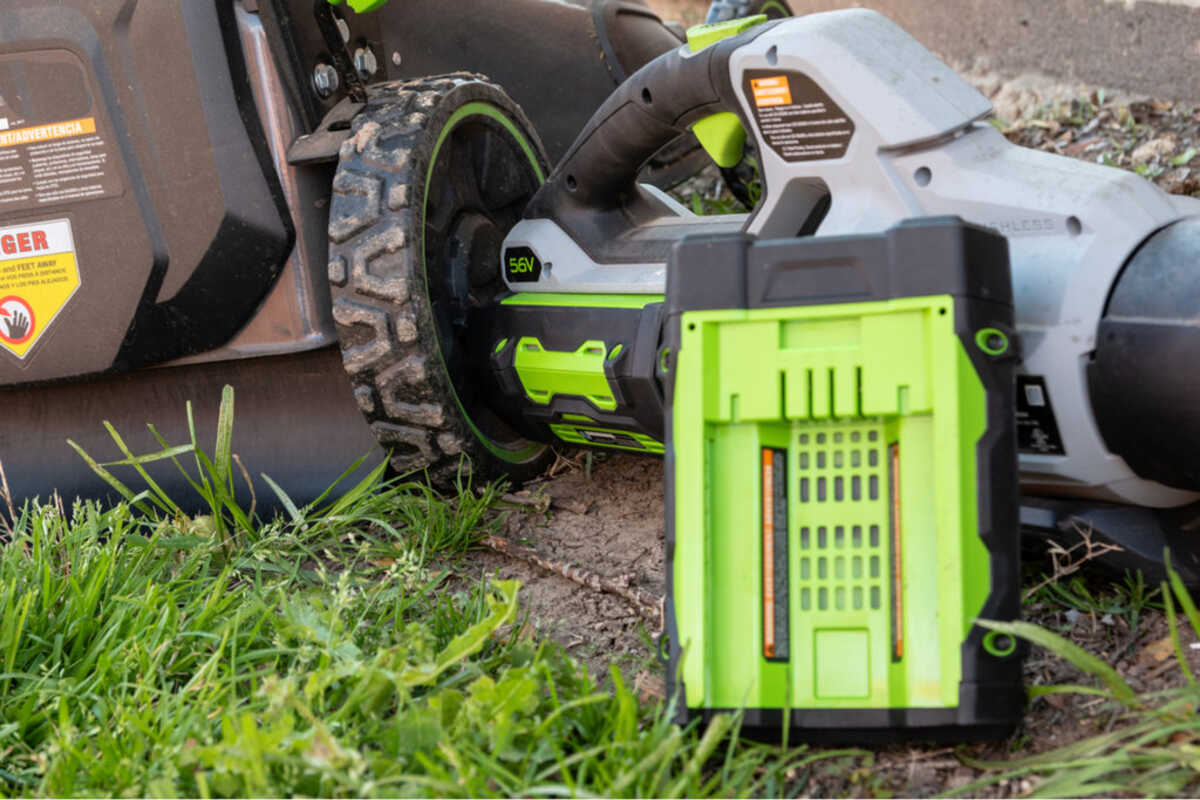
You recently invested in a battery-powered lawn mower to keep your yard looking sharp — but now the big question is: how do you keep those batteries charged and ready so your mowing session never comes to a frustrating halt? Understanding the basics of charging and caring for your mower batteries can make a huge difference in performance and longevity.
Key Takeaways
Battery-powered lawn mowers require consistent charging and proper maintenance to deliver optimal cutting performance.
Most push mower batteries reach full charge in 30 minutes to 4 hours, while riding mowers may need 3 to 12 hours depending on model and capacity.
Good battery care extends lifespan significantly: lithium-ion batteries can last up to 5 years, and lead-acid types typically last 3 to 4 years.
Pro Tips: Always charge at room temperature, never let batteries drop below 20%, and store in a cool, dry area over winter.
Your Lawn Mower Battery Care Checklist:
How frequently you need to charge, the proper care routine, and even eventual replacement costs all depend on the type of mower you own and the battery it uses.
Electric push mowers — which make up the majority of the electric mower market — generally use one or two removable lithium-ion (Li-ion) battery packs. You simply pop the battery out and place it in the manufacturer's charger.
Electric riding mowers come with one of three battery chemistries. Older models rely on multiple lead-acid batteries connected in series (similar to car batteries). Newer models feature lithium-ion or lithium iron phosphate (LiFePO₄) packs.
Riding mower batteries are typically not removable and charge either like traditional lead-acid units or through the mower's built-in charging port.
How to Charge a Lawn Mower Battery (Step-by-Step)
For Push Mowers (Li-ion Batteries):
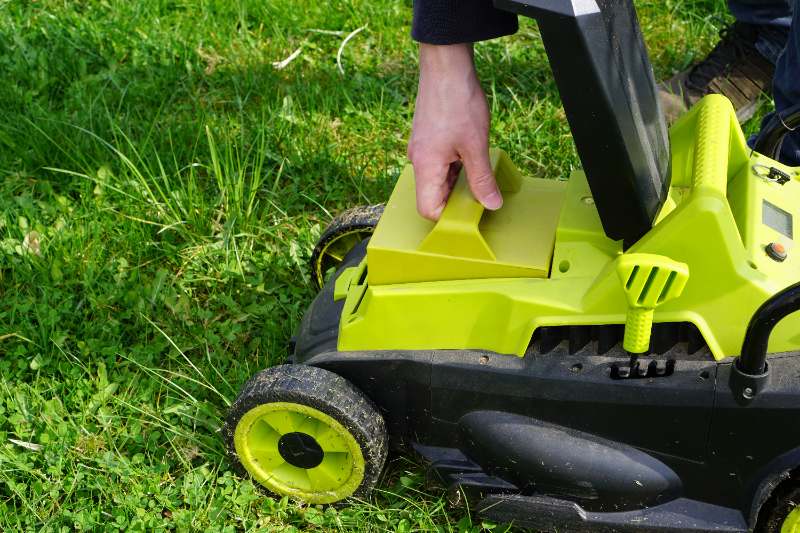
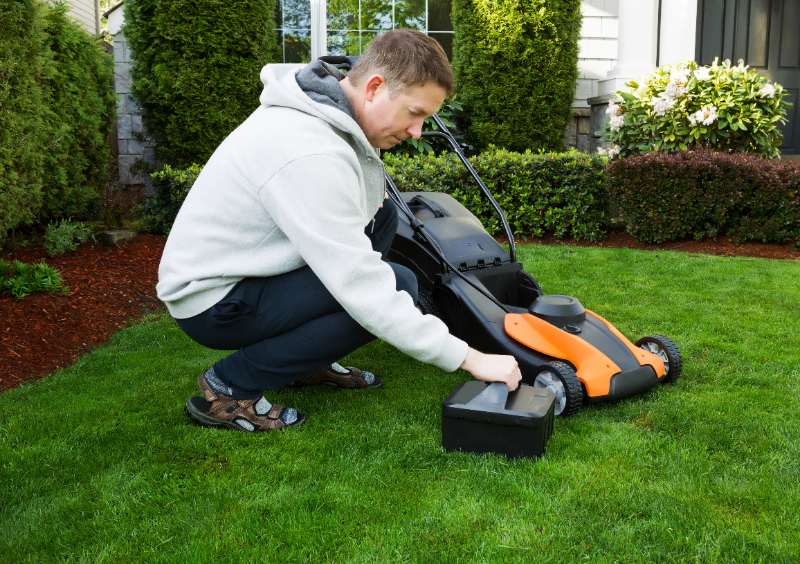
Detach the battery or battery pack from the mower, slide it into the manufacturer-provided charger, and plug the charger into a standard wall outlet. Remove the battery once it reaches full charge.
Safety Note: Some mowers include tabletop charging docks for convenient indoor charging.
For Riding Lawn Mowers (Lead-acid Batteries):
Put on protective gear. Wear gloves and safety glasses before handling the battery.
Disconnect the charger from the power outlet before working.
Find the battery. It is usually located beneath the seat — consult your owner's manual for the exact location.
Attach cables in order. Connect the red positive cable first, followed by the black negative cable. Keep cables away from bare metal parts.
Set the correct voltage. Adjust the charger to match your battery's amp rating.
Plug in and begin charging.
Unplug when fully charged.
For Riding Mowers (Li-ion or LiFePO₄ Batteries):
Open the charge port cover, insert the charging cord, and connect the other end to a standard 110-volt wall outlet. Disconnect the charger once the battery indicator shows a full charge.
How Long Does It Take to Charge a Lawn Mower Battery?
Charging duration depends on battery size, voltage, and charger type. Here is a general breakdown:
Small Lawn Mowers
| Mower | Battery Type | Charging Time | Cutting Time |
|---|---|---|---|
| Snapper push mower | Lithium-ion | 30 minutes | 25–30 minutes |
| Sun Joe light mower | Lithium-ion | 1.5–2 hours | 45 minutes |
| Cub Cadet smaller sit-on mower | Lithium-ion | 4 hours | 1 hour |
Large Lawn Mowers
| Mower | Battery Type | Charging Time | Cutting Time |
|---|---|---|---|
| LEO self-propelled | Lithium-ion | 2 hours | 50 minutes |
| Cub Cadet big sit-on mower | Lithium-ion | 4 hours | 1.5 hours |
| Weibang big sit-on mower | Lithium-ion | 12 hours | 2.5 hours |
Generally, electric push mowers reach a full charge in 30 minutes to 2 hours. Riding mowers typically need 3 to 4 hours, although larger models may require up to 12 hours.
Many models feature two-stage charging: the first 75% of capacity fills quickly, while the remaining 25% charges at a slower, battery-protective rate.
Most chargers use indicator lights — red means charging, green means complete. Some digital chargers display the exact percentage. Always unplug when the battery hits 100%, because overcharging gradually reduces overall battery life.
How to Maintain Your Lawn Mower Battery
Following these maintenance practices will help you get the most life out of every charge cycle:
Prevent deep discharge: Avoid letting the battery fall below 20% charge. Running batteries extremely low accelerates wear and dramatically shortens lifespan, particularly with lead-acid types.
Keep the mower deck clean: Grass buildup and debris force the motor to work harder, which causes overheating and drains the battery much faster.
Skip mowing wet grass: Wet turf is heavier and harder to cut, putting extra strain on the motor and depleting battery power faster. It also clogs the deck more easily.
Avoid cutting overgrown grass in one pass: Thick, tall grass strains the motor just like wet grass does. Raise the cutting deck and make multiple lighter passes instead.
Stay out of extreme heat: Mowing in very high temperatures can overheat the battery and lead to irreversible damage.
Store properly for winter: Remove the battery and keep it in a cool, dry space between 50°F and 68°F. Lithium batteries should be stored at 30%–50% charge, while lead-acid batteries should be fully charged. A battery maintainer or trickle charger can help keep optimal levels.
Never use mower batteries to jump-start a car: Lawn mower batteries are not designed for that kind of load, and doing so can void your warranty.
Lawn Mower Battery Lifespan
With consistent maintenance, you can expect:
3–4
years for lead-acid batteries
Up to 5
years for lithium-ion batteries
Key factors that affect lifespan include overcharging, exposure to extreme temperatures (both hot and cold), and general cleanliness. As batteries age, they build up internal resistance, which means they have to work harder to deliver the same output — and you will notice shorter run times as the first sign of wear.
Battery Charging and Maintenance Best Practices
✓ Do:
Stick with original equipment: Third-party chargers can deliver incorrect voltage or amperage, potentially damaging batteries and voiding warranties.
Charge after every use: Most manufacturers recommend recharging after each mowing session (especially lead-acid if used for over an hour). During off-season months, plug in every 30 to 60 days.
Let the battery cool first: After heavy use or hot conditions, wait 10 to 15 minutes before plugging in. Charging a hot battery speeds up degradation.
Watch the temperature while charging: If the battery feels excessively hot, stop charging immediately.
Remove during storage: Always take the battery out of the mower before putting it away for an extended period.
Store safely: Keep batteries away from metal objects (keys, coins, screws) and any liquids that could short-circuit the terminals.
Keep them clean and dry: Wipe off oil, grease, grass clippings, and moisture regularly.
Protect the terminals: Apply terminal protectant spray or dielectric grease to guard against corrosion from moisture and dirt.
✗ Don't:
Charge in extreme temperatures: Both excessive heat and cold reduce battery lifespan. Check your manual for the recommended temperature range.
Charge in wet or damp areas: Water and electricity are a dangerous combination. Always charge in a dry location.
Tamper with safety controls: Never bypass or modify devices that regulate charging voltage — they exist to prevent battery damage and fires.
Store near heat sources: Open flames, pilot lights, and excessive heat dramatically increase the risk of explosion or fire.
FAQ About Lawn Mower Battery Charging
Why Won't My Lawn Mower Battery Hold a Charge?
The most common culprits are battery age (typical lifespan is 3 to 5 years), damage from extreme temperatures, repeated deep discharges below 20%, or corroded terminals. Start by cleaning the terminals with a wire brush. If the battery is more than 4 years old or refuses to charge past 20%, it is probably time for a replacement.
How Much Do Replacement Batteries Cost?
Replacement costs vary widely by chemistry and capacity. Lithium-ion mower batteries generally run between $150 and $300 or more. Lithium iron phosphate (LiFePO₄) batteries at 12V cost roughly $140 to $200 each, while lead-acid batteries start at about $65 to $70 apiece — though most mowers need 2 to 7 of them. High-capacity 48V LiFePO₄ packs can cost upward of $600, but they eliminate the need for multiple individual batteries.
Ready to Upgrade Your Lawn Care Setup?
Browse our collection of top-rated cordless mowers and outdoor equipment at Backyard Provider.
Worx 40V Push Mower WG752