


When it comes to selecting a backup power solution for your home in Eastern Ontario, the decision between propane and natural gas generators is more significant than many homeowners realize. Both fuel types offer distinct advantages, and understanding these differences can save you thousands of dollars while ensuring your family stays comfortable during extended power outages.
With our region's harsh winters and increasingly unpredictable weather patterns, having reliable backup power isn't just a convenience—it's a necessity. Let's break down everything you need to know to make the right choice for your specific situation.
Quick Answer: Propane or Natural Gas?
Choose Natural Gas If:
- You already have a natural gas line connected to your home
- You want an unlimited fuel supply without refilling
- Lower ongoing fuel costs are your priority
- You live in an area with reliable gas infrastructure
Choose Propane If:
- You live in a rural area without natural gas access
- You need higher energy output and efficiency
- Energy independence is important to you
- You want fuel that stores indefinitely
Choose Either If:
You're building a new property and have flexibility in your infrastructure decisions. Many modern generators, including tri-fuel models, can operate on both propane and natural gas, giving you the ultimate flexibility for Eastern Ontario's unique energy landscape.
Propane vs. Natural Gas Generators: Side-by-Side Comparison
The table below breaks down essential advantages of propane generators and how they match against natural gas models for Eastern Ontario homeowners.
| Feature | Natural Gas | Propane |
|---|---|---|
| Fuel Availability | Continuous supply via pipeline | Requires tank storage & refills |
| Runtime During Grid Outages | Unlimited (pipeline dependent) | Limited by tank capacity |
| Energy Efficiency (BTU) | ~1,000 BTU per cubic foot | ~2,500 BTU per cubic foot |
| Storage Requirements | None required | Tank installation required |
| Upfront Installation | Lower if gas line exists | Higher (tank + equipment) |
| Ongoing Fuel Costs | Generally lower per BTU | Variable, market dependent |
| Fuel Shelf Life | Unlimited (always fresh) | Indefinite storage |
| Cold Weather Performance | Reliable in extreme cold | Excellent in cold climates |
Fuel Availability in Eastern Ontario
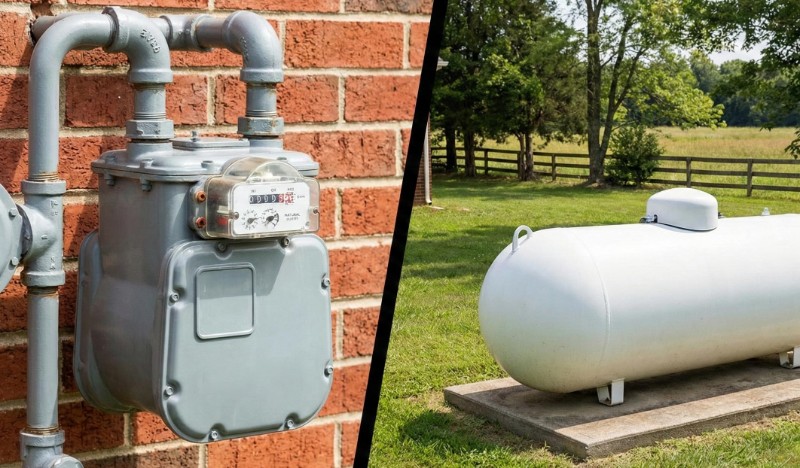
Do You Even Have Natural Gas Where You Live?
Fuel availability varies tremendously across Eastern Ontario and represents one of the most critical factors in your generator decision. While urban centers like Ottawa typically have comprehensive natural gas coverage, many rural communities throughout our region operate entirely on propane infrastructure or have no natural gas options at all.
If you reside outside major municipalities, there's a reasonable chance natural gas simply isn't available at your property. Even within city limits, some older subdivisions and rural-adjacent areas remain without gas service despite their proximity to urban centers.
Propane Logistics (What Homeowners Should Know)
Propane generators require an on-site storage tank, typically ranging from 250 to 1,000 gallons depending on your backup power requirements. A 500-gallon tank can generally sustain a whole-home generator for several days during an extended outage, though actual runtime varies based on load and weather conditions.
Tank placement must follow local codes, requiring specific setbacks from buildings, property lines, and ignition sources. Most propane suppliers offer both owned and leased tank arrangements with scheduled delivery programs that ensure you never run dry.
Natural Gas Logistics (What Homeowners Should Know)
Natural gas generators connect directly to your existing gas line, which must typically be upgraded to handle the additional load. This connection requires professional installation and local utility approval. The advantage is a continuous, unlimited fuel supply with no storage concerns or delivery scheduling—your generator simply draws from the municipal gas network whenever power is needed.
Output, Efficiency, and Why Ratings Can Look Different
Understanding generator output ratings requires knowing that the same generator will perform differently depending on fuel type. Propane contains significantly more energy per unit volume than natural gas—approximately 2.5 times more BTUs. This means propane generators typically deliver higher wattage output from the same engine size.
When comparing specifications, you'll notice that manufacturers often list separate ratings for propane versus natural gas operation. A generator rated at 13,000 watts on propane might produce only 11,000-12,000 watts on natural gas. These differences directly impact how much of your home you can power during an outage.
Important Note: This doesn't mean natural gas is inferior—the continuous supply often outweighs the efficiency difference. However, understanding these nuances helps you select the appropriately sized generator for your specific needs and fuel choice.
Propane vs. Natural Gas: Cost Discussion
What Actually Drives Total Cost?
The generator itself represents only one component of your overall investment. Your total expenditure depends on several interconnected factors: equipment costs, installation complexity, infrastructure requirements, fuel pricing, and ongoing maintenance. Each of these varies considerably between propane and natural gas systems.
Propane installations often carry higher upfront costs due to tank purchase or lease agreements, concrete pads, and more complex fuel delivery systems. Natural gas installations typically cost less initially when a gas line already exists, but can become expensive if your property requires new gas service or significant line upgrades.
Operating Costs
Fuel costs fluctuate based on market conditions, seasonal demand, and regional availability. Generally, natural gas tends to be less expensive per BTU in areas with established infrastructure, while propane prices vary more significantly with crude oil markets and seasonal heating demand.
Rough Cost Estimation:
Running a generator for 24 hours typically consumes two to three gallons of propane per hour under moderate load. Natural gas consumption varies by generator size but generally costs 20-30% less for equivalent runtime in regions with competitive gas pricing.
Dual-Fuel Considerations
Dual-fuel and tri-fuel generators offer remarkable flexibility, allowing you to switch between propane, natural gas, and even gasoline depending on availability and pricing. This versatility proves especially valuable in Eastern Ontario where fuel access can change based on location, season, and emergency conditions.
Tri-Fuel Flexibility for Eastern Ontario Homes
Experience the ultimate in fuel flexibility with tri-fuel technology—run on gasoline, propane, or natural gas depending on what's available and most economical.
Reliability During Extended Outages
Eastern Ontario experiences its share of extended power outages, from ice storms to severe summer thunderstorms. Understanding how each fuel type performs over multi-day outages helps you prepare for worst-case scenarios.
1-Day Outage
Both fuel types perform equally well for short-duration outages. Propane tanks and natural gas lines can easily sustain a full day of generator operation without any concerns about fuel depletion or delivery scheduling.
3-Day Outage
Natural gas maintains its advantage with continuous supply. Propane users with adequately sized tanks (500+ gallons) remain comfortable, though monitoring fuel levels becomes more important as the outage extends.
7+ Day Outage
Extended outages reveal critical differences. Natural gas users enjoy uninterrupted power while propane users may need emergency deliveries—which can be challenging when roads are affected by the same storm causing the outage.
The Eastern Ontario Reality
Our region's ice storms and winter weather events have historically caused week-long outages in rural areas. Tree contractors and equipment failures can leave communities without power for extended periods. If you're planning for serious preparedness, consider your fuel supply capacity carefully. Propane users should consider larger tank sizes, while natural gas users benefit from the pipeline's inherent reliability—assuming the gas infrastructure itself isn't compromised.
Generator Safety, Code & Compatibility
Placement & Ventilation
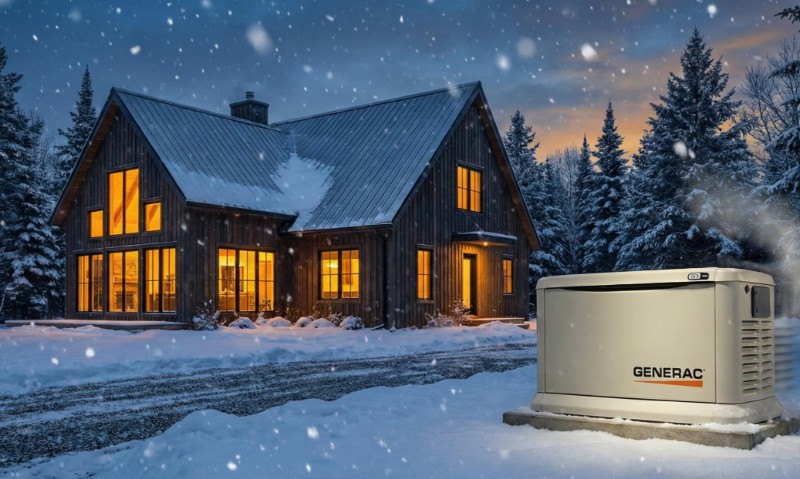
Proper generator placement isn't optional—it's a safety requirement enforced by local building codes. Generators must maintain specific distances from windows, doors, vents, and property lines. Both propane and natural gas generators produce exhaust gases that require adequate ventilation and proper positioning to prevent carbon monoxide from entering living spaces.
Carbon Monoxide Prevention
Modern generators increasingly include CO detection and automatic shutoff features—essential safety technology that protects your family from this odorless, invisible danger. When evaluating generators, prioritize models with built-in CO monitoring systems. Additionally, ensure your home has working carbon monoxide detectors on every level, tested monthly and with fresh batteries.
Electrical Connections
Generator electrical connections require professional installation by a licensed electrician. Transfer switches—either manual or automatic—prevent dangerous backfeed into utility lines while enabling safe whole-home or partial-home power distribution. Never attempt to connect a generator directly to your home's electrical panel without proper transfer equipment.
Compatibility with Modern Heat Pumps
As Eastern Ontario homeowners increasingly adopt heat pump technology for efficient heating and cooling, generator compatibility becomes crucial. Heat pumps require clean, stable power to operate safely—making inverter generators particularly well-suited for this application. The pure sine wave output from inverter models protects sensitive electronics and compressor components from power quality issues that could cause damage or premature failure.
Conclusion
The choice between propane and natural gas generators ultimately depends on your specific circumstances: where you live, what infrastructure exists at your property, how you prioritize upfront versus ongoing costs, and how seriously you plan for extended outages.
For Eastern Ontario homeowners with existing natural gas service, tapping into that continuous fuel supply often makes the most practical sense. For rural properties without gas access, propane provides reliable, high-efficiency backup power with the added benefit of indefinite fuel storage.
If you value maximum flexibility, consider a tri-fuel generator that adapts to whatever fuel source is available—the ultimate preparedness solution for our region's unpredictable conditions.
Ready to secure reliable backup power for your home?
Shop WEN TF1300iX Generator