

What's Inside
Rowing machines, often referred to as ergometers or simply "ergs," engage both your upper and lower body with every pull. The motion builds muscular strength, improves stamina, and gives your cardiovascular system a serious workout — all while keeping stress off your joints.
You don't need to be a competitive athlete to enjoy what rowing has to offer. This article walks you through 9 key benefits of stepping onto the rower.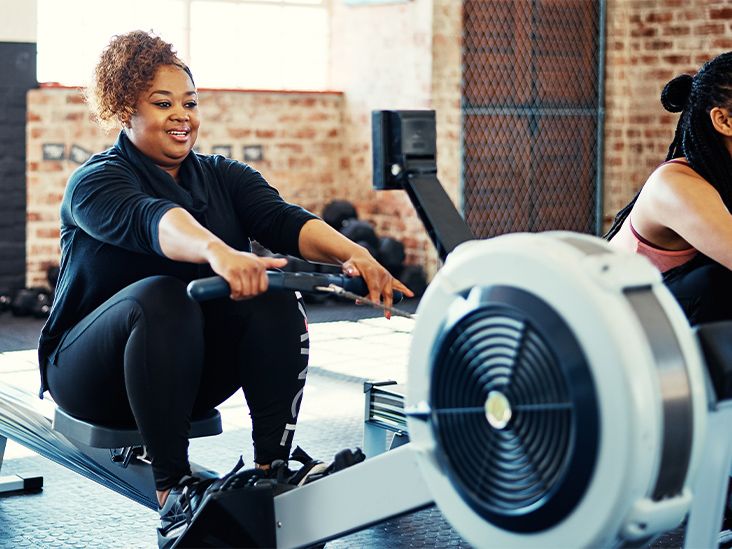
1A True Total-Body Workout
One of the biggest myths about rowing is that it's only an arm exercise. In reality, a full rowing stroke activates muscles from your ankles up to your shoulders.
According to the American Fitness Professionals Association, roughly 65–75% of the effort during a stroke comes from your legs, with the remaining 25–35% driven by the upper body.
The primary lower-body muscles engaged include:
- Quadriceps
- Calves
- Glutes
Rowing also conditions your upper-body muscles, such as:
- Pectorals
- Arms
- Abdominals
- Obliques
Your legs power the initial drive phase, while your core and upper body finish the stroke.
2Suitable for Every Fitness Level
If you have access to an ergometer, you can start rowing — regardless of your current fitness base. It's inclusive, low-barrier, and forgiving to learn.
A 2015 study even deemed rowing safe for people with low vision and blindness. Over the course of six weeks, 24 participants who rowed five days a week saw significant improvements in fat-free body mass and reductions in total body fat percentage. Their cholesterol levels dropped, strength improved, and trunk flexion increased considerably.
3Gentle on Your Joints
Rowing delivers a high calorie burn without pounding your joints. Because the movement is smooth and controlled, it's a popular recovery option and is often recommended for individuals in the early stages of osteoarthritis.
A 2014 study following 24 participants over eight weeks reported a 30% improvement in joint torque, elbow, shoulder, lumbar, and knee rotation — results comparable to higher-impact training such as running or plyometrics, but without the wear and tear.
4It Can Be Meditative
There's a mind-body rhythm to rowing. While the most meditative experience comes from rowing on open water, you can capture a similar calm on the ergometer. The repetitive, flowing motion invites your mind to settle into autopilot.
The rowing stroke has four distinct phases:
- Catch
- Drive
- Finish
- Recovery
Rowing also triggers the release of endorphins — the body's natural feel-good hormones — which help lower stress.
5Excellent for Heart & Lungs
As an aerobic exercise, rowing trains your cardiovascular system, which moves nutrients and oxygen throughout your body. Since rowing is demanding, your heart has to work harder to circulate blood — and that workload translates into a stronger heart over time.
That's especially valuable for anyone looking to protect their cardiovascular health or support heart recovery.
6Builds Power & Endurance
Rowing combines resistance with cardio to develop both power and stamina.
Power is your ability to exert maximum force in a very short span — think sprinting, leaping, or throwing a heavy punch. When done with proper form, rowing trains your legs to drive the stroke and your upper-body and core muscles to deliver explosive power at full effort.
Endurance is your body's capacity to sustain effort over long periods. Rowing strengthens both cardiovascular endurance and muscular endurance simultaneously.
7Time-Efficient
Short on time? The rower can still deliver results. Because it taxes the major muscle groups while raising your heart rate, you get both cardio and strength benefits in a single session.
Short bursts of high-intensity rowing — essentially high-intensity interval training (HIIT) — are known to boost calorie burn and excess post-exercise oxygen consumption. Put simply: you'll keep burning calories after the workout wraps.
A 2022 study found that low-volume HIIT sessions under 15 minutes produced cardiovascular improvements similar to or better than high-volume HIIT and moderate-intensity continuous training — with gains in VO₂ max, blood pressure, and heart function.:max_bytes(150000):strip_icc()/vwt-rogue-echo-rower-grant-gordon-17-0139db80687c4af98c5455a325f18b44.jpeg)
8A Smart Alternative to Treadmills & Ellipticals
When picking gym equipment, the rower is often overlooked — but compared to the treadmill or elliptical, it holds its own, and then some.
A treadmill primarily works your lower body. The elliptical covers both the upper and lower body, but the rowing machine demands more from both halves with every pull.
It's also noticeably quieter than a treadmill — a real advantage if you live in a condo or apartment. And rowers tend to be more budget-friendly than treadmills as well.
9Perfect for Home Workouts
A treadmill or weight rack can dominate a room, particularly if your home is also moonlighting as a workout space.
Many rowing machines fold up and tuck neatly away when they're not in use. That compact footprint makes them a strong choice for apartment dwellers or anyone short on square footage.
Shopping for a Rowing Machine
For a rowing machine with a solid build that also looks premium — and makes a soothing rowing sound as you work — the WaterRower A1 is a standout choice. With a natural wood frame and water-flywheel resistance, it blends into a home gym or living space effortlessly.
If you're looking for a standard cable rowing machine, plenty of quality models are available at a range of price points online.
Tips on Use, Technique & Form
You don't have to be a competitive rower to get the most out of your workouts. These tips will help you row with better form and avoid setbacks.
Focus on Good Technique
Poor posture — like rounded shoulders — or sloppy form can lead to strain or injury. Low back pain is one of the most common complaints from rowers. Research from 2015 showed that between 25% and 81% of the injuries rowers reported involved the low back.
A common cause: pushing with your legs and leaning back at the same instant. Rowing this way forces your spine to overcompensate for weak abdominal muscles. The correct technique is to engage your legs first, then lean back with your core engaged and your back straight.
Don't Overdo It Starting Out
Building a rowing habit takes patience. Keep proper form every stroke. Avoid marathon sessions right after tough weightlifting workouts or other intense training.
It's also wise not to stack a hard rowing workout immediately after a high-load lifting session.
Frequently Asked Questions
Can rowing help me lose belly fat?
Rowing supports calorie burn, which — combined with a calorie deficit — can lead to weight loss. However, spot-reducing belly fat isn't possible. Factors like genetics and the type of training you do both influence where fat comes off.
What muscles does the rowing machine target?
Rowing is a full-body movement, so it strengthens major muscle groups in your arms, legs, and core while also giving you cardiovascular conditioning. If you row consistently, expect to build noticeable muscle tone, even without loading on extra resistance.
How long should I row?
Even a five-minute row is better than skipping your workout, since any amount of activity beats none. The American Heart Association recommends a minimum of 150 minutes of moderate-intensity aerobic activity, 75 minutes of vigorous aerobic activity, or a blend of both each week. A 20-minute HIIT rowing session a couple times a week can get you more than halfway to that vigorous target.
How many calories does a rowing session burn?
According to Harvard Health, a 125-pound person can burn about 255 calories in 30 minutes of vigorous rowing. A 155-pound person burns roughly 369 calories, and a 185-pound person hits approximately 440 calories.
For reference, a 125-pound person typically burns about 270 calories in 30 minutes of elliptical training, and a 155-pound person burns about 324 calories with a 185-pound person clocking around 378.
Rowing consistently with a healthy, balanced diet is a reliable way to stay active and in shape.
The Bottom Line
Rowing isn't only for the outdoors. A rowing machine — or ergometer — lets you enjoy the full spectrum of benefits rowing has to offer from inside your home. It delivers so much that even treadmills and ellipticals can struggle to keep pace. Still, before diving in, check with your healthcare provider to make sure rowing is the right fit for you.