

Key Takeaways
- Wine dispensers employ advanced preservation technology to maintain freshness and prevent oxidation after opening.
- Precise pouring controls guarantee consistent servings while minimizing wine waste.
- Home, commercial, and countertop models are available to suit any space or usage need.
- Features like multiple taps, intuitive interfaces, and adjustable temperature zones enhance user experience.
- Routine maintenance and calibration are essential for consistent wine quality and reliable performance.
- A dependable wine dispenser supports diverse wine selections, increases efficiency, and elevates every pour.
Welcome to the definitive resource on wine dispenser machines — covering types, features, and benefits for both home and business settings. These remarkable machines serve, store, and preserve wines at ideal temperatures, handling everything from individual bottle units to expansive commercial systems.
To find the right match for your needs, it helps to understand how each feature works and what each type of dispenser brings to the table. The sections below walk you through everything in clear, straightforward detail.
In This Article
• What Is a Wine Dispenser Machine?
• Where Wine Dispensers Are Used
• How Does a Wine Dispenser Work?
• Types of Wine Dispensers
• Wine Dispensers for Home
• Commercial Wine Dispensers
• Countertop Wine Dispensers
• Must-Have Features
• Benefits of Using a Wine Dispenser
• Conclusion
• Frequently Asked Questions
What Is a Wine Dispenser Machine?
A wine dispenser machine is a specialized appliance designed to serve wine directly from the bottle, one glass at a time. Its core purpose is to maintain the freshness of wine once the bottle has been opened. Because wine deteriorates rapidly when exposed to air, these machines utilize innovative methods to slow down that process. Their principal function is combating oxidation — the chemical reaction responsible for stripping wine of its flavor and aroma.
Most models achieve this through the use of inert gases such as nitrogen or argon. These gases settle over the surface of the wine, forming a protective barrier that blocks oxygen from making contact. The result is that wine stays fresh-tasting for weeks or even months — far longer than a simple cork or stopper could manage.
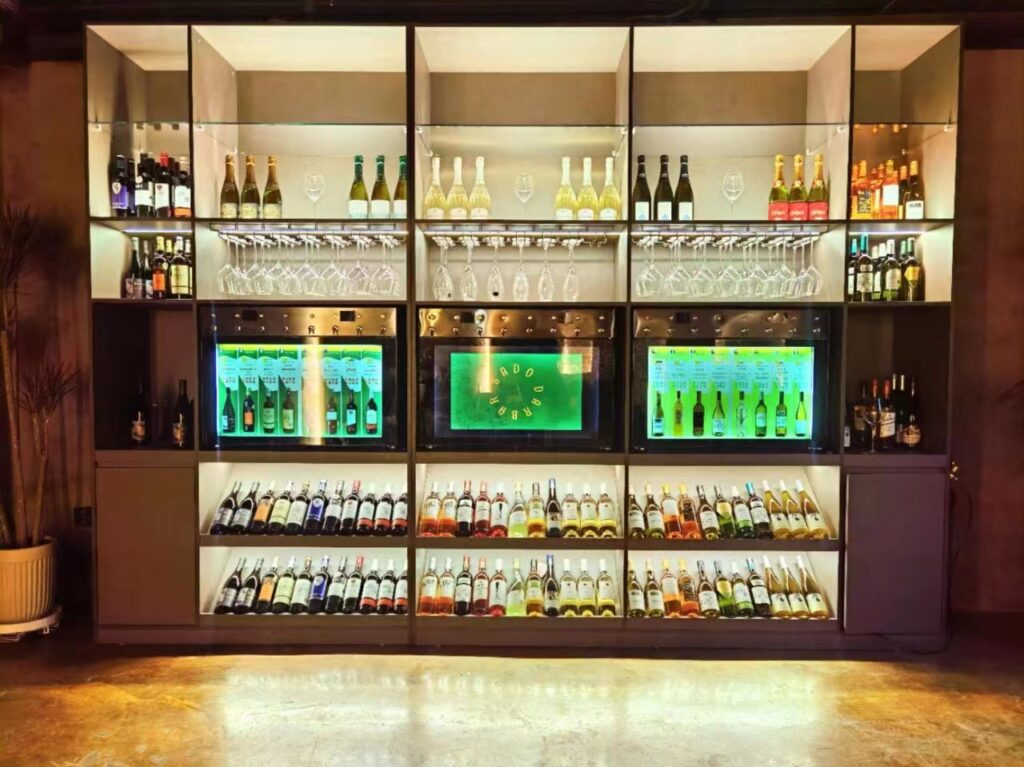
Where Wine Dispensers Are Commonly Used
Restaurants & Bars
Wine-by-the-glass programs
Wineries & Tasting Events
Flights and sample pours
Hotels & Hospitality
Guest lounges and suites
Home Collections
Enthusiasts and entertainers
What makes wine dispensers stand out is their ability to deliver pre-measured portions of wine. Each glass receives an identical pour, which is invaluable for establishments where consistent serving size matters. Bars, restaurants, and even homeowners hosting tastings rely on these machines to cut down on waste while ensuring every glass is perfectly poured.
Many models go a step further by offering adjustable serving sizes. This is particularly helpful for managing costs at venues where wine is sold by the glass — guests can choose from a tasting pour, a half glass, or a full serving.
Temperature control is another standout capability. Most dispensers allow you to set the ideal temperature for each bottle, drawing out the best possible flavor and aroma. White wines are generally served cooler than reds, and certain machines even feature independent temperature zones for each tap — so you can keep a Chardonnay and a Cabernet at their respective sweet spots simultaneously.
These machines come in a wide range of sizes. Compact models designed for home bars or small venues sit on a counter, while larger units with four or more taps can be built directly into the bar or wall at a restaurant. In high-volume environments, staff can serve numerous patrons quickly, and the dispenser preserves wine much longer than an open bottle ever could. Each tap can be dedicated to a different wine, giving venues the freedom to rotate selections without worrying about waste.
It is worth noting that not every wine is compatible with a dispenser. Certain delicate or highly aged wines may not respond well to even gentle pressure or gas exposure. Always verify that your preferred wines pair well with the dispenser model you have in mind.
How Does a Wine Dispenser Work?
At its core, a wine dispenser accomplishes two things: it pours wine with precision and keeps the remaining wine fresh. These machines use clever engineering to shield wine from oxygen while delivering it at the perfect serving temperature. They come in a variety of sizes and configurations suited to everything from a quiet home evening to a packed restaurant.
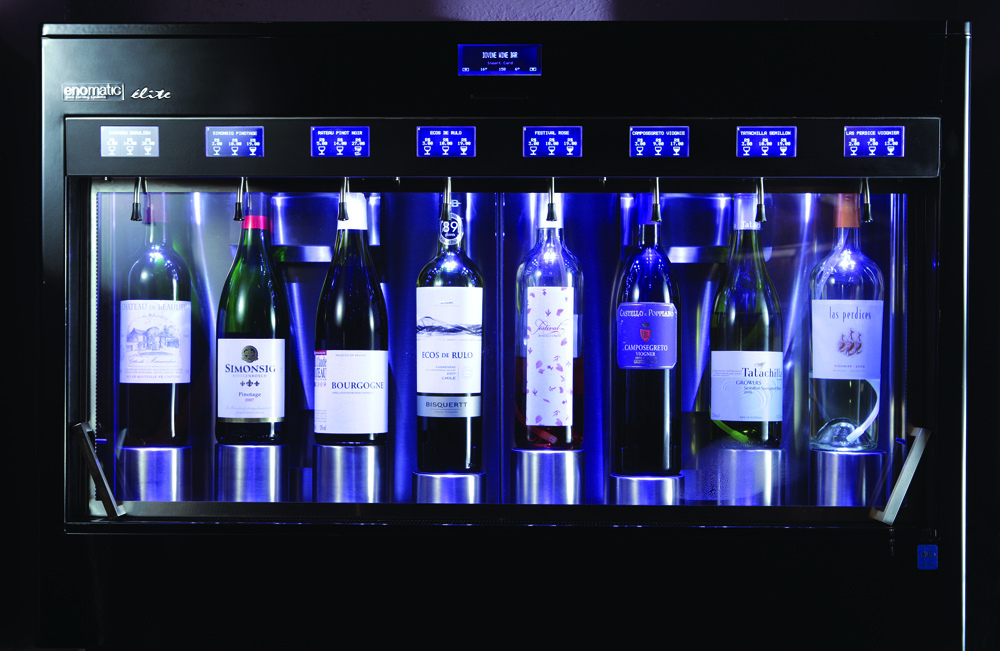
Operating a wine dispenser typically involves these steps:
Load the Bottles — Open the wine and place each bottle into its designated slot within the machine.
Seal the Bottles — The dispenser's internal system ensures every bottle is sealed and ready for service.
Set the Temperature — Choose a temperature between 4°C and 18°C. Some models offer separate red and white wine zones.
Calibrate the Pour — Select the amount of wine for each serving — most machines offer up to three portion sizes.
Pour and Serve — Use the tap or button control for a clean, mess-free pour with no waste.
Gas Preservation — After each pour, the machine pushes argon or nitrogen into the bottle, displacing oxygen.
Clean Regularly — Sanitize nozzles and contact areas after use to keep the system hygienic and functioning well.
Wine dispensers rely on inert gas — most commonly argon — to guard against oxidation. Once wine has been exposed to air, it begins to deteriorate. Argon, which is denser than air, settles directly on the surface of the wine inside the bottle. It fills the space left behind after each pour, effectively sealing out oxygen and preserving the wine's original character for weeks or even months. Nitrogen serves as an alternative, valued for its stability and non-reactive nature.
Every wine has its own ideal settings. Calibrating the dispenser for a specific wine means dialing in the right temperature and portion size. Red wines typically maintain their best qualities between 12°C and 18°C, while whites and sparkling wines may need to be chilled down to 4°C. Some advanced dispensers even save these preferences for individual bottles, so you get a tailored pour every time.
Consistent cleaning and maintenance are critical for any wine dispenser. Wine residue can accumulate in lines and taps, leading to clogs or off-flavors if left unchecked. Cleaning after each use, along with deeper inspections every few weeks, keeps the system running smoothly and ensures that there is no taste contamination between different wines.
Types of Wine Dispensers (Home, Commercial, Countertop)
| Feature | Manual | Automated | Countertop | Commercial |
|---|---|---|---|---|
| Home Use | ✔ | ✔ | ✔ | ❌ |
| Commercial Use | ❌ | ✔ | ❌ | ✔ |
| Sparkling Support | Limited | ✔ | Limited | ✔ |
| Smart Features | ❌ | ✔ | Varies | ✔ |
| Dual Temp Zones | ❌ | ✔ | Some | ✔ |
| Price Range | $100–$500 | $1,000–$5,000+ | $200–$2,500 | $5,000–$100K+ |
| Maintenance | Low | Moderate | Low | High |
There is a wine dispenser for virtually every setting and requirement. Each type preserves freshness, simplifies the pouring process, and complements its intended environment. Here is a closer look at the main categories:
Wine Dispensers for the Home
Home wine dispensers are purpose-built for residential use. Most are compact countertop units capable of holding between two and four bottles. They generally rely on straightforward preservation methods like vacuum pumps or inert gas systems to keep wine fresh. Temperature control is a common feature, allowing you to serve reds and whites at their optimal chill levels.
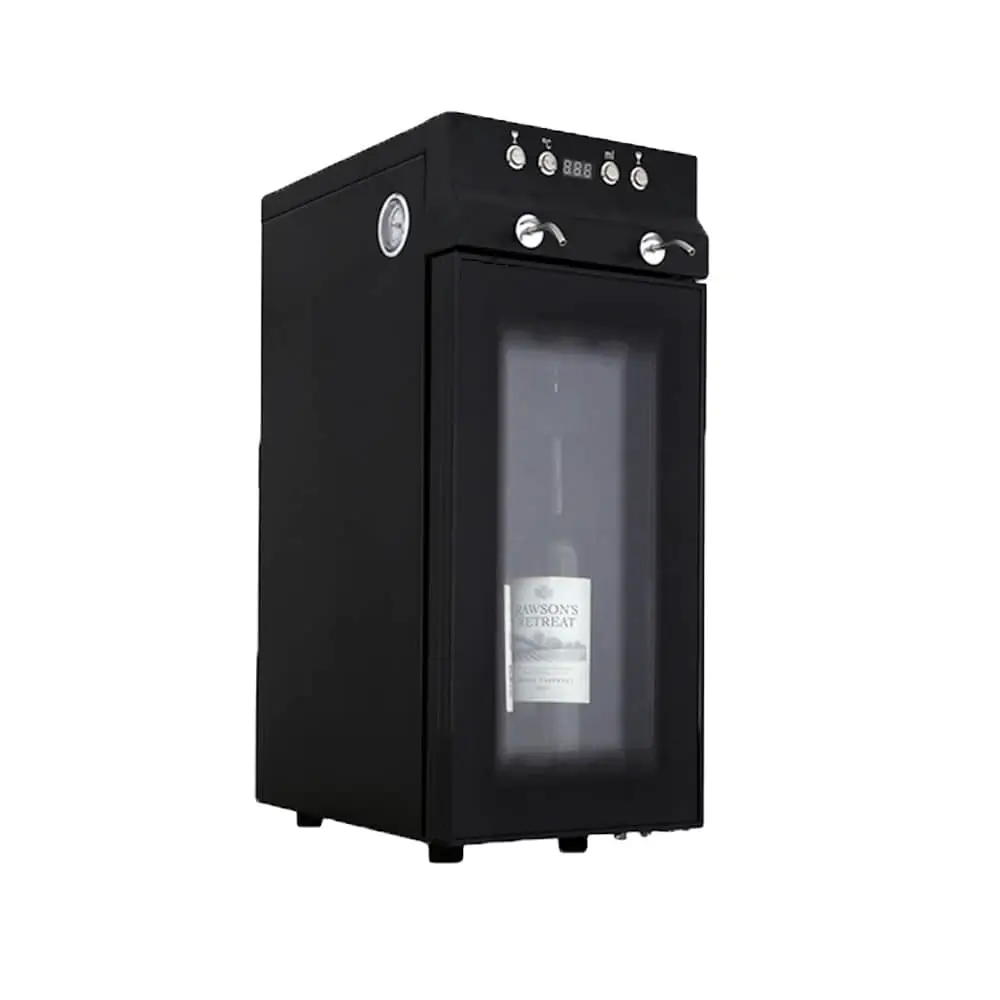
Some home models employ needle technology, which lets you pour wine without pulling the cork. This keeps the bottle sealed and extends freshness for weeks. These dispensers are perfect for individuals who like to savor a single glass at a time or who want to keep multiple bottles open without any going to waste.
Wine Dispensers for Commercial Use
Commercial wine dispensers are engineered for the demands of busy restaurants, hotels, and wine bars. They are significantly larger and can accommodate sixteen or more bottles at a time. Most commercial-grade units employ advanced gas systems — typically argon or nitrogen — to preserve wine after every pour. Precise temperature zones allow the machine to serve reds, whites, and sparkling wines at their ideal temperatures simultaneously.

Many commercial dispensers also feature automatic pour controls, enabling staff to serve exact amounts and reduce waste. Some units even integrate directly with point-of-sale systems. These capabilities allow establishments to offer dozens of wines by the glass while maintaining flavor and bouquet as close to a freshly opened bottle as possible.
Countertop Wine Dispensers
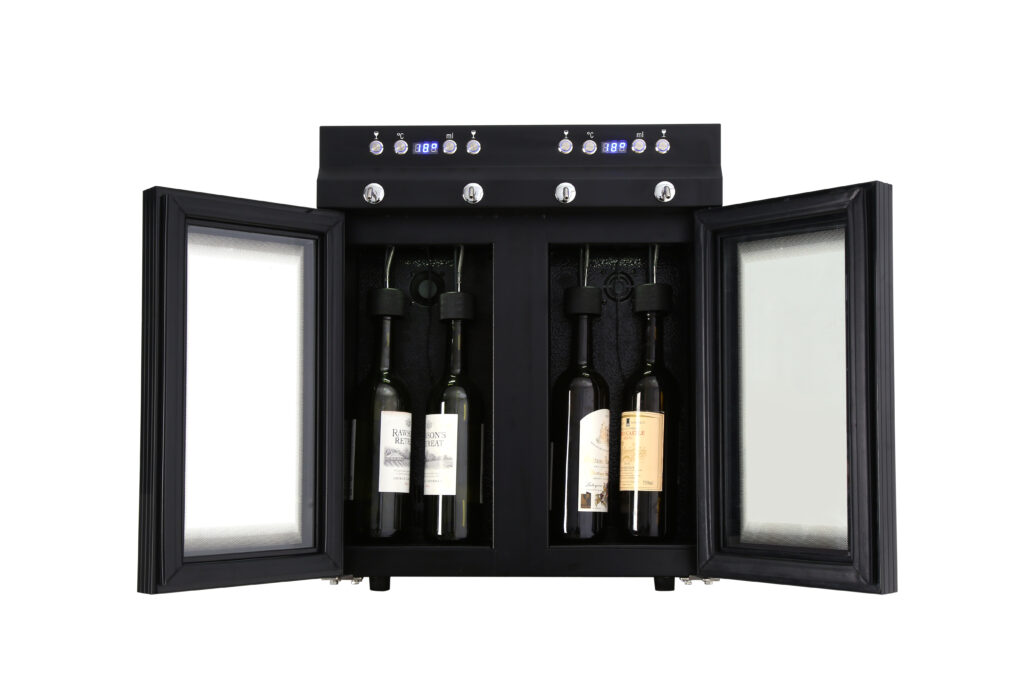
Countertop dispensers are an excellent option for anyone working with limited space. These compact units typically hold one to four bottles and are easy to set up and maintain. They fit comfortably on a home bar, kitchen counter, or a crowded commercial counter without taking up much real estate.
Most countertop models use vacuum or inert gas preservation alongside basic temperature control. They are ideal for casual use, home entertaining, or small cafes that want to offer quick access to several wines without investing in a full-scale commercial setup.
Multi-bottle dispensers take the concept further by allowing you to pour several different varietals at once — a major advantage for tastings, events, and restaurants with extensive wine lists. Many feature independent taps for each bottle and can handle both red and white wines at their proper serving temperatures. Some even offer wall-mount or tabletop configurations for added flexibility.
Automatic wine dispensers are designed for speed in high-volume environments. With a simple button press, staff or guests can serve precise amounts. This reduces errors and keeps service lines moving — especially important during peak hours.
Must-Have Features in Modern Wine Dispensers
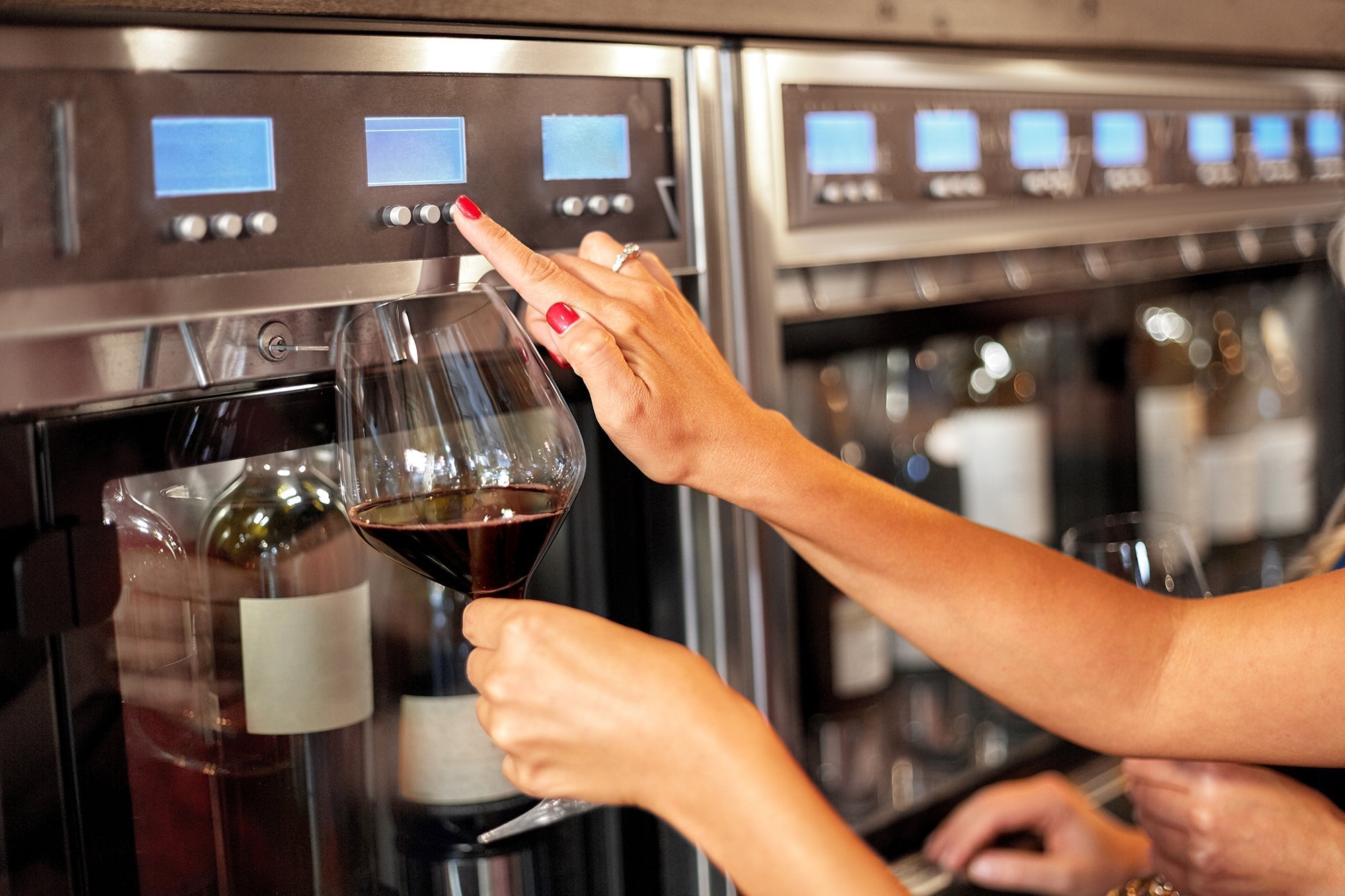
Modern wine dispensers do far more than simply pour a glass. They combine smart technology with intuitive design to help both businesses and consumers get the most out of every bottle. Here are the features that make the biggest difference:
Precise Dispensing
Controlled pours reduce waste and ensure consistent serving sizes across every glass.
Gas Preservation
Nitrogen or argon gas systems block oxygen from reaching the wine, extending freshness for weeks.
Multiple Taps
Offer several wines simultaneously — reds, whites, and sparkling — without cross-contamination.
Touchscreen Controls
User-friendly interfaces minimize training time and speed up service in any setting.
Temperature Zones
Independent zones let you serve each wine at its ideal temperature — from crisp whites to room-temp reds.
Needle Technology
Pour directly through the cork without uncorking, keeping the bottle sealed for maximum longevity.
Compact Designs
Sleek, space-efficient builds that suit home kitchens, bar counters, and hotel lobbies equally.
Flexible Capacity
Options from 2-bottle home units all the way to 12+ bottle commercial systems for high-volume service.
The most critical function remains preservation. Wine deteriorates rapidly upon exposure to air, so quality dispensers use inert gases like nitrogen or argon to form a protective blanket over the wine. Argon tends to be the preferred choice for premium bottles because it is denser and provides a stronger barrier. Nitrogen is more commonly used due to its lower cost. Needle technology adds another layer of protection, enabling a clean pour right through the cork so the bottle never needs to be opened.
Pour precision reduces waste and ensures that every glass holds the right volume — especially important for tastings and flights. Multiple taps are essential for restaurants, wine bars, and events, as they let you rotate selections and serve a range of varietals without any cross-contamination between pours.
Temperature control is vital for bringing out the best in every wine. Basic models offer single or dual zones, which are perfectly adequate for home use or small cafes. Larger commercial machines can feature multiple independently controlled zones, making it possible to serve everything from ice-cold sparkling to perfectly tempered reds in a single unit.
Intuitive controls — whether touchscreen or simple button-based — cut down on training time and minimize errors during service. On the design front, contemporary dispensers favor sleek lines and compact footprints that integrate smoothly into any environment, from a home kitchen counter to a bustling lounge or hotel breakfast bar. Capacity varies from two-bottle home units to systems holding eight, twelve, or more bottles for scaling up to larger venues.

Benefits of Using a Wine Dispenser
2–4+
Weeks of Freshness
4–18°C
Ideal Temp Range
Zero
Waste Per Pour
Fast
By-the-Glass Service
A wine dispensing system is far more than a convenient gadget — it fundamentally changes the way wine is served, stored, and enjoyed in both home and commercial environments. Its most significant contribution is extending the life of opened wine, broadening selection possibilities, and streamlining the entire serving process.
The foremost advantage is wine preservation. The moment a bottle is uncorked, oxidation begins. A wine dispenser combats this by resealing the bottle and — in most cases — injecting inert gas to displace oxygen. The wine stays protected for weeks or even months, which means you can pour a single glass and set the rest aside without any risk of spoilage. No more rushing to finish a bottle before it turns.
Wine dispensing machines also make it simple for drinkers to explore a wider selection by the glass. For bars, restaurants, and private events, the ability to offer more options without fear of open bottles going to waste is a clear win. With adjustable pour sizes, guests can choose a tasting portion, a half glass, or a full serving — putting them in control and personalizing their experience. For business owners, this translates to stronger sales and a broader wine list without sacrificing profit on unsold inventory.
Temperature control is another key benefit. These machines maintain each wine at its ideal serving temperature, and many models feature independent zones for red, white, and sparkling wines. Every glass arrives exactly as the winemaker intended — no ice buckets, no guesswork, just consistent quality from the first pour to the last.
Operational efficiency gets a major boost as well. Pouring wine through a dispenser is cleaner, faster, and more accurate than doing it by hand. It eliminates spills, reduces staff training requirements, and speeds up service during rush hours. Without corks and bottle openers in the equation, wine service becomes smoother and more polished.
Ultimately, wine dispensers help create a wine program that feels elevated yet approachable. They serve the dedicated oenophile seeking perfection and the casual drinker who simply wants a great glass — all with minimal hassle.
Conclusion
Wine dispenser machines simplify every aspect of wine service. They deliver consistent portions, maintain freshness over extended periods, and work seamlessly in any environment. Home users benefit from a tidy setup that preserves wine and prevents spills. Bars and restaurants enjoy faster, more efficient guest service. Countertop models are a smart solution for tight spaces and smaller gatherings.
Practical features like integrated cooling, tap controls, and straightforward cleaning routines make daily use effortless. Each dispenser type addresses a different set of needs, so the key is selecting one that aligns with your available space, serving volume, and personal style.
Whether you are a dedicated wine enthusiast, an avid home entertainer, or a business owner looking to elevate your offerings, a wine dispenser delivers more variety with less waste — making every glass count.
Frequently Asked Questions
Is nitrogen or argon better for wine preservation?
Argon is widely considered the superior choice for wine preservation, particularly for opened bottles in home or casual settings. Because it is denser than air, argon creates a more effective seal over the wine's surface, providing stronger protection against oxidation.
What types of wine dispenser machines are available?
Wine dispensers come in several configurations including home models, commercial-grade systems, and countertop units. Each type is tailored to specific usage requirements, from small personal collections to high-volume restaurant service.
How does a wine dispenser help preserve wine?
Wine dispensers use airtight seals combined with temperature regulation to protect wine from oxidation. By replacing the air in the bottle with inert gas, they allow opened bottles to maintain peak flavor and aroma far longer than traditional storage methods.
Can wine dispensers serve both red and white wine?
Yes. Most modern wine dispensers are equipped with separate temperature zones for red and white wines, allowing both to be served at their ideal temperatures from a single machine.
Are wine dispensers easy to clean?
Many wine dispensers feature removable components and even self-cleaning functions, making maintenance convenient. Following the manufacturer's cleaning guidelines ensures the machine continues to operate at its best.
What features should I look for when choosing a wine dispenser?
Focus on temperature control, portion control, the wine preservation system, bottle capacity, and ease of cleaning. These features together determine how well the dispenser will serve your specific needs and environment.
Are wine dispensers energy efficient?
Generally, yes. Modern wine dispensers are built with advanced insulation and low-power cooling systems that keep energy consumption to a minimum while maintaining optimal storage conditions.
Who benefits most from using a wine dispenser?
Wine dispensers are valuable for restaurants and bars seeking efficient by-the-glass service, as well as home wine enthusiasts who want to preserve and enjoy their collection without waste. Anyone who values freshness, convenience, and variety will find a wine dispenser worthwhile.