

 Range anxiety is usually the first worry riders face when they consider switching to an electric scooter. Will the battery actually hold up? Will it drain quicker than expected? Will it leave me stranded halfway to work? In crowded American cities with unpredictable traffic and long stop-and-go commutes, these questions only get louder.
But while advertised range figures might look alarming on paper, most real-world confusion stems from misunderstanding how a scooter behaves in everyday conditions. In many cases, range anxiety shrinks dramatically once riders stop comparing test-lab numbers against their own routes and instead pair themselves with a scooter that genuinely fits their commute profile.
Understanding real-world electric scooter range, especially in busy U.S. traffic, turns range from a source of worry into something practical you can plan around. Let's unpack it.
What Is Electric Scooter Range?
In the simplest terms, electric scooter range is the distance your scooter can cover on a single full charge. However, under real-world conditions, range is rarely a fixed number — it's more like a moving target.
You may notice this yourself. Two riders on the same scooter, riding the same route, can end their day with very different battery percentages. That's because range isn't defined by the battery alone. It's shaped by how the scooter is engineered and how it's used once it leaves the showroom.
At the hardware level, battery capacity, measured in watt-hours (Wh), sets the upper limit. But several other factors can affect how the stored energy in the battery is actually used. A scooter may carry a large battery pack, yet still fall short of delivering its stated range. Here's why:
- Motor calibration and tuning — A well-tuned motor delivers power progressively, especially during acceleration. Aggressive tuning tends to drain energy faster.
- Controller and software optimization — The controller decides how much power to release and when. Smarter software smooths throttle response and recovers more efficiency.
- Battery Management System (BMS) efficiency — A refined BMS keeps optimal voltage balance and temperature, reducing energy loss and extending usable charge cycles.
- Thermal management — Heat is the silent enemy of efficiency. Scooters that manage battery and motor temperatures better retain more range in hot, stop-and-go urban traffic.
Then come the human and environmental variables, which often matter just as much. Stop-and-go traffic, frequent hard acceleration, riding at top speeds, or carrying a loaded backpack all increase real-world energy demand. Scooters built from the ground up for American commuting deliver significantly better real-world range and reliability.
How Range Impacts Your Daily Commute
Electric scooter range directly shapes how riders plan their journey — far beyond just the "how far" question. Understanding your actual range needs starts with mapping out your typical weekly travel pattern.
Active urban commuters typically cover 20 to 40 miles per day. Scooters with a real-world range of around 40 miles, such as the Varla Pegasus City Commuter, comfortably absorb daily charging pressure and give you a generous cushion for detours, errands, or unexpected route changes.
There's often a visible disconnect between the number you see on a brochure and the number you see on your dashboard. This is "the range gap" — and it's one of the biggest sources of confusion for first-time electric scooter buyers.
What Is the Certified Range?
In reality, the certified range is calculated under controlled laboratory conditions. The scooter is tested at steady speeds, with minimal acceleration, little wind resistance, moderate temperatures, and without real-world variables such as hills, riders, pillion passengers, or sudden braking.
Why Does a Certified Range Exist?
Most scooters are sold using a certified range figure — typically measured under the Urban Driving Cycle (UDC) or similar benchmark. The point is to provide a common yardstick so different models can be compared objectively under identical lab conditions. It isn't designed to mirror urban traffic, weather, or riding behavior.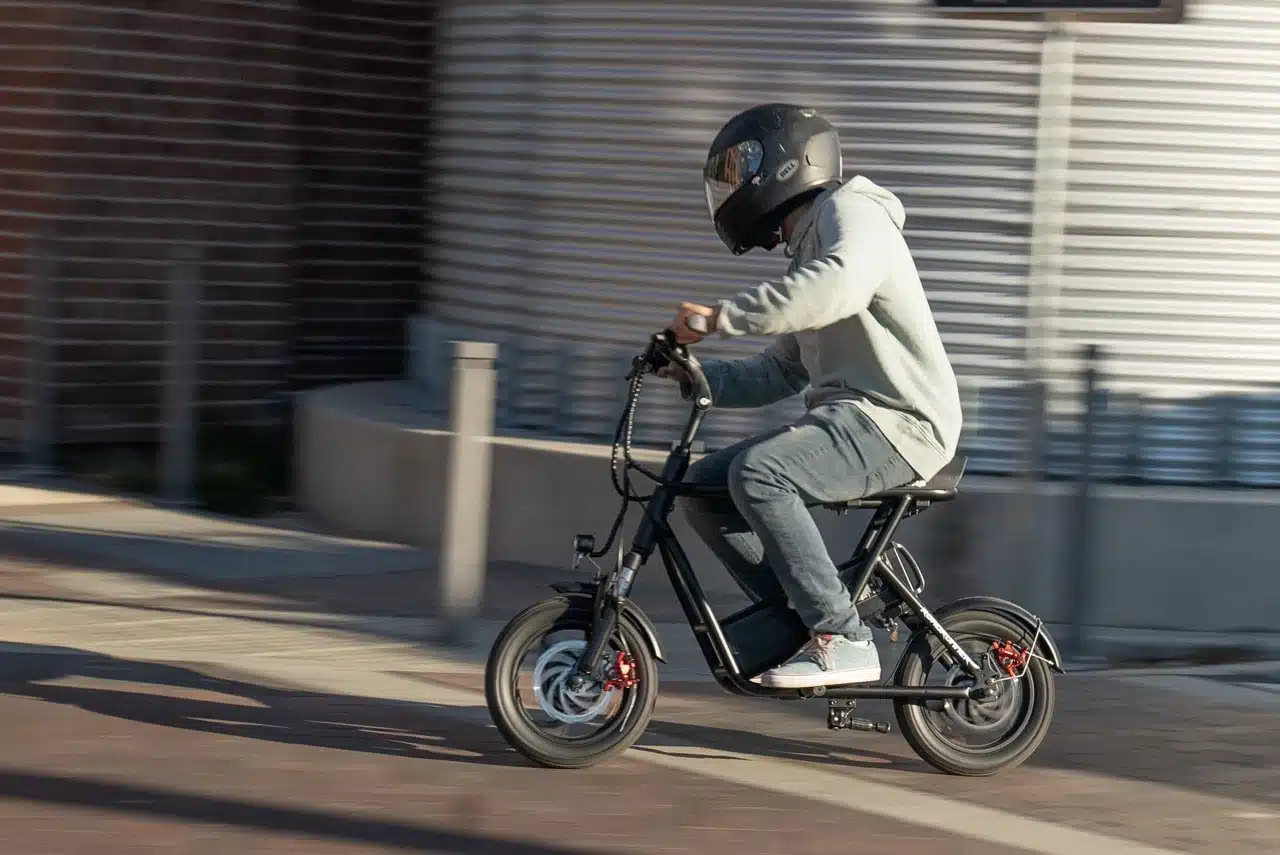
The confusion begins when first-time EV buyers assume this certified figure is what they'll see on their daily commute.
UDC Range vs Real-World Range: What Riders Should Know
Well-engineered electric scooters, suited to American riding conditions, can deliver around 70% to 80% of their certified range once they hit real roads. Understanding this gap early prevents disappointment and helps you plan charging and usage realistically.
Here are some real-world factors that affect range performance:
| Factor | Impact on Range | Mitigation Strategy |
|---|---|---|
| Stop-and-go traffic | −15% to −25% | Use regenerative braking, maintain steady speeds |
| High temperature (95°F+) | −8% to −12% | Charge during cooler hours, park in shade |
| Aggressive acceleration | −25% to −35% | Gradual throttle input, use Eco mode |
| Additional weight | −2% per 20 lb | Travel light, skip unnecessary cargo |
| Headwinds and inclines | −10% to −20% | Plan routes avoiding steep hills |
When you evaluate your next electric scooter, look beyond the certified range figure and pay close attention to how far it actually runs on a full charge under typical American traffic conditions. That's the range your daily commute truly depends on.
Commute Planning
Commute planning often sounds like extra homework, but when it comes to owning an EV, it's the quiet secret weapon that eliminates range anxiety. Commute planning should be about constantly watching your battery meter in panic — it should be about making small, smart choices before you even leave your home.
Essential commute planning involves three things:
- Real-time monitoring — Battery state-of-charge with range-to-empty calculations.
- Route optimization — Smart navigation and avoiding energy-intensive paths.
- Charging integration — Workplace, home, and public charging location mapping.
Seasonal planning helps maintain a reliable range year-round. Winters typically call for softer speeds and route changes around waterlogged areas, while summers require cooler parking and avoiding mid-day charging. Accounting for these factors prevents unexpected range drops.
How to Maximize Mileage for Daily Use
A well-optimized motor, an inclusive BMS, and smart thermal management do much of the heavy lifting to extract the maximum range from an electric scooter. But once you're on real roads, a surprising amount of range still depends on how you ride, when you ride, and how you maintain.
Smart Riding Habits
Even with advanced BMS, the rider is still the biggest variable in the range equation. Adopting "predictive" rather than "reactive" riding habits can prove to be the difference between average and exceptional mileage.
Key smart riding principles for American commuting conditions include:
- Momentum management — Anticipate signals and traffic flow to minimize complete stops.
- Smooth acceleration — Gradual throttle inputs can reduce energy intake by 40%.
- Speed consistency — Maintain steady speeds within the 20–30 mph efficiency band.
- Regenerative maximization — Release throttle early to capture deceleration energy.
- Mode selection — Match riding mode to traffic conditions, not just top speed desires.
Regular Maintenance
One of the biggest advantages of an electric scooter is how little routine maintenance it needs compared to a gas scooter. There are no oil changes, no clutch wear, no fuel system issues. In fact, EVs typically demand around 50–60% less maintenance overall. Still, the small amount of upkeep they do require plays a direct role in how much range you continue to get month after month.
For urban riders dealing with traffic, dust, heat, and weather, regular attention keeps real-world range consistent, not just on paper.
What Can You Do as a Daily Rider?
Here are some simple checks that, when done regularly, go a long way in preserving efficiency:
- Keep tire pressure in check — Under-inflated tires increase rolling resistance and quietly eat into range.
- Pay attention to braking feel — If braking starts feeling inconsistent, regeneration may not be working as efficiently as it should.
- Watch how the scooter feels, not just the range number — Sluggish acceleration or sudden range drops are often early signs of software or calibration issues that should be addressed before they compound.
- Be extra mindful during wet and dusty months — With modern scooters well-sealed, frequent exposure to water, slush, and dust means it's worth checking visible connectors and vents for buildup or blockage.
Charging Habits
Optimal charging practices represent the most controllable factor in maintaining long-term range performance and battery health. Understanding lithium-ion battery chemistry enables riders to develop habits that preserve capacity while maximizing daily availability.
| Charging Practice | Battery Impact | Range Benefit |
|---|---|---|
| 20–80% daily charging | Extends life by 2x | Maintains consistent capacity |
| Avoid deep discharge | Prevents cell damage | Preserves maximum range |
| Temperature control | Reduces degradation | Maintains efficiency |
| Regular full charge cycles | Calibrates BMS | Accurate range display |
| Slow charge preference | Minimizes heat stress | Better long-term capacity |
Modern removable batteries make charging far more flexible, especially for apartment residents. Indoor, temperature-controlled charging protects battery health. Additionally, the optional Battery-as-a-Service (BaaS) model removes battery ownership worries altogether.
Smart charging systems prevent overcharging and manage heat automatically. For daily commuters, charging as soon as you get home ensures full readiness for evening rides, while growing workplace charging options enable convenient mid-day top-ups and extended daily range.
Comparing Electric Scooters to Other Modes of Transport
Electric scooters strike a balance between the limitations of public transport and the high costs of private cars, making them ideal for American city riders. On home charging, they cost less than a tank of gas, compared to $5 to $8 per gallon for petrol scooters and $12 to $18 for app-based cabs. The cost saving is amplified by lower maintenance, no fuel stops, and reduced parking expenses.
The flexibility matrix for different transport modes:
- Electric scooters — Door-to-door connectivity, instant availability, weather protection.
- Public transport — Fixed routes and timings, transfers required, weather exposure.
- Personal cars — High costs, parking challenges, traffic stress.
- App-based transport — Availability uncertainty, surge pricing, no ownership benefits.
Environmental awareness is shaping transport choices, especially among young professionals. Electric scooters generate 40–60% lower lifetime carbon emissions than ICE vehicles, even with the current power mix, and this advantage will increase as renewable energy expands.
Cost Efficiency
The sticker price of an electric scooter often startles buyers, but the Total Cost of Ownership (TCO) tells a very different story. For the cost-conscious American commuter, the math is simple: you pay for technology upfront to save substantially on running costs later.
If you ride roughly 30 miles a day (around 900 miles per month), the difference between fueling a petrol scooter and charging a modern electric scooter is striking.
| Cost Component | Electric Scooter (Home Charging) | Petrol Scooter | Savings |
|---|---|---|---|
| Fuel / Electricity (monthly) | $8 – $12 | $50 – $65 | $40 – $55 |
| Maintenance (monthly) | $3 – $5 | $12 – $18 | $8 – $13 |
| Insurance (annual) | $35 – $55 | $60 – $80 | $20 – $30 |
| Registration | $8 – $30 | $150 – $220 | $120 – $190 |
Note: These figures are typical averages for maximum urban use and may vary by city, model, and riding habits. Estimates incorporate typical electricity tariffs vs. petrol prices, basic servicing costs, and standard insurance premiums for 2026.
Federal and State Incentives: Electric scooters in the U.S. also benefit from purchase incentives and tax credits that further improve the upfront cost equation. Many states offer additional rebates for electric two-wheelers and zero-emission vehicles, lowering overall ownership costs even more.
Battery as a Service: Emerging subscription models have tackled the upfront cost head-on with the BaaS model. Instead of paying for the whole scooter at once, you buy the scooter alone (starting as low as $1,100 on a sub-compact model) and subscribe to the battery energy instead.
Convenience and Flexibility
The lifestyle transformation enabled by electric scooter ownership extends far beyond economic benefits, fundamentally improving daily convenience and personal flexibility. These advantages manifest in countless small moments that collectively enhance the quality of life for urban riders.
Daily convenience improvements through electric scooter adoption:
- Silent operation — Early morning starts without disturbing neighbors.
- Instant readiness — No warm-up time or cold-start issues.
- Home charging — Eliminates fuel station queues and quality concerns.
- Digital integration — Smartphone connectivity for navigation and monitoring.
- Minimal maintenance — No oil changes, filter replacements, or tune-ups.
- Preferential treatment — Dedicated parking, green-zone access, social approval.
Well-designed electric scooters exemplify modern convenience through features like turn-by-turn navigation, remote diagnostics, theft protection, and crash alerts. Removable batteries solve the perpetual challenge of charging in an apartment, while smart charging options include home, office, and public stations.
Conclusion
Electric scooters represent more than just an alternative mode of transport — they offer a fundamental shift in how we approach daily commuting. Understanding range capabilities, both certified and real-world, empowers confident decision-making while smart usage habits maximize efficiency. As charging infrastructure expands and battery technology advances, the advantages of electric mobility become increasingly compelling for American commuters seeking economical, convenient, and sustainable transportation solutions.