

Not all ab machines deliver the same results. Some collect dust in a corner. Others become the centerpiece of every core workout. The difference comes down to design, function, and how well the machine matches your training goals.
After looking at dozens of options, we've identified seven gym machines that consistently stand out for abdominal training. Whether you're setting up a home gym or upgrading an existing space, this guide breaks down each machine so you can make a confident choice.
Below, you'll find the pros, the limitations, workout routines for beginners and advanced users, and practical tips for each one. Let's get into it.
Table of Contents
Quick Comparison Chart • 1. Seated Ab Crunch Machine • 2. Vertical Knee Raise Station • 3. Rotary Torso Machine • 4. Cable Ab Crunch Station • 5. Roman Chair / Hyperextension Bench • 6. Decline Sit-Up Bench • 7. Hanging Leg Raise Station • Conclusion
Quick Comparison Chart
Before diving deeper, here's a snapshot of what each machine brings to the table.
| Machine | Main Target | Best For | Key Advantage | Main Limitation |
|---|---|---|---|---|
| Seated Ab Crunch | Upper/Mid Abs | Beginners, Seniors | Easy to use, low injury risk | Fixed motion, doesn't engage stabilizers |
| Vertical Knee Raise | Lower Abs, Hip Flexors | Intermediate–Advanced | Bodyweight-based, compact | Needs core control, grip fatigue |
| Rotary Torso | Obliques (Side Abs) | General Fitness, Rehab | Safe rotation, isolates obliques | Can be rushed, risk of over-rotation |
| Cable Ab Crunch | Upper Abs | Strength Training | Adjustable resistance and angles | Requires form coaching |
| Roman Chair | Lower Back + Core | Posture Correction | Works both abs and back | Risk of overextension if rushed |
| Decline Sit-Up Bench | Upper Abs | Budget Gyms, Home Setups | Adjustable incline, low maintenance | Can strain lower back with poor form |
| Hanging Leg Raise | Lower Abs | Calisthenics, Athletes | Builds deep core strength | Hard for beginners, grip fatigue |
1. Seated Ab Crunch Machine
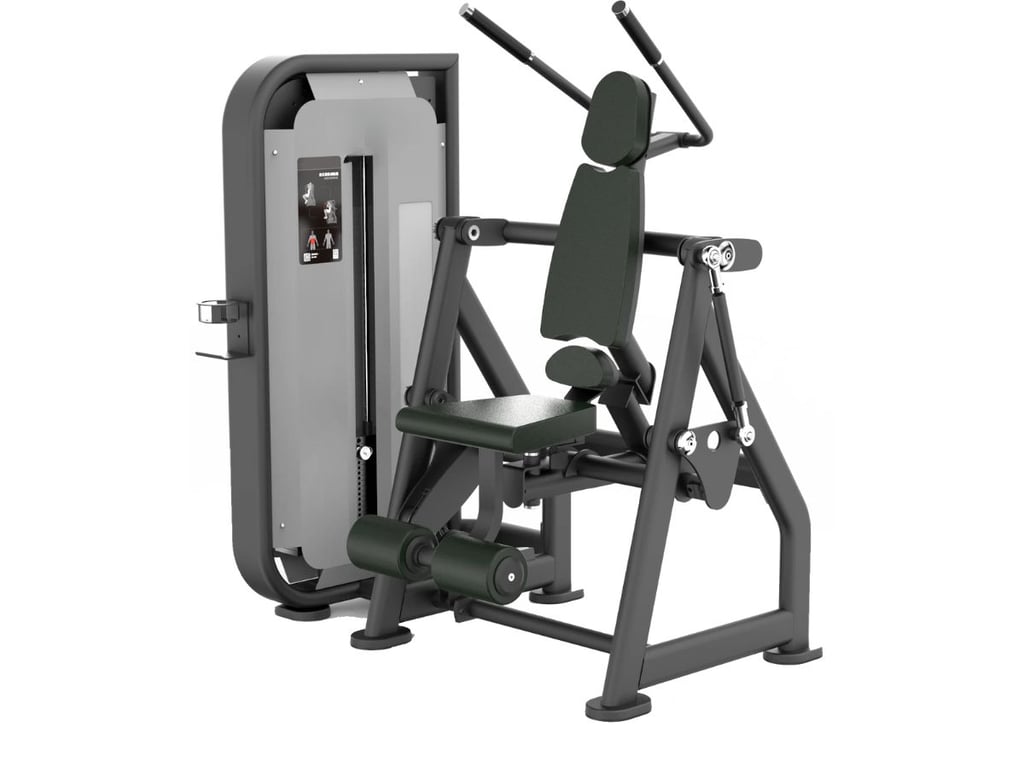
It's easy to dismiss the seated ab crunch machine as something meant only for newcomers. But sit down, set the resistance, and push through a few controlled reps—you'll feel your upper abs fire up in ways you didn't expect. This machine has earned its place in training facilities of all sizes for good reason: it's straightforward, safe, and effective.
If you're shopping for core equipment that appeals to a wide range of fitness levels, this is one to consider early.
How It Works
You take a seat, grip the handles, and perform a forward crunch against the resistance of a weight stack. The seat pad supports your lower back while the machine guides you through a controlled range of motion. The primary muscle at work here is the rectus abdominis—the front-facing muscle responsible for that defined core appearance.
Pros & Limitations
✓ Pros
Simple to learn and use
Safe for most fitness levels
Solid introduction to resistance-based core training
✗ Limitations
Fixed movement path limits range
Deep stabilizer muscles are not heavily engaged
May feel too basic for seasoned lifters
Beginner & Advanced Routines
Beginner
2 to 3 sets of 10 to 15 reps
Use light weight
Focus on controlled movement
Advanced
Increase resistance gradually
Slow down the lowering phase for extra burn
Superset with planks for a deeper challenge
Tips for Using It Effectively
Sit all the way back so your lower back stays firmly pressed against the pad. Hold the handles with a secure but relaxed grip. Move slowly—there's no benefit to rushing through reps with momentum. Exhale as you crunch forward and inhale on the return. Keep your eyes forward to protect your neck. If you feel tension in your lower back rather than your abs, stop and adjust your positioning.
Small corrections like these go a long way toward making each rep count and keeping things safe.
2. Vertical Knee Raise Station (Captain's Chair)
The Vertical Knee Raise—also known as the Captain's Chair—is one of those machines that looks manageable until you're actually on it. Raising your legs while your body is suspended demands real core engagement, particularly in the lower abs and hip flexors. It's compact, requires no weight plates, and delivers results that speak for themselves.
If your workout space is limited but you want serious lower ab activation, this station is worth every inch it occupies.

How It Works
You support your body on padded armrests with your back flat against the rear pad. Your legs hang freely. From that position, you raise your knees toward your chest—or lift straight legs for a greater challenge. The key is moving slowly and letting your abdominal muscles control the motion rather than relying on leg momentum.
Pros & Limitations
✓ Pros
No weights needed—purely bodyweight
Compact and space-efficient
Strong activation of the lower abdominals
✗ Limitations
Challenging for beginners with a weak core or grip
Form breaks down quickly if reps are rushed
Can strain the back without proper control
Beginner & Advanced Routines
Beginner
2 sets of 8 to 10 reps
Start with bent-knee raises (knee tucks)
Breathe steadily and move with control
Advanced
3 to 4 sets of straight-leg raises or toe-to-bar
Lower your legs slowly for extra tension
Superset with planks for full-core work
Tips for Using It Effectively
Engage your core muscles before every rep. Press your back firmly into the pad and avoid swinging your legs—let muscle do the work, not momentum. Exhale on the way up, inhale as you lower slowly. Controlled movement builds the kind of strength that shows over time.
3. Rotary Torso Machine
Most core routines focus on forward bending or leg raises—but what about rotation? The rotary torso machine fills that gap. It targets the obliques, those side-body muscles responsible for twisting, turning, and stabilizing your torso. If your core training has been feeling one-dimensional, this machine can change that.

How It Works
You sit down, position your arms or hands on the pads, and lock your hips into place. From there, you perform a controlled rotation of your upper body from side to side while your lower body stays still. The internal and external obliques drive the movement, and resistance comes from a weight stack so you can scale the difficulty up or down.
Pros & Limitations
✓ Pros
Excellent for isolating the side core muscles
Low-impact with a controlled range of motion
Works well for general fitness and sports training
✗ Limitations
Loses effectiveness when done too quickly
Over-rotating can strain the lower back
Not recommended for those with spinal or disc concerns
Beginner & Advanced Routines
Beginner
Light resistance
Rotate slowly to about 45° on each side
2 to 3 sets of 10 to 12 reps
Advanced
Full-range rotation with heavier load
3 to 4 sets of 12 to 15 reps
Superset with planks or dumbbell side bends
Tips for Using It Effectively
Lock your hips and legs firmly in place. The rotation should come entirely from your torso. Move slowly, avoid swinging, and concentrate on squeezing the obliques as you twist. Stay within your comfortable range—pushing too far can do more harm than good. When performed with focus, this machine delivers the kind of core strength you can actually feel during everyday movements.
4. Cable Ab Crunch Station
The cable ab crunch station is one of the most versatile core machines available. Unlike fixed-path equipment, it uses a cable and weight stack to provide constant tension throughout every rep. Whether you prefer kneeling or standing crunches, this machine adapts. The trick is learning to curl from the spine rather than pulling with the arms—once that clicks, every rep becomes noticeably more effective.

How It Works
A weight stack connects to a cable, and you perform a crunching motion against that resistance. There are two common setups: kneeling, where you hold the rope above your head, and standing, using a high pulley attachment. In both cases, the motion should come from your spine curling downward—not from your arms pulling down. The rectus abdominis is the primary target, and the adjustable weight lets you match the challenge to any strength level.
Pros & Limitations
✓ Pros
Customizable resistance and angle options
Consistent tension through the full range of motion
Can be used kneeling, standing, or sideways for rotation
✗ Limitations
Proper form is easy to get wrong
Some users rely on arms instead of abs
Often takes guidance or coaching to master
Beginner & Advanced Routines
Beginner
Start with kneeling cable crunches
2 to 3 sets of 10 to 12 reps
Keep it light and focus on form
Advanced
Increase resistance and slow the lowering phase
Try standing or rotational cable crunches
Superset with hanging knee raises
Tips for Using It Effectively
Focus on curling your spine like a wave instead of yanking the cable downward. Keep your elbows close to your body and brace your abs before every rep. Exhale as you crunch down and maintain tension in your core, not your arms. Once you learn to initiate the movement from your ribcage rather than your shoulders, the results follow quickly.
5. Roman Chair / Hyperextension Bench
The Roman chair often gets overlooked because people assume it's only for back exercises. That's a mistake. When used with proper technique, it's an excellent tool for core and posterior chain training. It strengthens the lower back, glutes, and—when adjusted correctly—the abs too. It's affordable, takes up minimal space, and works for everything from strength-focused sessions to rehabilitation programming.

How It Works
You position yourself face down with your hips supported on the pad and your heels locked behind the footrests. From there, you perform controlled spine extension and flexion using your own bodyweight as resistance. This targets the lower back, glutes, and core—especially when performed with tight, deliberate control.
Pros & Limitations
✓ Pros
Trains both the posterior chain and core
Low equipment cost
Great for improving posture and spinal strength
✗ Limitations
Easy to overextend the spine without guidance
Some users may be unsure about body positioning
Doesn't isolate the abs unless the movement is adjusted
Beginner & Advanced Routines
Beginner
Bodyweight only
2 to 3 sets of 10 reps
Lift only to a neutral spine—not beyond
Advanced
Hold a weight plate at your chest
Pause for 2 seconds at the top of each rep
Add reverse crunches for extra core work
Tips for Using It Effectively
Keep your spine neutral—don't over-arch at the top. Move slowly, engage your core throughout, and avoid lifting with your neck or throwing your chest upward. Breathe out as you lift and breathe in on the return. It may look unassuming, but the Roman chair delivers powerful results when used correctly, making it a smart addition for anyone focused on better core control and stronger overall movement.
6. Decline Sit-Up Bench (Adjustable Ab Bench)
The decline sit-up bench is a classic piece of equipment that has stood the test of time. It looks simple, but that's part of its appeal. Lying on an angled surface with your feet secured instantly increases resistance, turning even a basic crunch into something far more demanding. The adjustable incline lets you scale difficulty to match any fitness level—making it a practical choice for home gyms, hotel fitness areas, and budget-conscious setups alike.

How It Works
You lie back with your feet locked in and your upper body angled downward. This position uses gravity to increase the workload on your abdominals. A steeper decline means more resistance; a flatter angle makes it easier. The primary target is the rectus abdominis, though your hip flexors and obliques also engage depending on how you perform each rep.
Pros & Limitations
✓ Pros
Adjustable for all fitness levels
Budget-friendly and low maintenance
Great for home gyms, hotels, and small spaces
✗ Limitations
Can pressure the lower back if done too fast
Some users overuse hip flexors instead of abs
Harder to scale once bodyweight sit-ups become easy
Beginner & Advanced Routines
Beginner
Start at a low incline
2 sets of 10 to 12 crunches
Hands crossed over chest
Advanced
Hold a weight plate at your chest or overhead
Add twisting sit-ups for oblique work
3 sets of 12 to 15 reps with full range
Tips for Using It Effectively
Resist the urge to rush through reps just to finish a set. Slow, controlled movement is what delivers results. Exhale on the way up and avoid pulling on your neck. If the decline angle becomes too easy, increase incline or add resistance rather than simply doing more reps. This bench may be straightforward, but used right, it creates deep, lasting core engagement.
7. Hanging Leg Raise Station
The hanging leg raise station is arguably the most demanding ab machine on this list—and that's exactly why serious athletes love it. By suspending from a bar and raising your legs, you recruit deep lower abdominal fibers that other machines simply don't reach. It's a bodyweight exercise at its purest, requiring grip strength, core control, and discipline in every rep.
If you're ready to take core training to the next level, this is the machine that gets you there.

How It Works
You hang from a bar or grip handles overhead with your body fully extended. From that position, you raise your legs—either bent at the knee for an easier variation or straight for maximum challenge. The lower abs and hip flexors are the primary drivers, and the movement also demands significant grip endurance. The key is eliminating swing and letting your core muscles pull your legs upward.
Pros & Limitations
✓ Pros
Builds deep, functional core strength
Purely bodyweight—no plates required
Excellent for athletic and calisthenic training
✗ Limitations
Difficult for beginners with a weak core
Grip fatigue can limit set duration
Easy to rely on momentum rather than muscle
Beginner & Advanced Routines
Beginner
Band-assisted knee raises
2 sets of 6 to 8 reps
Focus on eliminating swing
Advanced
V-ups and windshield wipers
3 to 4 sets of 10 to 12 reps
Add ankle weights for extra resistance
Tips for Using It Effectively
Grip the bar firmly and stabilize your upper body before each set. Avoid kipping or swinging—every rep should be driven by your abdominal muscles. Exhale as you raise your legs and lower them slowly for maximum tension. If grip fatigue becomes a problem, use straps to extend your sets. This station rewards patience and control, and the results are worth the effort.
Conclusion
There's no single "best" ab machine—it all comes down to your goals, your space, and who's using it. Beginners might benefit most from the guided motion of a seated ab crunch machine or the adjustability of a decline bench. Intermediate and advanced users will find more challenge in the vertical knee raise, cable ab crunch station, or hanging leg raise.
For well-rounded core development, consider combining machines that target different areas—upper abs, lower abs, obliques, and the lower back. The rotary torso and Roman chair fill niches that other machines miss, making them valuable additions to any setup.
Whatever you choose, remember that proper form, controlled movement, and consistency matter more than which machine you're on. Pick the equipment that matches your needs, learn to use it well, and the results will follow.