

Everything coaches, parents, and athletes need to know — from youth leagues to collegiate play.
Choosing the right pitching mound height isn't just a rules requirement — it's one of the most important decisions you can make for a young pitcher's development, safety, and long-term performance. The wrong height at the wrong age can ingrain bad mechanics and even lead to injury. This guide walks you through every level of play, so you always set up your mound correctly.
The Mound Height Progression: Why It Makes Sense
Young pitchers don't throw from a full-height mound overnight — and for good reason. The progressive mound system is built around biomechanics and safe movement patterns. As a pitcher's body grows and strengthens, the increased incline teaches proper downhill mechanics that translate directly into velocity, control, and arm health. Skipping ahead in mound height before a player is ready creates compensations in their delivery that are notoriously hard to correct later on.
Think of it this way: the mound height guides the body like a training rail. Too flat and a young arm works against itself. Too steep and mechanics fall apart. The right height for the right age creates a natural, repeatable, and powerful delivery.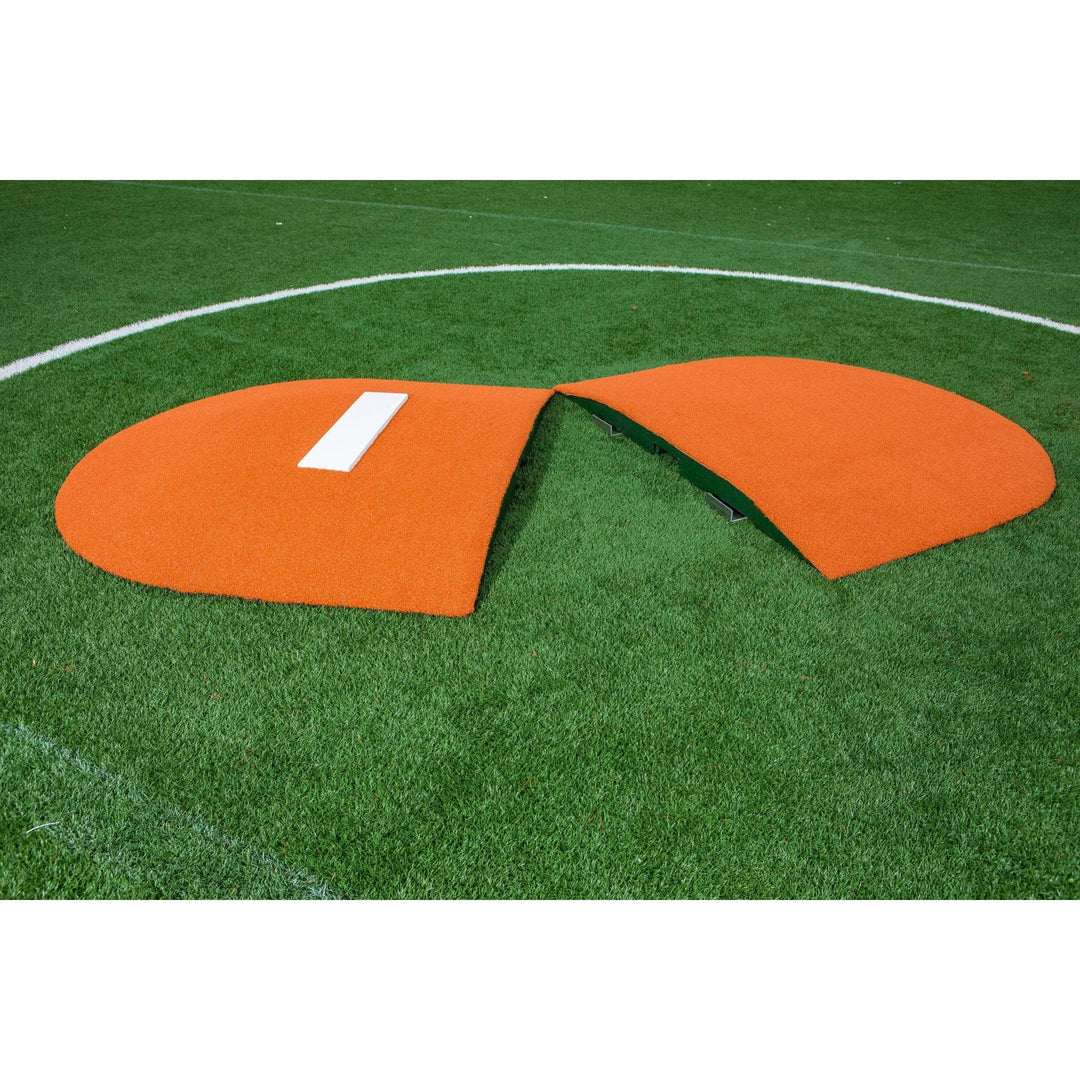
4-Inch Mounds: Starting Them Right
For the youngest players on the field, a 4-inch portable mound introduces the concept of throwing from an elevated surface without overwhelming small bodies. At this stage, the goal isn't mechanics refinement — it's fun, confidence, and getting comfortable on the mound. The gentle incline helps young arms develop a natural forward lean and body momentum without putting undue stress on developing shoulders.
If you're setting up a backyard practice area or a youth rec program for this age group, a portable 4-inch mound keeps sessions engaging and age-appropriate — and it often holds kids' attention far better than a flat concrete slab.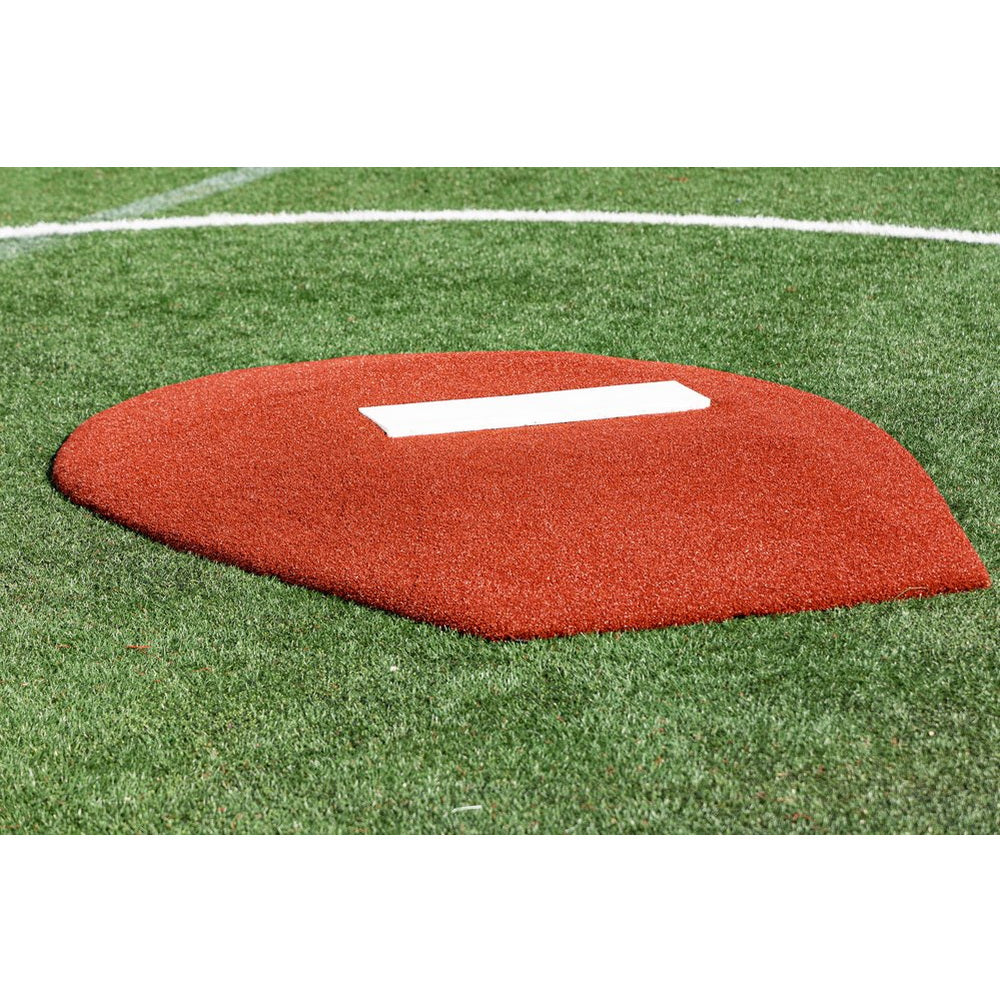
6-Inch Mounds: The Youth League Standard
The 6-inch mound is the most widely used height in youth baseball, and for good reason. It's the official standard for most Little League organizations and Babe Ruth leagues across the country. At this height, young pitchers begin to develop real downhill plane on their pitches, which builds arm speed naturally as muscles and coordination mature.
This is also the height where coaches can start meaningfully coaching mechanics — hip drive, stride length, arm path, and follow-through all become teachable and visible at a 6-inch incline. Many pitching coaches consider this the single most important developmental mound height in a pitcher's career.
8-Inch Mounds: The Transition Sweet Spot
The jump from 6 to 8 inches is where many pitchers really start to feel and understand what an elevated mound does for their delivery. At 8 inches, gravity assists hip rotation and creates a more dramatic push-off dynamic. Pitchers who have solid foundational mechanics at the 6-inch level quickly notice added velocity and sharper break on breaking balls when stepping onto an 8-inch surface.
This height bridges youth play and high school competition beautifully. It's common in competitive travel ball circuits and select middle school programs that prepare players for the next level. If your player is serious about continuing into high school ball, practicing on an 8-inch mound is a wise investment.
10-Inch Mounds: The Regulation Standard
Ten inches is the official regulation height for high school, collegiate, and professional baseball — and it demands full mechanical commitment. The steeper incline amplifies every element of a pitcher's delivery: hip rotation, stride extension, arm path, and follow-through. Strong mechanics produce velocity and control; weak mechanics get punished immediately. That's precisely why experienced pitching coaches love the 10-inch mound as a teaching tool.
For serious pitchers preparing for high school tryouts or beyond, training consistently on a 10-inch portable mound is non-negotiable. It builds the muscle memory and neuromuscular patterns required to compete at the highest amateur and professional levels.
Game Mounds vs. Practice Mounds: What's the Difference?
Not all mounds are created equal — and understanding the difference between a game mound and a practice mound can save you a significant amount of money and frustration.
Built to last through an entire season of heavy use.
Typically measure 150 feet or more in circumference with a regulation flat landing area.
Weather-resistant, UV-stable materials built for outdoor permanence.
Often include anchor panels and a protective cover for year-round use.
Lightweight — typically under 100 lbs for easy transport.
Softer turf surfaces that are gentler on footwear and home surfaces.
May have slightly smaller footprints for use in garages, gyms, or yards.
More affordable entry point for individual and backyard training.
The smartest approach is to invest in a quality practice mound that mirrors the dimensions of the game mound your pitcher will compete on — same height, similar surface feel. Inconsistency between practice and game mounds leads to mechanical drift over a season.
Indoor vs. Outdoor Mounds: Key Differences
Planning to train indoors? There are a handful of important distinctions to keep in mind when selecting a mound for an enclosed facility versus an outdoor setting.
Indoor Mound Must-Haves
Look for non-marking rubber base materials, a lightweight and portable design, and easy transport handles. Indoor mounds should have a smaller footprint and no anchor points that could damage gym flooring. Avoid mounds with metal hardware that can scratch or gouge interior surfaces.
Outdoor mounds need to be built tougher. UV-stabilized turf that won't fade or crack through seasons of sun exposure, weather-resistant base materials, and drainage-friendly designs are all worth prioritizing. If your mound will live outside year-round, a heavy-duty cover is an excellent protective investment.
Making the Final Call: Which Height Is Right for You?
Here's a straightforward summary based on age and ability:
- Ages 5–8: Start with a 4-inch mound to introduce proper mechanics without overwhelming arm strength or coordination.
- Ages 7–12: Move to a 6-inch mound — the Little League standard — to begin focusing on real pitching mechanics and ball plane.
- Ages 11–14: Transition to 8 inches. This is the perfect bridge between youth and high school competition, ideal for developing arm strength and pitch variety.
- Ages 14 and up: Regulation 10-inch mounds are the training ground for high school, collegiate, and professional play. No compromise here.
If you're unsure where your pitcher fits, we always recommend choosing the mound height that aligns with their current league rather than jumping ahead. Mechanics built at the right height are the foundation everything else is built on.
Portable Mound Maintenance: The $200 Lesson Learned the Hard Way
Portable mounds are a serious investment — and like any piece of quality equipment, they reward a little ongoing care with years of dependable performance. The number one mistake we see buyers make is neglecting basic maintenance after purchase, which dramatically shortens the mound's usable life.
Keep your mound's turf surface clean and free of debris after every session. Store it out of direct sunlight when not in use, or invest in a quality cover if it lives outside. Inspect the base and surface annually for any signs of wear or separation. A few minutes of care after each practice can add years to your mound's lifespan — and protect the hundreds of dollars you invested in quality.
Ready to Set Up the Perfect Mound?
Whether you're building a backyard practice setup or equipping a full program, the right portable mound makes a measurable difference. Explore our top-rated option for youth and Little League play below.