

If you remember your very first time smoking meat, chances are it did not go exactly as planned. You probably had no clue how to manage your temperature, and when the meat's internal heat suddenly stopped climbing, you panicked. You sat there adjusting vents, tossing in more charcoal, and staring at the thermometer in disbelief — all while everyone inside was getting hungrier by the minute.
If you have spent any amount of time with a smoker, you have almost certainly run into this phenomenon before. It is called the stall — sometimes referred to as the plateau or the zone. But what exactly is it? What triggers it? And most importantly, how do you push through it or avoid it entirely? Let us break it all down.
What Exactly Is the Stall?
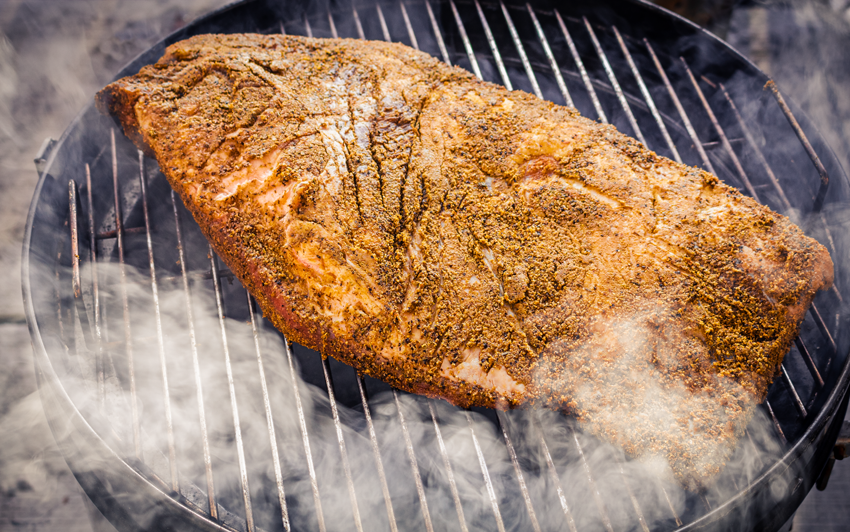
The stall, plateau, or zone kicks in when you are smoking or slow-cooking larger cuts of meat over an extended period. It happens when the internal temperature of the meat climbs to somewhere around 150°F to 170°F — and then just stops rising. It can stay stuck at that temperature for hours, testing the patience of even experienced pitmasters.
A fellow barbecue enthusiast once shared a story about a pork dinner he had planned with friends. He had done the same cook several times before without any issues. But on this particular occasion, after wrapping the pork at 160°F, he hit an enormous stall. It took more than three and a half hours longer than expected. He eventually gave in and cranked the heat — something no pitmaster enjoys doing. By 9:30 in the evening, dinner was served. It had not rested at all, but it was still delicious.
What Causes the Stall?
The stall is driven by the evaporation of moisture from the surface of the meat. Think of it as the same principle behind sweating — when you are exercising hard, your body sweats to cool itself down. The meat does the same thing. As the heating rate of the meat matches the cooling rate caused by evaporation, the temperature flatlines and refuses to budge. It can feel incredibly frustrating.
So does this mean the meat dries out completely and becomes a tough, flavorless hunk? Not at all. There is only a limited amount of free surface moisture that gets consumed during the stall. The rest of the moisture — the good stuff — is locked away in the collagen, fat, and protein. That moisture is what eventually creates the tender, melt-in-your-mouth texture you are chasing. Once the surface moisture is spent, the internal temperature begins climbing again.
“The stall is not your enemy — it is simply science at work. The moisture locked in collagen, fat, and protein is what creates that incredible, succulent texture once the temperature starts climbing again.”
Factors That Affect the Stall
A number of variables can influence the stall — for better or worse. The two biggest culprits are airflow and humidity.
Weather plays a surprisingly large role. One pitmaster shared a story about planning an overnight smoke on a 10-pound brisket. The day was mildly overcast, not too warm, not too cold, and there was virtually no humidity or wind. The result? No stall at all. The brisket should have been ready by 4 a.m., but it was done even earlier. He wrapped it up, rested it in a cooler until morning, and it came out beautifully. The weather, the density of the charcoal, the cut of the meat, and the airflow in your smoker can all make a surprising difference.
Airflow
The more airflow inside your smoker, the lower the temperature at which the stall tends to occur. In a smoker with strong airflow, you might see the stall begin around 150°F, whereas in a sealed, insulated unit, it might not hit until closer to 170°F. This effect is especially noticeable in wood and bullet-style smokers that have multiple ports, vents, and openings. It does not make those smokers worse — it is just something to be aware of when using them.
Moisture
Moisture is tricky. It comes from the meat itself, the humidity in the air, and any additional moisture you introduce through basting, mop sauces, sprays, or a water pan. Adding moisture is a double-edged blade — it can help when conditions are dry, but it may also lengthen the stall in humid conditions.
Using a water pan is a smart move in most smoking situations. The liquid evaporates and raises the humidity inside the cooking chamber, which slows the evaporation process on the meat's surface. This allows the interior temperature to gradually catch up with the exterior. It also encourages the smoke to stick to the surface, giving you a richer, more developed smoke flavor.
Basting, mopping, spritzing, and using a water pan all have an impact on the length of your cook. Cool liquid and vapor landing on the meat's surface actually help create the conditions that trigger the stall in the first place. That does not mean you should avoid these techniques — it just means you should use at least one of them strategically to make sure there is enough moisture available to keep the smoker temperature steady, support good flavor development, and allow the collagen and fat to render properly.
Featured Product
Keep the Wind Out. Keep the Heat In.
Protect your flame from unpredictable gusts with a premium stainless steel wind guard — purpose-built for serious outdoor cooking.
Tagwood BBQ Wind Guard | BBQ51SSHow to Get Past or Avoid the Stall
That’s a Wrap
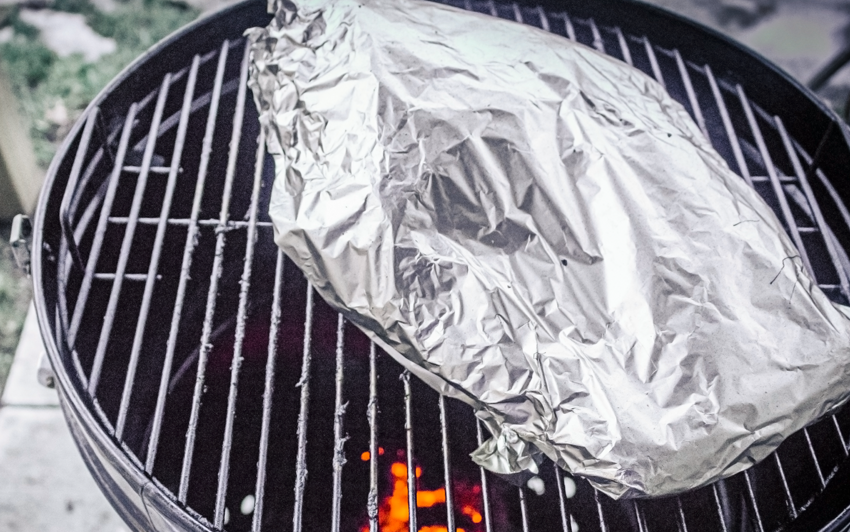
One of the most popular methods for beating the stall is wrapping your meat in foil. This approach is widely known as the Texas Crutch. By adding a splash of liquid — juice, wine, beer, watered-down sauce — and sealing the meat tightly in foil, you create a mini steam environment with nearly one hundred percent humidity. This effectively braises the meat during the second half of the smoke. If you take this route to bypass the stall, just remember to finish cooking to your target internal temperature as specified by the recipe, because unwrapping too early will let evaporative cooling slow things right back down.
Now, many pitmasters are probably thinking: what about the bark? And that is a valid concern. If you prefer a bark that is dry and crispy, foil may not be the best option for you. Some people use butcher paper instead, which still helps push through the stall but allows more moisture to escape so the bark does not get soggy. Just remember that butcher paper does not create as tight a seal, so the coating may still soften somewhat. You can also re-crisp the bark at the end by hitting it with a burst of dry, high heat right before slicing.
Turn It Up
If the idea of soggy bark is not for you, there is another option: raise the temperature of your grill and power through the stall with sheer heat. As we discussed, evaporative cooling is what keeps the meat's internal temperature stuck. By increasing your cook temperature, you are essentially using more thermal energy to overpower the evaporation. This will not prevent the stall, but it will shorten the amount of time you spend stuck in it.
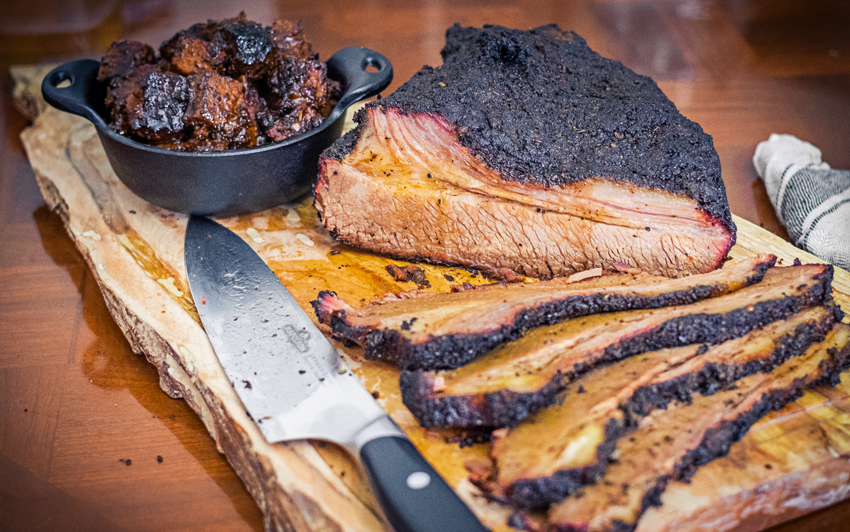
The trade-off with this technique is that at lower temperatures, the heating and evaporative cooling rates tend to balance each other out nicely. Push the heat too high, and you risk rendering the fat and connective tissue too quickly, which can make the meat tough. Bumping your smoker from around 225°F to 275°F until the meat is finished can help you power through the stall and can be quite effective on pork shoulders. Brisket, however, does not always respond as well to this approach.
For briskets specifically, you can separate the point from the flat before smoking and rub them both thoroughly. Then smoke them at the same time while monitoring their temperatures individually. This gives you the flexibility to wrap the flat or not. The benefit is that the point will develop a deep, beautiful bark along with a well-defined smoke ring — perfect for burnt ends.
Just Don’t Look
Finally, you can simply set your smoker up for the long haul with a water pan and let it ride. Many experienced pitmasters use the no-peek method and let the smoke do its work alongside the stall — and yes, sometimes even a second stall. Set your smoker up, close the lid, and only intervene to add more water to the pan, more charcoal or wood to the basket as needed. Using a wireless digital thermometer allows you to keep tabs on both the grill temperature and the meat's internal temperature without ever lifting the lid.
Happy Grilling!
Share your stall stories and smoking victories with us — we love hearing how fellow backyard pitmasters conquer the cook.