

 If hardscaping is a recurring part of your work or weekend projects, having the right gear in your corner makes all the difference between a job that lasts and one that fails the first winter. In this guide, we'll walk through the most important factors to weigh before investing in a plate compactor, including the different types available, how they perform, and what to expect from your project.
An Introduction to Plate Compactors & Compaction Equipment
Understanding Plate Compactors
What Is a Plate Compactor?
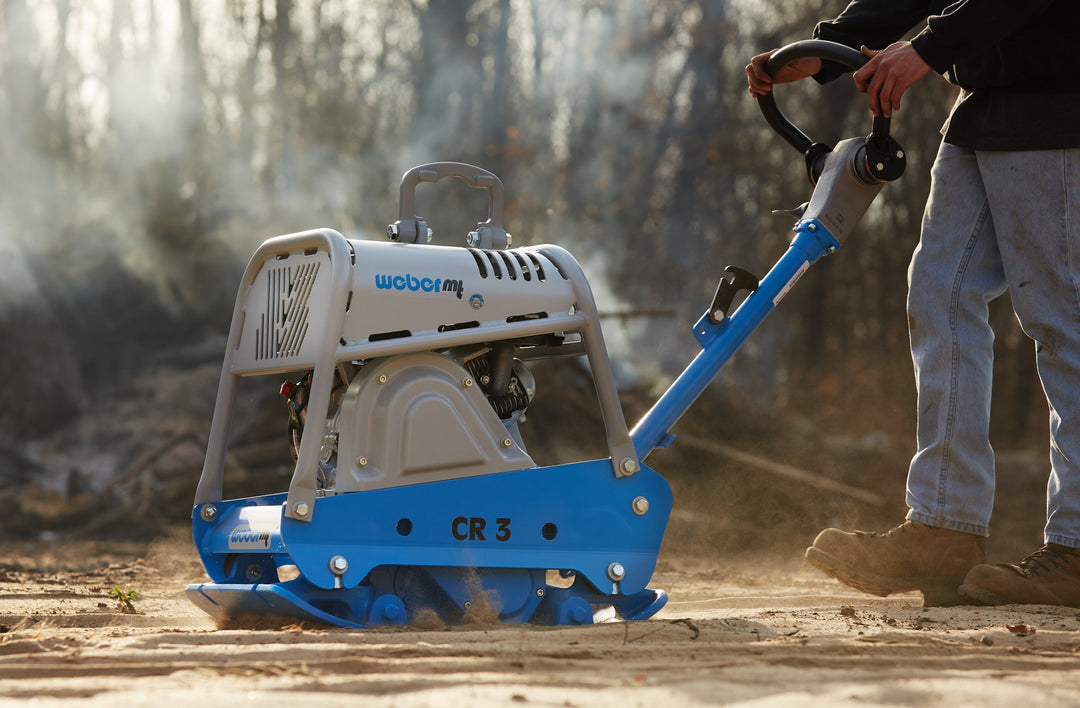
At its core, a plate compactor is a machine that drives downward force into the ground or a prepared surface through a vibrating steel plate. The combination of rapid vibration and the weight of the plate striking the surface pushes soil particles closer together, eliminates air pockets, and leaves behind a dense, compacted base — the kind of foundation that keeps pavers, slabs, and other hardscape elements locked in place for years.
The Four Main Types of Plate Compactors
There are four core categories of plate compactors, and each one serves a different purpose:
Rolling Plate Compactors
Built to operate directly on top of finished pavers, these compactors lock joint sand and bedding material into place without cracking or scratching the surface.
Forward Plate Compactors
The lightest option in the lineup and a great all-rounder for dirt, gravel, asphalt, or pavers. They produce 2,000–5,000 CF/lbs of centrifugal force and only move forward as they work, ensuring even compaction.
Reversible Plate Compactors
By delivering force in both directions, reversible models are easier to maneuver, faster to position, and ideal for tight spaces where backing up is part of the routine.
Heavy-Duty / High-Performance Compactors
Engineered with larger plates and deep compaction force, these workhorses are the answer when you need to compact soil down several inches — perfect for large excavation, prep work, and demanding commercial sites.
 Key Factors to Consider Before Buying
Compaction Force
As we touched on earlier, the effectiveness of any plate compactor comes down to two key elements: the frequency of the vibration and the amplitude (the height of the strike). Higher amplitude, faster frequency, and a heavier machine all translate into deeper, more effective compaction. The trick is matching the compaction force to what your project actually requires — overpowering a small patio job is just as wasteful as underpowering a driveway.
Plate Size and Shape
The size of the plate has a direct effect on both efficiency and maneuverability. Larger plates cover more ground per pass, which is great for open areas, and they tend to perform better on dense materials like clay or silt. Smaller plates, on the other hand, give you precision in tight spots. Pick the plate that matches the scale of your typical project.
Engine Type
Most plate compactors run on either gas or diesel. Diesel engines tend to deliver more torque and longer life under heavy use, but they require more maintenance and a bigger upfront investment. Gas engines are easier to find, easier to service, and ideal for daily users who want a no-fuss machine — they may just need attention more often and aren't built to last quite as long.
Maneuverability and Weight
Bigger isn't always better. A massive compactor can sound like overkill insurance, but if it's too heavy for the surface you're working on, it can actually crack pavers, push aside fresh asphalt, or damage what you're trying to set. Match the weight of the machine to the job — and don't forget to think about how you'll load, transport, and move it around the site.
Durability and Build Quality
Several construction details determine whether your compactor will hold up over the years. Look for reinforced plastic panels, thicker steel plates, robust welds, and well-built handles. Water tanks for asphalt work, foldable handles for transport, and reversible plate options are all worth weighing depending on how you'll use the machine.
Understanding Your Project Needs
To zero in on the right plate compactor, take an honest look at the scope of what you actually do. This usually comes down to a few key questions:
- Do you work mostly on residential or commercial projects?
- What is the typical size of your jobs and the type of surface you're compacting?
- How often will you use the compactor — daily, weekly, monthly, or just a few times a year?
- Does it make more sense to own a machine, or to rent the right size when the job calls for it?
- How portable does it need to be? Will you transport it in a truck, trailer, or simply roll it onto and off the worksite?
When you have answers to these questions, finding the right compactor becomes far less overwhelming — and far more strategic.
Our Top Plate Compactor Recommendations
Rolling Plate Compactor
For delicate slab and paver work, a rolling plate compactor is your best bet. These machines vibrate slabs and porcelain pavers into their bedding material gently — no excessive force, no cracking, no surface damage. Perfect for large pavers and finished hardscapes.
Light-Duty Plate Compactor
For light-duty work — like building a small walkway, patio, or backyard pathway — a 14-inch plate compactor creates the perfect base. Look for a model that doesn't lift more than 1 lb per strike, which keeps things smooth and prevents damage on smaller, more delicate projects.
Medium-Duty Plate Compactor
If your work includes walkways and patios that fall in the medium-sized range, this is where efficiency really pays off. A solid medium-duty compactor will give you the ability to lay a paver pad and compact directly on top of pavers without missing a beat.
Heavy-Duty Plate Compactor
For driveways, large patios, and bigger excavation projects, a heavy-duty compactor with a wider plate delivers stronger results, better compaction depth, and dramatically reduced time. When the area is too compacted to the necessary depth in a single pass with smaller machines, this is the category that earns its keep.
Rammers
For tight quarters where a plate just won't fit — trenches, narrow utility cuts, repairs, and footings — a rammer is the right tool for the job. Rammers deliver deep, powerful compaction in a narrow footprint, making them essential for any contractor working in confined spaces.
 Finding the Right Compactor for Your Project
Built for the Job. Made to Last.
Choosing a plate compactor comes down to knowing the type of compactor you need, the force it delivers, the plate size and shape, the engine fueling it, the machine's maneuverability and weight, and the durability of its build. Investing in quality compaction equipment means better results on every project, fewer headaches mid-job, and longer machine life overall. Plenty of well-built options are out there — and we've gathered some of the best in our collection so you can spend less time hunting and more time working.
Our Top Pick: Stark USA 6.5HP Plate Compactor
If you're looking for a powerhouse that checks every box — gas-powered, 196cc engine, 4,000 lbs of compaction force, and a built-in water tank for asphalt work — this is the machine that delivers the kind of results contractors rely on. Built tough, easy to handle, and ready to tackle everything from driveways to backyard patios.
Shop the Stark USA 6.5HP Compactor