

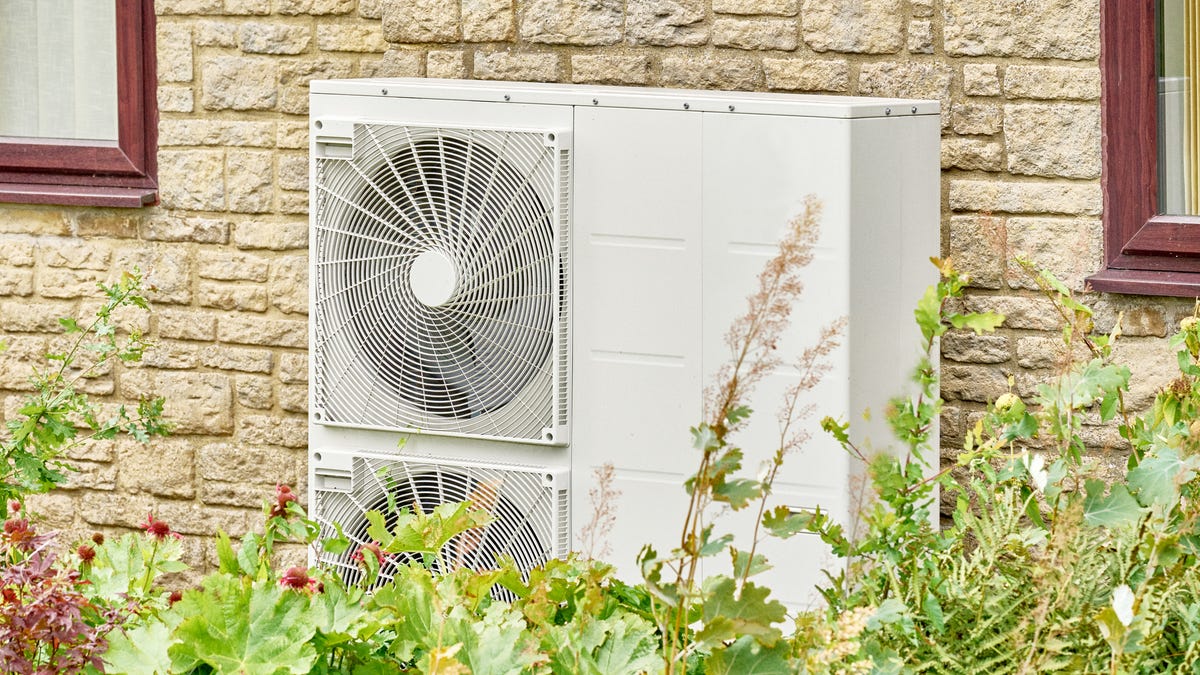
During the summer months, your home's cooling system works overtime. And come winter, a reliable heating source becomes essential. While many homeowners stick to traditional air conditioning units and furnaces, a heat pump offers an all-in-one solution that handles both heating and cooling with remarkable efficiency.
Heat pumps have become a preferred choice for energy-conscious homeowners everywhere. They can cut your energy consumption by as much as 50% compared to conventional electric heating systems, according to the U.S. Department of Energy. With rising electricity costs and increased focus on sustainable living, investing in the right heat pump is more relevant than ever. But here's the crucial part — selecting the correct size for your specific home.
🌿 A properly sized heat pump doesn't just keep you comfortable — it reduces energy waste, lowers your utility bills, and extends the life of your system.
Why Finding the Right Size Heat Pump Matters
It might seem like the size of your heat pump is a minor detail, but it's actually one of the most important factors in home comfort. Choosing a unit that is too small means the system will struggle to maintain a comfortable temperature. It runs constantly, wears down faster, and your energy bills climb higher than they should.
On the flip side, installing a heat pump that's too large creates its own set of problems. An oversized unit will cycle on and off too frequently, producing more energy than your home actually needs. This short-cycling wastes electricity, creates uneven temperatures throughout your rooms, and places unnecessary strain on the equipment — ultimately shortening its lifespan.
The goal is to find that sweet spot where the heat pump matches your home's exact needs — not too much, not too little, but just right.
How to Determine the Right Heat Pump Size
There are a few proven approaches to calculating the ideal heat pump size for your property. The two most widely used methods are the Manual J calculation and the square footage method. Both are valuable, and understanding each one will help you make a well-informed decision.
Method 1: Manual J Calculation
The Manual J calculation is considered the gold standard in the HVAC industry. Developed by the Air Conditioning Contractors of America (ACCA), this method takes a comprehensive look at your home to determine the precise heating and cooling load. It accounts for a wide range of factors including:
Your local climate and how many days of heating or cooling your region requires each year; the total square footage and layout of your home; the amount and quality of insulation in walls, floors, and ceilings; the number, size, and orientation of windows and doors; your home's air infiltration rate; the insulation quality present in your space; how many people live in the household; your preferred indoor temperature settings; and any heat-generating appliances you regularly use.
This method gives the most accurate sizing recommendation because it considers virtually every variable that affects your home's heating and cooling demands.
Method 2: Square Footage Estimate
If you want a quicker ballpark figure, the square footage method is a practical starting point. While it doesn't capture every nuance the way a Manual J does, it provides a solid general guideline that many homeowners and HVAC professionals use.
The basic rule of thumb is straightforward: for every 500 square feet of living space, your home will need approximately one ton of air conditioning capacity. Here are some common guidelines to help you estimate:
| Home Size (sq ft) | Heat Pump Size (Tons) | Approx. BTUs |
|---|---|---|
| 500 sq ft | 1 Ton | 12,000 BTU |
| 1,000 sq ft | 2 Tons | 24,000 BTU |
| 1,500 sq ft | 3 Tons | 36,000 BTU |
| 2,000 sq ft | 4 Tons | 48,000 BTU |
| 2,500 sq ft | 5 Tons | 60,000 BTU |
| 3,000 sq ft | 6 Tons | 72,000 BTU |
It's also helpful to understand what BTUs are in this context. BTU stands for British Thermal Unit, and it measures the amount of energy your heat pump uses to either heat or cool your home. The higher the BTU rating, the more powerful the system. Knowing your required BTU output is essential when comparing different models and brands.
Featured Product
Find the Right Heat Pump for Your Home
A 2.5-ton split system with 14 SEER efficiency — ideal for homes around 1,250 square feet seeking reliable year-round comfort.
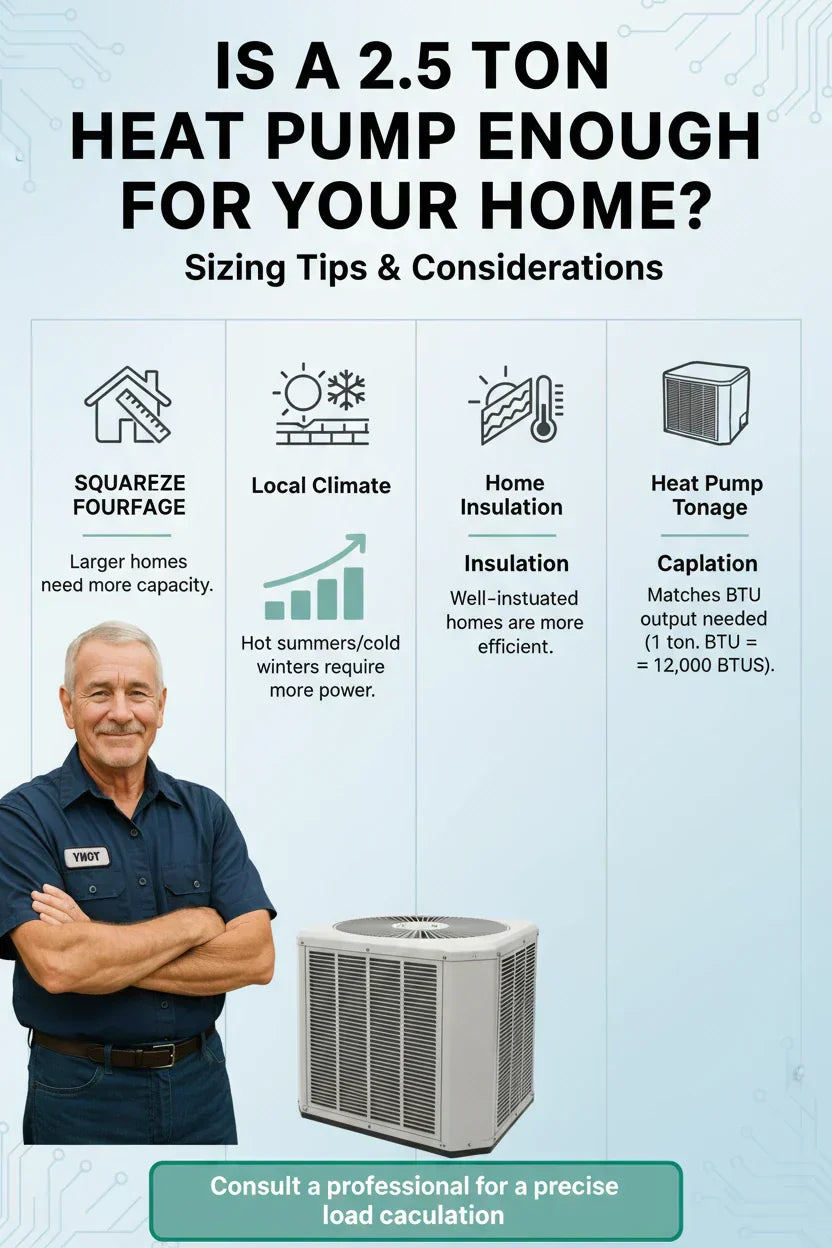
Your Heat Pump Sizing Quick-Reference
Once you've identified your home's approximate square footage, the chart below provides a straightforward reference for matching your space to the correct heat pump capacity. Remember, these are general guidelines — factors like ceiling height, insulation quality, local climate, and the number of windows can all shift your actual requirements slightly.
1.5T
Up to 800 sq ft
~18,000 BTU
2T
800–1,200 sq ft
~24,000 BTU
2.5T
1,200–1,500 sq ft
~30,000 BTU
3T
1,500–1,800 sq ft
~36,000 BTU
4T
1,800–2,400 sq ft
~48,000 BTU
5T
2,400–3,000 sq ft
~60,000 BTU
Other Factors That Influence Your Decision
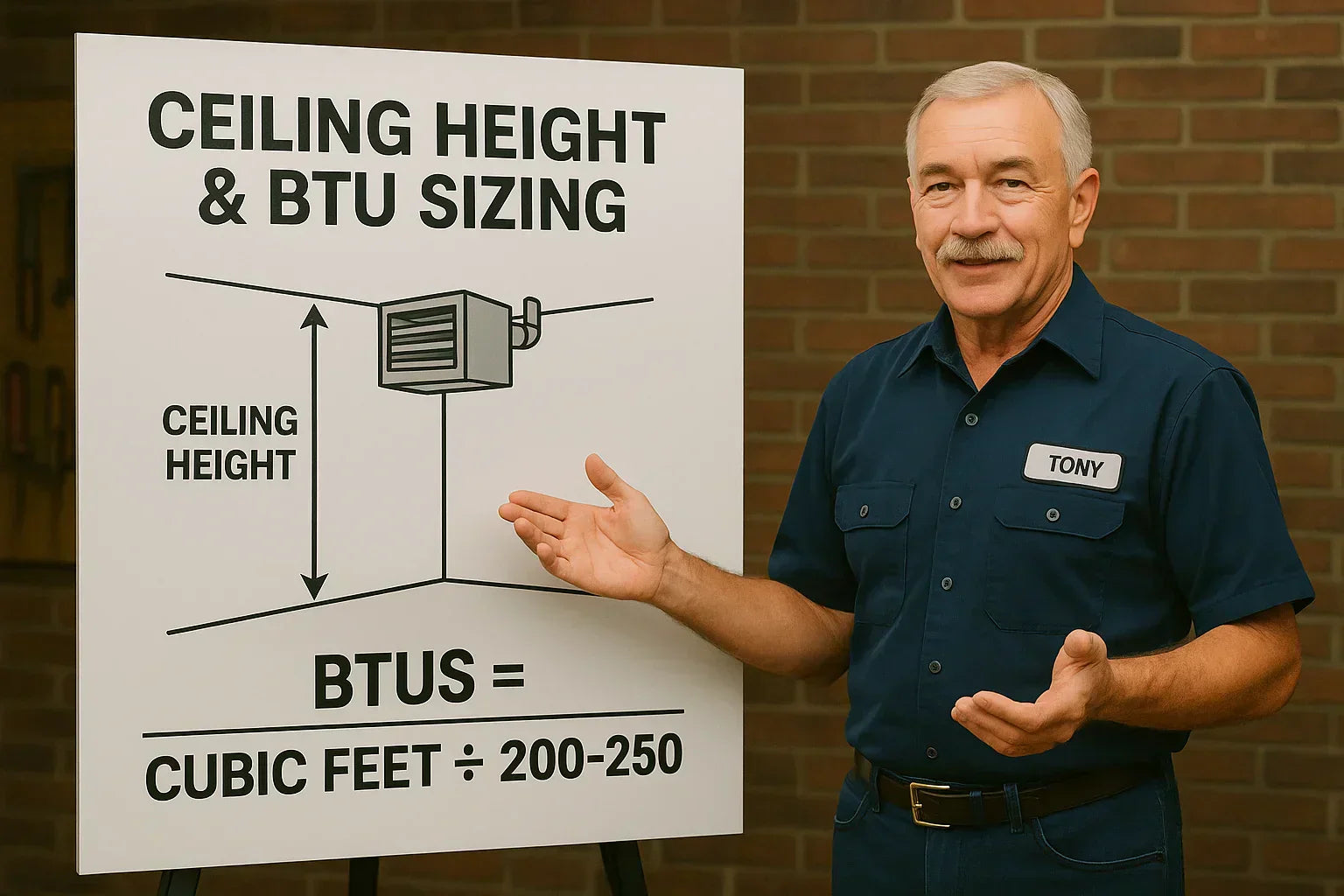
Square footage is an excellent starting point, but a few additional variables can shift the equation. If your home has high ceilings (above 8 feet), your heat pump may need to work harder to condition the extra volume of air. Homes with large, sun-facing windows absorb more heat during the summer, potentially increasing your cooling demand. Poor insulation or older construction may also require a slightly larger unit to compensate for energy loss.
Your geographical location plays a significant role as well. Homes in warmer climates like the southern United States may lean more heavily on cooling capacity, while homes in northern regions need to prioritize heating performance. The number of occupants matters too — more people generate more body heat, which adds to the cooling load in summer months.
Finally, consider the efficiency rating of the unit you're evaluating. Heat pumps are rated by SEER (Seasonal Energy Efficiency Ratio) for cooling and HSPF (Heating Seasonal Performance Factor) for heating. Higher ratings indicate better efficiency, meaning the system uses less energy to produce the same amount of heating or cooling. A 14 SEER unit, for example, provides a solid balance between performance and affordability for most residential applications.
The Bottom Line
Selecting the right heat pump size for your home is one of the most impactful decisions you can make when it comes to energy efficiency and year-round comfort. Whether you use the detailed Manual J approach or a simple square footage estimate, the key takeaway is this: match the unit to your home's specific needs.
An undersized system will leave you uncomfortable and drain your wallet through excessive energy use. An oversized system wastes electricity and shortens the equipment's lifespan through constant cycling. The right-sized heat pump, however, delivers consistent comfort, lower energy bills, and years of dependable service.
Once you've determined the approximate tonnage your home requires, you can begin shopping with confidence. Look for reputable brands, consider SEER and HSPF ratings, and don't hesitate to consult with an HVAC professional for a more precise assessment. Your home's comfort — and your budget — will thank you.
Ready to Upgrade Your Home Comfort?
Explore our selection of high-efficiency heat pump systems designed for reliable performance season after season.
Armstrong Air 2.5T Heat Pump — 14 SEER