

A couple of months back I got lucky and managed to swing a leg over a brand new Forbidden Dreadnought, the latest release from Canadian brand Forbidden. The most obvious thing that jumps out the moment you see it is the high pivot point. I had heard of high pivots on bikes before, but I genuinely had no clue why they existed or whether they actually brought anything useful to the table. Eight weeks of proper riding later, I think I finally get it — and I am ready to share what I have learned.
On a traditional mountain bike, the main suspension pivot sits somewhere near the top of the chainring at the front of the frame. A high-pivot bike shifts that pivot point well above the chainring, and that single change unlocks a completely different ride feel.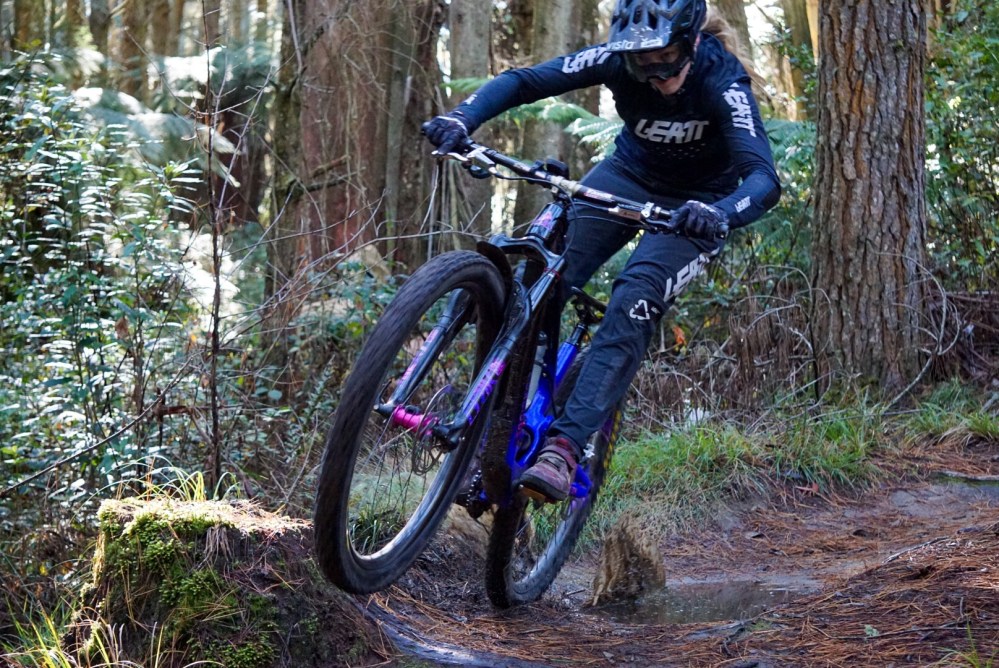
It Isn't Actually a New Idea
High pivots have been around on mountain bikes as far back as the year 2000. Over the years the concept has been tried on frames from Trek, Honda, Ghost and Zerode. More recently, the Commencal Supreme took over 2018 downhill World Cup podiums beneath Amaury Pierron and Myriam Nicole, and Norco followed up by launching their Aurum HSP downhill rig off the back of that success. For a long time though, high pivots were pretty much reserved for downhill race bikes and the occasional custom build.
So What Has Changed?
High-pivot bikes carry a bit of a reputation — people assume they will feel draggy and resistant when you pedal, which is why you wouldn't normally consider the layout for a trail bike. The high pivot also needs room on the frame that used to be taken up by the front derailleur and multiple chainrings. Thankfully, modern drivetrains have fixed that. With wide-range cassettes and beefier rear derailleurs, riders now run a single chainring, which frees up frame space for the pivot and an idler pulley. Wider boost hub spacing has also helped by stiffening up the rear triangle, meaning longer chainstays and a high pivot no longer flex where they shouldn't. The result? More and more brands are looking at high pivots for their enduro and trail platforms. Norco already has the Range HSP, and Devinci has a high-pivot Spartan on the way.
What Does Moving the Pivot Actually Do?
On a conventional bike, when the suspension compresses the rear wheel moves upward and forward, toward the seat tube. That shortens the wheelbase mid-impact, and a shorter wheelbase means a less stable bike at speed.
 A high-pivot design creates an axle path that much more closely mirrors the travel path of the fork. Instead of the rear wheel swinging forward into the bike, it moves up and backwards, away from the rest of the frame. That keeps momentum moving — there is more time for the wheel to roll over whatever is in front of it, so the bigger the hit, the further back the wheel floats, and the more stable the bike stays underneath you.
The suspension also behaves differently through the shock. The rearward axle path gives more leverage on the shock than normal forces acting on the rider would, which makes the back end feel notably softer and more supple over chunk and chatter.
The Advantages
While the suspension goes to work on rough trail, a traditional low-pivot bike will shorten as it compresses through a corner, throwing your weight rearward. That unweights the front tire and you lose grip exactly when you need it. A high-pivot bike does the opposite — it lengthens under compression, keeping your body weight centred over the bike and maintaining traction where it matters.
And the Disadvantages?
The classic complaint about high pivots has always been pedal kickback. As the bike compresses and the wheelbase extends, the chain gets pulled, and that pull would normally rotate the cranks backwards through your feet. The fix is to route the chain up and over an idler pulley sitting above the crank, and that setup effectively cancels out the kickback feel. The trade-off is chain length — a size Medium Dreadnought runs 128 links, which is about two links longer than a standard drivetrain, so you'll burn through two chains when you first build the bike up. Some riders worry that the extra idler pulley adds drag, but in practice it feels no worse than riding with mildly muddy tyres.
My Take
All the theory and tech talk aside, what really matters is how the thing rides. I'll be honest — I was a bit nervous switching over to a high-pivot bike. I half expected it to feel like steering a boat with a huge turning circle, and at very slow speeds there is a hint of drag. But once you get the bike up to pace, it absolutely comes alive. It took a couple of weeks of proper riding to get used to the extending wheelbase under compression, but the stability that comes with it is genuinely noticeable. With a little confidence and slightly earlier brake points, you can push into corners and rail through with more speed without losing grip. One thing worth noting — your body weight stays more centred on the bike, so you won't find yourself thrown off the back as easily in steep terrain. I have ended up running my bars a touch higher than I used to as a result.
The real standout is how well this bike carries speed through the roughest trail sections. I am currently running the Fox Float X2 shock at around 32% sag, and the ramp-up through the travel feels spot on. Even with a relatively short 154mm of rear travel on what is a seriously aggressive enduro bike, I have struggled to bottom it out.
Where It Shines
- Stable through rough, high-speed terrain
- Maintains traction in corners under compression
- Supple small-bump feel
- Hard to bottom out, even at shorter travel
Worth Knowing
- Slight drag feel at very low speeds
- Needs two chains to build initially
- Less playful for wheelies and manuals
- Asks for a short adjustment period
As you might guess, a high-pivot bike is a little less poppy and playful than the average trail rig, so you wouldn't pick one up as an all-out jibbing weapon. I have heard complaints that the longer chainstay makes manuals and wheelies tricky — and I am terrible at wheelies to begin with, but even at 5'7" I can find the balance point on the Dreadnought. Anyone with decent wheelie skills will adapt to the new balance point and still keep things lively.
It might have taken a couple of weeks to rewire my riding to suit a high-pivot layout, but once I committed to letting off the brakes a touch and letting the bike do what it does best, it transformed my time on trail. I have never had as many laps of the downhill tracks on a single crown fork before — and I can absolutely see why so many enduro bikes are heading in the high-pivot direction.
Looking for a Proven Trail & Enduro Ride?
If high-pivot tech isn't on your shortlist just yet, a modern full-carbon enduro hardtail-killer like the GT Force Carbon Elite is a brilliant place to start — aggressive geometry, carbon frame, and ready to charge.
Shop GT Force Carbon Elite 29Ride More. Worry Less.
Whether you're chasing stability in the rough or simply hunting for your next trail weapon, Backyard Provider has the gear to back your ride.