

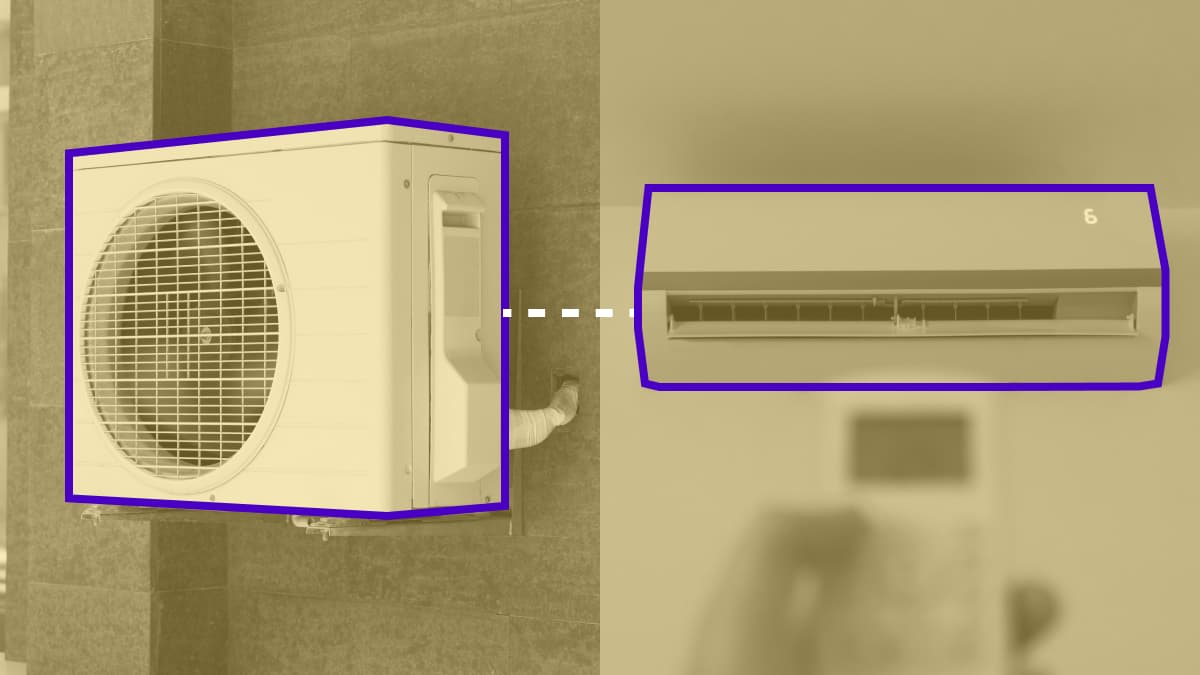
Meet the Mini-Split
Traditional ducted heat pumps rely on your home's existing ductwork — or brand-new ducts if needed — to distribute heated or cooled air across every room. But what happens when your home doesn't have ductwork at all?
That's where mini-splits come in. Also known as "ductless" heat pumps, these compact systems are designed for easy installation in homes without existing ductwork. They're typically mounted high on a wall, and each unit serves a single room or area of your living space.
Simple Installation
No need for bulky ductwork. Mini-splits require just a small opening in the wall for refrigerant lines, making installation faster and less invasive.
Personalized Comfort
Every unit can be set to its own temperature. If someone in your household prefers it cooler or warmer, everyone can have it their way.
Superior Efficiency
Mini-splits outperform traditional air conditioners in efficiency. In heating mode, they operate 2 to 4 times more efficiently than furnaces or baseboard heaters.
In this guide, we'll break down how mini-splits operate, explore their pros and cons, and answer the most common questions homeowners have about these versatile systems.
How Does a Mini-Split Operate?
At its core, a mini-split works much like a conventional air conditioning system. During cooling mode, it transfers heat from the inside of your home to the outside air. The key difference lies in how and where that cooled air is delivered.
A central air system pushes cool air from a single air handler — essentially a large fan housed in your attic or basement — through a network of ducts that reach every room. A mini-split, on the other hand, can distribute conditioned air from up to six individual air handlers. This is what makes zone-by-zone temperature control possible.
Behind the scenes, the system cycles refrigerant through processes of expansion, compression, and evaporation to move thermal energy exactly where you need it.
Heating and Cooling Zones
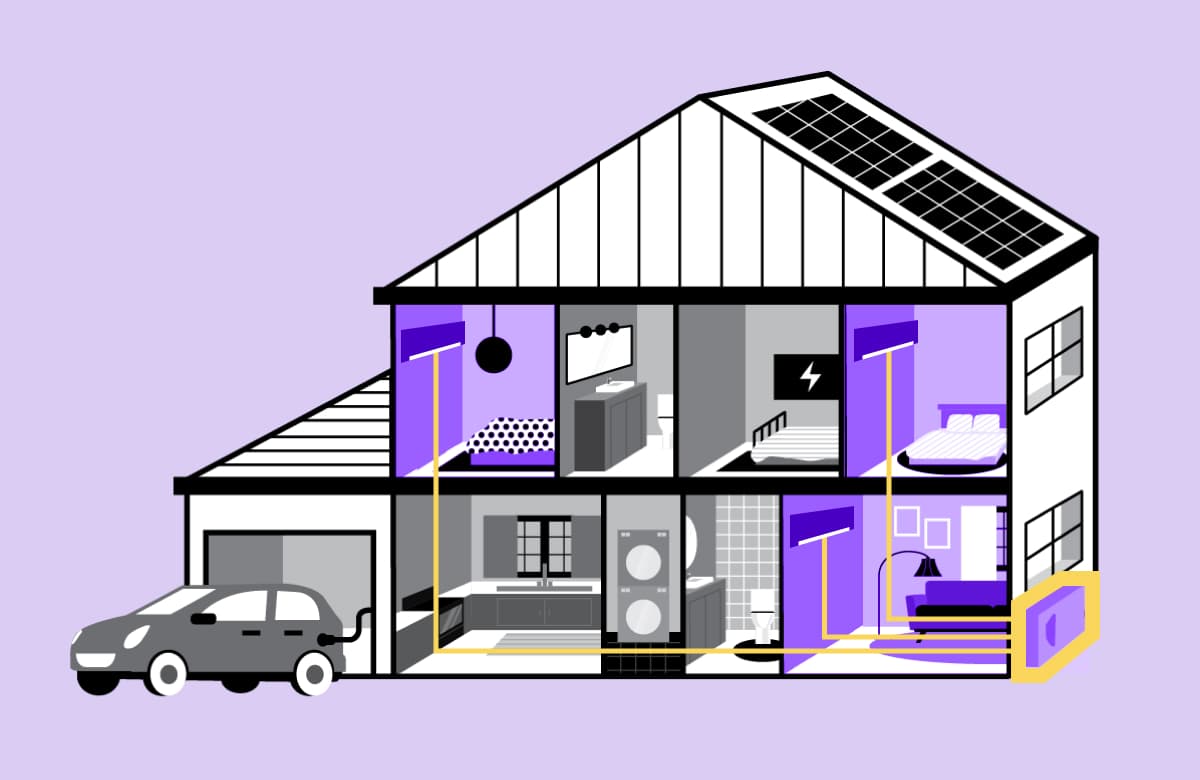
When setting up a mini-split, one of the first decisions you'll make is how many "zones" — or separate heating and cooling areas — you want to create in your home. A single indoor unit can serve one room or zone, or you can install five or six units to give each area independent temperature control.
Single-zone setups are ideal when you need to add climate control to a room that existing ducts can't reach, a newly built addition, or an outdoor-adjacent space like a garage or workshop.
For broader coverage, a multi-zone configuration allows up to six indoor units connected to a single outdoor compressor. Each indoor unit links to the outdoor unit through slim refrigerant lines, power cables, and drainage tubes.
Indoor Unit Mounting Options
Thanks to their slim tubing and cable connections, mini-split indoor units can fit into many more locations than conventional ducted vents. The most popular choice is a wall-mounted unit, typically installed about six inches below the ceiling so cool air disperses downward while warm air naturally rises.
Beyond wall mounting, you have several other options to suit your space:
Floor-Mounted
Perfect for rooms where windows, ceilings, or design features make wall mounting impractical.
Floor-Standing
Best suited for walls with very limited usable space above or around them.
Ceiling Cassette
Offers a more discreet appearance with excellent downward air distribution.
Ceiling Suspended
Delivers stronger airflow across larger areas, though with slightly more noise.
Key Benefits of Mini-Split Systems
A mini-split system hands you precise control over how your home is cooled, heated, and dehumidified. Here's a closer look at each advantage.
Zone-by-Zone Temperature Control
Each indoor unit can be managed with a remote control, a smart thermostat, or a mobile app. Instead of locking your entire home into one temperature, you can fine-tune each zone for situations like:
- Household members who can never agree on the thermostat
- Rooms used only at certain times — bedrooms, offices, guest rooms, or attics
- New additions or spaces that don't have existing ductwork
- Problem areas with unique heating or cooling challenges, such as sunrooms or basements
- Keeping pets comfortable in one area while you're away
Outstanding Energy Efficiency
In a typical home, ducts are responsible for 20 to 30 percent of conditioned air loss. Because mini-splits deliver heating and cooling directly from each unit — with no ducts in between — those losses are eliminated entirely. Plus, you can turn off zones that don't need conditioning, saving even more energy.
Heating and Cooling in One System
Mini-splits don't just cool — they heat, too. In heating mode, they use the same ductless thermal energy transfer process. And like all heat pumps, they can warm your home up to four times more efficiently than any other heating method. That means one system replaces both an air conditioner and a furnace or baseboard heater.
Better Indoor Air Quality
Traditional ducted HVAC systems rely on a single filter in one central location, and cleaning the ducts usually requires a professional. With a mini-split, every indoor unit has its own filter that you can access and replace easily — often with nothing more than a stepladder.
Advanced Dehumidification
Every air conditioner doubles as a dehumidifier, and mini-splits are no exception. But they have a distinct edge: on those muggy autumn days when it's humid but not truly hot, you don't have to blast the AC and freeze yourself just to remove moisture. Mini-splits offer a "reheat dehumidification mode" that keeps the temperature steady while pulling humidity from the air.
Potential Drawbacks of Mini-Splits
Higher Initial Investment
Installing brand-new ductwork for a central air system is costly — but setting up a mini-split system isn't inexpensive either. A single-zone system can run around $6,600 on average, and multi-zone configurations that cover an entire home can cost several times that amount.
Electrical Work May Be Required
Depending on your home's current electrical setup, a mini-split installation may require anything from running a 220-volt line to each indoor unit to upgrading your electrical panel entirely — from 100 amps to 200 amps in some cases.
Ready to Upgrade Your Home Comfort?
Explore our selection of high-performance heat pump systems built for efficiency, durability, and year-round comfort.
Armstrong Air 2.5 Ton Heat Pump - 14 SEERMini-Splits vs. Central Air Conditioning
Why Choose Mini-Splits
- ✓ Independent temperature control for each room
- ✓ Greater energy efficiency with zero duct loss
- ✓ Heat your home up to 4× more efficiently than a furnace
- ✓ Dehumidify without over-cooling
- ✓ Cleaner air with individual unit filters
Why Choose Central AC
- • Lower upfront cost for whole-home cooling
- • Less electrical modification needed
- • More seamless visual integration
Frequently Asked Questions
Do I need a mini-split in every room?
Not at all. A larger indoor unit can cover an entire "zone" of your home — not just a single room. If a room doesn't require heating, cooling, or dehumidification, you can skip it entirely. That said, it's generally more efficient to install a properly-sized unit in each room where you want climate control rather than relying on oversized units to handle multiple rooms at once.
How noisy are mini-split systems?
Mini-splits consist of an indoor unit and an outdoor unit, each with its own noise level depending on capacity and operating conditions. Indoor units typically register between 20 and 49 decibels — comparable to a whisper or quiet library. Outdoor units range from 45 to 60 decibels, roughly the level of a quiet suburban neighborhood.
Can I install a mini-split myself?
DIY mini-split kits are available in both single-zone and multi-zone configurations. However, professional installation offers significant advantages. A qualified HVAC contractor brings experience with electrical work, wall mounting, and knowing exactly what's behind your walls before drilling. They're also familiar with local codes, your home style, and can properly size the system for your needs. Most manufacturers provide warranties of up to 12 years — but only when installed by a licensed technician.
What electrical requirements should I expect?
Most high-efficiency mini-split systems require 208 to 230 volt service. Some smaller units operate on standard 110–115 volt household circuits. Your HVAC contractor can assess your system's electrical demands and determine whether your home's current panel and service are sufficient. If there's any uncertainty, consulting a licensed electrician is always a smart move.
Do mini-splits only come in white?
Most indoor and outdoor units are available in white and black, though black options can be harder to find. If the look of a visible wall unit concerns you, ceiling-mounted or floor-mounted configurations offer a more discreet alternative. Some manufacturers even offer decorative covers or frame-style units that let you display artwork over the system.
How can I hide or disguise a mini-split?
Beyond choosing a ceiling or floor-mounted option, there are creative ways to conceal a wall unit. Some manufacturers offer gallery-style frames where you can display an image of your choice while the system operates from the sides. You can also work with your contractor on creative placement — inside bookcases, behind decorative radiator covers, under stairwells, or other locations. The key rule: don't block access to the air intake, filters, or service components, and keep units away from sensitive electronics.
Find the Right Heat Pump for Your Space
Whether you're upgrading an existing system or starting fresh, we carry dependable split-system heat pumps built for real-world performance.
Armstrong Air 2.5 Ton Heat Pump - 14 SEER