

Finding the Perfect Heat Pump
Choosing a heating and cooling system is a long-term decision, and few options deliver the flexibility and efficiency of a well-matched ductless heat pump. Whether you're upgrading an older home, conditioning a finished basement, or adding comfort to a room that never quite feels right, ductless mini splits have become the go-to solution for homeowners who want precise temperature control without the mess of ductwork.
This guide walks through what really matters when comparing units: efficiency ratings, feature sets, cold-climate performance, indoor design options, and the true cost of ownership over the system's lifespan.
Why Ductless Heat Pump Reviews Matter for Your Home Comfort Decision
Reviews aren't just star ratings — they're a window into how a system actually performs in homes like yours. A unit may look great on paper, but real homeowners reveal the details that spec sheets leave out: how quiet the indoor head really is at night, how steady the airflow feels across seasons, and whether installation went smoothly or turned into a headache.
By reading through a mix of verified reviews, you get an honest picture of reliability, support quality, and long-term satisfaction. That's the foundation for a confident purchase.
How Ductless Heat Pumps Work
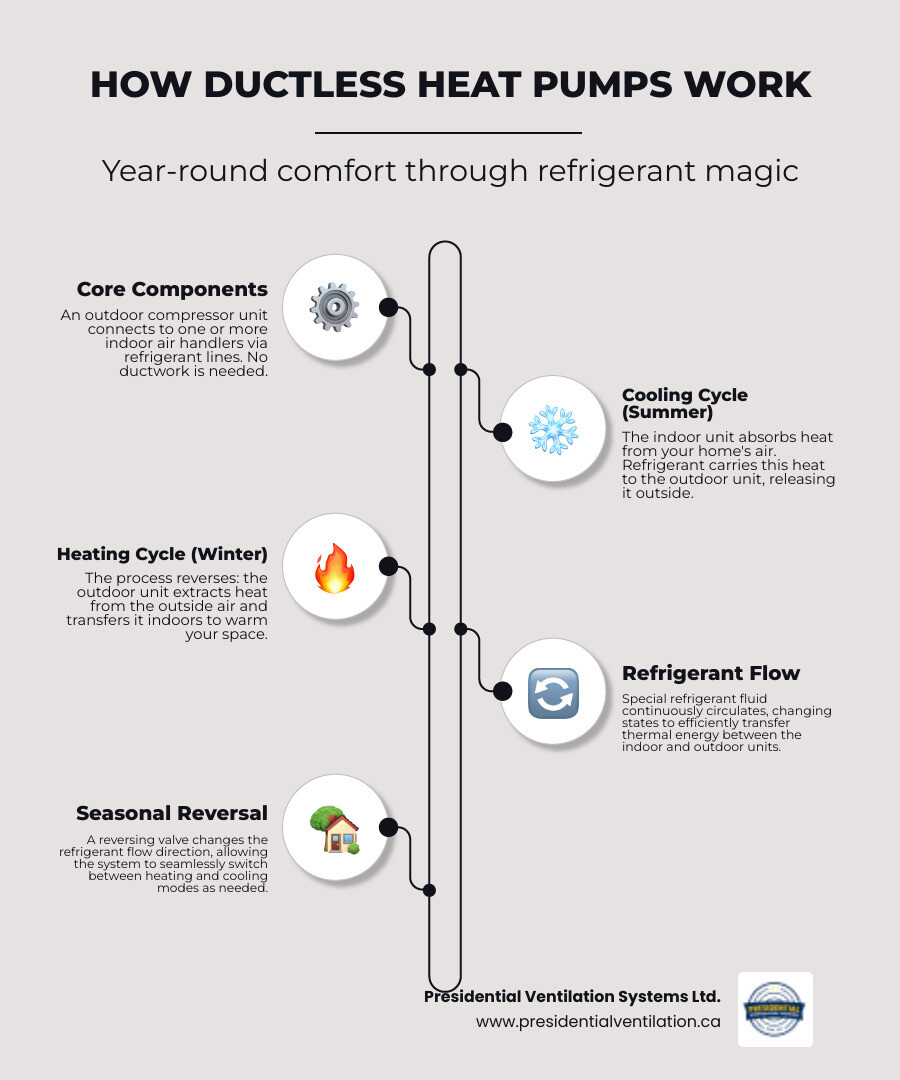
Unlike traditional central systems, ductless heat pumps transfer heat rather than generate it. An outdoor condenser moves refrigerant through a refrigerant line to one or more indoor air-handling units, delivering conditioned air directly to each zone.
Outdoor Unit Captures Heat
Refrigerant absorbs ambient heat from the outside air — even in cold weather — and routes it inside during winter.
Refrigerant Line Transfers Energy
A slim line set carries refrigerant between the outdoor condenser and indoor head, replacing bulky ducts entirely.
Indoor Head Delivers Comfort
The indoor unit releases heated or cooled air with variable-speed precision, keeping each room at its chosen setpoint.
Reversing Valve Switches Modes
In summer, the cycle reverses — pulling heat out of the home to deliver cool, dehumidified air instead.
Common Themes in Customer Ductless Heat Pump Reviews: Pros and Cons
Digging into hundreds of homeowner reviews reveals consistent patterns. Most customers praise the whisper-quiet operation, the rapid temperature response, and the obvious drop in monthly energy bills. Many also highlight how satisfying it is to finally condition a room that central HVAC never reached well.
What Owners Love
- Near-silent indoor operation, ideal for bedrooms and offices
- Zoned control with independent setpoints per room
- Dramatic energy savings compared to baseboard or window units
- Clean, modern indoor head designs that blend with decor
- Strong dehumidification during humid summer months
Where Owners Want More
- Upfront cost can feel high before rebates are applied
- Proper sizing is critical — undersized units struggle in extreme weather
- Filter cleaning every few weeks is part of ownership
- Wall-mounted heads aren't everyone's aesthetic preference
 Decoding Efficiency Ratings for Your Ductless Heat Pump Reviews
Efficiency ratings are the backbone of every ductless heat pump review. The three figures you'll see most often are SEER2, HSPF2, and EER2. Each tells you something different about how much work the system gets done per watt of electricity consumed.
What the Numbers Actually Mean
SEER2 measures seasonal cooling efficiency, HSPF2 captures seasonal heating efficiency, and EER2 reflects performance at peak load. Higher numbers across the board translate directly into lower utility bills and stronger long-term value. A modern high-efficiency mini split may reach SEER2 figures well into the 20s — dramatically better than aging central systems still running in many homes.
Quick Reference
SEER2 20+ — Strong efficiency tier for most U.S. climates. HSPF2 9+ — Reliable heating-season performance. ENERGY STAR certified — Often qualifies for federal tax credits and utility rebates that meaningfully reduce total cost.
The Ultimate Guide to Ductless Heat Pump Reviews: Key Features to Compare
Beyond efficiency numbers, feature sets differentiate a good mini split from a great one. These are the specifications experienced installers and homeowners look at first:
Inverter Compressor Technology
Variable-speed compressors ramp output up or down instead of cycling on and off, delivering steadier temperatures and significantly better efficiency than older fixed-speed units.
Cold-Climate Performance
Look for rated heating capacity at low outdoor temperatures — many modern units produce usable heat down to -15°F and below without auxiliary strip heat.
Smart Controls & Wi-Fi
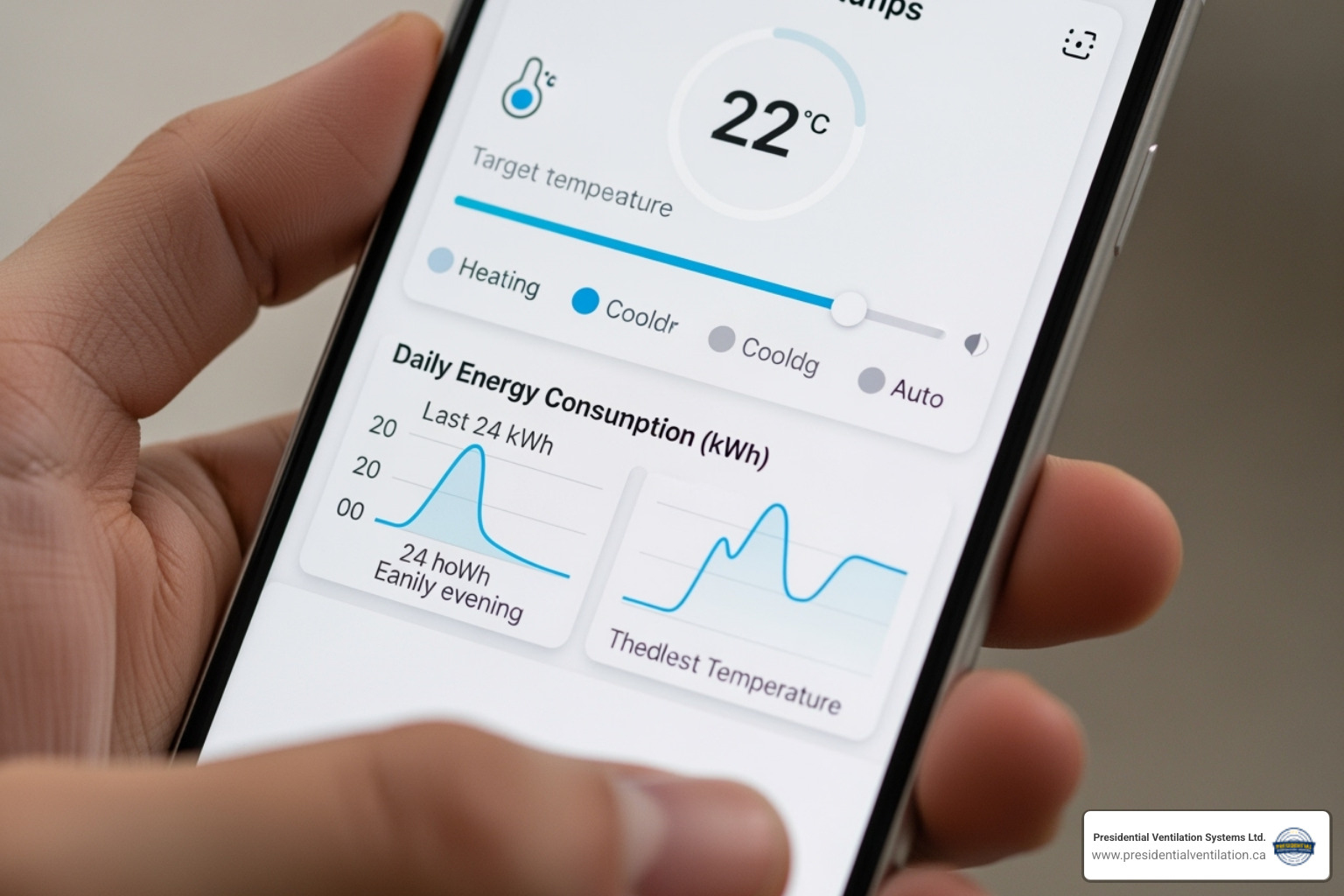
Built-in Wi-Fi lets you adjust temperatures, schedule setbacks, and track energy use from a phone app — useful for second homes and vacation rentals.
Multi-Zone Capability
A single outdoor condenser can support multiple indoor heads, each with its own thermostat — perfect for homes where family members disagree about temperature.
Advanced Filtration
Many systems include multi-stage filters that capture dust, pollen, and odors, improving indoor air quality alongside comfort.
Quiet Operation
Indoor sound levels as low as 19 dB make mini splits virtually inaudible — a huge upgrade over traditional HVAC or window units.
A Proven Choice for Whole-Home Comfort
The Senville AURA 24,000 BTU Mini Split checks every box in this guide — high SEER2 efficiency, reliable sub-zero heating performance, Wi-Fi smart controls, and a variable-speed inverter compressor engineered for quiet, steady operation. It's built to handle spaces up to roughly 1,500 square feet.
Shop Senville AURA 24KDuctless Heat Pump Ratings Compared
The table below summarizes the efficiency tiers you'll encounter while shopping so you can match a system to your climate and energy goals.
| Efficiency Tier | SEER2 Range | HSPF2 Range | Best For |
|---|---|---|---|
| Standard | 15 – 17 | 7.5 – 8.2 | Mild climates, seasonal rooms |
| High Efficiency | 18 – 21 | 8.5 – 9.5 | Primary living spaces |
| Premium | 22 – 25 | 9.5 – 10.5 | Whole-home solutions |
| Cold Climate | 20+ | 10+ | Northern regions, extreme cold |
 Built for Canadian Performance in Extreme Cold
Northern homeowners have legitimate concerns about heat pumps, and the market has responded. Modern cold-climate ductless systems use enhanced vapor injection compressors, larger heat exchangers, and refined refrigerants to maintain heating capacity where older heat pumps would have struggled. Many now carry capacity ratings down to -22°F, making them genuinely viable as primary heat sources in Canadian winters and U.S. northern states.
Pairing a cold-climate mini split with good insulation and a smart thermostat routine can cut winter heating costs dramatically compared to electric baseboard or oil systems.
Choosing Your Style: A Look at Indoor Unit Options
Indoor heads come in several form factors so you can match the system to the room, not force the room to accommodate the system.
Wall-Mounted
The most popular option — compact, efficient, and easy to install high on an interior or exterior wall.
Ceiling Cassette
Recessed into a dropped ceiling for a clean, almost invisible look. Ideal for open living areas and commercial spaces.
Floor Console
Mounted at the base of a wall like a traditional radiator — a great choice for rooms with sloped ceilings or limited wall space.
Concealed Duct
Hidden in a soffit or small chase with short runs of flex duct, giving the look of central air in just one area.
The Bottom Line: Understanding Costs, Rebates, and Your ROI
Total cost includes equipment, line set materials, electrical work, and installation labor. While a quality mini split represents a meaningful investment upfront, the long-term math is compelling. Many homeowners see 25% to 50% lower energy costs compared to their previous heating and cooling setup.
On top of energy savings, federal tax credits, state programs, and local utility rebates can take a substantial bite out of the sticker price. ENERGY STAR–certified heat pumps currently qualify for a federal tax credit of up to $2,000 under the Inflation Reduction Act, and many utilities layer their own rebates on top.
Typical Payback Window
Depending on climate, the system being replaced, and local electricity rates, most homeowners see full payback on their investment within 5 to 8 years — after which the savings continue flowing for the remaining life of the system, typically 15 to 20 years with proper maintenance.
Frequently Asked Questions
Can a ductless system heat my whole house in Nova Scotia?
Yes, provided the system is properly sized and rated for cold-climate performance. A multi-zone cold-climate mini split with capacity down to -20°F or lower can serve as a whole-home primary heating solution, though many owners keep a secondary backup for peace of mind during extreme cold snaps.
How often do I need to clean the filters on my ductless unit?
For most homes, a quick filter rinse every two to four weeks keeps airflow optimal and efficiency high. Homes with pets, active kids, or nearby construction may want to check more often. It's a two-minute task and one of the most important things you can do to extend the life of the system.
Do I need a professional installer or can I DIY?
Most jurisdictions require a licensed HVAC professional for refrigerant line connections, evacuation, and electrical work. Some pre-charged DIY kits do exist for smaller single-zone setups, but for most homeowners a certified installation protects both your warranty and your peace of mind.
How loud is a ductless heat pump in real-world use?
Quieter than most people expect. Indoor heads often operate between 19 and 35 decibels — roughly the volume of a whisper or soft rainfall. The outdoor condenser is louder but still typically quieter than a running refrigerator.
Conclusion: Your Next Step to Year-Round Comfort
A well-chosen ductless heat pump delivers precise temperature control, substantial energy savings, and comfort you'll notice every single day. With strong efficiency ratings, smart controls, and proven cold-climate performance, the Senville AURA 24,000 BTU is engineered to handle real homes in real climates — reliably and quietly, year after year.
Shop Senville AURA 24K