

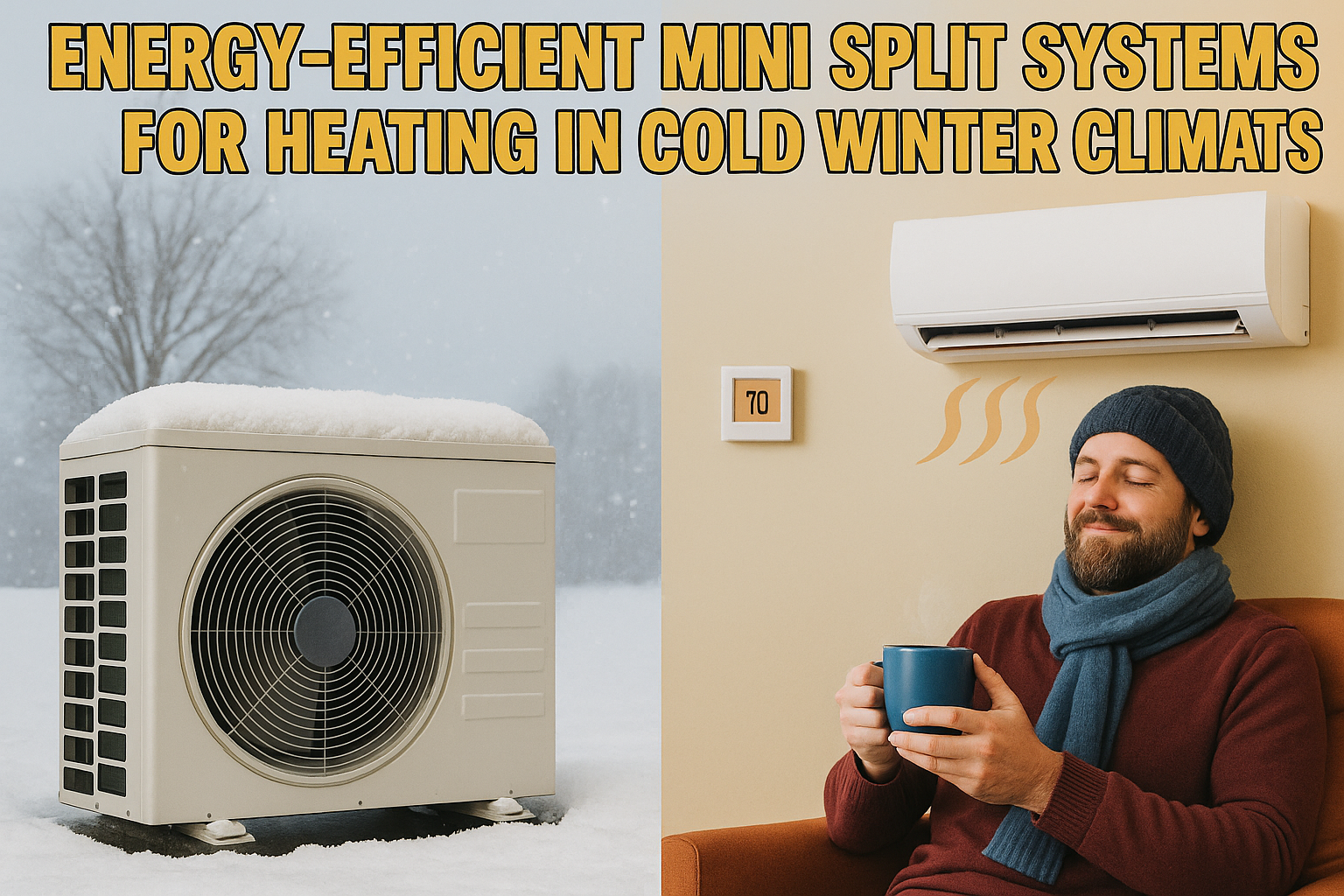
 Modern, energy-efficient ductless mini-split heat pumps move heat rather than create it, providing warmth even when outdoor temperatures drop — provided the unit is properly specified, installed, and paired with sound building-envelope practices. A heat pump really does what its name suggests: it transports heat from one location to another. Rather than a refrigerator moving heat outward in reverse — warming a space instead of burning fuel to make new heat — a mini-split can supply several times more heat energy than the electricity it draws.
This section outlines what matters for cold-weather performance: the fundamentals of heat-pump operation, the efficiency benefit you can reasonably expect from that approach, and how careful setup and tight building-shell support reliably comfort once temperatures fall. The aim is to offer a plain-English foundation so you understand what to expect from an energy-efficient mini-split in winter, what it can realistically deliver, and where installation and home upgrades make the biggest difference.
How Ductless Mini-Split Heat Pumps Work: Components & the Reversing Cycle
Ductless mini-splits circulate heat through a sealed refrigerant loop. The simplest way to picture the system is through its core components:
Compressor
The pump that drives refrigerant through the circuit and raises its pressure and temperature on demand.
Outdoor Coil
Functions as either the condenser or evaporator depending on whether the system is heating or cooling.
Indoor Evaporator / Air Handler
Mounted on the wall or ceiling and exchanges heat directly with the room's air.
Reversing Valve
The switch that flips the system between heating and cooling operation.
When cooling, the indoor coil serves as the evaporator. Refrigerant arrives cold and at low pressure, absorbs heat from indoor air, and vaporizes. The compressor then boosts that vapor to a high pressure and high temperature. Outside, the outdoor coil behaves as the condenser, dumping the collected heat to the surroundings as the refrigerant condenses back into a liquid and the loop continues.
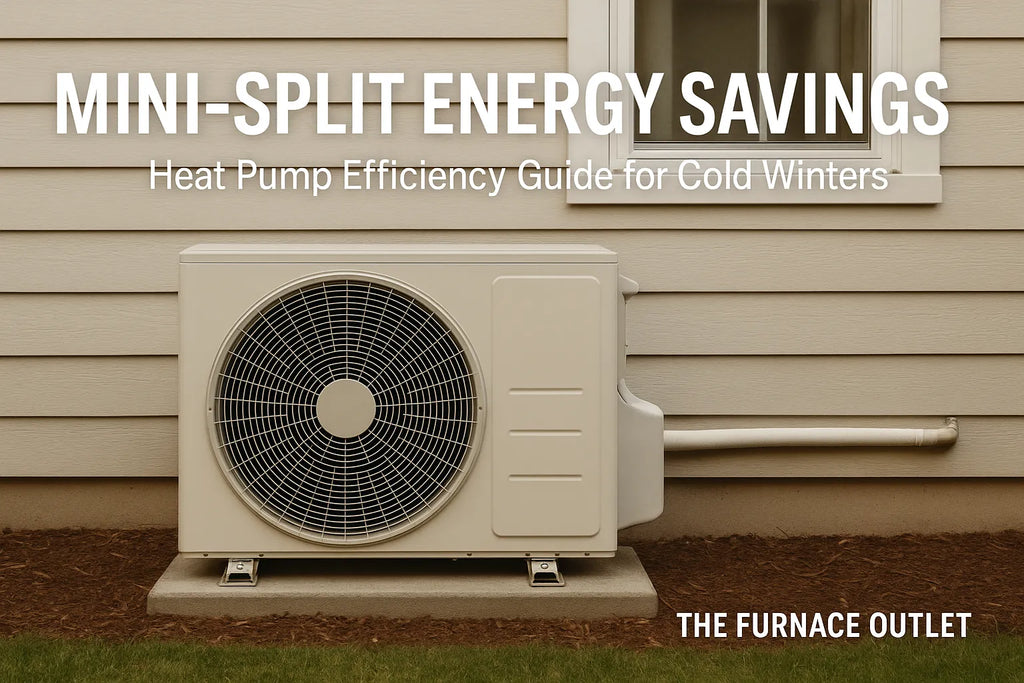
In heating mode, the reversing valve flips the direction. The outdoor coil becomes the evaporator, drawing heat from outside air even in cold weather, while the indoor coil takes on the condenser role and releases that heat into the living space. It's essentially the same hardware running on a reversed track — same components, simply moving the energy in the opposite direction.
Do Mini-Splits Actually Work in Sub-Freezing Temperatures?
Yes. Modern cold-climate ductless heat pumps can be the primary heat source in winter. In our field experience, correctly specified systems preserve meaningful capacity well below freezing, with many models holding meaningful output into the single digits and even a bit below zero. Homes we service typically run through long cold snaps without needing backup heat.
There is a trade-off as temperatures fall: both output and efficiency soften. Expect coefficients of performance in the ballpark of 2 to 4 under mild to moderate cold conditions, tapering down as the environment trends toward extremes. If you're at high elevation, still pushing forward but with reduced breathing room per breath, the analogy holds. In deep cold, units run longer, available capacity narrows, and backup becomes a sensible conversation.
Real-world reliability is shaped by the small differences as much as the fundamentals: correct sizing against the home's design load, quality installation and commissioning, and a solid building envelope. When the load is calculated properly, the system is charged and set up correctly, and the home is reasonably tight, mini-splits offer steady, comfortable heat through most winters. If any of those three elements are off, performance suffers regardless of the nameplate on the box.
Efficiency Metrics to Compare: HSPF2, SEER2 and COP at Low Temperatures
Since 2023, the DOE test procedure moved to the M1 method and ratings are now shown as SEER2, HSPF2 and EER2. Minimum efficiency thresholds rose, and older SEER or HSPF numbers aren't directly comparable to SEER2 or HSPF2. Think of these like miles per gallon: one scale for cooling and one for heating, but tighter and more realistic test conditions.
SEER2
Cooling efficiency across a season. Useful for lowering summer bills, though it matters less in cold-heavy climates.
HSPF2
Heating efficiency across a season for heat pumps. In cold climates, prioritize higher HSPF2 backed by verified low-ambient performance.
COP at 5°F or Lower
A point-in-time metric that shows how well the unit actually heats in deep cold. Always check both COP and delivered BTUs at that temperature.
Many manufacturers reference SEER2 and HSPF2, and some also publish low-temperature performance data. In our experience at Budget Heating (BudgetHeating.com), the best cold-climate choices feature a strong HSPF2 with documented capacity and COP at 5°F or under.
Defrost Cycles, Controls and Preventing Capacity Loss in Winter
In heating mode, frost collects on the outdoor coil. A defrost cycle briefly reverses refrigerant flow to melt the frost on the outdoor coil, after which the unit returns to heating. During this short window, indoor heat output dips — normal behavior. Knowing the expected frequency of defrost in your environment helps set appropriate expectations.
Modern controls use sensors and adaptive algorithms to minimize unneeded cycles, and proper commissioning at installation catches sensor and timing issues before they become winter problems.
- Keep a clear meltwater drainage path beneath the outdoor unit.
- Raise the unit above typical snow depth in your region.
- Add heat tape or a pan heater when standing water is a concern at the base.
Key Cold-Climate Technologies: Inverter Compressors, Low-Ambient Kits and Hyper-Heat
Cold-climate mini-splits hold their heating output through a combination of inverter control, cold-weather engineering, and smart defrost with winter add-ons. The following features help the outdoor unit keep running in a hard freeze and keep indoor comfort stable through harsh temperature swings.
Inverter-Driven Compressors
Rather than a basic on/off cycle, inverter systems continuously vary capacity to match load. Picture a dimmer switch instead of a light toggle. Wide modulation also helps the compressor ramp up as outdoor temperatures soften, preserving usable heat. It also delivers smoother room temperatures and improves part-load efficiency alongside single-speed units.
Hyper-Heat and Low-Ambient Kits
Cold-climate models are engineered to hold output down to the thermometer's floor. Many add cold-start protections like crankcase heaters, tailored control logic, and outdoor fan strategies that maintain pressure in deep cold. In our field experience at Budget Heating (BudgetHeating.com), these features reduce nuisance trips during cold snaps and keep the system dependable through unpredictable weather.
Defrost and Winter Enclosures
Smarter defrost routines use sensors and variable timing to run as needed, cutting defrost time and coordinating the indoor coil to limit cool-air drafts. Base-pan or drain-pan heaters keep meltwater moving, wind baffles and snow hoods clear airflow. A thoughtful outdoor-placement plan reduces snow drift and wind-recirculation concerns.
When weighing claims, look for inverter compression, a documented low-ambient or hyper-heat rating, and whether a pan heater or accessory kit is included or recommended. Ask how the unit is installed outdoors as well, since placement can make or break winter performance.
Ready for Year-Round Comfort?
The Senville AURA 24000 BTU mini-split delivers inverter-driven efficiency with proven cold-weather heating performance.
Senville AURA 24KHow to Size a Mini-Split for Cold-Climate Heating (Manual J & BTU Basics)
Begin with a room-by-room Manual J calculation built on your winter design temperature. It measures heat loss per space so you size to the load, not a rule of thumb. In our experience at Budget Heating (BudgetHeating.com), completing a Manual J correctly and matching turndown to the home is what prevents short cycling and chilly spots.
- Choose capacity to meet the design load. In many cold regions, plan on 10 to 20% more installed BTUs than nameplate assumptions, and check the outdoor unit's rated output at your design temperature.
- Pay attention to turndown. Higher turndown lets the system throttle gently on mild days, much like a dimmer switch instead of a simple on/off toggle. For multi-zone setups, match combined outdoor capacity to combined indoor loads.
- Respect line-set length and rise limitations. Verify manufacturer commissioning steps: pressure test, deep vacuum, correct charge weight, and documented operating pressures and temperatures.
When sizing for the peak, leave the modulation to manage the rest for a balanced, quiet, and efficient long-term run.
When Mini-Splits May Not Be the Best Choice: Trade-Offs, Alternatives & Honest Limits
In the field, mini-splits are dependable heating and cooling systems. With the right model and proper setup, they perform well even in cold climates — but there are honest limits to observe.
- If your winters regularly push well below 99% design temperatures, mini-split capacity and efficiency can fall. Plan on supplemental heat — better options would be a high-efficiency gas furnace, a hybrid setup, or a dual-fuel hybrid that pairs a heat pump with combustion heat.
- If you prefer strictly SEER2, winter performance can disappoint. Judge cold-climate suitability by HSPF2 and the unit's low-ambient capacity. If those ratings don't match your heating load, think about a hybrid or a combustion primary.
- If adding or keeping backup heat is not practical, a dedicated gas or hydronic system often delivers more predictable comfort during deep cold.
Back-up heat is like a rain jacket over a sweater. The sweater handles most days; the jacket keeps you comfortable when the weather turns harsh.
Maintenance & Safe Winter Operation: A Homeowner Checklist
In our field experience, monthly light checks and an annual professional visit keep performance high, trim utility costs, and protect warranties in cold weather.
- Clean or replace filters monthly.
- Keep 2 to 3 feet of clearance around the outdoor unit. After storms, gently brush snow off the top and grille.
- Confirm the condensate drain is clear. Don't let water or ice form on the coils.
- Don't deice electrical panels. If you notice hissing, leaks, tripping breakers, or strong ice, switch off and contact a pro.
A certified technician should perform an annual tune-up: verify refrigerant charge, inspect electrical integrity, measure defrost and sensor performance, and coil cleanliness. Every refrigerant and electrical task is left to qualified technicians. In harsh climates, add a mid-winter check. Keep airflow and drainage clear day to day, like keeping a windshield free of frost for safe travel.
Upgrade to Cold-Weather Comfort
Built for efficiency and engineered for reliable performance — the Senville AURA 24K is a smart pick for year-round indoor climate control.
Senville AURA 24K