

When is a Condensate Pump Non-Negotiable?
Before planning the installation itself, it's worth confirming whether a condensate pump is truly required for your layout. In below-grade rooms such as finished basements and crawlspaces, the indoor head unit frequently sits lower than the exterior drainage point. Since water will not move uphill on its own, a pump becomes essential to carry moisture to the discharge location. This situation is especially common with multi-head configurations like the Cooper&Hunter 3-Zone Ceiling Cassette (6k+6k+9k) or larger 4-Zone systems, where an upward run is unavoidable when the drain must exit through a joist bay or concealed ceiling cavity.
Similar drainage obstacles appear in interior-only rooms and server closets where routing a drain directly through an exterior wall simply isn't feasible. In those cases the line may need to travel above a dropped ceiling or thread through a closet partition before reaching daylight. Long horizontal runs tend to lose the continuous downward slope required for reliable gravity drainage, forcing you to rely on mechanical assistance. Higher-capacity mini splits such as the ACIQ 36,000 BTU Concealed Duct or the Cooper&Hunter 6-Zone 5.0 Ton system generally benefit from engineered drainage support because of the larger moisture volume they produce when cooling expansive spaces.
Winter Doesn't Eliminate the Problem
Even in heating mode, moisture management matters. Outdoor units produce meltwater during defrost cycles, and indoor drainage still requires a clear, reliable path.
While condensate pumps are most closely associated with summer cooling, cold-weather operation adds a second layer of complexity worth understanding. When a mini split runs in heating mode, the outdoor unit now becomes the component generating condensate, which can freeze into problematic ice buildup near the base pan. Although an indoor pump will not prevent outside icing, confirming that your entire Heat Pump System is draining correctly is fundamental to avoiding year-round performance issues. This holds especially true for robust multi-zone installations such as the Cooper&Hunter 60k BTU 5-Zone Cassette system or the 3-Zone 12k+12k+12k configuration, which push themselves hard during extreme temperature swings.

Choosing the Right Pump and Features
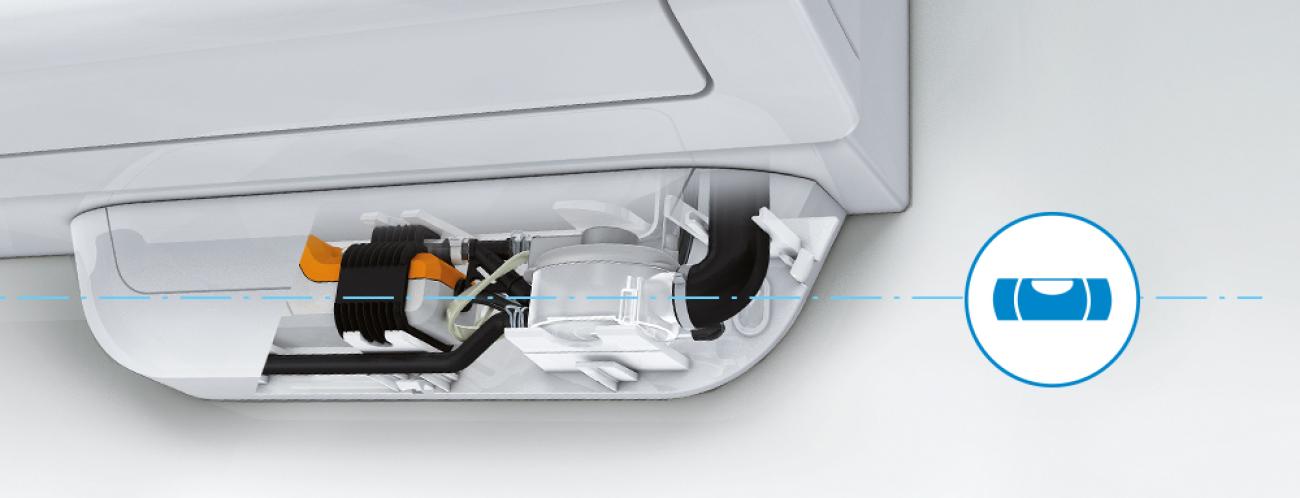
Picking a dependable condensate pump is what transforms your mini split from "mostly working" into a discreet, maintenance-free comfort appliance. Mini-split-specific pumps, such as widely used 10.5 GPH models, are engineered to run quietly and compactly, tucking neatly inside or behind the indoor unit's decorative cover. These pumps pair particularly well with low-profile installations like the ACIQ 18,000 BTU Ceiling Cassette. For more ambitious multi-room projects using something like a Cooper&Hunter 2-Zone (9k+18k) or a 3-Zone 2.3 Ton system, you'll want to verify the pump's lift height and flow rate can comfortably accommodate both the vertical rise and the total condensate volume of your system.
Lift Capacity
Measured in feet, this indicates how high the pump can raise water against gravity. Confirm it exceeds your required vertical run.
Flow Rate (GPH)
Gallons-per-hour should match or exceed your mini split's peak moisture output during humid cooling days.
Noise Level
Seek units rated under 23 dB. Anything louder becomes noticeable in quiet bedrooms, offices, or media rooms.
Safety Switch
A built-in float switch shuts down the mini split if the pump fails, preventing overflow and moisture damage.
Installation: Where Mistakes Happen
Even a perfectly specified pump can underperform if the installation cuts corners. The most frequent issues come from poor mounting, insufficient tubing slope on the discharge side, and neglecting the float safety wiring that protects against overflow. Begin by securing the pump on a stable, level surface close to the indoor head so the suction tubing stays short and free of sagging loops. Every downstream bend adds friction, quietly eroding the pump's effective lift capacity until drainage problems appear on the hottest day of the year.
Discharge tubing should always rise directly from the pump to the highest point of its run before sloping gently down toward the exit location. That high point acts as a vapor break, preventing siphoning and reducing stress on the pump's internal diaphragm. Secure the tubing every few feet to avoid sags where water can pool and stagnate, and always wire the float safety switch into the mini split's low-voltage shutdown circuit rather than leaving it unconnected. Skipping that step means a pump failure will go unnoticed until water actually appears on the floor or ceiling below.
Mini Split Pairing Reference
| System Type | Pump Required? | Typical Lift Need |
|---|---|---|
| Single-Zone Wall Mount | Sometimes | 3 – 10 ft |
| Ceiling Cassette Multi-Zone | Usually Yes | 8 – 20 ft |
| Concealed Duct Installation | Almost Always | 10 – 25 ft |
| Basement / Below-Grade | Required | 12 – 30 ft |
Senville AURA 24000 BTU Mini Split Concealed Duct Air Conditioner and Heat Pump
A smart choice for concealed installations where a condensate pump is essential. This SENA/24HF/ID unit delivers powerful year-round comfort while giving you the flexibility to route drainage wherever your space requires.
Shop Senville AURA 24KMaintenance Keeps the Pump Silent
Condensate pumps tend to be forgotten until they fail, and the cause of most failures is biological rather than mechanical. The condensate line collects algae, dust, and mineral sediment that slowly clog the intake screen and float mechanism. Twice-yearly maintenance, once before cooling season and again before the heating months, keeps the pump operating quietly and reliably for many years. Flushing the reservoir with a mild vinegar solution, wiping the float, and checking the tubing for biofilm takes only a few minutes but extends service life significantly.
Homeowners running high-output systems or installations in humid climates should inspect quarterly instead. If you begin hearing the pump cycle more frequently than usual, or hear water pulsing through the discharge line in uneven bursts, treat those signals as early warnings. A pump operating against partial blockage works harder, uses more electricity, and approaches premature failure faster than one maintained on a simple seasonal schedule.
Protect Your Investment With the Right Setup
Pairing your mini split with a properly sized condensate pump keeps your comfort system clean, quiet, and ready for every season. Explore our expertly curated selection of concealed duct systems and ceiling cassette units engineered for reliable multi-zone performance.
Shop Senville AURA 24K