

A sewer camera is one of the most practical inspection tools available for diagnosing problems within drain and sewage pipes. Used across both residential and commercial settings, this specialized pipe camera enables technicians to pinpoint the exact source of a blockage, leak, or structural concern without any guesswork.
Catching pipe issues early means addressing them before they escalate into expensive, large-scale repairs. This makes understanding how sewer cameras work — and why they matter — essential knowledge for homeowners, plumbers, and property managers alike.
Why Is a Sewer Line Camera Necessary?
The primary purpose of a sewer line camera is to provide a clear, real-time view of what is happening inside a pipe — whether it is a backup, a hidden leak, or a stubborn blockage. The greatest advantage of this technology is that it eliminates the need for disruptive yard excavation just to diagnose the problem.
That said, once the camera reveals the issue, certain repairs may still require hands-on intervention. A simple clog, for example, might only need a high-pressure jetter to clear the line. But if the camera shows that tree roots have infiltrated and compromised the pipe itself, more extensive work will likely be needed.
How Does a Sewer Camera Work?
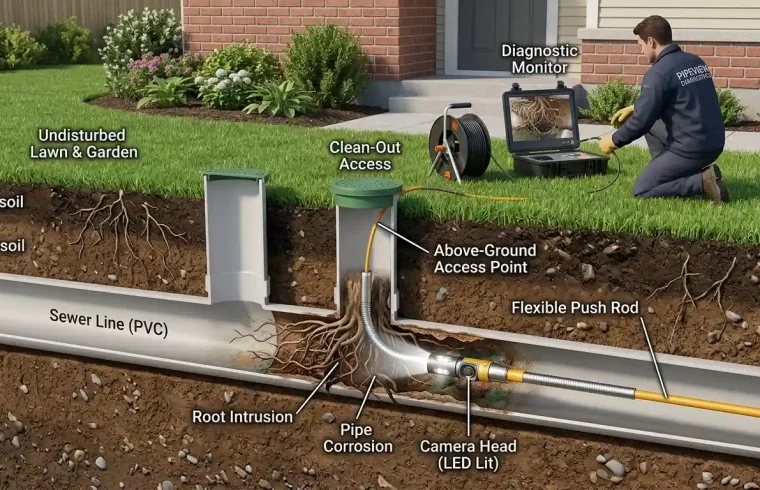
Video inspection of sewer lines and pipelines has become increasingly important in modern plumbing. The process relies on a compact digital camera mounted to a flexible push rod, which is carefully fed through the pipe system.
As the camera travels through the pipe, it transmits a live video feed to an above-ground monitor. This allows the technician to visually inspect damage, debris buildup, and clogs that would otherwise remain hidden inside the sewer infrastructure of both commercial and residential properties.
With this system, a plumber or homeowner can quickly identify the root cause of a sewer problem. This leads to more efficient troubleshooting, permanent repairs, greater productivity, and significant savings in time, money, and effort.

When deciding which sewer camera to invest in, consider the following questions:
1. Do I need a professional-grade sewer camera with advanced features like digital recording and Wi-Fi?
2. Would a budget-friendly sewer camera be sufficient for my needs?
3. Is a sewer camera rental the better option if this is a one-time job?
What Types of Sewer Issues Can a Video Pipe Inspection Detect?
Here are some of the most common sewer line problems that a pipe inspection camera can quickly identify:
Tree Root Intrusions
Tree roots are naturally drawn toward moisture. When they discover even a small crack in a sewer pipe, they work their way inside to access the water supply. This problem tends to be most prevalent during the spring season when trees are actively growing and their root systems are expanding outward.
Cracked, Broken, or Collapsed Pipes
As the camera navigates through the interior of the pipe, the technician can clearly see whether the pipe has shifted, fractured, or fully collapsed. These types of damage can stem from a number of causes, but heavy vehicles driving over sewer lines or field pipes are among the most frequent culprits.
Major Blockages
Flushing inappropriate materials down the drain can lead to the buildup of paper, grease, and various types of debris. Grease and food blockages are particularly common in commercial restaurants. Residential buildings with food disposal systems also experience a high rate of blockage occurrences.
Sagging Sewer Lines
Over time, sections of a sewer pipe can begin to sag, creating a low point — or "belly" — in the line. Waste material collects in this sagging section, resulting in repeated blockages that keep coming back even after clearing.
Backyard Provider is a trusted destination for high-quality sewer inspection cameras and accessories. Our selection of plumbing cameras, sewer line cameras, and related equipment ensures you can find the right inspection tool to match your specific requirements.
Final Thoughts
Inspecting sewer lines with a camera is a non-invasive, highly effective way to get a clear look at what is happening underground. It saves time, reduces costs, and eliminates unnecessary digging. However, for the best results when it comes to sewer inspection and repairs, it is always advisable to work with a licensed and experienced plumbing professional who can interpret the findings and recommend the right course of action.