

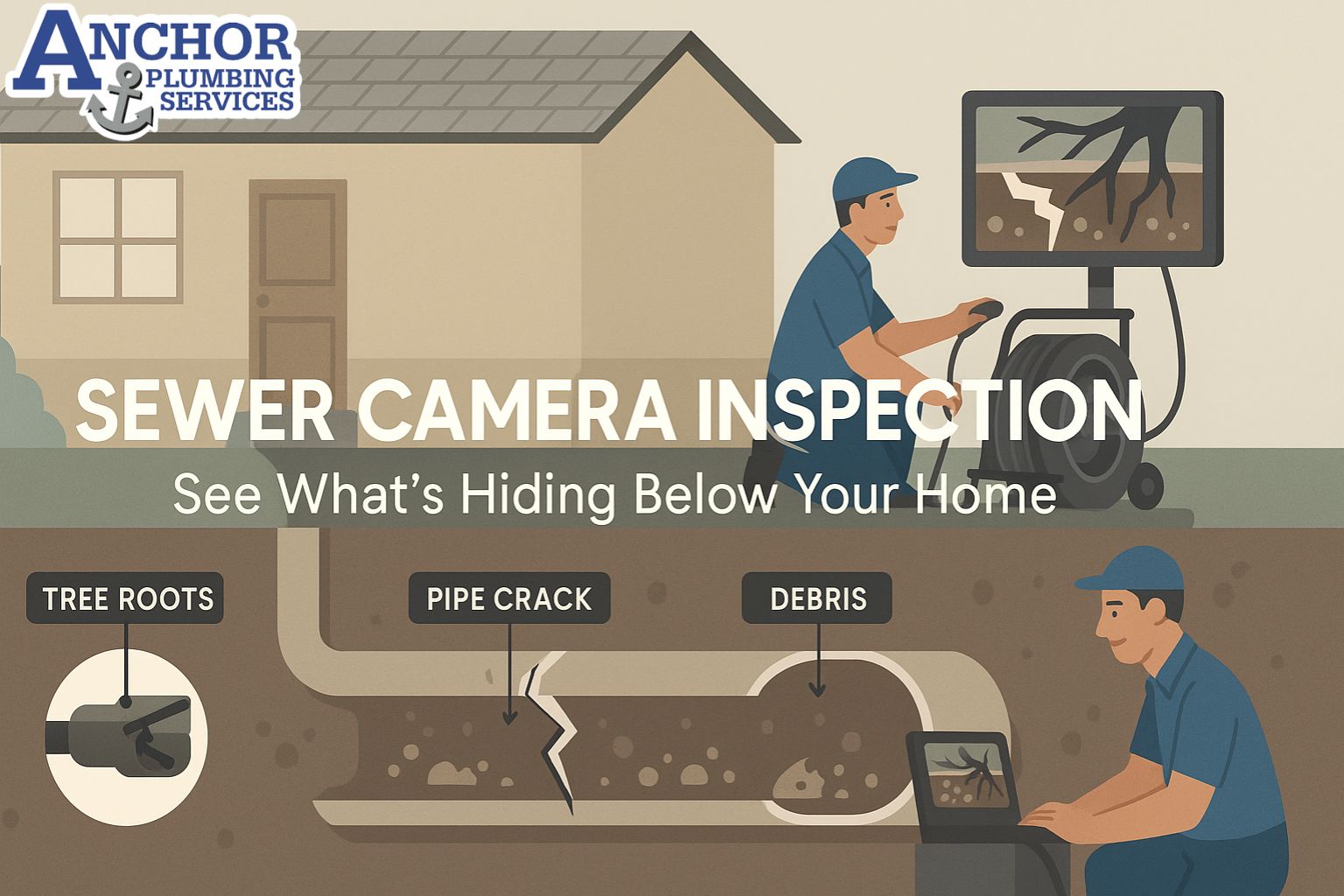
A sewer camera inspection is a non-invasive diagnostic technique that gives homeowners a clear, real-time view of what’s happening inside their underground drain and sewer lines. By feeding a high-resolution camera scope into the pipe system, trained technicians can spot hidden damage—cracks, root infiltration, clogs, and misaligned joints—without tearing up your yard or breaking through concrete.
As residential plumbing ages, issues like pipe corrosion, sediment accumulation, and ground movement become increasingly common. Many homeowners first notice warning signs such as sluggish drains, unpleasant smells rising from fixtures, or water backing up in unexpected places—long before visible exterior damage appears. A camera inspection offers a fast, accurate method for identifying the root cause.
This type of inspection is frequently performed during real estate purchases, major renovations, or before scheduling trenchless pipe repair. It provides a definitive look at pipe health and flow conditions before committing to expensive repairs or replacements.
In this guide, we’ll walk through how sewer camera inspections work, the types of problems they uncover, when you should schedule one, how much you can expect to pay, and how this technology supports smarter repair planning for your home.
What Is a Sewer Camera Inspection and How Does It Work?
A sewer camera inspection is a video-based diagnostic procedure designed to evaluate the internal condition of your wastewater drainage system. The process starts by threading a waterproof camera head through a cleanout port—a dedicated access point that leads directly into your home’s primary sewer line.
Once inserted, a flexible push cable guides the camera through bends, junctions, and extended pipe runs. The live video feed streams to an external inspection monitor, enabling the technician to observe and assess visible issues as they appear in real time.
Today’s sewer scopes are equipped with powerful LED illumination, pan-and-tilt lens assemblies, and built-in distance counters. These features allow technicians to pinpoint blockages, fractures, and structural shifts with remarkable accuracy—often down to a matter of inches.
A standard inspection typically takes between 30 and 60 minutes and can assess up to 100 feet of pipe using high-definition video capture.
Once the inspection wraps up, many professionals provide a saved video recording or a detailed written report summarizing all faults and findings.
What Problems Can a Sewer Camera Detect?
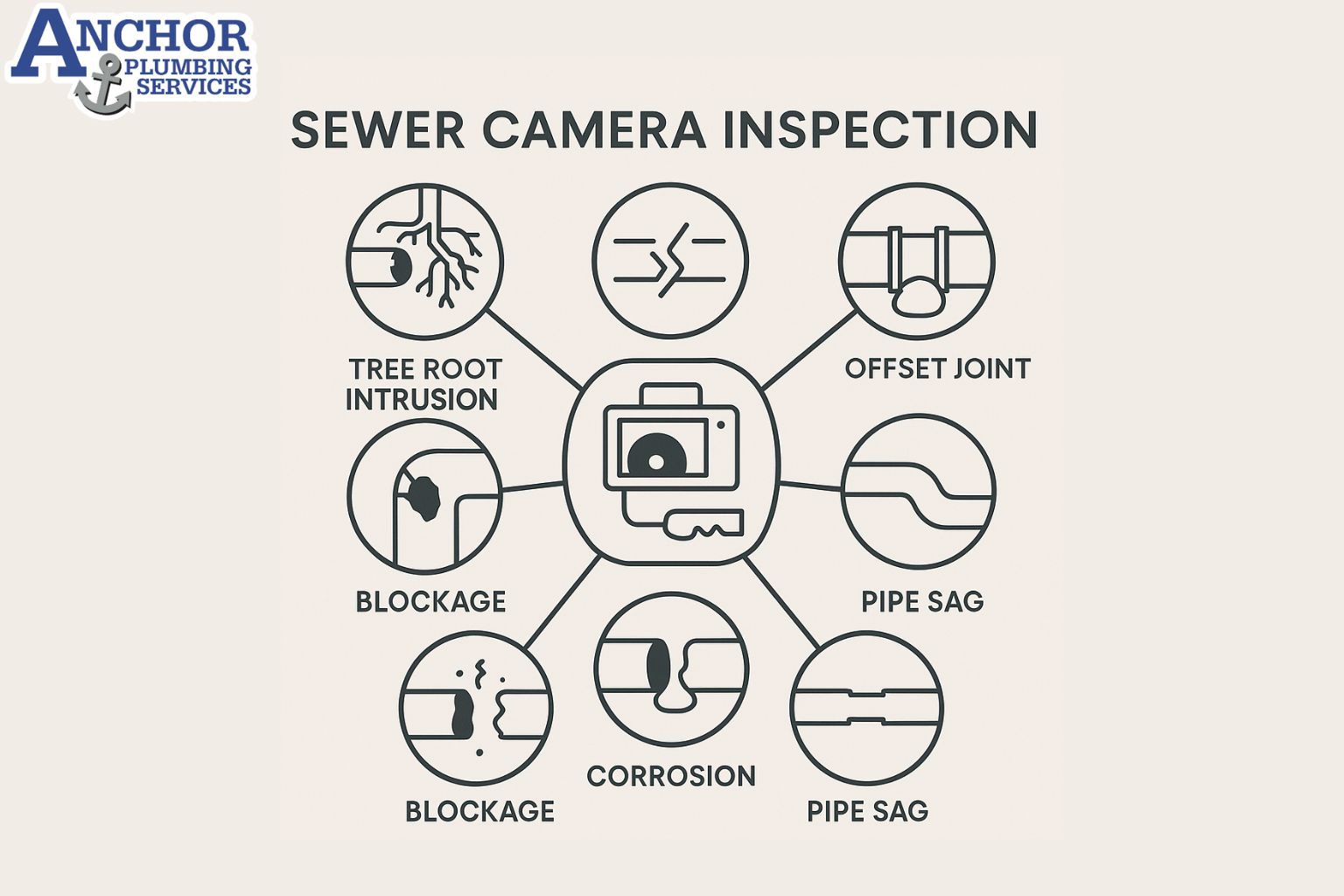
A sewer camera inspection can reveal a broad spectrum of structural and flow-related issues inside residential sewer pipes. The camera captures high-definition footage, allowing plumbing professionals to identify the exact location and severity of interior damage.
Tree Root Intrusion
Roots penetrate small cracks or joint gaps, then expand inside the pipe, restricting water flow and causing structural damage to the pipe walls.
Pipe Cracks
Fractures commonly develop in aging clay or cast iron pipes due to sustained soil pressure, ground settling, or gradual corrosion over time.
Offset Joints
Ground movement can shift pipe sections out of alignment, creating mismatched connections where waste and debris easily accumulate.
Pipe Bellies
Low spots or sagging areas form in the line where water pools and solids collect, frequently caused by poor slope or compacted soil beneath the pipe.
Corrosion
Particularly prevalent in cast iron systems, internal rust gradually narrows the pipe diameter and weakens the overall structural integrity.
Blockages
Buildup of grease, sanitary wipes, or foreign debris can create partial or complete obstructions that severely limit wastewater flow.
Sewer camera tools measure blockage length, damage severity, and precise depth, helping technicians diagnose pipe problems accurately without any excavation.
When Should You Schedule a Sewer Camera Inspection?
Homeowners should think about booking a sewer camera inspection when early warning signs begin to surface. These indicators include:
✓ Recurring drain clogs, particularly when they affect multiple fixtures simultaneously
✓ Gurgling toilets or tubs that drain slowly without an obvious cause
✓ Foul odors near drain openings, commonly caused by trapped gas or sewage accumulation
✓ Water backing up into floor drains or lower-level fixtures
✓ Before purchasing or renovating a home to uncover potential surprise repair costs
“A camera inspection yields the best results when performed either before or after a professional drain cleaning, depending on whether a blockage or structural issue is the primary concern.”
Variables like drainage speed, clog frequency, and the age of your home all play a role in determining whether an inspection is warranted. For properties in older neighborhoods, annual inspections are a smart preventive measure against unexpected pipe failures.
Can a Sewer Camera Inspection Be Used for Repairs?
Absolutely. Sewer camera inspections serve as an essential planning tool for repair strategies such as trenchless relining, hydro jetting, or precision excavation.
The camera provides critical data including:
Exact location of the damage or obstruction
Depth of the pipe below ground level
Length of the damaged section
Type of failure (crack, root, sag, or joint separation)
Locator beacons attached to the camera enable plumbers to mark the exact problem area above ground with pinpoint accuracy.
This level of detail drastically reduces the need for full-scale trenching, making minimally invasive repairs achievable with lower costs and shorter project timelines. It also allows technicians to confirm pipe condition before applying pipe lining or structural patching solutions.
What Does a Sewer Camera Inspection Not Detect?
While sewer camera inspections are highly effective for visual diagnostics, they do come with specific limitations. The camera can only identify issues visible from inside the pipe interior.
It cannot detect:
Leaks outside the pipe (such as from loose fittings or groundwater seepage)
Water quality problems like bacterial contamination or mineral deposits
Ventilation issues in vertical plumbing vents that do not carry wastewater
Structural problems above or around the pipe (e.g., settling soil or slab cracks)
Camera inspections are strictly line-of-sight tools—they cannot detect moisture behind walls or identify pipe bursts occurring outside the main sewer path.
For a more complete diagnostic picture, technicians may recommend supplementary testing methods such as smoke tests, hydrostatic pressure tests, or electronic leak detection sensors.
How Much Does a Sewer Camera Inspection Cost?
A sewer line camera inspection generally costs between $150 and $500, with the final price depending on your location, total pipe length, and whether the inspection is bundled with additional services.
What’s Typically Included
• A live video feed during the inspection procedure
• A digital recording of the inspection (via USB, cloud link, or DVD)
• A written report or verbal summary detailing defects, blockage locations, and recommendations
For most residential properties, sewer inspections fall in the $200 to $350 range, with higher pricing for longer pipe runs or post-clog verification assessments.
Some plumbing companies offer inspections as part of a diagnostic package when combined with hydro jetting or repair estimates, providing additional value for homeowners.
Is Sewer Camera Inspection Growing in Popularity?
Yes. Sewer camera inspections are becoming increasingly popular across the United States, driven by aging infrastructure, expansive soil conditions, and densely tree-lined neighborhoods where root intrusion and pipe movement are a persistent concern.
Several key factors are fueling demand:
Homes built before 1980 with cast iron or clay pipe systems
Foundation shifts caused by alternating dry and wet soil cycles
Dense vegetation increasing root-related blockage risk
Local water authority compliance requirements for certain sewer connections and renovations
“Many local water utilities actively encourage homeowners to maintain their private sewer laterals to reduce infiltration and prevent overflow events.”
Permits are generally not required for non-invasive camera inspections, but any repair work identified during the process must comply with local building codes and permitting regulations.
Frequently Asked Questions
Is a sewer camera inspection worth the investment?
Yes. A sewer camera inspection delivers precise visual diagnostics of concealed pipe issues, helping homeowners avoid costly repairs and misdiagnosed plumbing problems down the road.
Does a sewer camera inspection reveal leaks?
No. The camera identifies visual damage on the inside surfaces of the pipe, but it is unable to detect external leaks or subsurface seepage beyond the pipe walls.
Can I rent a sewer camera and do it myself?
You can, but professional inspections typically yield far better results. Consumer-grade rental cameras often lack locator beacons, sufficient video clarity, and adequate cable length to thoroughly inspect most residential sewer systems.
Conclusion
Sewer camera inspections provide a non-invasive, highly accurate method for diagnosing underground plumbing issues including blockages, pipe cracks, root infiltration, and sagging sections. They empower homeowners to understand the true condition of their sewer lines before minor issues escalate into major, costly repairs.
Whether you’re purchasing a property, dealing with persistent drainage problems, or planning a renovation, a professional camera inspection delivers the clear visual evidence you need to make informed decisions and protect your home’s plumbing infrastructure for years to come.