

 Mountain bikes come equipped with varying levels of suspension travel, and the right amount depends entirely on the style of riding you plan to do. Suspension travel refers to the distance a suspension fork or rear shock can compress — essentially, how far the wheel axle moves vertically as the suspension absorbs impact.
Depending on the riding discipline a bike is built for, suspension travel can range anywhere from 80mm up to 200mm. Although greater travel might sound like an obvious advantage for smoothing out rough terrain, it can actually work against you if your riding demands a lighter, more responsive machine — especially on climbs.
Selecting the ideal travel for your needs can feel overwhelming, but a handful of key considerations make the decision much simpler. Your riding style, the terrain you frequent, and where you want to progress as a rider all play important roles. Bike manufacturers engineer their frames around specific travel ranges suited to particular terrains and disciplines, so understanding these categories is one of the most effective ways to figure out exactly what you need.
In this guide, we break down each mountain bike category and the suspension travel they typically offer, helping you make a confident and informed choice.
Cross-Country Mountain Bikes
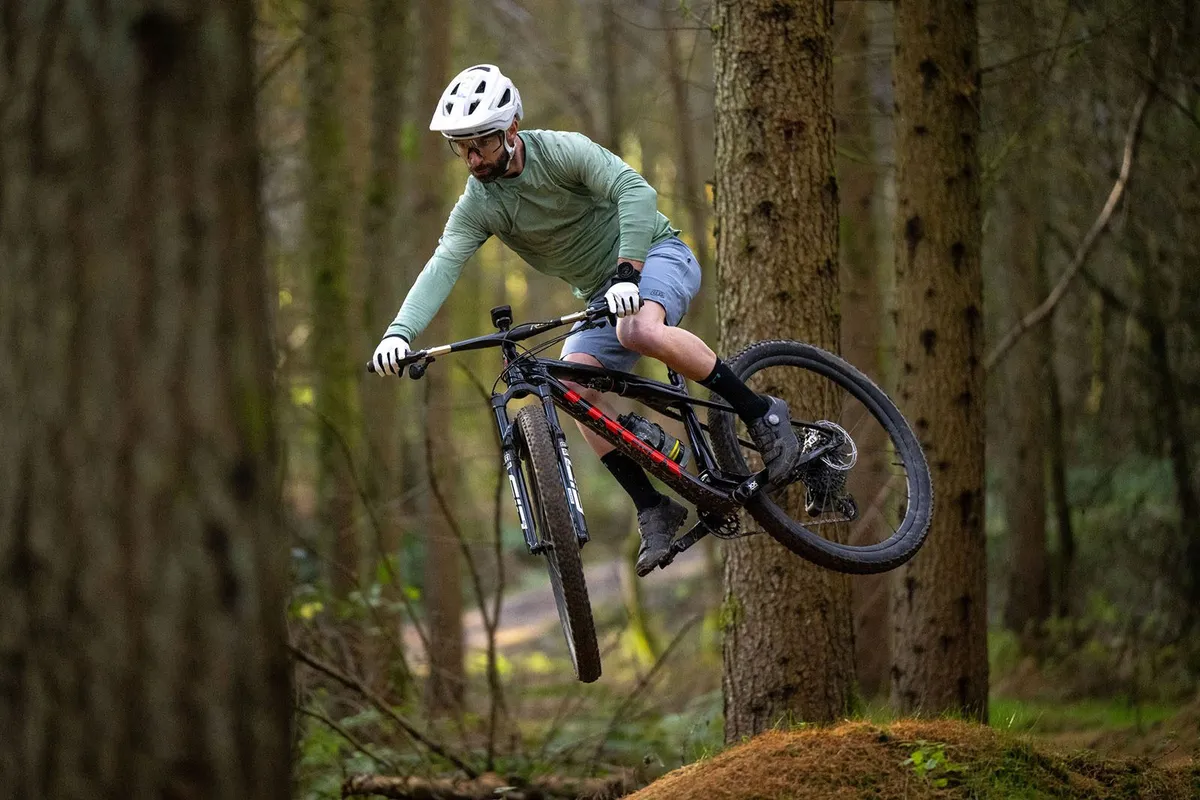
Short-travel bikes can still be remarkably capable on technical terrain.
The finest cross-country mountain bikes are engineered to shine in high-speed racing situations, where keeping weight low and maximizing pedalling efficiency are absolutely essential for success.
Traditionally, cross-country bikes have been equipped with 80 to 100mm of travel. However, as modern race courses have grown increasingly technical and demanding, it is now quite common to find bikes in this category sporting around 120mm of suspension both front and rear.
Running less suspension travel than other mountain bike styles allows cross-country frames to be constructed with lighter materials and thinner tubing. Less reinforcement is necessary because the frame does not endure the same level of articulation stress. This lighter construction is a major advantage when powering up steep inclines — the hallmark of cross-country racing.
The shorter-travel forks fitted to cross-country bikes also contribute to weight savings. They employ a lighter chassis and narrower stanchions, typically measuring 30 to 32mm in diameter. Stanchions are the upper tubes of the fork that remain fixed to the crown while the lower legs slide over them during compression.
The compromise for this weight reduction comes in the form of fork flex. Thinner stanchions are less rigid, which can affect steering precision and reduce the fork's ability to handle truly gnarly terrain as friction builds up within the seals.
A shorter-travel fork also reaches its limits faster than a longer-travel alternative. While damper setup and tuning influence bump absorption significantly, less total travel ultimately means reduced capacity to soak up larger hits.
Hardtail mountain bikes are also very popular in the cross-country world. A rigid rear end delivers the highest possible pedalling efficiency. That said, the superior traction and descending confidence offered by full-suspension designs make them the preferred choice for many riders.
Downcountry Mountain Bikes

Downcountry bikes blend the climbing performance of cross-country with improved descending confidence.
Downcountry bikes seek to strike a balance between a cross-country bike's climbing efficiency and a trail bike's descending prowess. This is a relatively young category within the mountain biking world and, as such, does not have a rigidly defined set of standards.
In terms of suspension, downcountry bikes generally range from enhanced cross-country setups at around 110mm of travel to lightweight trail-oriented builds featuring approximately 130mm front and rear.
The slightly longer travel compared to a pure cross-country machine means downcountry bikes feel significantly more composed on descents. At the same time, their shorter travel relative to trail bikes preserves a meaningful pedalling efficiency advantage over burlier options.
Downcountry frames can be built lighter than trail bikes because the structural demands are not as high. Less material is required since these bikes do not need the same strength as a full-blown trail or enduro machine.
In terms of fork construction, downcountry bikes typically feature sturdier and stiffer forks than cross-country models, with stanchion diameters usually sitting at around 34mm. This provides noticeably better rigidity and more direct steering feel, though some weight savings are still part of the design equation.
Trail Mountain Bikes

Trail bikes offer enough suspension for most riding situations — only the gnarliest terrain will leave you wanting more.
Trail bikes rank among the most widely loved types of mountain bikes, and for good reason. They are built to occupy the sweet spot between enduro bikes and cross-country bikes, delivering a ride experience that is simultaneously fun and remarkably capable.
Confident on descents and reasonably efficient on climbs, trail bikes generally come with between 120 and 160mm of suspension travel. Bikes sitting at the longer end of this range begin to overlap with all-mountain territory and will typically feature beefier frame construction to handle the extra suspension forces.
The ideal travel amount for a trail bike depends heavily on the terrain you ride and where you want to take your riding. Around 140mm is a sweet spot for tackling even the toughest trail centre runs, while riders with gnarlier aspirations may prefer something with a bit more travel.
Forks equipped with mid-range stanchions — typically 34mm, 35mm, or 36mm in diameter — are standard fare on trail bikes. These shift the balance away from outright lightness toward greater rigid stability for improved descending performance. The reduced flexibility translates to more precise steering inputs and a more planted, confident feeling over rough ground.
Enduro Mountain Bikes
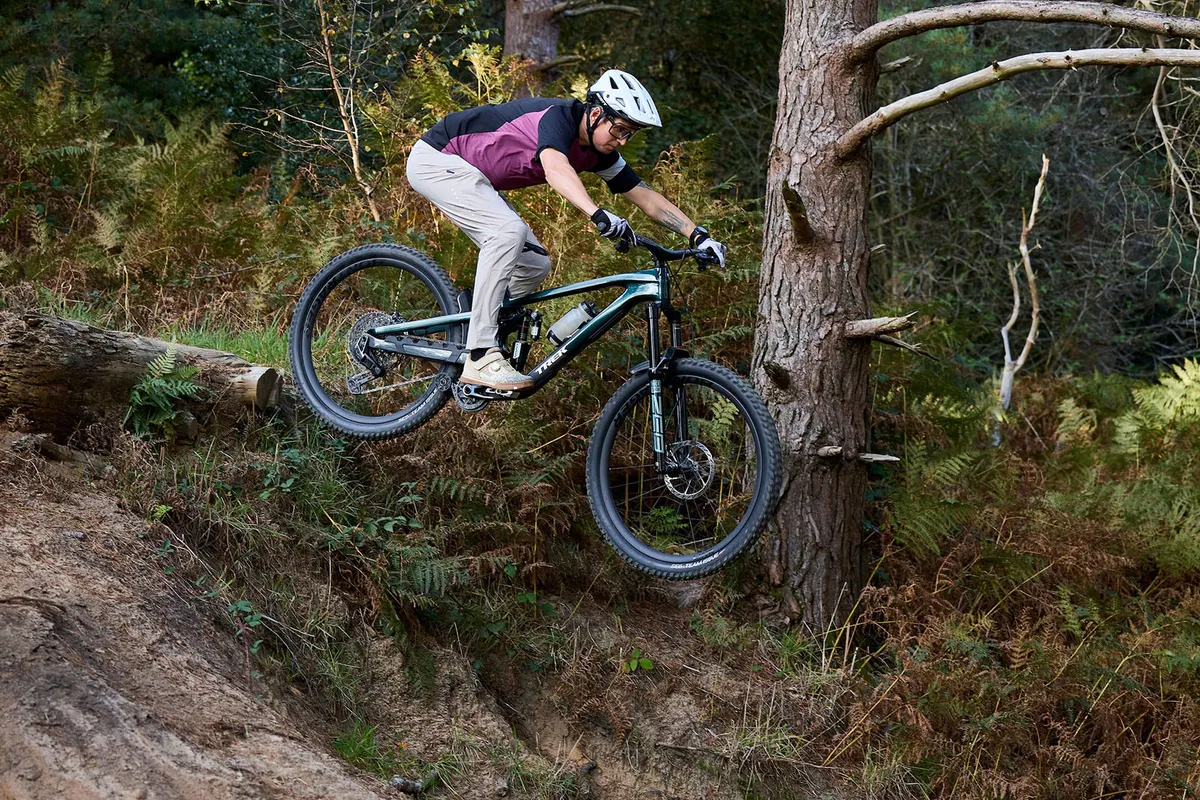
Enduro bikes are built like downhill machines that can still pedal to the top of the mountain.
Enduro bikes are purpose-built for the rigors of enduro racing — a format that involves timed downhill stages connected by untimed transition stages that riders must pedal. This means enduro bikes need to excel on steep, technical descents while still offering a serviceable pedalling platform for the climbs in between.
Suspension travel on enduro bikes starts at around 150mm and can extend up to 180mm. Some enduro-oriented forks even offer a 190mm travel option, although setups in that range are more commonly found on freeride or bike park machines.
Enduro frames demand robust construction to withstand the punishment of downhill trails. Head tubes must be reinforced to manage the significant forces transferred through long-travel forks, and the rear linkage needs to be engineered for substantial articulation.
This heavier frame construction naturally adds weight, which reduces climbing efficiency. However, the trade-off is more than justified by the confidence and capability these bikes offer on the way back down.
Forks in the enduro travel range prioritize rigidity above weight savings, featuring stanchion diameters of 36mm to 38mm. This delivers direct and reliable steering input and a reassuringly solid ride when pushing through challenging terrain at speed.
Downhill Mountain Bikes
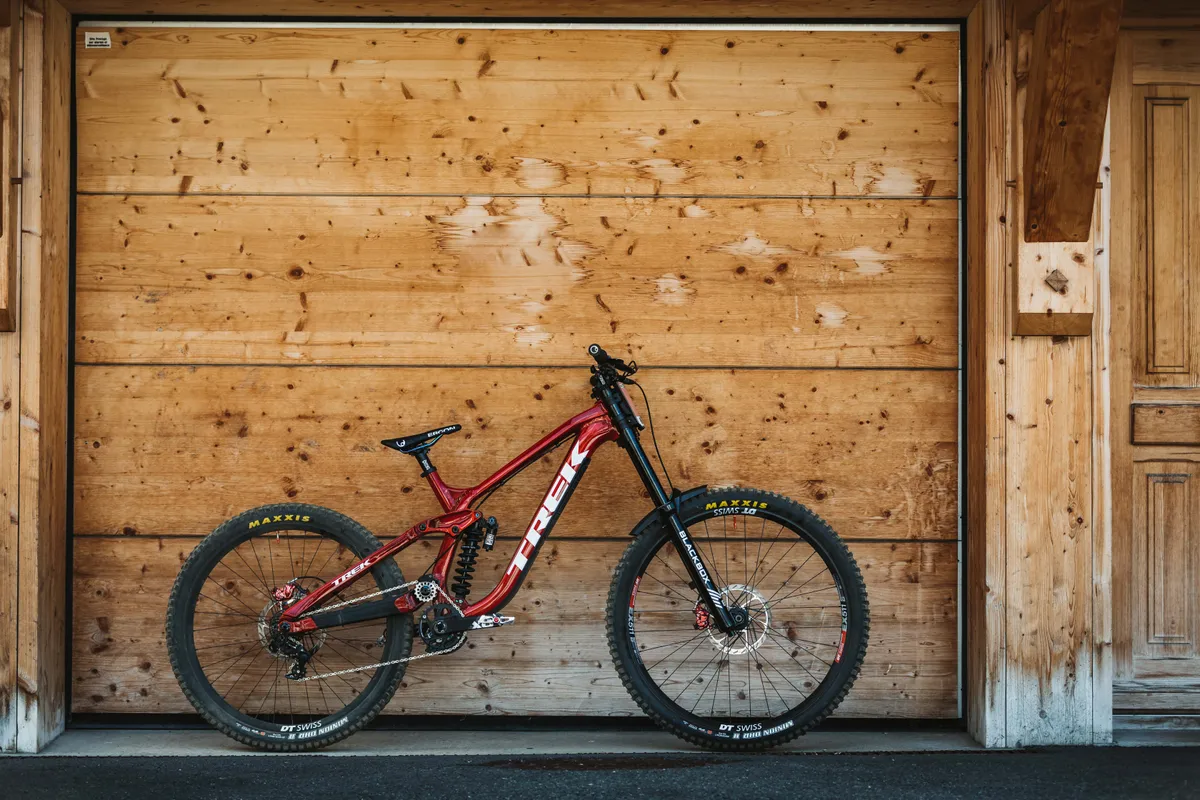
Built for pure speed on the descent, downhill bikes carry the most suspension travel of any mountain bike category.
Downhill bikes are designed with a single-minded purpose: getting down steep, technical terrain as fast as possible. Because these bikes are never expected to pedal uphill or across flat ground under their own power, designers can focus entirely on creating the ultimate descending platform.
These machines carry some of the longest suspension travel available, ranging from 180 to 200mm, offering riders crucial protection against the large, repeated impacts encountered on downhill courses.
Frames must be constructed to the highest strength standards to cope with the immense forces generated on downhill tracks. While this makes them heavier than bikes from other disciplines, the weight penalty is largely irrelevant since gravity — not leg power — is doing the work.
Downhill forks feature the thickest stanchions of any mountain bike fork, typically between 35 and 40mm in diameter. This extreme rigidity is essential for maintaining precise steering control through the most punishing terrain imaginable.
These forks employ a dual-crown design, meaning they clamp both above and below the head tube. This is in contrast to single-crown forks, which only attach from below. The dual-crown arrangement dramatically increases torsional stiffness, keeping steering inputs sharp and accurate while providing the structural integrity needed for massive impacts.
Weight is simply not a significant concern with downhill bikes. The added heft that comes with heavy-duty construction is a worthwhile exchange for the performance gains achieved in the process.
Electric Mountain Bikes
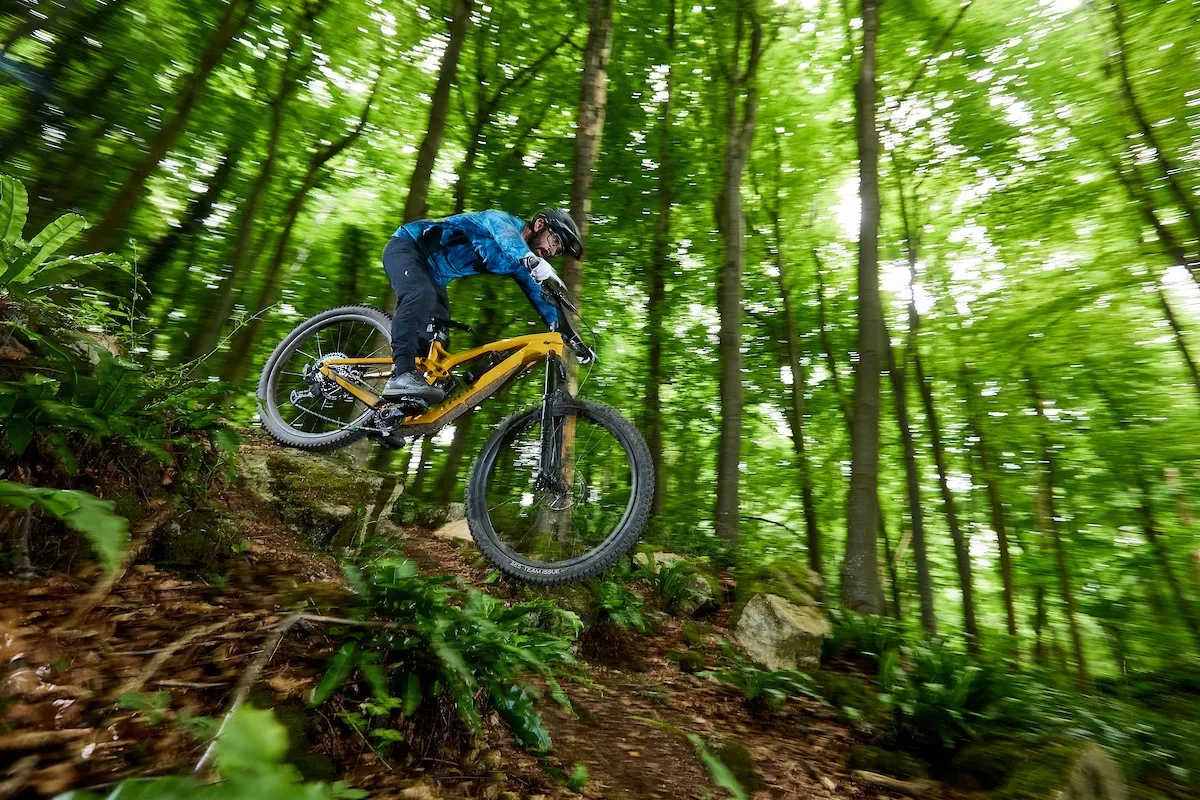
Electric mountain bikes carry suspension travel matched to their intended riding discipline.
Electric mountain bikes are heavy machines — in many cases even heavier than dedicated downhill bikes. The addition of a battery and motor means that frames and components must be over-engineered to cope with the extra mass, which in turn adds even more weight to the overall package.
Electric bikes can be classified within any of the disciplines discussed in this guide, and they generally feature suspension travel appropriate to that particular category. The top electric mountain bikes will come equipped with e-MTB-specific forks and shocks, many featuring thicker stanchions for added rigidity and custom tunes tailored to the heavier weight of the bike.
One significant advantage of electric mountain bikes is that the motor-assisted pedalling removes the traditional trade-off associated with heavier, longer-travel setups. You can enjoy more suspension without worrying about the added weight sapping your climbing energy, since the motor handles the hard work on the ascents.
What About Hardtail Mountain Bikes?

Hardtails are an excellent platform for building your riding skills.
Hardtail mountain bikes feature a suspension fork at the front paired with a completely rigid rear end. They appear across a range of disciplines, though they are most commonly found in the cross-country and trail segments. Hardtails are also an extremely popular choice for riders shopping on a budget, since the simpler design and absence of rear suspension significantly reduce manufacturing costs.
As with full-suspension mountain bikes, the fork travel on a hardtail generally corresponds to the riding discipline it is designed for. Cross-country hardtails typically run around 100mm of travel, while more aggressively oriented models can be found with suspension travel reaching up to 150mm.
Some manufacturers incorporate flex points into the rear triangle of their hardtail frames, introducing a degree of vertical compliance. This clever design touch improves rider comfort in the saddle and, to a lesser extent, enhances rear-wheel traction during climbing efforts.
Suspension Travel at a Glance
| Bike Category | Travel Range | Stanchion Diameter |
|---|---|---|
| Cross-Country | 80 – 120mm | 30 – 32mm |
| Downcountry | 110 – 130mm | ~34mm |
| Trail | 120 – 160mm | 34 – 36mm |
| Enduro | 150 – 180mm | 36 – 38mm |
| Downhill | 180 – 200mm | 35 – 40mm |
| Hardtail | 100 – 150mm | Varies by discipline |
Backyard Provider — Equipping Your Outdoor Adventures