

What Is a Wood Pellet Grill?
Pellet grills are outdoor cookers that blend the best traits of smokers, charcoal grills, and ovens into one machine. They burn 100% all-natural hardwood pellets as the fuel source, which allows a wood pellet grill to deliver either direct or indirect heat depending on what you're cooking.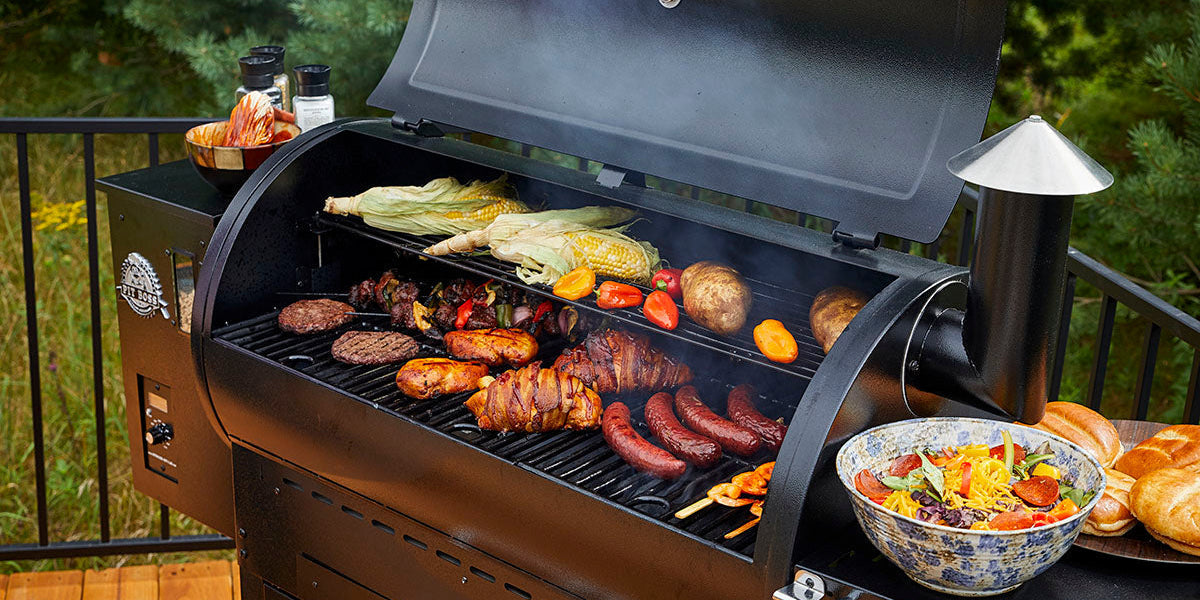
How Do Pellet Grills Work?
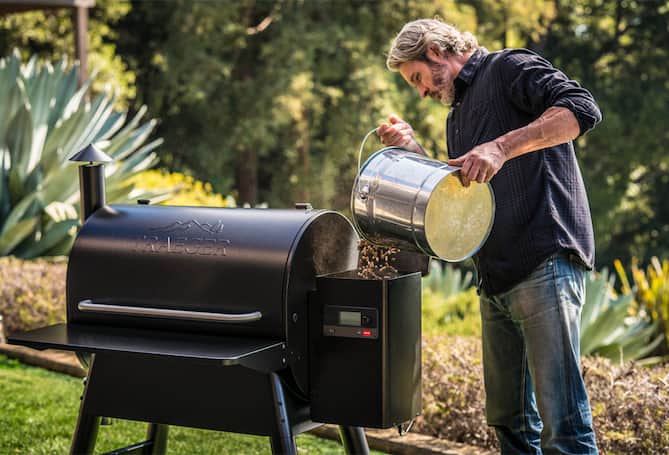
Hardwood pellets are loaded into a storage container known as the hopper. From there, they're fed into a cooking chamber by an electric auger. As the pellets ignite through combustion, they warm the cook box, and a set of intake fans pulls in fresh air to circulate heat and smoke evenly throughout the grill.
Similar to a conventional oven, pellet grills let you dial in a precise temperature digitally or with a knob — typically ranging from 180°F up to 500°F. That means you can slow-smoke low and easy or crank it up for a hot sear. Most pellet grills also come with a built-in meat probe so you can keep tabs on the internal temperature of your food right from the controller. Many models even include a built-in lever system that makes switching between indirect and direct heat quick and simple.
How Are the Pellets Made?
Hardwood pellets are made entirely from natural hardwood that's been dried out and ground into sawdust. That sawdust is then pressed under extreme heat to form small, compact pellets held together by the wood's own natural lignin — no glues, no fillers. Because pellets are so dense and clean-burning, they produce less than 1% ash, meaning a full 40-lb bag will leave only about half a cup of ash behind. Cleanup is effortless, and they deliver rich, authentic wood-fired flavor without the constant babysitting that wood chips or chunks demand.
How Long Do Pellets Last in a Pellet Grill?
Just like topping off the tank before a road trip, it's worth double-checking your hopper before you start cooking. A reliable rule of thumb: expect to burn about 2 lbs of pellets per hour of low-and-slow smoking, and closer to 4 lbs per hour when you're grilling hot and fast.
 Why Pellet Grills?
Cooking on a pellet grill is a different experience than any other type of outdoor cooker. Whether you're running direct or indirect heat, the fan-forced convection circulates smoke around every inch of food in the chamber — so everything gets infused with real hardwood flavor, no matter the recipe.
Beyond smoky flavor, pellet grills let you cook low and slow for hours on end. Some owners even leave their grill running while they're at work or asleep, pulling off perfectly smoked brisket and other cuts that would normally demand hours of hands-on attention. That convenience makes traditionally complicated barbecues approachable for everyone, not just pitmasters.
All you do is set the grill to the recommended smoke setting, leave it be, and monitor progress with a remote thermometer or the built-in meat probe.
Add to that a nicely seared steak at 500°F, and it's easy to see why pellet grills are considered 8-in-1 cookers that cover just about every backyard BBQ technique you could want. Not every wood pellet grill pulls this off — but the right one truly can.
Wood Pellet Grill vs. Charcoal Smoker
While pellet grills give you the ability to smoke food, they operate very differently from a traditional smoker. Because pellet grills use an automated fuel and air delivery system, controlling temperature is dramatically easier than it would be on a classic offset smoker. You can skip the frustration of babysitting charcoal over a long cook that could otherwise last many hours. With a pellet grill, smoking essentially becomes a "set it and forget it" affair — so you get the flavor benefits without needing the experience of a seasoned pitmaster.
Pellet grills also give you the convenience of pulling many different cooking styles out of a single unit. A traditional smoker only smokes, so if you wanted to grill, bake, or roast as well, you'd be forced to buy a separate machine.
Wood Pellet Grill vs. Propane Grill
Both gas grills and pellet grills deliver convenience at an affordable price — that's one reason pellet grills broke into the mainstream so quickly. Still, there are meaningful differences between the two.
Gas grills are strong performers at medium to high heat. However, because they tend to be poorly insulated, most gas grills struggle at low temperatures and aren't really designed to do slow smoking. They also require proper ventilation and, because they don't typically perform well as smokers, most outdoor cooks find themselves limited to grilling and searing.
Pellet grills, on the other hand, also offer more fuel variety than gas ever could. Hardwood pellets come in a wide range of natural flavor profiles you can match to your food. It's also much easier to hold a specific temperature on a pellet grill — each one has a temperature "dial-in" process, and you can pretty much set it to whatever setpoint you want within a 15°F window.
Wood Pellet Grill vs. Charcoal Grill
Charcoal grills have long been viewed as the classic way to grill. Odds are you've already used one at some point — whether it was a kettle, barrel, kamado, or something else. That said, there are really only two main fuel sources available for charcoal cookers: lump charcoal and charcoal briquettes.
Cooking on a charcoal grill is itself a bit of a craft that can take a lot of practice to truly master. The reason is simple: controlling the temperature on charcoal is hard. Pellet grills take a much more straightforward approach to heat control, which is a big part of why they've become so appealing. They're also easier to clean up — a 40-lb bag of hardwood pellets produces less than half a cup of ash total.
Wood Pellet Grill vs. Electric Smoker
Electric smokers are the modern take on the classic smoker, offering easier operation and more control than their more traditional relatives. Instead of burning wood or charcoal, electric smokers heat up wood chips from inside a tray in order to pull that smoky flavor out. Like pellet grills, they're convenient to use — you set the temp and forget it. However, most electric smokers can't climb up to the higher temperatures a pellet grill can reach. If the grill-and-sear range of 450°F–550°F matters to you, keep that in mind. They also don't hit the heat required for many other outdoor cooking techniques. So if an electric smoker sounds like your fit, look at a lineup of pellet grills too — many cover temperatures from 400°F and up, offering 5-in-1 flexibility in a single unit.
 The Backyard Provider Pellet Grill Pick
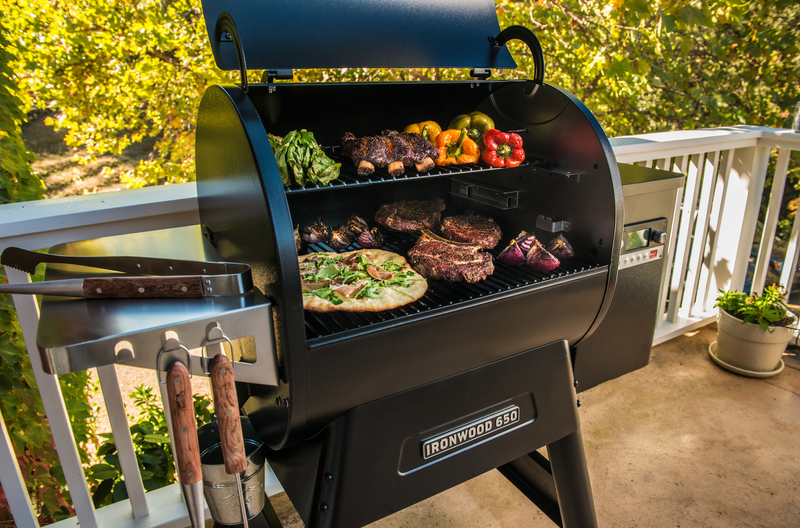
If you're in the market for a serious, hard-working, feature-packed pellet grill — one that's backed by a strong warranty and built to handle everything from smoke to sear — look no further than the Recteq Patio Legends 400. Load it up with hardwood pellets and let it sit back at low heat so you can fall off the bone brisket all while you're busy with your day. Or, crank the temp higher and you can get a steakhouse-quality sear straight in your own backyard. From weeknight dinners to weekend cookouts with friends, the Patio Legends 400 brings real wood-fired flavor home — and backs it with the kind of build quality you can trust season after season.