

For most backyard cooks, the decision usually comes down to charcoal or propane. Some have tried an electric unit and walked away unimpressed. But over the past decade a fourth fuel — wood pellets — has quietly pulled ahead of the pack. Despite a steeper entry price, pellet grills have earned a reputation for delivering real wood flavor with modern convenience, and you'll now spot them at tailgates, festivals, and weekend cookouts across the country.
Below we break pellets down against charcoal, propane, and wood chips across the criteria that matter most.
In this article
- BBQ pellets vs. charcoal grills
- BBQ pellets on a charcoal grill
- BBQ pellets vs. propane
- BBQ pellets vs. wood chips
Barbecue wood pellet basics
Wood pellets are manufactured for two distinct jobs: heating and grilling. The differences between the two are not cosmetic — they matter a lot for flavor, safety, and how your food ends up tasting.
- Heating pellets are engineered for home furnaces and stoves. They burn hot and steady but often include unpleasant additives and commercial hardwood blends you do not want anywhere near your dinner.
- BBQ pellets are made of 100% food-grade compressed hardwood sawdust. Pressure alone — not glue or chemicals — binds the sawdust together, locking in the clean smoke profile pitmasters rely on.
- A cleaner burn than charcoal. BBQ pellets turn roughly 90% of their mass into usable heat and produce a fraction of the ash you'd see from briquettes.
- Safer than gas. At Energex, for example, pellets are manufactured to meet the same safety standards as any food-contact product — no petrochemicals, no mystery additives.
- Variety you can actually taste. Hickory, oak, applewood, pecan, bourbon barrel, and many more — each wood delivers its own distinct flavor profile.
- Environmentally sound. Pellets are a renewable resource made from hardwood sawdust that would otherwise be waste, with no petrochemicals required.
01The four fuel options at a glance
Before going deeper, here's how the four main grilling fuels stack up when you walk into a backyard and start looking for flavor.
Charcoal
The long-standing favorite for hardwood flavor. Takes a while to come up to temperature, but rewards patience with a big, smoky crust.
Propane
Fast and convenient, yet propane struggles to put real smoke into your food. Great for searing, underwhelming for low-and-slow.
Wood Chips
Terrific for adding smoke on top of another fuel. They burn fast, require constant tending, and can turn food bitter if overused.
BBQ Pellets
The best of both worlds — authentic hardwood smoke with thermostat-level control. Clean burn, low ash, and consistent heat for hours.
 Wood pellets vs. charcoal grills
Charcoal is the heritage fuel of American backyard barbecue — and for good reason. But with the rise of modern pellet grills, many longtime charcoal loyalists are crossing over after a single cook. Here's why.
1Taste
If flavor is the deciding factor, pellet grills may win you over on your first cook. Pellets deliver a purer hardwood profile than charcoal because most charcoal, particularly briquettes, contains binders and fillers that impart their own scent while burning. Choose from varieties such as 100% hickory or 100% applewood for a focused, flavorful smoke.
Pellets also tend to be more forgiving, since they deliver a lower dose of smoke over a longer stretch of cooking. That means the natural moisture in brisket, pork, or fish survives — instead of being washed away under a heavy smoke blanket.
Most Americans know the taste of charcoal. Give the same cut of meat a chance on a pellet grill, and you'll find the cleaner, more nuanced flavor hard to forget.
2Convenience and ease of use
Charcoal takes effort. You build the pile, light it, wait for coals to ash over, and hope the temperature lands where you wanted it. Once the food is on, you're tending vents and moving coals to keep the heat where it needs to be.
After a heat cycle or two, charcoal gets easier. But pellet grills are easier from minute one — set the temperature on the controller, load the hopper, and walk away. The auger feeds pellets automatically while you enjoy the day.
3Versatility
A pellet grill is not just a smoker. It can grill, roast, bake, smoke, and even sear — all from the same machine. That is the kind of versatility no charcoal setup can match without extra equipment or workarounds.
Most charcoal grills will smoke, barbecue, grill, and sear, and that is about where the list ends. Pellet grills open a lot more doors if you like experimenting with your backyard cook sessions.
4Safety
Charcoal grills can throw sparks and embers, and they need constant monitoring while the heat is dialed in. Pellet grills, by contrast, burn the pellets in an enclosed firepot and use fans to manage airflow, so flare-ups and wasted fuel are rarely a concern.
5Cost
A small, no-frills charcoal grill can be yours for $30. Bigger, higher-end charcoal models climb from there. Pellet grills are more of an investment up front because the electronics, hopper, and auger system add to the build — but the gap has been narrowing fast as the category has matured, and ongoing competition keeps pushing prices down.
Fuel cost tells a different story. A 20-pound bag of quality BBQ pellets typically lasts several times as long as a comparable bag of charcoal, which quietly rebalances the math in pellets' favor over time.
Editor's Pick
 Ready for a pellet grill that does it all — smoke, grill, sear, and roast?
The Recteq X-Fire Pro 825 delivers high-heat searing performance alongside true low-and-slow smoke, with the convenience every pellet grill promises.
Shop Recteq X-Fire Pro 825Can you use BBQ pellets in a charcoal grill?
Yes — with two caveats. First, you need high-quality pellets that are designed for grilling (look for 100% hardwood with low ash and strict quality control). Second, technique matters more here than on a dedicated pellet grill.
A simple way to do it with your charcoal grill:
- Get the charcoal started as you normally would.
- Once the charcoal is hot and covered with a layer of white ash, scatter a handful of pellets over the top.
- Once the pellets begin to smolder, you're ready to grill.
- To take the flavor deeper, close the lid.
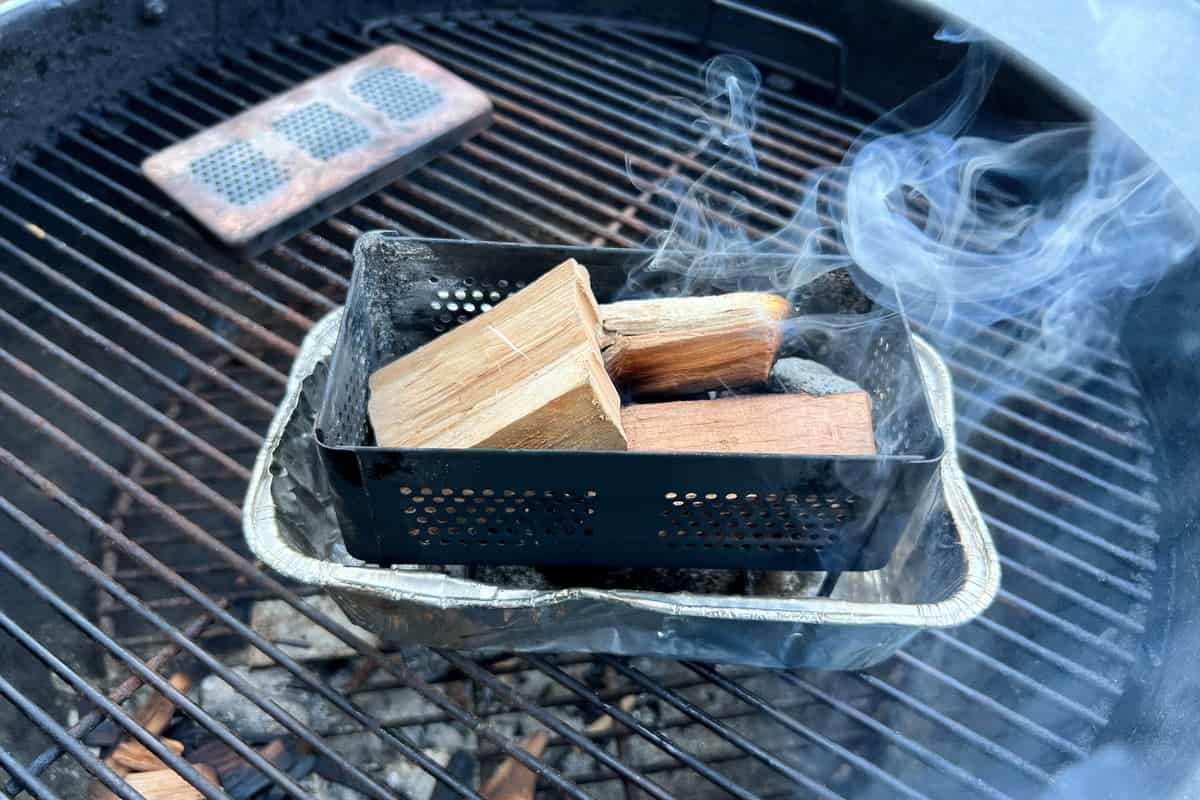
Another option is to build a pellet smoker tube, like an A-Maze-N Tubes design. Fill it with pellets, light one end with a torch, let the flame burn for a minute, and blow it out so it smolders. For brisket, pork shoulder, ribs, or whole fish, a pellet tube gives you hours of real hardwood smoke on the coals.
Want faster, fuss-free heat? Punch a few holes in the bottom of an aluminum tray, fill it with pellets, and place it on the coals. It's a small hack with a big payoff.
Section 04Wood pellets vs. propane
Propane grills are the other kitchen-door standby in American backyards. Put BBQ pellets next to natural gas or propane in a straight comparison, and the differences jump out quickly.
Pellets
Deliver authentic hardwood smoke with automated, thermostatic control. Clean-burning, renewable, and low on ash.
Propane
Lights fast and runs clean, but produces almost no smoke flavor on its own. Ideal when speed and convenience matter most.
1Taste
There's no contest on flavor. A pellet grill cooks meat, poultry, and fish with real wood smoke. Propane puts out almost no smoke on its own — it cooks cleanly but produces a much more neutral flavor. Some grillers add a smoker box to their gas grills to compensate, but the results rarely match a true pellet-fueled cook.
If you've spent years on propane and nothing but propane, switching to pellets is like listening to your favorite album in high fidelity for the first time. The depth is simply on another level.
2Convenience and ease of use
Propane has built its reputation on convenience, and it's still hard to argue that. Open the valve, push a button, and you're cooking. Pellet grills take a little longer to come up to temp, but you set it once and they hold it for as long as you like.
You also know exactly how much propane is left only when you check the tank — and few things ruin a Saturday cook faster than running dry mid-brisket. A 20-pound pellet bag lets you see at a glance how much fuel you have left.
And thanks to modern pellet grill controllers, adjusting heat on the fly is usually as simple as turning a dial — same quick feedback a gas grill offers, just without burning through propane to hold a low temperature for hours.
3Versatility
Pellet grills handle grilling, roasting, baking, braising, smoking, and searing. Propane grills focus on grilling and searing and stay there. Propane also imposes its own ventilation and clearance rules, which makes pellet units a better fit for many patio layouts.
4Safety
Propane is a pressurized, flammable fuel. Leaks, flare-ups, and the occasional dramatic ignition event are not rare on gas grills, and a tank swap is always a careful operation. Pellets are solid hardwood fuel — no pressurized tank, no gas line, no leak risk. As always, keep any grill a safe distance from structures and flammable materials.
5Cost
Pellet grills have historically cost more up front than propane grills, though competition has closed that gap quickly. Day-to-day fuel cost depends on how much of a cook you're doing and what the pellets or tank cost at your store — but a 20-pound bag of pellets often powers roughly 20 hours of cooking, which stretches a lot further than it looks on the shelf.
Wood pellets vs. wood chips
Pellets and chips come from the same place — hardwood — but the processing is very different, and that is where the performance gap opens up.
BBQ pellets are compressed hardwood sawdust, dried down until they are so dense that a consistent moisture level and clean smoke profile are guaranteed. Pellets don't catch fire like chips — they smolder, which is exactly what you want for controlled flavor.
Wood chips are not compressed at all. They're chunks of hardwood, irregular in size, and designed mostly to be tossed onto charcoal or into a smoker box to add a quick smoke burst. They work, but they burn fast and lose their flavor fingerprint quickly if the fire gets too hot.
1Taste
Both deliver hardwood flavor. But because pellets smolder evenly at a consistent temperature, the flavor they lay down is steady from the first hour to the last. Chips tend to come in waves — a big puff of smoke at the start and much less toward the end.
Pellets are also available in a wider range of single-species and blended woods, including hickory, apple, pecan, oak, mesquite, and bourbon barrel. Chip selections are narrower and less consistent bag-to-bag.
2Convenience and ease of use
Pellets are simpler. Load the hopper, set the temperature, and the grill does the rest. Chips need to be soaked, placed in a smoker box, and monitored throughout the cook so they don't ignite or burn out too quickly. If you leave a chip pan unattended, you're either losing smoke or producing bitter, oversmoked food.
Pellets also tend to produce less ash and less mess, which cuts cleanup time after every session.
3Cost
Raw hardwood chips tend to be cheaper per bag, but they also burn faster and less efficiently, so your cost-per-hour of cooking is usually higher than you'd expect. Pellets stretch much further and give you a more predictable cook, which is what most backyard cooks are really paying for.
Bring home the easiest, best-tasting cook in your backyard
If everything above has you leaning toward pellets, the next step is picking a grill that can sear hot, smoke low, and handle every cook you throw at it. The Recteq X-Fire Pro 825 is built for exactly that — dual-mode performance, serious build quality, and enough cooking space for the whole crew.
Shop Recteq X-Fire Pro 825