

A quiet transformation is taking place in the world of efficient wood heating. Each passing season, a growing number of homeowners are turning to log burner fans (often called stove fans) to draw the full potential out of their heating setups. These compact devices have rapidly climbed the ranks to become one of the most sought-after accessories for wood-burning stoves.
The appeal is straightforward: log burner fans offer a simple, eco-conscious, and hassle-free method of spreading warmth throughout your living space — all without needing to plug into the grid.
But do they really live up to the hype? Is the improvement in room temperature actually perceptible? Are they just another passing gadget trend, or a smart addition worth adding to your setup alongside premium fire logs and briquettes?
Let's dive in and find out!
 What Exactly Are Log Burner Fans?
Often referred to as stove fans, log burner fans are clever little gadgets designed to distribute hot air more evenly around your home — and they do so without needing any electrical input. Typically crafted from metal and sized roughly like a small tablet, these fans rest directly on top of your wood burner. The force that powers the blades comes entirely from the heat given off by your stove, harnessed through a fascinating physical principle known as the Seebeck effect.
How Do You Install a Wood Burner Fan?
Setting up a stove fan takes only a matter of seconds and doesn't require any tools. Just rest it on top of your wood-burning stove, aim the blades toward the area of the room you'd like to warm up, and you're ready to go.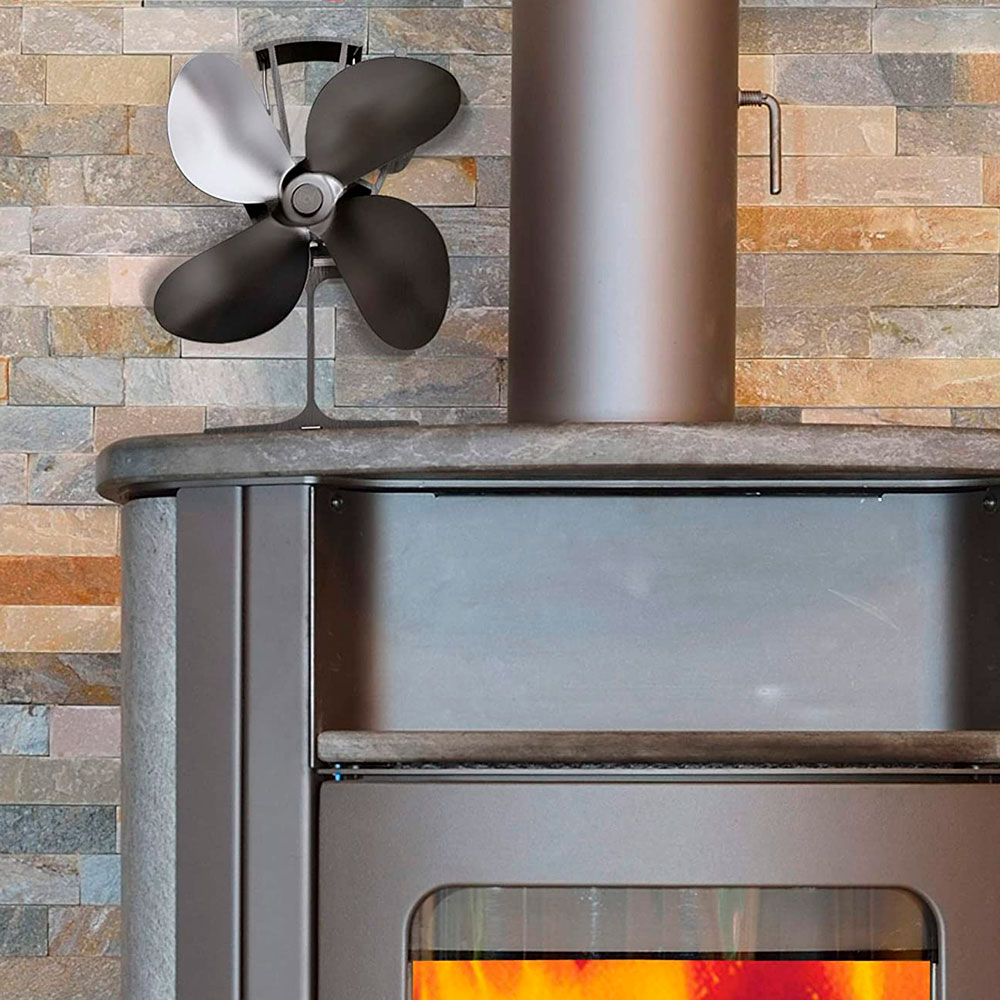
Do They Require a Plug or Batteries?
Not at all. Log burner fans run completely independently of any power source — no outlets, no batteries, no cords. Every bit of energy they need is drawn directly from the heat of your stove through the Seebeck effect, which is a well-documented example of the thermoelectric phenomenon.
How Do Log Burner Fans Actually Work?
Stove fans rely on the Seebeck effect to produce their own electricity. As your burner warms up, the blades gradually start spinning, pushing heated air outward — air that would otherwise simply drift up toward the ceiling — throughout the room, making it feel noticeably warmer. Every bit of this motion is fueled purely by the warmth coming from your burner.
How Does the Seebeck Effect Power a Stove Fan?
All stove fans rely on the Seebeck effect, a form of thermoelectric reaction that produces electricity directly from heat. When the fan's base heats up (with help from heat-conducting pads) while the upper portion stays cooler, electricity is generated. That electrical current is what gets the blades spinning. Because of this clever design, no plug-in power or batteries are ever required.
The Benefits of Using a Log Burner Fan
Thanks to basic physics, most of the warmth generated by a wood-burning stove tends to drift upward to the ceiling rather than circulating around the room itself. A stove fan helps push that warmth outward at the pace your room actually absorbs it — so your spaces get toasty faster.
One of the leading causes of heating waste across the UK is people burning more wood than what's actually needed to warm their home. By using the heat your stove produces more effectively, you won't find yourself adding more fuel than necessary.
Unlike their electric counterparts, log burner fans run without any power grid dependence. There's no need for batteries or outlets — the heat coming off your burner is all it takes to get the fan in motion.
Just place your stove fan on top of your burner, angle it toward the area you want to heat, and you're good to go. Within a few minutes of lighting your burner, the fan begins rotating and eventually ramps up to its ideal speed.
Why Wood Stoves Warm the Ceiling Instead of You
Warm air is naturally less dense than cool air, so when you get a fire going in a log burner, the heat instinctively drifts upward toward the ceiling. For most people sitting in the room, that warmth is essentially wasted — hovering out of reach. Until the ceiling itself is saturated with heat, the area you're actually living in stays chilly, even when you're burning the hottest logs available.
Stove fans step in to push that hot air horizontally, making sure warmth gets spread out more evenly across the whole room.
What to Look Into Before Picking a Stove Fan
- Size & Available Space. A larger fan is generally better, but only if your stove's top surface has the room to safely hold it — and enough heating capacity to actually turn the blades.
- Blade Count & Dimensions. Bigger or more numerous blades usually push more air, though they can spin a little slower and generate less convection. The trick is finding the right match for your specific stove.
- Heat Compatibility. Different models are tuned for different temperature ranges. Make sure whichever one you pick works with the heat output of your particular burner.
Ready to Upgrade Your Wood Stove Setup?
Pair your stove fan with a powerful, efficient wood-burning stove for maximum warmth and performance all season long.
Shop Osburn 3500 Wood StoveLooking for a premium wood-burning stove to complete your home heating setup? Backyard Provider has you covered.
Osburn 3500 Wood Stove