

An elliptical exercise machine replicates the natural stride of running while dramatically reducing the stress placed on your joints. This makes it an excellent choice for anyone who wants cardio-intensive workouts without the heavy impact a treadmill delivers — especially if you're recovering from an injury or aiming to protect your knees and hips long-term.
At Backyard Provider, we examine ellipticals from trusted manufacturers to help you identify machines that truly belong in your home. We look at ergonomics, build quality, safety, and overall value — so you can spend your money with confidence.
While browsing online is a great starting point, we strongly encourage you to test any elliptical in person before committing. Unlike treadmills, ellipticals restrict your movement to a fixed pedal path, and you won't be able to judge whether that motion feels right just by reading specifications. You might also discover issues like knee contact with the frame — something only a hands-on trial can reveal.
In this guide, we'll walk through the different categories of ellipticals — from models with built-in heart rate tracking to the various flywheel configurations available. We'll help you determine which elliptical best fits your fitness goals, space, and budget.

Featured Pick
Find Your Perfect Elliptical
We evaluate and compare the latest elliptical exercisers so you get the best value and performance for your investment.
NordicTrack AirGlide 7iTypes of Ellipticals
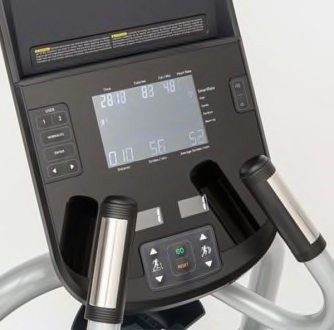
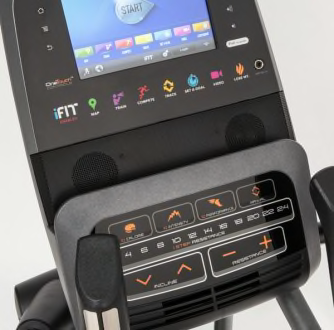
Ellipticals generally fall into two broad categories: those equipped with heart rate programs and those without. If you're just getting started, a heart rate program can be a valuable feature — it automatically adjusts the workout intensity to keep you within a target zone. For seasoned users, manual control might be all you need.
Elliptical Configurations
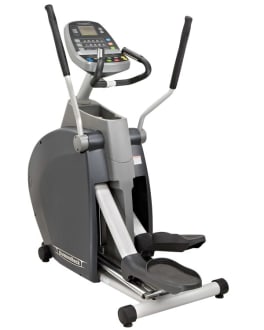
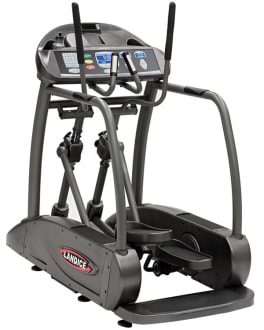
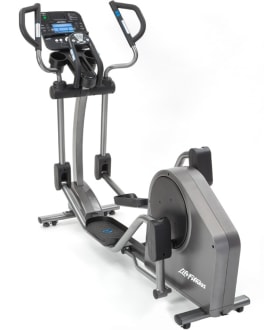
There are three primary configurations of elliptical machines, and each one is defined by where the flywheel is positioned relative to the foot pedals. This arrangement affects both the feel of your stride and the overall footprint of the machine.
How to Pick an Elliptical
Before settling on a specific model, there are several baseline factors to consider. Below, we break down the most important aspects of design, specifications, and features that should guide your decision.
Size
Most ellipticals measure roughly 72 inches long by 30 inches wide, though lengths can vary from 50 to 84 inches. Remember that during operation, the pedals may extend beyond the machine's body, and you'll stand higher than you would on a treadmill — so ceiling height matters. Step-up heights typically fall between 5 and 15 inches, with pedals reaching up to 25 inches above the floor at the peak of the stride cycle.
You'll want at least 20 inches of clearance on one side and at either the front or back of the machine for safety.
Ergonomics
Unlike a treadmill that lets you move freely, an elliptical locks you into a specific motion path. Comfort is critical — when testing a machine, check that you can maintain upright posture, the handgrips feel natural without straining your wrists, the pedals are close together, and the frame doesn't interfere with the movement of your arms, shoulders, or knees.
Intensity
Every elliptical offers variable resistance. Make sure the lowest setting feels easy and that the challenge becomes genuinely difficult at around 75 percent of maximum. If the hardest level feels only mildly tough when you first try it, you'll quickly outgrow the machine. Also look for an adjustable incline to further customize intensity.
Connectivity
Like treadmills and exercise bikes, many ellipticals offer wireless connectivity through Bluetooth. This lets you sync with mobile apps for workout tracking, connect to social fitness platforms, and access libraries of guided exercise routines directly from your device.
Programs
Built-in workout programs add variety and can keep you motivated to exercise regularly. Don't overpay for features you won't use — a few solid programs targeting different workout types should suffice. Some machines also allow custom resistance profiles. Check whether a monthly subscription is required, as certain brands lock essential functions behind a paywall.
General Safety
Ellipticals pose a risk to children, who can get fingers or hands caught in the moving components. If you have kids at home or regular young visitors, take precautions: keep the room locked, unplug the machine when not in use, enable any software lockout features, and insert pedal safety pins after every workout session if your model includes them.
Budget & Logistics
Price
Premium ellipticals can run upward of $3,000 — some even exceed $5,000 — but you can find capable machines for significantly less. More expensive models generally deliver additional features, sturdier construction, and a larger footprint.
Delivery
Ellipticals are heavy and assembly can be complex — usually requiring two people. Check whether professional assembly is included or available at an additional cost before purchasing.
Return Policy
Before buying, verify the return policy — including any restocking fees and who covers return shipping costs. If you're purchasing online, understand exactly how the return logistics are handled.
Warranty
Look for a warranty covering parts for three to seven years and at least one year of labor coverage. Most quality ellipticals include a lifetime frame warranty. Extended warranties generally aren't worth the extra expense.
Key Elliptical Features
Beyond the essentials, there are a handful of additional features worth evaluating before you finalize your purchase.
Stride Length
If your elliptical offers adjustable stride length, take the time to experiment with different settings. A stride that feels natural to your body will reduce fatigue and help you maintain proper form throughout your workout.
Safety Features
Certain ellipticals include features specifically designed to prevent injuries — especially to children. Two of the most common options to look for:
Pedal Arm Safety Pin: A mechanical device that prevents the pedals from moving or stops the user from increasing resistance. Commonly found on premium machines.
Software Lockout: A digital feature that disables the console or keypad, making the machine less appealing and accessible to curious children.
Why Trust Backyard Provider for Ellipticals
Our elliptical recommendations are built on thorough evaluation of every aspect of these machines. Every model we feature undergoes rigorous assessment to ensure it delivers a quality workout without compromising comfort or safety.
How Ellipticals Are Evaluated
Each machine is assigned an Overall Score based on a comprehensive battery of tests. These evaluations cover specific performance areas so you can see exactly how a model stacks up — both overall and in individual categories.
Testing Methods
Ellipticals are put through a series of real-world tests and evaluations to measure usability and durability. Here are some examples of what's assessed:
Ergonomics: Comfort and reach are tested using proportioned figures at both the 95th percentile (tall) and 5th percentile (short) to accommodate the widest range of body types.
Intensity Range: A panel of testers with varying fitness levels evaluates how easy the lowest setting feels, how challenging 75 percent of maximum resistance is, and whether the highest setting provides a meaningful workout.
Safety: Assessors examine pinch points, pedal dimensions, protective coverings, and handle design. Static load tests apply 750 pounds to a single pedal to check for any deformation or functional changes.
Ready to find your perfect elliptical?
NordicTrack AirGlide 7i