

The Physiology of Seating: Why Material Science Matters
Extended sitting places a continuous load on your musculoskeletal framework. According to established ergonomic research, poorly chosen seat surfaces create friction zones and micro-pressure points that restrict blood flow across muscles and tendons. While the immediate discomfort may seem minor, the cumulative toll of an inferior seat material can compound dramatically over months and years of daily use.
Throughout the day, your body transfers heat, moisture, and natural oils to whatever surface you are sitting on. Materials with limited breathability — particularly certain synthetics — tend to trap that thermal energy, causing localized temperature spikes. The result is what ergonomists call "micro-fidgeting," an unconscious pattern of postural shifts that actually accelerates fatigue rather than relieving it. Over extended periods, these seemingly small disruptions can raise the likelihood of musculoskeletal disorders significantly.
A truly high-performance seat material must strike a delicate balance: firm enough to distribute your weight evenly across the sitting surface, yet supple enough to prevent static pooling in a single posture. This is precisely where the gap between top-grain leather, PU leather, and bonded leather becomes a technical decision rather than a purely cosmetic one.

Top-Grain Leather: The Engineering Gold Standard
Among the various upholstery options available today, top-grain leather occupies the highest tier for executive and professional seating. Unlike synthetic alternatives or composite blends, top-grain leather is harvested from the outermost layer of the hide — the portion closest to the surface where the fiber structure is densest and most uniform.
For chairs in the premium category, a genuine top-grain Nappa leather finish stands out. Because the natural pores of the hide remain intact rather than being filled with layers of plastic pigment, the material adapts dynamically to body temperature fluctuations. This reduces the thermal accumulation that leads to postural instability over long work sessions.
Expert Insight: The tell-tale indicator of genuinely high-quality top-grain leather is the distinctive "pull-up" effect. When the surface is stretched or pressed, the waxes and oils within the hide migrate, creating a temporary lightening at the flex point. This produces a rich, ever-evolving patina that develops character over time rather than simply cracking or peeling.
The Business Case for Quality: Long-Term ROI
For executives and business owners, the choice of seating material extends well beyond personal preference. When factored against variables like total cost of ownership, expected replacement frequency over a ten-to-fifteen-year window, and the less tangible but very real impact on employee wellness, a premium chair frequently proves to be the smarter financial decision.
Research into modern workplace design consistently highlights the connection between material transparency and long-term durability. Investing in a chair built with top-grain leather or equivalent high-performance upholstery ensures that the seat retains its structural and aesthetic integrity through years of heavy daily use — rather than requiring a costly replacement every two to three years.

Practical Recommendations for Setup and Maintenance
To maximize both the lifespan of your ergonomic investment and your own musculoskeletal health, incorporate these maintenance habits into your routine.
1. Professional Maintenance Protocol
Dusting
Use a dry, clean microfiber cloth weekly. Dust acts as a microscopic abrasive that can wear down the finish of both PU and genuine surfaces over time.
Spills
Blot immediately with a barely damp cloth. Never use a dryer or heat-based method to dry leather — it can cause fibers to stiffen and crack prematurely.
Silicone Barrier
Strictly avoid silicone-based cleaners. While they provide a temporary sheen, silicone can trap grime on top-grain leather and accelerate the breakdown of the polymer bonds in PU and bonded varieties.
Conditioning
For top-grain leather, apply a high-quality conditioner once or twice a year to keep the material supple and resistant to surface cracking.
2. Ergonomic Configuration
The Sit-Stand Ratio: Even the most advanced leather chair cannot eliminate the risks of static posture. Follow the 60/20/20 guideline — sixty minutes seated, twenty standing, and twenty in gentle movement — for every ninety-minute work cycle.
Monitor Height: Ensure the top of your screen is at or slightly below eye level. This prevents the "forward head" position that places excessive strain on the neck, regardless of how comfortable your chair feels beneath you.
Armrest Alignment: Adjust armrests so your shoulders are relaxed and your elbows form a 90- to 100-degree angle. This is a core recommendation in the BIFMA Ergonomic Standards framework.
PU Leather: Engineered Performance and Its Limitations
Polyurethane (PU) leather is a synthetic material made by coating a fabric backing with a flexible polymer layer. Often described as "faux" or "modern high-performance" leather, PU can be tailored to replicate specific textures, colors, and tactile qualities with remarkable precision.
In certain applications, a high-performance PU can achieve abrasion resistance exceeding 50,000 Martindale cycles. The material can also endure a standard abrasion test simulating extended wear against upholstery under a specific pressure threshold. A rating of 50,000 cycles is generally considered suitable for heavy-duty commercial use. This can actually surpass the durability of certain "corrected" top-grain leather used in budget furniture, where the natural grain has been sanded away and replaced with a stamped pattern.
However, the hidden cost of PU lies in its predictable decay curve. Over time, the plasticizers that keep the top layer flexible begin to migrate away from the fabric backing. This leads to the familiar phenomenon of "delamination," where the plastic coating visibly cracks and peels away from the base fabric. This usually begins at high-friction contact zones like seat edges and armrest surfaces.
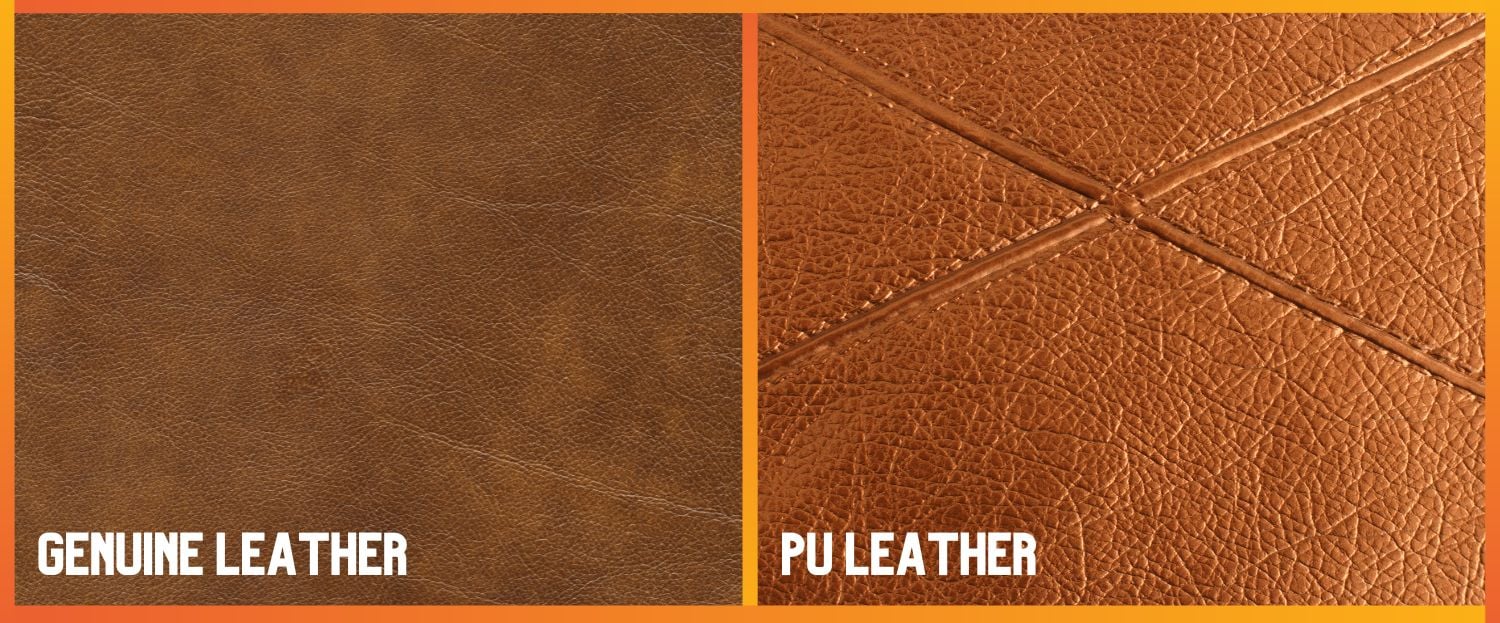
Bonded Leather: The Hidden Risk in the "Real Leather" Claim
Bonded leather is arguably the most misunderstood material in the furniture industry. It is manufactured by shredding leather scraps and binding them together with polyurethane or latex binders onto a fiber backing. While it can legally carry marketing labels containing the word "leather," its structural integrity is significantly lower than that of top-grain hide.
A central challenge with bonded leather, rarely mentioned in retail specifications, is its reaction to humidity. As the binding agents break down over time, the surface can develop a "tacky" or sticky feel. Furthermore, because it relies on a composite fiber structure, it has very limited stretch capacity. The interlocking collagen fibers found in natural hide that provide the necessary "give" for organic, body-conforming support are simply absent — meaning bonded leather tends to crack flat, making it prone to sudden, catastrophic tearing at the seams.

Comparative Analysis: Material Performance Modeling
To assist in the procurement process, the following table models the expected performance of these materials based on common industry benchmarks and material science principles.
| Feature | Top Grain (Napa) | High-Performance PU | Bonded Leather |
|---|---|---|---|
| Primary Composition | 100% Natural Hide | Polymer on Fabric | Shredded Scraps + Binder |
| Breathability | High (Natural Pores) | Low to Moderate | Very Low |
| Typical Lifespan | 10–25+ Years | 3–7 Years | 1–3 Years |
| Failure Mode | Natural Patina / Aging | Delamination / Peeling | Cracking / Flaking |
| Maintenance | Leather Cream / Cloth | Damp Cloth | Extremely Difficult |
| Tactile Feel | Supple, Adaptive | Consistent, Smooth | Plastic-like |
Methodology Note: This comparison is based on a scenario-based model using an identical office usage pattern. Exact performance will vary based on specific manufacturing processes, environmental conditions, and individual usage habits.
Integrating Ergonomic Standards: BIFMA and ISO Compliance
When selecting a chair, material quality should always be assessed alongside the lens of international safety and performance standards. The BIFMA G1 Ergonomics Guideline provides recommended configurations for furniture fit across the 5th to 95th percentile of the population. However, the utility of that fit depends entirely on the upholstery beneath it.
For example, major executive leather chair lines often feature construction that includes a high-end, full-grain Nappa leather, a high-density sculpted cushion, and a multi-layer PU frame that mirrors the microscopic structure of natural hide fibers. This produces a "bio-ergonomic" feel that aligns well with ISO 9241 requirements for pressure distribution in workstation seating. By using performance leather in this way, the design addresses the hard-to-solve tension between rich visual presence and genuine postural support using synthetic materials.
Featured Product
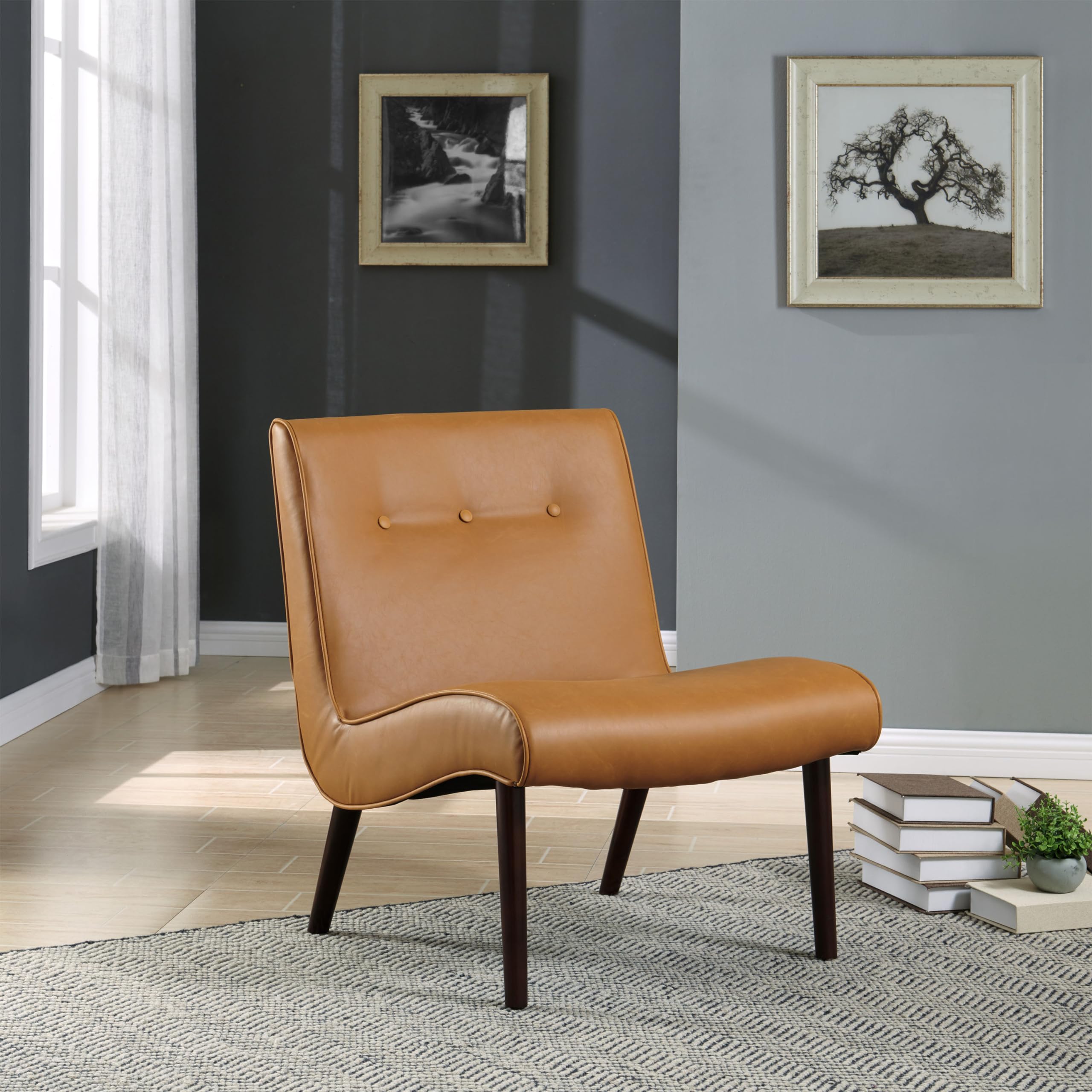
Experience Bonded Leather Comfort at a Smart Price Point
See how bonded leather performs in a stylish, real-world accent chair — perfect for home offices and living spaces where design meets practicality.
Alexis Bonded Leather ChairConclusion: Making an Informed Selection
The "best" material for an office chair depends on the intended use case and the user's environment. For those seeking the ultimate in breathability, longevity, and professional aesthetics, top-grain Nappa leather is the undisputed choice. For high-traffic environments where spill resistance is a priority, high-performance microfiber PU offers a durable, engineered alternative.
By understanding the technical differences between these grades — and recognizing the inherent risks of bonded leather — professionals can build a workspace that supports both their physical health and their long-term financial goals.