

Choosing the right projector goes far beyond picking the biggest screen size. Whether you're outfitting a home theater, upgrading a conference room, or planning outdoor movie nights, understanding the key specifications will help you invest wisely and avoid costly mistakes.
Who Needs a Projector?

Projectors serve a surprisingly wide range of users. Before evaluating specs, identify which category best describes your needs — this alone will eliminate half the options on the market.
Business & Presentations
Conference rooms and training spaces benefit from bright, high-contrast projectors that perform well under ambient lighting without requiring a darkened room.
Education & Training
Classrooms need reliable, easy-to-use units with strong lamp life, straightforward connectivity, and minimal maintenance to keep lessons running smoothly.
Home Theater
Cinephiles demand 4K resolution, high dynamic range support, accurate color reproduction, and near-silent operation to replicate an authentic cinema experience.
Gaming
Gamers should prioritize low input lag (under 20ms), fast refresh rates, and a short-throw lens to maximize immersion without needing a massive room.
Outdoor & Portable Use
Backyard setups and camping trips call for compact, battery-powered units with strong wireless capability and enough brightness to handle ambient evening light.
What to Look For
Once you've identified your use case, these are the twelve specifications that matter most. Understand each one and you'll never be misled by marketing language again.
Resolution
Resolution determines how sharp and detailed the projected image appears. 720p (HD) is acceptable for casual use and basic presentations. 1080p (Full HD) is the sweet spot for most home and business applications. 4K (UHD) delivers extraordinary detail for dedicated home theaters and high-end commercial displays. Always match resolution to viewing distance — at 10 feet or less, 4K makes a visible difference.
Brightness (Lumens)
Lumens measure the volume of light a projector outputs. In a fully darkened room, 1,500–2,500 lumens is sufficient. For rooms with partial ambient light, target 2,500–4,000 lumens. Bright, sunlit spaces require 4,000+ lumens. For outdoor evening use, 2,000–3,000 lumens with a quality screen typically delivers excellent results.
Contrast Ratio
Contrast ratio defines the difference between the deepest blacks and the brightest whites. A higher contrast ratio produces richer, more cinematic images. Look for a native contrast ratio of at least 10,000:1 for home theater use. Be cautious of inflated "dynamic" contrast specs — native contrast is the figure that matters in real-world viewing.
Aspect Ratio
Most content today is produced in 16:9 widescreen, making it the ideal ratio for movies, gaming, and web content. Some business projectors use 4:3 for legacy document formats. Choosing the wrong aspect ratio means black bars, stretched images, or wasted screen real estate.
Throw Distance
The throw distance is how far the projector must sit from the screen to fill it properly. Standard throw projectors need several feet of clearance. Short-throw units work from 3–5 feet. Ultra-short-throw models can sit inches from the wall — ideal for small rooms or permanent installations where ceiling mounting isn't possible.
Connectivity Options
HDMI 2.0 or higher is essential for 4K and HDR content. USB-A ports allow direct media playback from drives. Wireless connectivity (Wi-Fi and Bluetooth) is increasingly important for streaming apps, wireless audio, and screen mirroring from phones and laptops. Verify that the projector supports your primary source devices before purchasing.
Lamp Life
Traditional lamp-based projectors typically last 3,000–5,000 hours before requiring a bulb replacement, which can cost $100–$300. Modern laser and LED projectors deliver 20,000–30,000 hours of life with no bulb replacement needed — making them more cost-effective and convenient over the long term despite a higher upfront price.
Portability & Mounting Options
If you plan to move your projector between locations, weight and form factor are critical. Portable units under 3 lbs prioritize convenience. Fixed installations benefit from ceiling-mount compatibility, lens shift, and keystone correction for precise alignment. Verify that your chosen projector includes the physical mounting hardware or accessories you need.
Audio Quality
Built-in speakers vary enormously in quality. Entry-level projectors typically include 5–10W mono speakers — adequate for small rooms or casual viewing. If audio quality matters, look for built-in stereo speakers with 15W or more, or ensure the projector has a dedicated audio-out port to connect to a soundbar or external speakers.
Keystone Correction
When a projector isn't perfectly centered in front of the screen, the image appears trapezoidal. Keystone correction digitally compensates for this distortion. Auto keystone handles adjustments automatically. For the cleanest image quality, optical lens shift is superior to digital keystone correction since it avoids any resolution loss.
Special Features
Modern projectors increasingly include built-in streaming platforms (Android TV, Roku, Fire TV), voice control compatibility, and split-screen modes. These features reduce dependence on external devices and simplify your setup. Confirm whether the operating system receives regular software updates to keep apps and security current.
Brand Reliability & Warranty
Projectors are a long-term investment. Evaluate manufacturer reputation, customer support availability, and warranty terms before committing. A projector backed by a 2–3 year limited warranty and accessible technical support provides far greater peace of mind than an unbranded unit with no after-sale service.
Selecting the right projector is less about finding the highest-spec model and more about matching the right specification profile to your actual environment and budget. A well-matched mid-range projector will outperform an over-specified unit used in the wrong setting.
Buyer's Guide: Where to Buy
Knowing what you want is only half the equation — where you purchase matters just as much. Different retail channels offer different advantages depending on your priorities.
Local Electronics Retail Stores
Physical stores allow you to see the projector operating in person before buying. Sales staff can often demonstrate brightness and image quality side by side. The tradeoff is a more limited selection and typically higher prices than online alternatives.
Specialized A/V Retailers
Dedicated audio-visual retailers carry professional-grade models and employ knowledgeable staff who can configure and calibrate systems for your specific space. This channel is best suited for high-budget, permanent installations where professional setup support adds real value.
Online Retailers
Online shopping delivers the widest selection, competitive pricing, and access to detailed user reviews. Buying from an established online retailer also gives you access to comprehensive return policies and buyer protections. For most buyers, purchasing online from a reputable storefront is the most practical and cost-effective choice.
At Backyard Provider, we curate only the projectors we'd confidently recommend to our own families — models that deliver outstanding performance, dependable build quality, and real long-term value.
Ready to Find Your Perfect Projector?
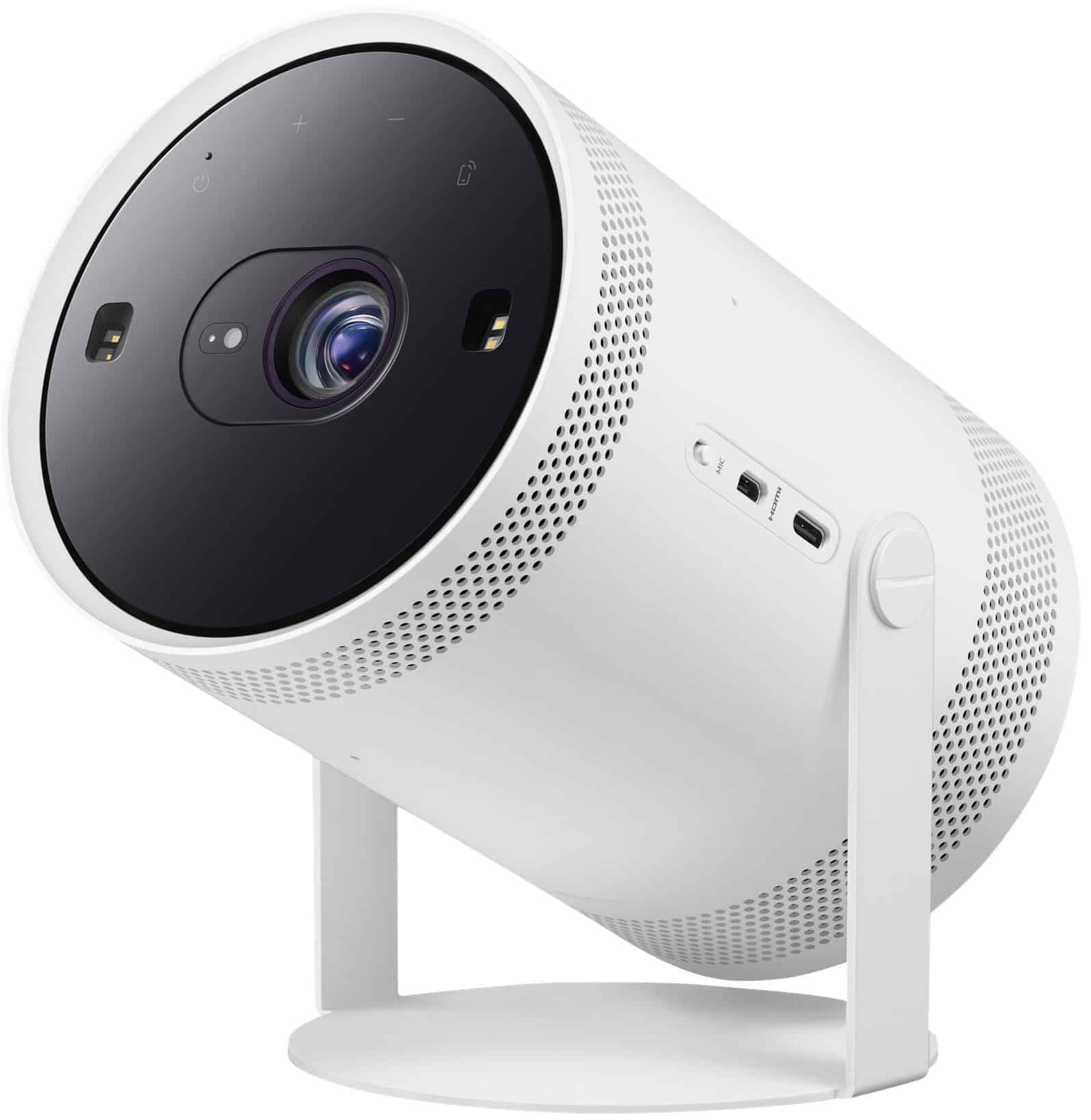
Stop guessing and start watching. Our portable smart projector is designed for the modern home — powerful, compact, and effortlessly connected for an immersive experience wherever you set it up.
Portable Smart ProjectorFAQ
What kind of projector is best for home use?
For most home users, a 1080p projector with 2,000–3,500 lumens and built-in streaming capability delivers the best balance of image quality, ease of use, and value. If your primary use is movies in a darkened room, prioritize contrast ratio and color accuracy over raw brightness.
What projector should I buy?
The answer depends entirely on your use case. Identify where you'll use it (indoor or outdoor), whether the room can be darkened, your viewing distance, and which devices you'll connect. From there, match those requirements against resolution, lumens, throw distance, and connectivity specs. Our product descriptions are written to help you make that match quickly and confidently.
Is a portable projector powerful enough for outdoor movie nights?
Yes — modern portable projectors have improved dramatically. A quality portable unit with 700–1,000 lumens performs very well after sunset with a dedicated projection screen. For use earlier in the evening with ambient light, look for 1,500+ lumens. The Backyard Provider portable projector is specifically designed for exactly this kind of flexible outdoor use.