

An air handler, sometimes called an air handling unit (AHU), is a central component in any HVAC (Heating, Ventilation, and Air Conditioning) system. Its main job is to move conditioned air throughout your home. Working as the indoor partner to your furnace, heat pump, or air conditioner, the air handler pulls in air, conditions it, and distributes it evenly through your ductwork so every room feels just right.
Typically positioned indoors, an air handler connects directly to the ducts that run throughout your living space. It operates alongside other core HVAC components, such as the furnace, air conditioner, or heat pump, to make sure air is properly filtered, conditioned, and circulated.
This system also plays a vital role in balancing humidity and managing airflow quality. By combining a blower, evaporator coil, and air filter into one well-coordinated unit, an air handler delivers consistent temperature control while also trapping airborne particles and helping collect excess moisture produced during cooling. In short, air handlers are indispensable to maintaining a healthy, comfortable indoor climate and ensuring your conditioned air reaches every room in your home with steady performance and efficiency.
Why an Air Handler Matters
An air handler sits at the core of your HVAC system and is often considered its beating heart because it's what actually moves conditioned air through your home. Whether you're running the air conditioning or the heat, the air handler works tirelessly to circulate air across the evaporator or heating coils and out through the ductwork. Its performance directly shapes how comfortable, efficient, and healthy your indoor environment feels. Here's what a dependable air handler brings to your home:
- Enhanced Comfort: A premium air handler keeps humidity in check and delivers consistent airflow, helping eliminate hot and cold spots while creating a more balanced indoor feel. Many advanced systems feature variable-speed motors for even more precise comfort control.
- Cleaner Air: The air handler constantly pushes air through your HVAC filters, trapping dust, allergens, and other particles to improve the air quality inside your home.
- Better Energy Efficiency: With smart features like variable-speed operation, a modern air handler can dial its output to match your home's actual needs, reducing energy consumption and helping your heating and cooling run longer without sacrificing comfort.
Key Components of an HVAC Air Handler
Getting familiar with the individual components of an air handler can make you a more informed homeowner when it's time for service or an upgrade. Let's look at the major parts inside the cabinet.
Evaporator Coil and Condenser Coil
The evaporator coil draws heat from the indoor air, while the condenser coil releases that heat to the outdoor environment. Together these coils cool and dehumidify the air as it moves through your home.
Blower Motor and Fan
The blower motor drives the fan that pushes conditioned air through the ductwork and into each room, making sure airflow is steady and even throughout the house.
Air Filter
The filter catches dust, debris, and other particles from the air, keeping them from cycling back into your living space. This protects both the quality of your indoor air and the internal components of the system.
Damper
Dampers regulate how much air flows within the air handler, directing it to specific zones of your home based on heating or cooling demands. These can be operated manually or automatically.
Drain Pan and Condensate Drain
The drain pan gathers moisture that condenses off the air as it crosses the evaporator coil. From there, the condensate drain carries that water out of the system safely, preventing water damage or mold issues.
Optional Electric Heat Strip
In climates with milder winters, an optional electric heat strip can supply supplemental warmth when needed. To get the most out of your system, experienced professionals recommend routine maintenance and timely tune-ups or upgrades. Our air handler selection is built around lasting performance and dependable comfort for your home.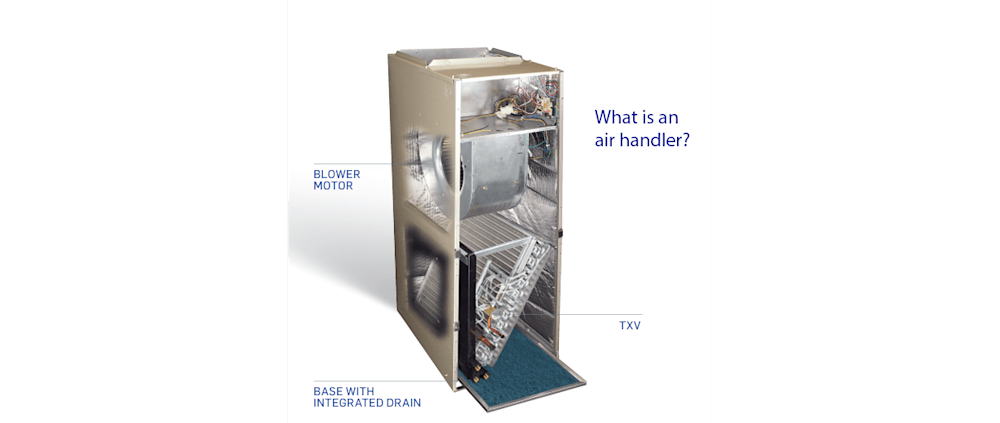
Types of Air Handling Units
The two primary categories are single-speed air handlers and variable-speed air handlers, each offering distinct strengths.
Single-Speed Air Handlers
Single-speed air handlers operate at one fixed setting, meaning they're either fully on or fully off. While they tend to be more affordable and simpler in design, they can be less energy-efficient because they don't adjust their output to real-time demand. They can operate at full capacity even when what the space actually needs is a modest output. These units are best suited for smaller homes or those with tighter budgets.
Variable-Speed Air Handlers
Variable-speed air handlers adapt their output on demand, running at different speeds to keep indoor conditions consistent. These units are more energy-efficient, lower humidity levels more effectively, and deliver quieter operation. Because they rarely run at 100% capacity, they consume less power and improve overall indoor air quality by enabling better filtration. Though they cost a bit more up front, they typically repay that with long-term energy savings and improved comfort.
Which model suits your home best really depends on your square footage, budget, and efficiency goals. Variable-speed options stand out when overall comfort and savings are priorities.
Who Needs an Air Handler?
An air handler (also referred to as a fan coil unit) is essential for homes using specialized HVAC systems, or certain heating and cooling setups. It's most commonly found in systems that don't rely on a traditional furnace to circulate air. Here are a few scenarios where an air handler is a strong fit:
- Homes with a Heat Pump System: Since heat pumps don't include a built-in blower like a furnace, they depend on an air handler to distribute heated or cooled air through the home.
- Homes with an Air Conditioner powered by electricity: Homes with an air conditioner rather than a furnace typically need an air handler to circulate cooled air. The unit contains the blower and the cooling coil, which works alongside the outdoor AC unit to cool your home. For heating, if there's no furnace, the air handler can be paired with an electric heat source like an electric heat strip inside the air handler.
Common Air Handler Problems
A smoothly running air handler is essential to keeping your overall HVAC system in top shape. But like any mechanical gear, air handlers can run into problems over time. Knowing the common issues in advance helps you detect and resolve them quickly. Below are a few typical concerns worth watching for.
Clogged Air Filters
Clogged air filters are one of the most common concerns, blocking airflow and forcing your HVAC system to strain harder while working less efficiently. Not only does this lower system performance, it can also cause higher heating and cooling bills. Consistently inspecting and swapping out filters helps maintain solid airflow and better indoor air quality. Learn more about how often to replace air filters and how often to replace an air filter.
Faulty Blower Motors and Their Troubleshooting
Faulty blower motors can cause reduced airflow, uneven heating or cooling, and unusual noises from your system. Troubleshooting may involve checking for power-supply issues, loose connections, or worn-out motor bearings. Professional service is recommended for motor repairs or replacements to avoid further damage.
Condensate Drain Issues and Maintenance
Air handlers generate moisture that drains off through a condensate channel over time. Over time, the drain line can become obstructed with debris, blocking water from exiting and creating potential water damage. Routine upkeep, like checking and clearing the condensate drain line, can help prevent these troubles from escalating.
By knowing what these common air handler issues look like, you can take proactive steps to keep your HVAC system running well. Consistent inspections and professional maintenance help you catch and address any concerns before they turn into more costly problems.
Maintenance Tips for HVAC Air Handlers
Consistent upkeep is the best way to keep your HVAC air handler running efficiently and to keep conditioned air flowing smoothly throughout your home. Routine care can help avoid expensive repairs and extend the useful life of your unit. Here are some essential practices to keep your air handler clean and working at its best:
Essential Air Handler Upkeep
- Regular Filter Changes: Changing the air filters routinely helps maintain good air quality and prevents dust buildup that can strain the efficiency of the air handler's performance.
- Annual Inspections: Scheduling a yearly check from a qualified technician allows early detection of wear and tear or potential issues, keeping your system in top shape.
- Keep the Area Clean: Make sure the space surrounding the air handler is clear of dust, debris, and obstructions to ensure proper airflow and prevent damage.
- Listen for Unusual Noises: Pay close attention to any strange sounds coming from the air handler, as these may signal mechanical problems requiring quick attention.
How Residential Air Handler Units Work
Air handlers are a key part of HVAC systems, ensuring balanced airflow, steady temperature control, humidity regulation, and proper distribution throughout the home. Understanding how air handlers work can help you make informed decisions for your residential HVAC requirements.
Air Circulation and Temperature Control
Air handlers pull in air from the surrounding environment through return ducts. This air is passed through filters to remove impurities and allergens. The conditioned air is then heated or cooled to achieve the right indoor temperature using a heating or cooling coil. The air handler's blower pushes the conditioned air back into the living spaces through supply ducts.
Humidity Regulation and Dehumidification
Air handlers help regulate humidity levels in your home. The cooling coil within the air handler removes excess moisture from the air, reducing humidity in humid climates, as air handlers equipped with dehumidification features can further enhance indoor comfort by removing excess moisture from the air.
Air Distribution and Zoning
Air handlers ensure efficient and effective air distribution throughout your home. They can be connected to a network of ducts that deliver conditioned air to different rooms or zones. By controlling the airflow to each zone, air handlers enable temperature customization and energy efficiency.
Ready to upgrade your home comfort with a trusted, high-efficiency air handler system?
Shop Mitsubishi PVA-AA24NL Air Handler