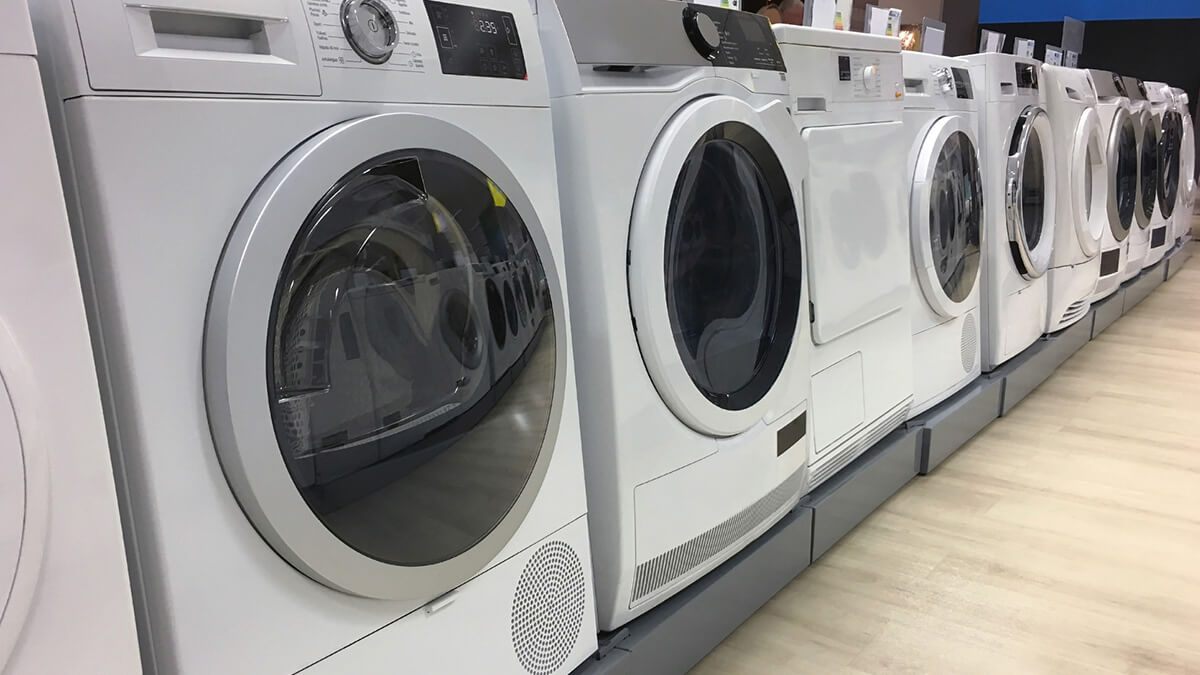
If you've ever walked into a home appliance store and noticed the sleek, glass-door washers stacked elegantly beside their matching dryers, you've seen a front-loading washer. But beyond the polished appearance, what exactly makes these machines stand apart — and more importantly, is one right for your home?
This guide breaks down everything you need to know about front-load washers: how they work, how they compare to top-loaders, and how to choose the right one for your household. By the end, you'll have a clear picture of whether a front-loader deserves a spot in your laundry room.
- How does a front-loading washer work?
- Pros and cons of front-loading washers
- Front-loader washing performance
- Capacity and water usage
- Energy and water efficiency
- Size — how big are front-loaders?
- Average cost and budget considerations
- Tips for buying a front-loader
How Does a Front-Loading Washer Work?
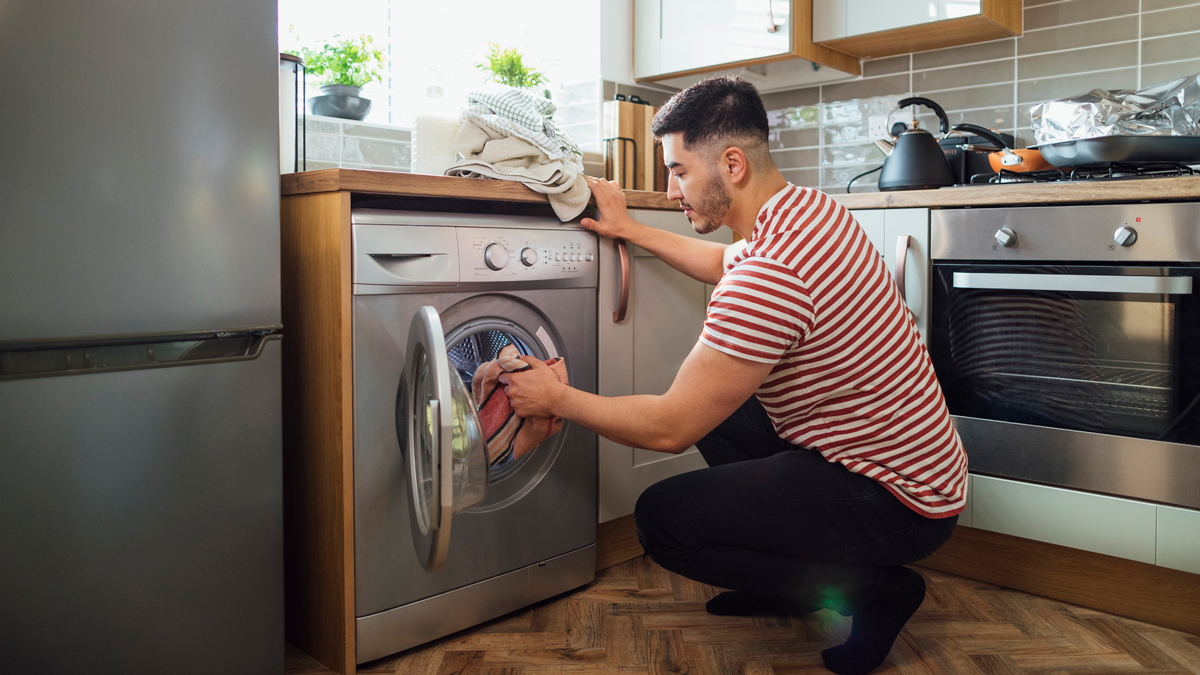
A front-loading washer loads clothes through a door on the front of the machine — hence the name. Instead of a central agitator spinning through the laundry like in traditional top-loaders, a front-loader uses a horizontal rotating drum that repeatedly lifts and drops your clothes through a small pool of water at the bottom of the tub.
This tumbling action — combined with a precisely formulated detergent — is remarkably effective at loosening and removing dirt, stains, and odors from fabric fibers. Because the drum is oriented horizontally, the clothes experience a consistent cycle of lifting, soaking, and falling that generates excellent mechanical cleaning action without the harshness of a central agitator.
Pros and Cons of Front-Loading Washers
Front-loaders come with a distinct set of advantages — and a few trade-offs worth knowing before you commit. Here's an honest breakdown:
- Superior cleaning performance
- Significantly more energy efficient
- Uses far less water per load
- Gentler on fabric — clothes last longer
- Higher spin speeds — faster drying times
- Stackable with a matching dryer
- Larger usable capacity
- Higher upfront purchase price
- Cannot add items mid-cycle
- Door gasket requires regular cleaning
- Prone to mildew smell if neglected
- Longer average wash cycles
- Bending required to load/unload
Front-Loader Washing Performance
When it comes to getting clothes genuinely clean, front-loading washers consistently outperform their top-loading counterparts in independent testing. The tumbling drum mechanism creates a more thorough interaction between detergent, water, and fabric — resulting in better stain removal and brighter whites over time.
Their higher spin speeds — often reaching 1,200 to 1,600 RPM — extract significantly more water from clothing at the end of the wash cycle. This means your clothes enter the dryer drier, cutting down on drying time and energy use in the process. If you pair a front-load washer with a matching dryer, you'll notice a meaningful improvement in your laundry routine overall.
Performance Fact
Front-loaders typically spin clothes at 1,200–1,600 RPM — up to twice the speed of many top-loaders — removing more moisture and slashing dryer time by up to 20%.
Capacity & Water Usage
Front-loaders are available in a wide range of capacities, typically from around 4.0 to 6.0+ cubic feet. For most households, a unit in the 5.0–5.5 cubic foot range handles large loads comfortably — including king-sized comforters and bulky bedding. Despite their larger usable drum space, they consume substantially less water than equivalently sized top-loaders, because the horizontal drum only needs water at the base, not a full tub fill.
| Household Size | Recommended Capacity | Loads per Week | Ideal For |
|---|---|---|---|
| 1–2 People | 4.0 – 4.5 Cu. Ft. | 3–5 | Apartments, couples |
| 3–4 People | 4.5 – 5.2 Cu. Ft. | 5–8 | Small families |
| 5+ People | 5.5 – 6.0+ Cu. Ft. | 8–12+ | Large families, frequent washing |
Energy & Water Efficiency
One of the strongest arguments for choosing a front-loader is its remarkable efficiency. Because they don't need to fill the drum completely with water, and because their faster spin cycles reduce dryer run time, front-loaders can use up to 45% less energy and 25–40% less water than comparable top-loading machines.
Over the lifetime of the appliance, this translates to real savings on your utility bills — often enough to offset the higher initial cost. Many front-loaders also carry ENERGY STAR® certification, reflecting their compliance with the most current federal efficiency standards.
How Big Are Front-Load Washers?
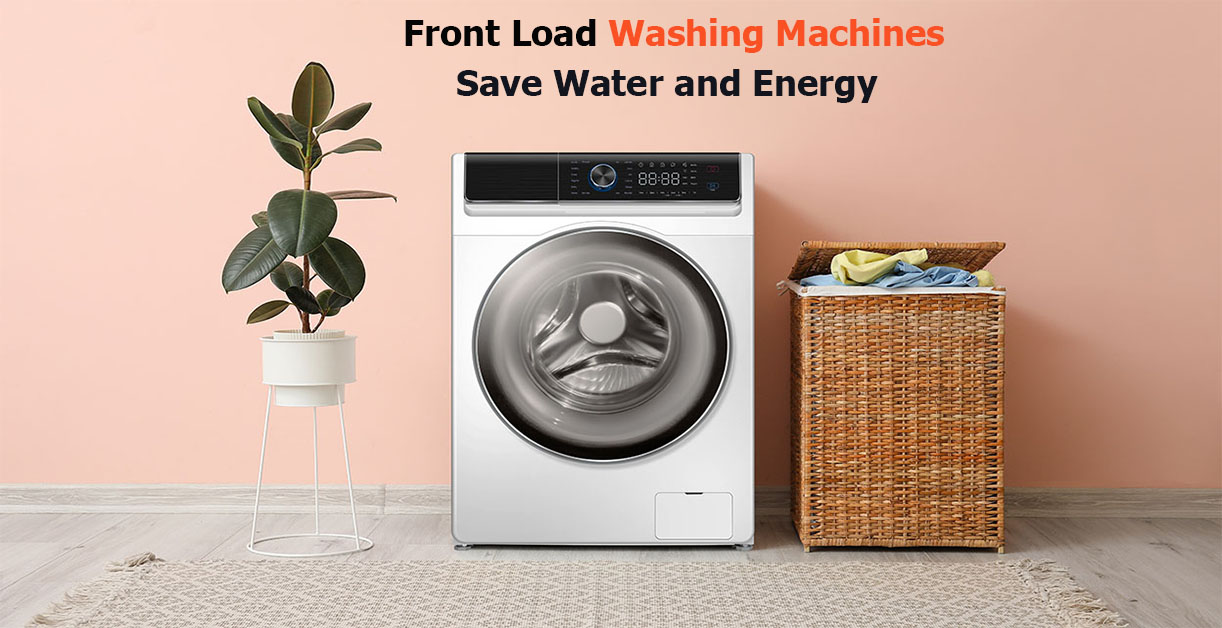
Most full-size front-loading washers measure approximately 27 inches wide, 33–39 inches tall, and 30–34 inches deep. Compact models designed for smaller spaces may measure as little as 24 inches wide. One major spatial advantage of front-loaders is their stackability: a compatible dryer can be placed directly on top using a stacking kit, effectively halving your laundry room footprint — a huge benefit for condos, apartments, and tighter utility rooms.
Average Cost of a Front-Load Washer
Front-loading washers generally carry a higher price tag than basic top-loaders. Entry-level models with standard features typically start in the $700–$900 range. Mid-tier machines with extended cycle options, steam features, and improved build quality generally fall between $1,000 and $1,400. Premium front-loaders from top-tier brands — with WiFi connectivity, allergen cycles, and expanded drum capacity — can exceed $1,800 or more.
It's worth factoring in the long-term utility savings when evaluating cost. A more efficient front-loader may cost more at the register but save noticeably on electricity and water bills over a 10–15 year lifespan.
| Price Range | What to Expect | Best For |
|---|---|---|
| $700 – $900 | Core wash programs, standard efficiency | Budget-conscious buyers |
| $1,000 – $1,400 | Steam cycles, larger drum, quiet operation | Most households |
| $1,500+ | Smart controls, allergen wash, WiFi, luxury finishes | Premium buyers |
Tips for Choosing the Right Front-Load Washer
Measure Your Space First
Before shopping, measure your laundry area carefully — including door clearances. Front-loaders require the door to swing open fully, so allow at least 20–24 inches of clearance in front of the machine for comfortable loading and unloading.
Consider a Pedestal or Riser
Because front-loaders require bending down to access the drum, many homeowners invest in optional pedestals that raise the machine 12–15 inches off the floor. These often include built-in storage drawers for laundry supplies — a practical bonus in tighter spaces.
Look for a True HE Detergent Requirement
Front-loaders use High Efficiency (HE) detergent, which produces fewer suds. Using regular detergent can create excess foam, impact wash quality, and even damage the machine over time. Always check that your detergent is clearly labeled HE-compatible.
Keep the Gasket Clean
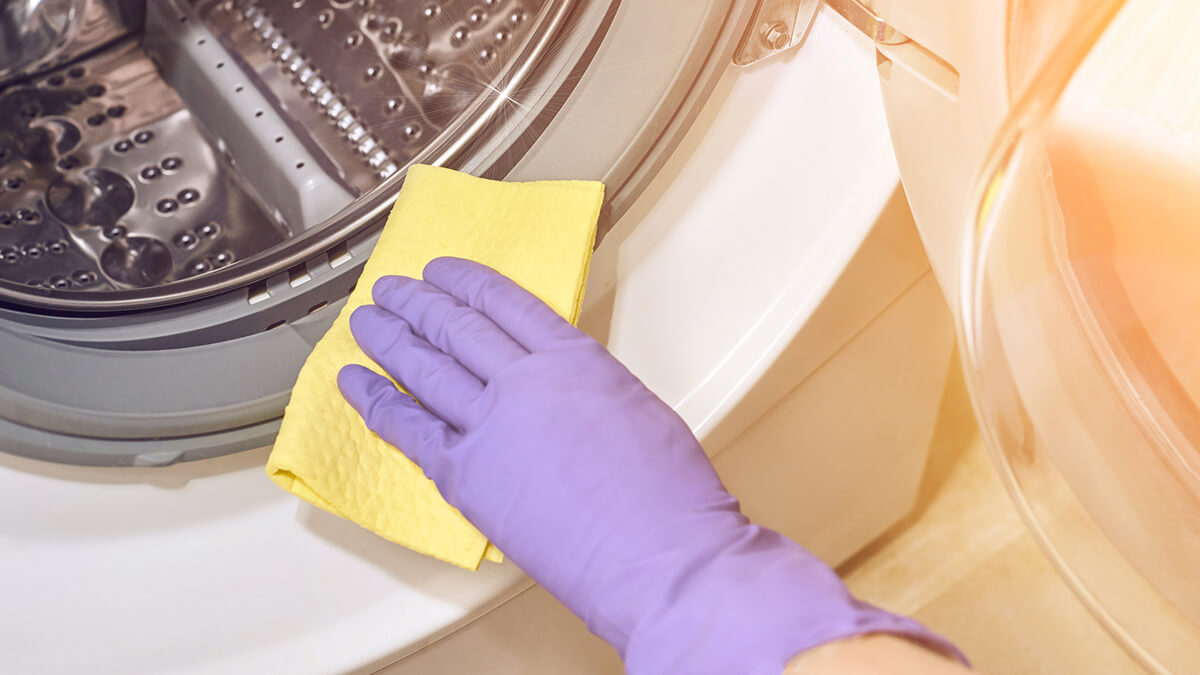
The rubber door seal (gasket) on a front-loader is the most maintenance-sensitive component. Wipe it dry after each load, leave the door slightly ajar between cycles to allow airflow, and run a monthly drum-cleaning cycle to prevent mildew buildup — and your machine will perform beautifully for years.
Is a Front-Load Washer Right for You?
For most modern households, a front-loading washer represents a genuinely worthwhile upgrade. The combination of superior cleaning performance, meaningful efficiency savings, and the added space flexibility of a stackable design make them a compelling choice for families, apartment dwellers, and anyone who wants to get more out of their laundry routine.
If you're ready to upgrade, the Midea 5.2 Cu. Ft. Front Load Washer offers an excellent entry point — combining generous capacity with energy-conscious engineering and a clean, contemporary design that looks right at home in any modern laundry room.