What Are Standard Washer and Dryer Sizes?
Before you bring home a new washer or dryer, knowing the right dimensions can save you from a frustrating surprise on delivery day. Whether you're upgrading a full laundry room, squeezing a pair into a closet, or going stackable to reclaim floor space, this guide walks you through every size category and the measurements that matter most.
Standard full-size washers and dryers are the most common choice for homes with a dedicated laundry room. Compact and all-in-one units serve apartments and smaller homes, while stackable configurations are ideal when vertical space is available. Understanding these differences before you buy is key to a seamless install.
Standard Side-by-Side Washer & Dryer Dimensions
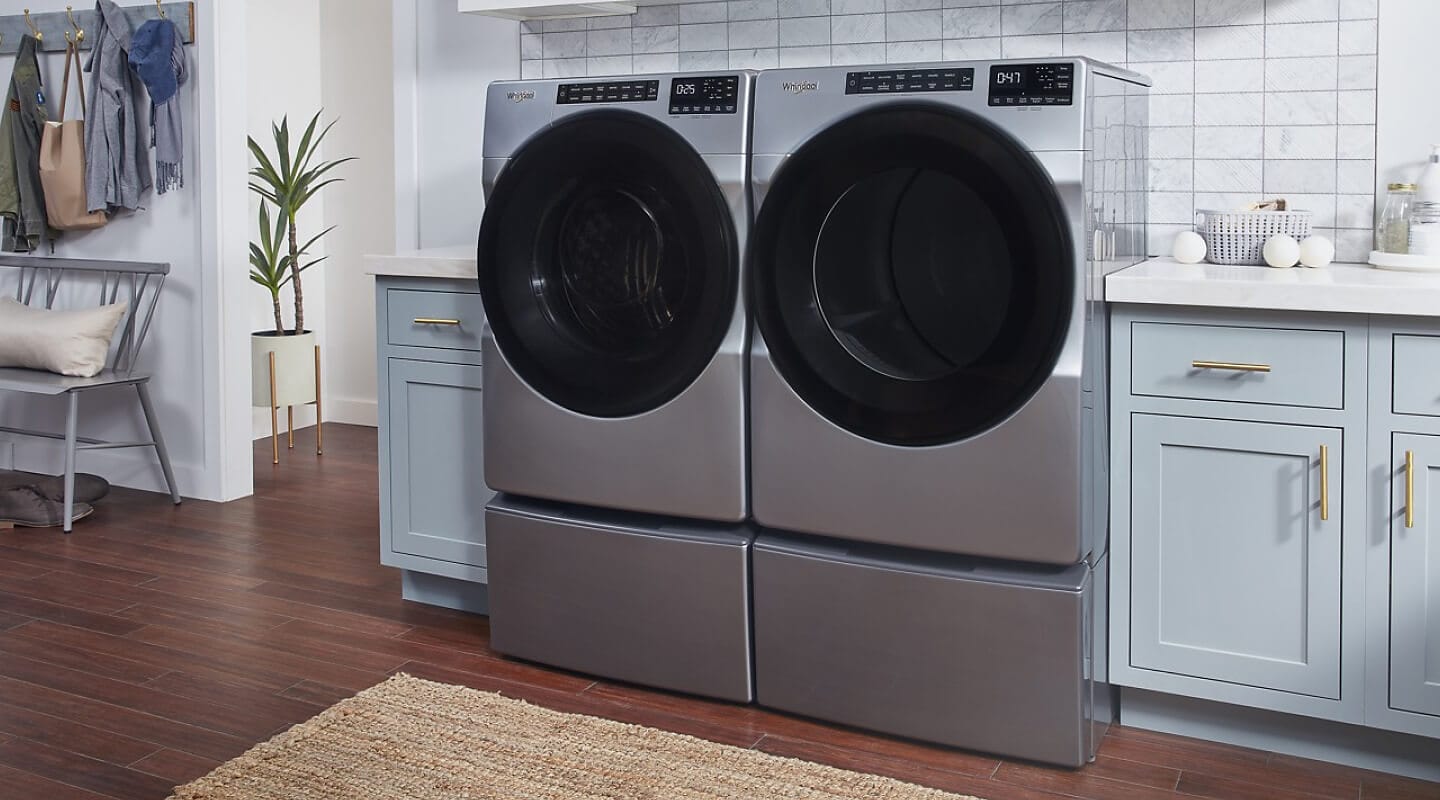
The classic laundry room setup places the washer and dryer side by side on the floor. These units are built to a remarkably consistent footprint across most brands, making replacements straightforward.
per unit
(lid closed)
(door closed)
washer drum
| Measurement | Typical Range | Recommended Clearance |
|---|---|---|
| Width (each unit) | 27 – 28 in. | +1 in. on each side |
| Height | 38 – 43 in. | +6 in. above top |
| Depth (door closed) | 28 – 34 in. | +6 in. behind unit |
| Depth (door open) | Up to 58 in. | Full door swing space |
| Combined width (pair) | 54 – 56 in. | +2 in. between units |
Pro Tip: Always measure your doorways and hallways before delivery day. The path from your front door to the laundry room can be trickier to navigate than the laundry space itself.
https://www.whirlpool.com/is/image/content/dam/business-unit/whirlpoolv2/en-us/marketing-content/site-assets/page-content/oc-articles/laundry-sizing-guide/laundry-sizing-

Standard Washer and Dryer Stack Dimensions
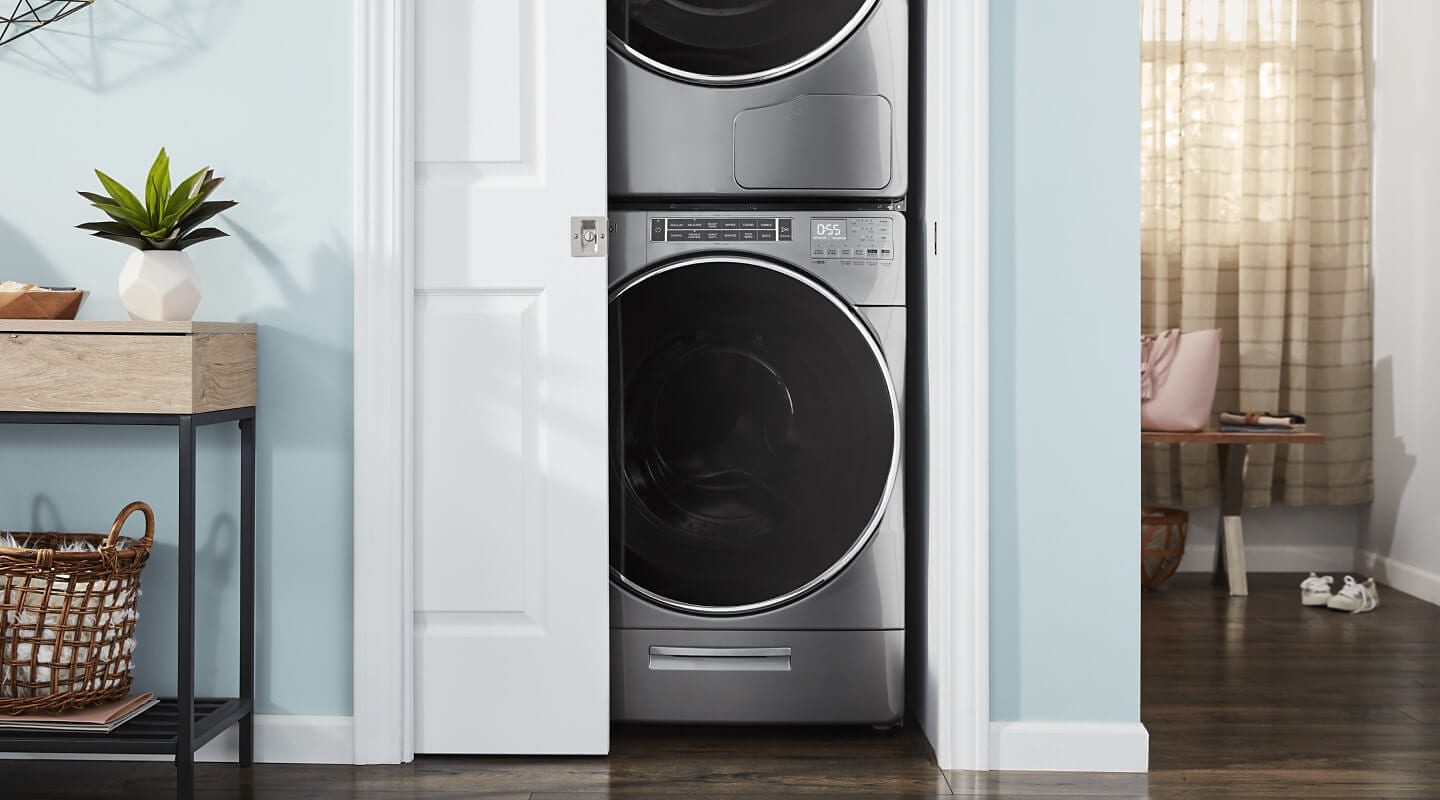
Stacking your washer and dryer is one of the smartest ways to save floor space without sacrificing laundry capacity. A standard stacked configuration places the dryer directly on top of the washer using a stacking kit — no special unit required.
Stackable Front-Load Dimensions
Front-load washers and dryers are the only type that can be safely stacked. Their flat, reinforced tops are engineered to bear the weight of a dryer above. Side-by-side or top-load units cannot be stacked.
A stacked pair typically measures 27 inches wide and between 74 and 80 inches tall — roughly the height of a standard doorframe. Always verify that your ceiling height and doorway clearance can accommodate the stacked height before purchasing.
~38 in.
~39 in.
27 in. wide
| Measurement | Typical Range |
|---|---|
| Width | 27 in. |
| Stacked Height | 74 – 80 in. |
| Depth | 30 – 34 in. |
| Min. Ceiling Height | 82 in. recommended |
Stacked Laundry Center Dimensions
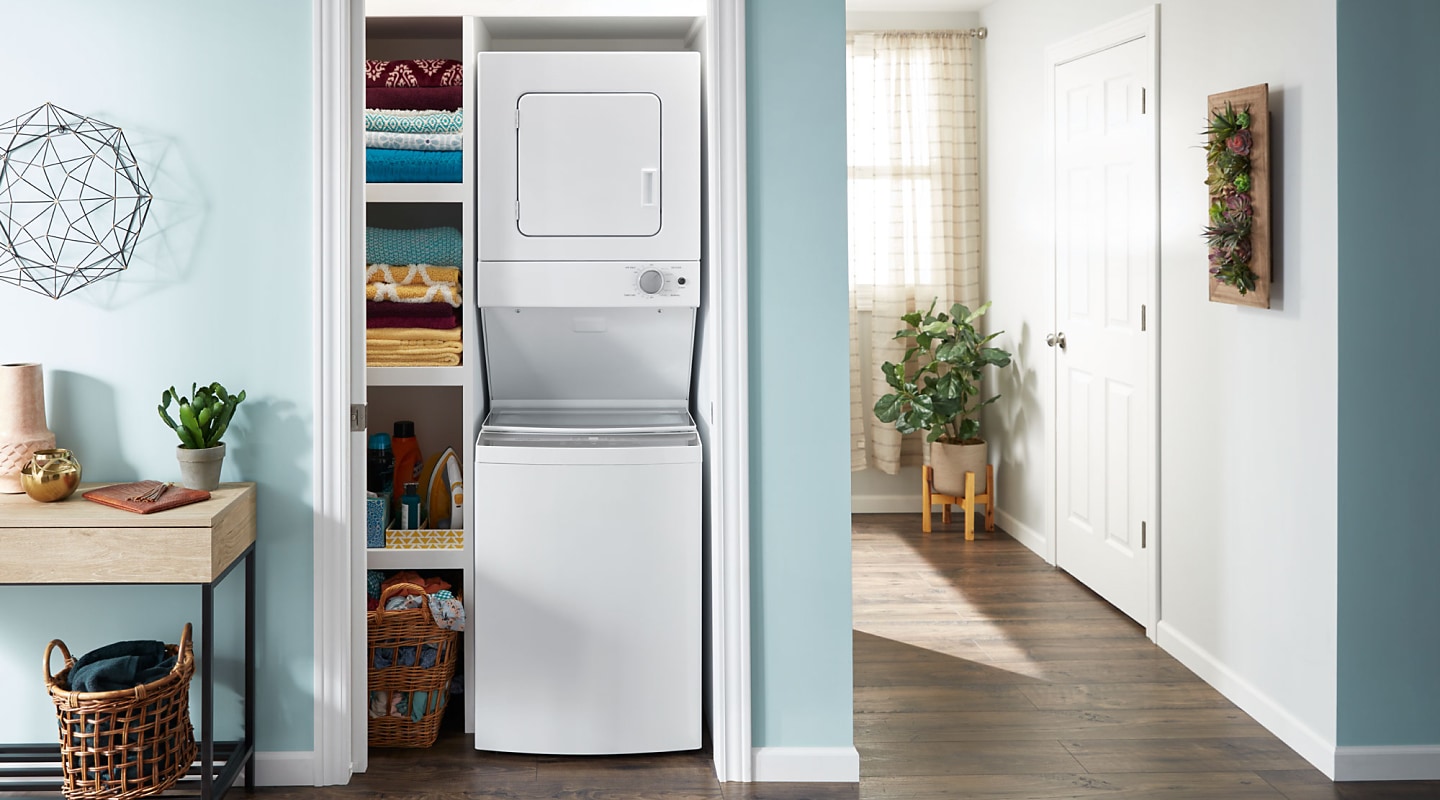
A stacked laundry center — also called an all-in-one laundry tower — is a single appliance with the washer and dryer built into one vertical unit from the factory. These are not two separate units combined; they're purpose-engineered as a single machine.
Because they're built as one unit, laundry centers tend to have a narrower footprint than two stacked separate units, making them an excellent fit for closets and tight alcoves. The tradeoff is that if one section needs service, the entire unit is affected.
Compact Washer and Dryer Dimensions
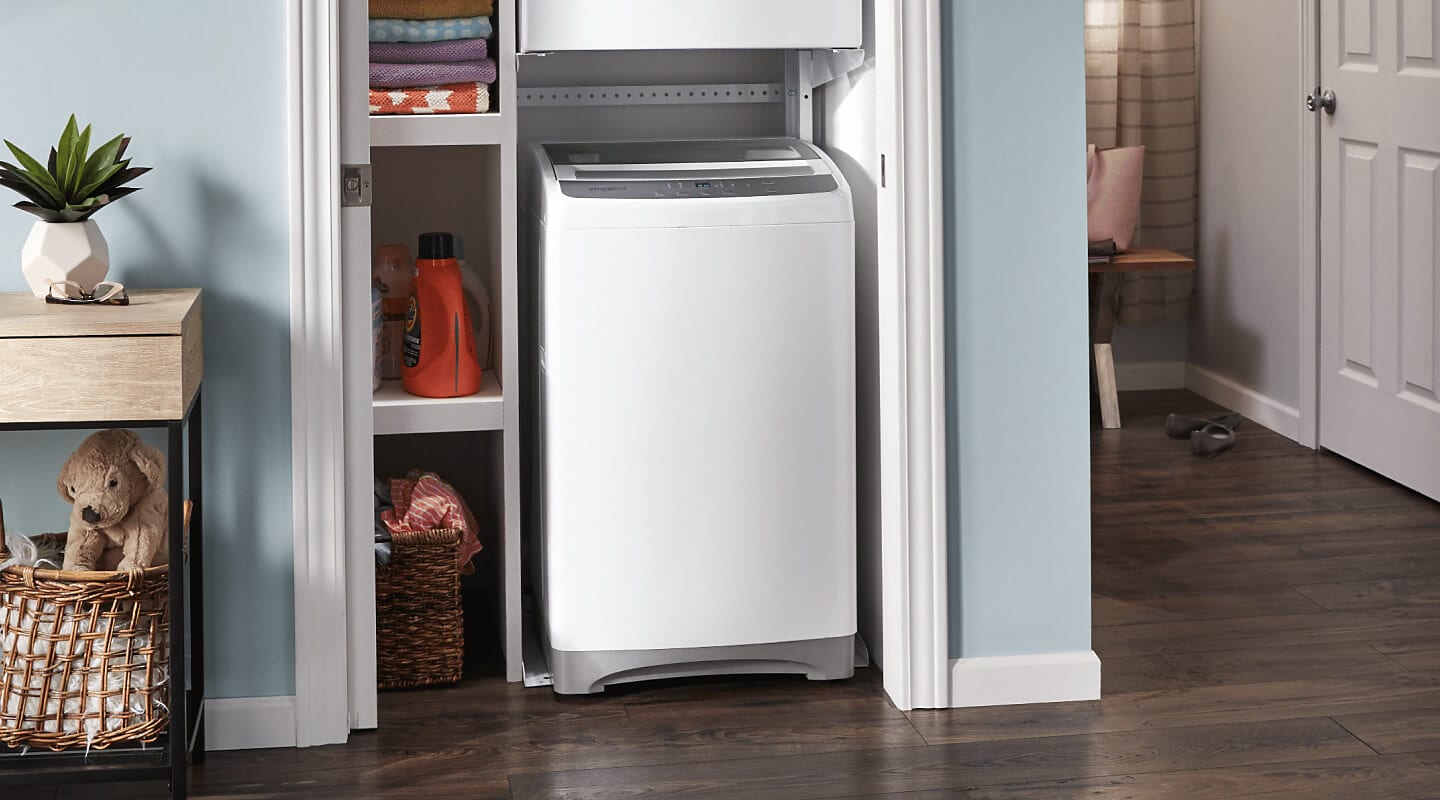
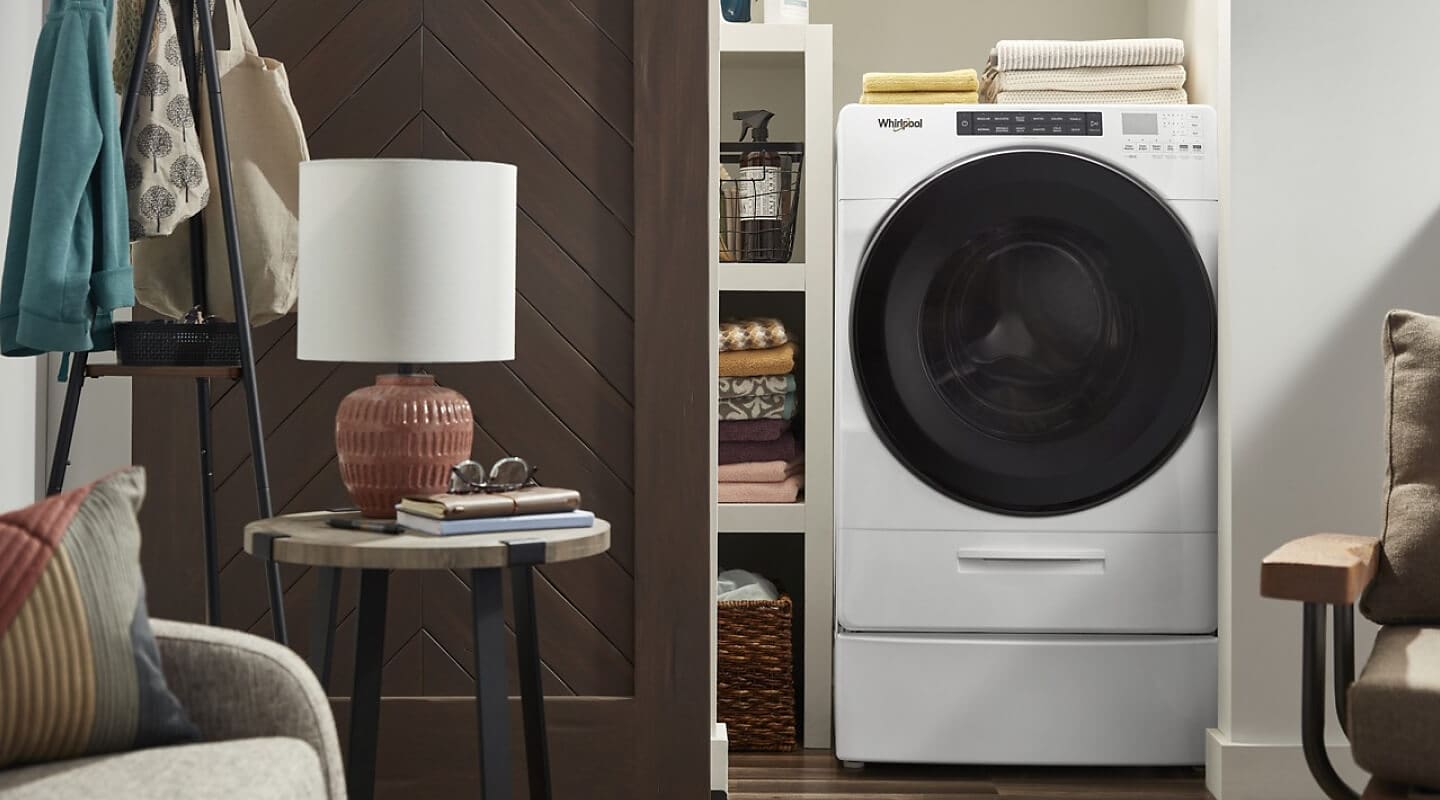
Compact washers and dryers are designed specifically for apartments, condos, RVs, and any home where full-size appliances simply won't fit. At roughly 24 inches wide, they can slide under a counter or tuck into a closet with room to spare.
Despite their smaller footprint, many compact models offer surprisingly capable drum capacities — typically 2.2 to 2.6 cubic feet — enough for a small household's regular loads. They can also be stacked, doubling your laundry capacity within an area no wider than a standard refrigerator.
| Measurement | Compact Units | Full-Size for Comparison |
|---|---|---|
| Width | ~24 in. | 27 – 28 in. |
| Height | 33 – 36 in. | 38 – 43 in. |
| Depth | 22 – 26 in. | 28 – 34 in. |
| Capacity | 2.2 – 2.6 cu. ft. | 4.5 – 6.0 cu. ft. |
Under-Counter Fit: Most compact washers are designed to slide beneath a 36-inch countertop — ideal for kitchen laundry nooks and mudrooms where every inch counts.
Large-Capacity Washer and Dryer Dimensions
Large families and households with heavy laundry loads benefit most from high-capacity washers and dryers. These units prioritize drum volume — often 5.0 to 6.2 cubic feet or more — allowing you to wash king-size comforters, large loads of towels, or an entire week's laundry in a single cycle.
The tradeoff is a bigger cabinet. Large-capacity units can be several inches wider and deeper than standard models, so careful measurement of your laundry space is essential. Check doorframe widths and hallway turns before ordering, as delivery and installation can be challenging with oversized machines.
Tips for Measuring Before You Buy
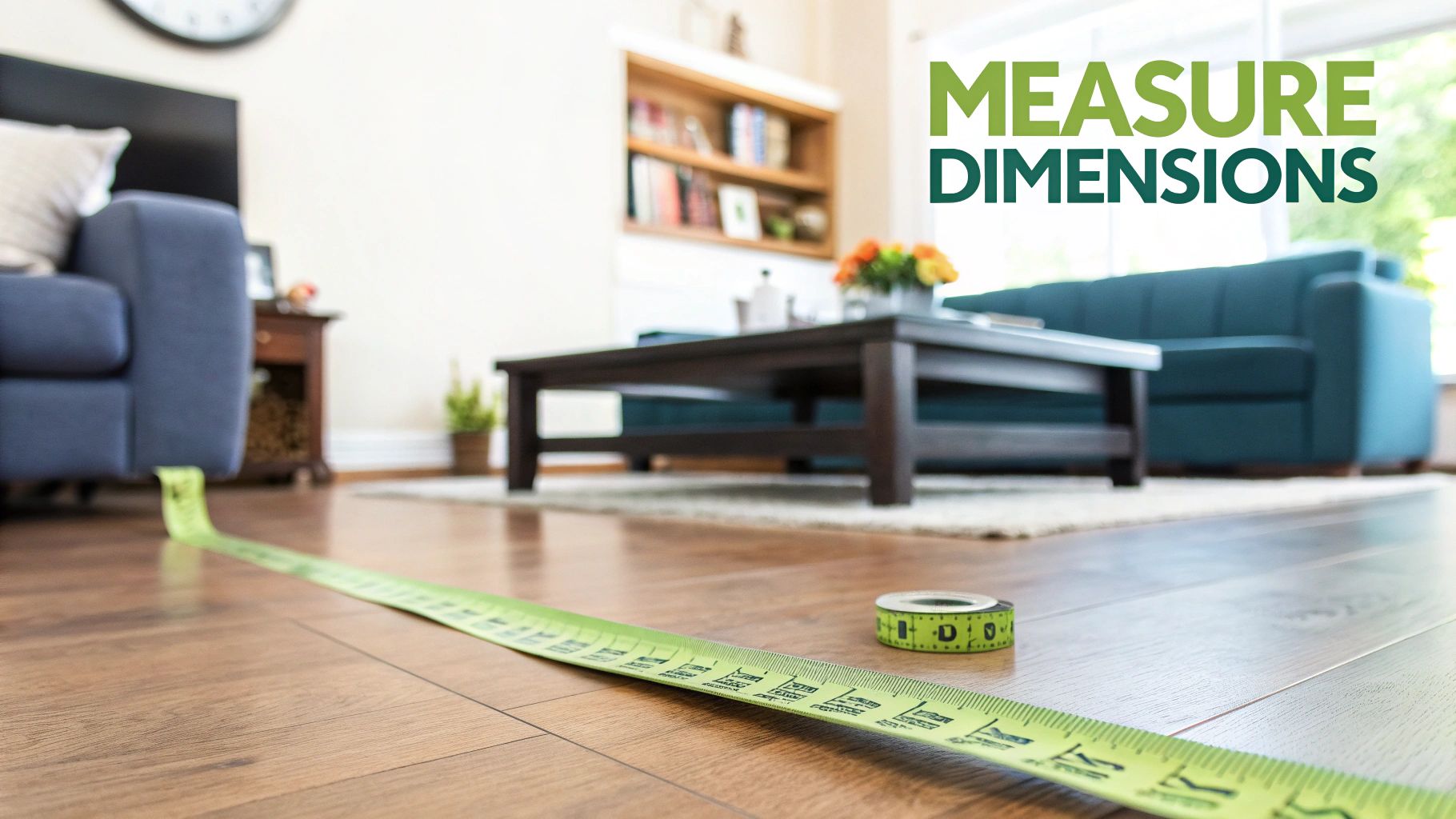
Getting the dimensions of the unit is only half the job. Measuring your installation space correctly — and accounting for clearances — is what actually ensures a smooth delivery and a safe, long-lasting install. Follow these steps before finalizing your purchase.
- 1 Measure the space width, height, and depth where the unit will live. Write these down before you shop and compare against the product spec sheet — not just the overview dimensions.
- 2 Add clearance on all sides. Allow at least 1 inch on either side for airflow, 6 inches behind for hoses and power cords, and 6 inches above the top for ventilation and vibration space.
- 3 Measure door swings. Front-load doors can swing out up to 24 inches. Make sure the door path is clear when open — especially in narrow closets and hallways.
- 4 Check the delivery path. Measure every doorway, hallway corner, and stairwell between the entrance and the laundry space. A unit that fits the room may still not fit through the house.
- 5 Verify utility connections. Confirm the location of water hookups, drain lines, and electrical outlets (or gas lines for gas dryers) relative to where the unit will sit.
- 6 Consider pedestal height. If you plan to use pedestals or risers, add their height — typically 12 to 16 inches — to the unit's stated height when checking ceiling clearance.