

Dial in the right temperature on your deep freezer and you'll lock in food quality, cut wasted energy, and protect every dollar of meat, produce, and bulk groceries you've invested in. Here's how to get it right — and keep it right.
You've invested hundreds of dollars into that deep freezer, and probably hundreds more filling it with food. But is it really doing its job of keeping everything you own frozen safely and efficiently?
The truth is, most freezers don't run at the temperature they should. According to the USDA Food Safety Service, a properly calibrated freezer should sit at or below 0°F (-18°C) — the sweet spot where food stops aging, bacteria stop multiplying, and freezer burn is kept in check.
In this guide, we'll break down what the proper deep freezer temperature actually is, how it differs from your fridge settings, and how to set and monitor it to keep your food fresh, your energy bills lower, and your freezer running the way it was designed to.
Key Takeaways
- The ideal deep freezer temperature is 0°F (-18°C), which keeps food safely frozen and preserves long-term quality.
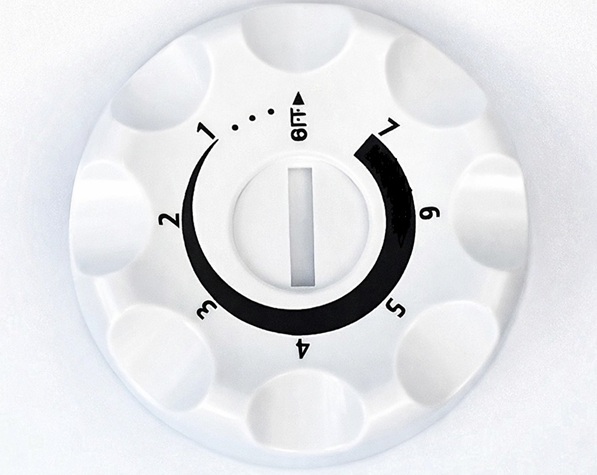
- Most dial-style freezers use settings 1 to 7 rather than a direct temperature readout — a mid setting (3 or 4) usually lands near 0°F.
- Use a standalone freezer thermometer to verify the true interior temperature; built-in dials can drift or read inaccurately.
- Keep the unit 75–85% full for peak efficiency — a well-stocked freezer holds cold far better than an empty one.
The Right Deep Freezer Temperature Setting
The difference between perfectly preserved meat and a freezer full of tough, wasted food can be as small as a few degrees. The FDA and USDA both recommend deep freezers be held steady at 0°F (-18°C).
This isn't just a guideline — it's the standard recommended by food safety experts for keeping frozen goods safe indefinitely while maintaining taste, texture, and nutritional value.
But doesn't water freeze at a much warmer temperature (32°F)?
Water freezes at 32°F, yes — but freezing water isn't enough. Even at temperatures between 28°F and 31°F, food still slowly deteriorates, enzymes remain active, and ice crystals continue forming inside cell walls. That's what causes freezer burn, mushy texture, and loss of flavor.
Reaching 0°F stops nearly every biological and chemical process. At that temperature, bacteria can't multiply, yeast and molds go dormant, and enzyme activity slows to a near halt. Meaning: your food stays truly frozen, not just cold.
This subtle temperature change is the key to preserving your foods taste, color, and nutritional value for months to a year.
Commercial appliances like walk-in units and chest freezers are built to hold this steady cold — which is one of the reasons they run so quietly and consistently.
How to Set a Freezer Dial Thermostat Correctly
What Do the Numbers 1–7 on the Freezer Dial Actually Mean?
That dial inside your freezer, usually marked with numbers 1 to 7 (though 5 is one of the most misunderstood features).
It's easy to assume the numbers correspond to a specific temperature, but a number on the dial does not equal degrees. For example, a "7" doesn't mean 7 degrees.
For most deep freezers, using the middle setting (4) will usually keep things at 0°F, the desired storage range.
How Does the Freezer Control Dial Work?
- Instead of a precise temperature control, it controls how hard the compressor runs.
- A low setting (1 or 2) means the compressor cycles less, producing less cold and allowing the interior to climb.
- A higher setting (6 or 7) means the compressor runs harder, forcing the interior to drop lower.
- Numbers like 3 or 4 sit comfortably in the middle — enough cooling to lock food in place without overworking the motor.
The principle is the same for nearly every model, no matter the platform or brand, whether you have a chest style, upright, or drawer freezer — the dial is simply a relative sensitivity tool, not a thermometer.
How to Adjust the Deep Freezer Temperature Setting to 0°F Using a Dial Thermostat
To dial in your unit accurately:
- Start by setting the dial at its middle range (3 or 4).
- Let your freezer run for 24 hours, then check the internal temperature with an accurate freezer thermometer.
- If it is warmer than 0°F, nudge the dial one number higher. If it's significantly colder, bring it back down a notch.
- Give the unit 12 hours to adjust to every setting change — a freezer takes time to equalize.
- Once you've reached a steady 0°F, log or mark that setting. That's your baseline for the future.
How to Accurately Check Your Freezer's Temperature
The built-in dial does not always give you a 0°F target, you need an accurate freezer thermometer.
The best method: set the thermometer between a few packs in the middle of the freezer, where temperatures are most stable and representative of real food-storage conditions.
Getting an accurate reading is simple: there's the right way to do it:
- Place it correctly. Put the thermometer in the center of the freezer, tucked between some frozen goods. Avoid placing it near walls, drawers, or the door.
- Wait for it to settle. Leave it undisturbed for 24 hours. This gives the thermometer time to match the true, average internal temperature.
- Check it quickly. Open the door at freezer lid and read the temperature as fast as possible. Every opening lets warm air rush in, so keep it brief.
Once you have an accurate reading, you can adjust your freezer's setting with confidence.
What Is the Best Freezer Setting for Energy Savings?
Running a freezer at 0°F is the best freezer setting for energy.
This temperature provides the perfect balance, keeping your food safely frozen for long-term storage without forcing the appliance to run continuously. A freezer that's colder than 0°F burns excess electricity and puts unnecessary strain on your motor, giving you smaller incremental benefit.
 Is Colder Deep Freezer Temperature Better?
It's tempting to think that dropping the dial below 0°F means a fresher, longer-lasting product, but in practice that's not the case. At 0°F, food is already biologically dormant — colder still doesn't add meaningful protection.
Going any lower just forces your compressor to run longer, increases wear, and consumes noticeably more power. Most modern deep freezers are engineered to hit 0°F with minimum energy draw and long-term durability.
Does Opening the Freezer Too Often Raise the Temperature?
Yes. Every time the lid opens, cold, dense air inside your freezer pours out, and warm, humid air rushes in. That air pocket forces the compressor to kick on and work harder just to drop the internal temperature again.
Each time you open the lid or door, external air rushes in, and the interior rises several degrees in seconds.
Organize foods inside your freezer to minimize how long you keep the door or lid open, and try to consolidate visits per day.
A garage-ready, lockable chest freezer with 12.7 cu. ft. of storage and a solid insulated top — engineered for the consistent, long-term freeze your food deserves.
Shop Maxx Cold Chest Freezer3 Telltale Signs Your Freezer Temperature Is Too High
When you don't have a thermometer in the freezer or a digital display directly on the actual unit, your food will tell you the accurate indicator of a freezer not running properly:
1. Soft Ice Cream
One of the most reliable signs your freezer temperature is too high is soft ice cream. If you can scoop it easily right out of the container, your freezer is not running a deep enough frost.
Because ice cream contains sugar and fat, it freezes at a lower temperature than, say, a bag of peas. If your freezer is not at a true 0°F (-18°C), ice cream will be usably soft, a telltale warning sign.
2. Freezer Burn
Excessive frost buildup is another clear warning. While a thin frost layer is normal, thick ice coating the sides and your food or along the walls of the interior points to a common cause: temperature fluctuations.
If the freezer is opened too often or is not cold enough, moisture in the air condenses, creeps in, and freezes onto cold surfaces. That moisture freezes back as frost on food, effectively dehydrating it and leaving the dried-out patches of freezer burn.
Those symptoms are a clue to rule your true temperature instability, a common flaw of a cheap freezer.
3. Partially Frozen Food
The most telltale sign of an over-temperature is when food items — cooled to room temperature but not actually frozen. If this is the case, your deep freezer is simply not keeping the freeze steady or accurate, and action is needed.
Even mildly, inserting the finger should leave some indent you shouldn't be able to make an impression in a properly frozen item.
How to Stop Temperature Swings and Prevent Freezer Problems
Keep the Freezer Full
You might be surprised to learn that one of the biggest deep freezer efficiency hacks relates to what's inside it.
A freezer packed with frozen food acts like a gigantic, cold ice block. Every frozen item retains its chill and when something warm (air from outside) comes in, the mass of frozen goods absorbs and neutralizes the heat very quickly.
With the cold mass absorbing fluctuations, your compressor does less work, energy use drops, and fluctuations inside the freezer are minimized.
An empty freezer, by contrast, loses temperature quickly when air enters, and every opening creates a bigger fluctuation.
Pro Tip: If you don't have enough food to fill it, keep water-full jugs of water or ice blocks in to fill the gaps. Water has great thermal properties, acts as a natural stabilizer, and gives you emergency ice when you need it.
Ensure Proper Ventilation
Beyond keeping it full, you also need to let your freezer breathe — literally.
Outside the Freezer
Keep the airspace around it clear: at least 3–4 inches from walls and plenty of clearance above. Your freezer runs by pulling heat out of its interior and discharging it into the surrounding air. If the coils are choked with dust or furnished up against a wall, they lose the ability to offload that heat, the compressor works overtime, and the interior temperature starts climbing.
Every few months give the outside of the unit (especially condenser coils) a good wipe-down or vacuum. It's one of the most overlooked maintenance tasks in the world of freezer ownership.
Inside the Freezer
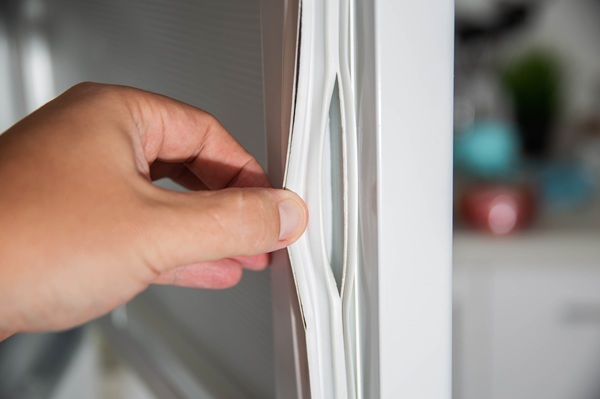 Inside the freezer, airflow matters too. While packing everything tightly away from freezer air can be tempting, air does need some room to circulate between items in order to keep temperatures even.
If you completely block airflow within the freezer, a frosted corner may stay cold while other zones slowly rise above the safe zone.
Proper arrangement — especially near baskets or inside interior walls — keeps temperatures consistent throughout.
The Maxx Cold MXSH12.7SHC is built to hold temperature in demanding environments — garage, basement, or back-of-house — with a locking lid and 12.7 cu. ft. of real usable space.
Shop Maxx Cold Chest Freezer