

A comprehensive guide to the must-have tools that will make your deck construction project smooth, efficient, and professional
Building a deck is one of the most rewarding outdoor projects you can undertake for your home. Whether you're creating a cozy space for morning coffee or an expansive entertainment area for gatherings, having the right tools makes all the difference between a frustrating experience and a satisfying build. The proper equipment not only ensures your deck is structurally sound and visually appealing but also makes the construction process safer and more efficient.
This comprehensive guide walks you through the essential tools every deck builder needs, from the fundamental measuring instruments to specialized power tools that will transform your backyard vision into reality. We'll explore both the basic necessities and professional-grade equipment that can elevate your project from good to exceptional.
1. Carpenter's Level – Your Foundation for Precision
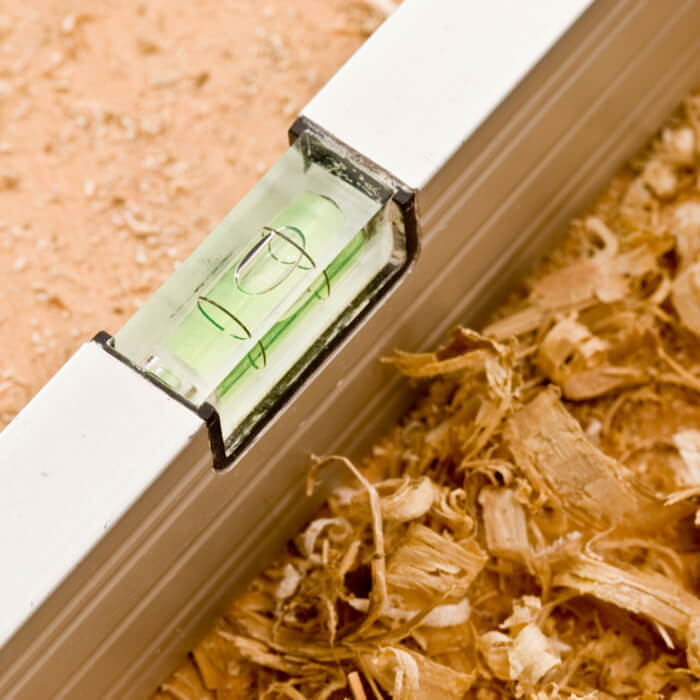
A quality carpenter's level is absolutely non-negotiable when building a deck. This tool is your constant companion throughout the entire construction process, ensuring every board, post, and beam is perfectly straight and true. Without proper leveling, your deck will suffer from drainage issues, uneven surfaces, and structural weaknesses that compound over time.
Why It's Essential:
Structural Integrity: Even slight deviations from level can cause water pooling, weakened joints, and premature deterioration of your deck materials.
Professional Appearance: A level deck looks polished and professionally built, while an uneven surface screams amateur work.
Safety First: Level surfaces prevent tripping hazards and ensure railings are properly positioned for maximum safety.
Invest in a 48-inch level for general work and consider a smaller torpedo level for tight spaces. Look for models with multiple vials for checking both horizontal and vertical alignment, and ensure the frame is sturdy enough to withstand job site conditions without losing accuracy.
2. Belt Sander – Achieving That Perfect Smooth Finish
Once your deck framing is complete and the decking boards are installed, a belt sander becomes your best friend for creating silky-smooth surfaces that are splinter-free and comfortable underfoot. This powerful tool removes rough spots, levels uneven boards, and prepares wood surfaces for staining or sealing with remarkable efficiency.
Belt sanders work by rotating sandpaper around two drums at high speed, removing material quickly and evenly. For deck building, they're particularly useful for smoothing cut ends, removing mill marks from lumber, and creating seamless transitions between boards. The aggressive material removal makes light work of tasks that would take hours with hand sanding.
Pro Tips for Belt Sanding:
Start with coarser grit (60-80) for initial smoothing and work your way up to finer grits (120-150) for the final finish. Always sand with the grain to avoid unsightly scratches, and keep the sander moving constantly to prevent gouging the wood surface.
For large deck surfaces, consider renting a floor-style belt sander that you can walk behind – it will save your back and complete the job in a fraction of the time.
3. Paint Roller – Efficient Application of Stains and Sealers
Protecting your newly built deck from the elements is crucial for longevity, and a quality paint roller system makes the application of stains, sealers, and protective coatings dramatically faster and more uniform than brushing. The right roller ensures even coverage without drips, streaks, or missed spots that could leave your wood vulnerable to moisture damage and UV degradation.
Choose rollers specifically designed for deck staining – they typically have a thicker nap (3/4 inch to 1 inch) that holds more product and works it into the wood grain effectively. An extension pole attachment allows you to cover large surface areas without constant bending and reaching, saving your back and speeding up the application process considerably.
Expert Recommendation: Use a combination approach – roll on the stain or sealer for coverage, then immediately back-brush with a quality brush to work the product into cracks, joints, and end grain. This technique provides both efficiency and thorough protection.
4. Circular Saw – The Workhorse of Deck Construction
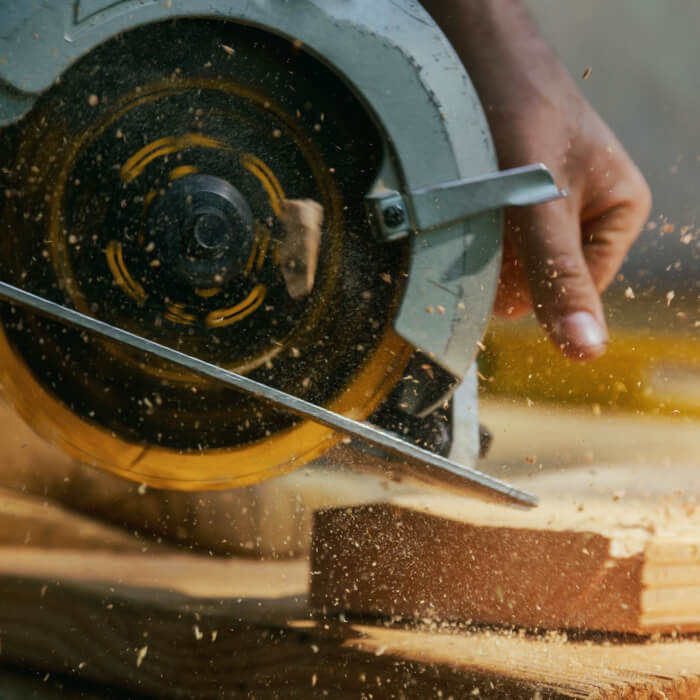
The circular saw is arguably the most versatile and frequently used power tool in deck building. This portable powerhouse makes quick, accurate cuts through dimensional lumber, decking boards, and even thicker beams when needed. From cutting joists to length to trimming deck boards for a perfect fit, your circular saw will be in your hands constantly throughout the project.
Key Features to Consider:
Look for a saw with at least 15 amps of power and a 7-1/4 inch blade for cutting through 2x lumber in a single pass. Electric brakes add safety by stopping the blade quickly after the trigger is released.
Blade Selection:
Invest in quality carbide-tipped blades designed for framing or general construction. A 24-tooth blade provides fast, rough cuts, while a 40-tooth blade offers smoother finishes for visible cuts.
Safety is paramount when operating a circular saw. Always ensure your work piece is properly supported, use the saw's blade guard, wear safety glasses, and never force the cut – let the blade do the work. A sharp blade cuts cleaner and safer than a dull one, so replace blades when they start binding or producing rough cuts.
5. Handsaw – For Precision and Accessibility
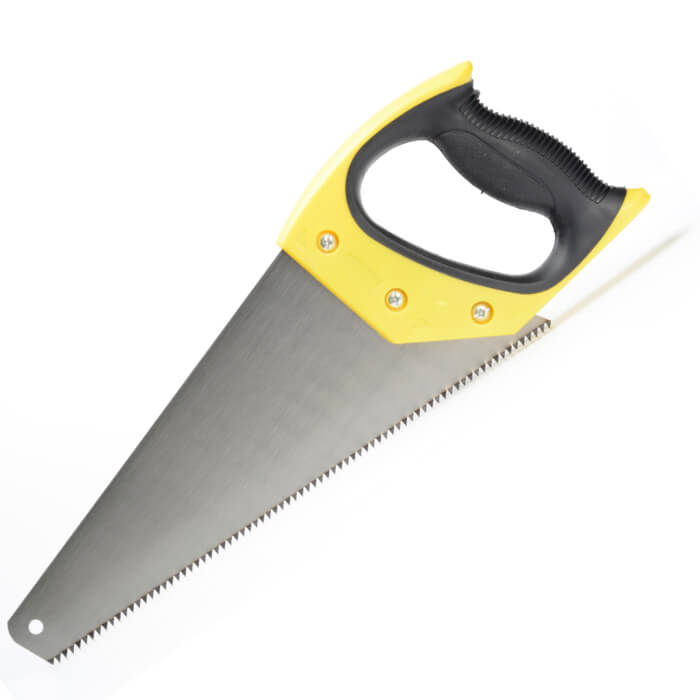
Despite living in the age of power tools, a quality handsaw remains an indispensable part of any deck builder's toolkit. There are situations where power tools simply can't reach, or where the precision and control of hand cutting is superior. Whether you're making fine adjustments, working in tight corners, or simply need to make a quick cut without setting up extension cords and safety equipment, a handsaw gets the job done.
Modern handsaws are far superior to their predecessors, featuring hardened teeth that stay sharp longer and ergonomic handles that reduce hand fatigue. A good crosscut saw with 8-10 teeth per inch handles most deck building tasks efficiently, while a Japanese-style pull saw provides incredibly smooth, precise cuts for finish work.
When to Choose a Handsaw: Trimming posts flush after installation, cutting in tight spaces under overhangs, making minor adjustments without disturbing previously fastened boards, and any situation where noise might be an issue. The quietness and portability make it perfect for quick corrections.
6. Cordless Drill/Driver – Your Most-Used Tool
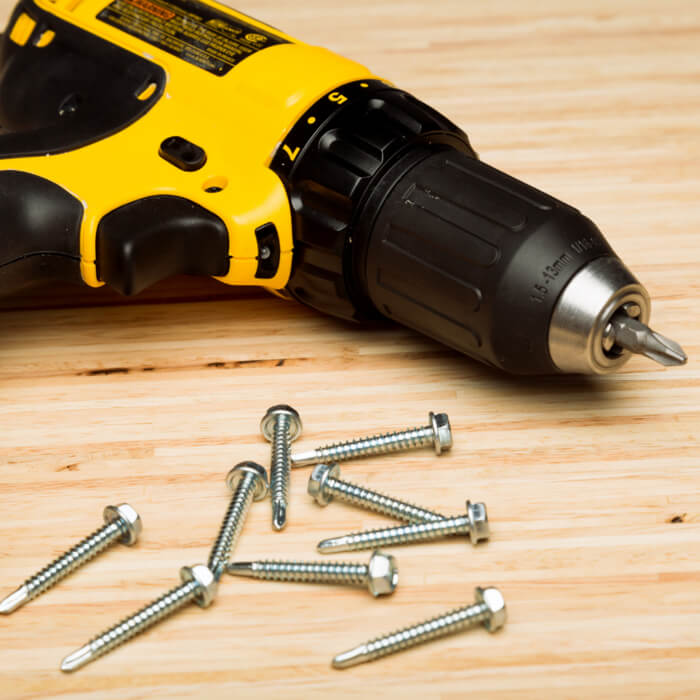
If you could only have one power tool for deck building, it would be a quality cordless drill/driver. This versatile tool drives screws, drills pilot holes, countersinks fasteners, and handles dozens of other tasks from start to finish. Modern lithium-ion models provide ample power and runtime for a full day of work, and the cordless convenience means you're never tethered to an outlet or wrestling with extension cords.
Critical Specifications:
Voltage: 18-20V provides the best balance of power and weight for deck building applications.
Clutch Settings: Multiple torque settings prevent over-driving screws and stripping heads.
LED Light: Built-in work lights illuminate fastening locations and pilot holes.
Consider purchasing two batteries so you always have a charged one ready. For extensive deck building, an impact driver makes an excellent companion to your drill/driver – use the drill for pilot holes and the impact driver for driving long deck screws with less wrist strain and faster speed.
Stock up on quality drill bits and driver bits. A set of brad point bits (for clean pilot holes in visible locations), spade bits (for drilling through framing members for wiring or plumbing), and several #2 Phillips and square drive bits will handle the vast majority of deck building needs.
7. Professional Upgrade: Decking Coil Nailer
For serious deck builders or anyone tackling a large deck project, a dedicated decking coil nailer transforms the installation process from tedious to efficient. This specialized tool drives fasteners at angles specifically designed for deck boards, creating secure connections that are faster and more consistent than hand-driving screws. What might take days with a drill can be completed in hours with a quality coil nailer.
Coil nailers hold dozens of fasteners in a compact coil magazine, eliminating the constant reloading that strip nailers require. The ergonomic design and balanced weight distribution reduce fatigue during long installation sessions, while the consistent depth adjustment ensures every fastener sits perfectly flush with the deck surface – no countersinking required.
Why Professional Builders Swear By It:
Speed: Install deck boards 3-4 times faster than traditional screw methods, dramatically reducing labor time and project completion dates.
Consistency: Every fastener is driven to the exact same depth with the exact same angle, resulting in a professional appearance throughout the entire deck surface.
Reduced Fatigue: The pneumatic or gas-powered operation requires minimal effort compared to repetitive screw driving, saving your wrists and hands for other tasks.
Versatility: Compatible with various fastener types and can handle different decking materials from softwoods to composite boards with appropriate adjustments.
The MAX Decking Coil Nailer represents the gold standard in professional deck installation tools. Engineered specifically for demanding decking applications, it handles fasteners up to 2-1/2 inches with ease, making it perfect for attaching deck boards to any joist system. The tool's robust construction withstands job site abuse while maintaining precision, and the easy-clear nose design minimizes downtime from jams.
Additional Must-Have Tools for Complete Success
Tape Measure
A 25-foot tape measure with a 1-inch wide blade is essential for accurate measurements throughout your build. Look for models with clear markings, a sturdy hook, and a reliable locking mechanism. The wide blade extends farther without collapsing, making solo measurements easier.
Speed Square
This triangular layout tool serves multiple purposes – marking square cuts, guiding your circular saw for straight cuts, laying out angles, and checking corners for square. Its compact size makes it perfect for keeping in your tool belt for constant access.
Framing Square
For laying out larger components and ensuring corners are perfectly square, a framing square is indispensable. Use it to check that your deck frame is square before securing joists, and for laying out stair stringers if your deck includes steps.
Chalk Line
When you need to mark long, straight lines across multiple boards or establish reference lines on your deck surface, a chalk line is the fastest and most accurate method. Choose chalk colors that contrast with your lumber for maximum visibility.
Post Hole Digger
For deck posts that extend into the ground, a quality post hole digger or power auger makes excavation much easier. Manual clamshell-style diggers work for a few holes, but power augers save enormous effort for larger projects or difficult soil conditions.
Hammer
Despite all the power tools, a traditional 20-ounce framing hammer remains essential for setting nails, persuading stubborn boards into position, and general assembly tasks. The weight provides good driving power without excessive fatigue during extended use.
Essential Safety Equipment
No discussion of deck building tools is complete without emphasizing proper safety equipment. Construction work inherently involves hazards, and the right protective gear prevents injuries that could sideline your project – or worse.
Safety Glasses: Protect your eyes from sawdust, wood chips, and debris – non-negotiable for all cutting and drilling operations.
Hearing Protection: Power tools produce damaging noise levels – use earplugs or earmuffs to preserve your hearing.
Work Gloves: Quality gloves prevent splinters and blisters while maintaining dexterity for handling materials and tools.
Work Boots: Steel-toed boots protect your feet from dropped lumber and tools while providing stable footing on uneven surfaces.
Building Your Dream Deck Starts with the Right Tools
Constructing a beautiful, durable deck that enhances your outdoor living space is entirely achievable with the proper tools and equipment. While the initial investment in quality tools might seem significant, these tools will serve you well beyond your deck project – they become valuable assets for countless future home improvement endeavors.
Start with the essential basics – level, measuring tools, saw, and drill – then gradually add specialized equipment like the decking coil nailer as your project demands and budget allows. Remember that quality tools make the work easier, faster, and more enjoyable, resulting in a superior finished product that you'll be proud to show off to friends and family.
Take your time to learn each tool properly, maintain your equipment well, prioritize safety at every step, and don't hesitate to rent specialized tools for one-time use. With patience, proper planning, and the right tools in your hands, you'll transform your backyard into the outdoor oasis you've always envisioned. Happy building!
Equip yourself with professional-grade tools and turn your deck building dreams into reality