

A squat rack is the single most important investment you can make for a serious home gym. It's the foundation that every other piece of equipment revolves around. Whether you're chasing new personal records, building functional strength, or simply trying to stay consistent with your training, the right rack can transform the way you train from home.
With dozens of brands, configurations, and styles flooding the market, choosing the right rack has become more complicated than ever. This in-depth guide walks you through everything you need to consider before pulling the trigger, from footprint and construction to attachments and safety features.
The History of the Squat Rack
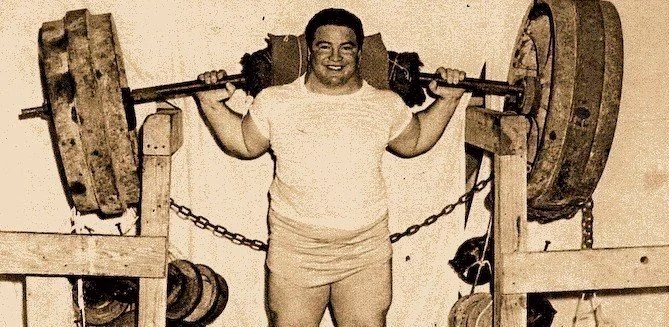
The squat rack didn't always look the way it does today. Early lifters in the 1940s and 1950s relied on makeshift wooden stands or training partners to get a loaded barbell onto their shoulders. As strength training moved from niche pastime to mainstream fitness culture, equipment manufacturers began designing dedicated steel stands built to hold serious weight safely.
By the 1970s, the traditional power cage emerged, a four-post steel structure that allowed lifters to train alone with adjustable safety arms. Over the following decades, innovations like laser-cut uprights, Westside hole spacing, and modular attachment systems turned the squat rack into the highly engineered centerpiece it is today.
Why You Should Own a Squat Rack
If you're committed to building real strength, a squat rack isn't optional — it's essential. Here's why it belongs in every home gym:
Train Safely Solo
Integrated safety arms and spotter bars let you push heavy lifts without needing a spotter present.
Unlock Full Barbell Work
Squats, bench press, overhead press, rack pulls — a rack opens up every major compound movement.
Save Long-Term Money
One rack replaces half a dozen machines and pays for itself compared to years of gym memberships.
Train on Your Schedule
No waiting for equipment, no crowded gyms, no compromises to your programming.
What to Look for in a Squat Rack
Not all racks are built equal. When comparing options, focus on the details that determine how your rack will perform over years of heavy use. Steel gauge, hole spacing, post thickness, and hardware quality all play a role in how the rack feels under load.
Steel Gauge and Post Size
The thickness of the steel (measured in gauge) and the dimensions of the uprights directly influence stability and weight capacity. Eleven-gauge steel with three-by-three-inch posts has become the gold standard for serious home gyms, offering a balance of rigidity and reasonable pricing.
Hole Spacing
Westside spacing — one-inch holes through the bench press range and two-inch spacing elsewhere — gives you the fine-tuned adjustability needed to dial in your bar path on every lift.
Footprint and Ceiling Height
Measure twice, buy once. A rack that's perfect on paper can become unusable if your ceiling is too low for overhead pressing or if the footprint swallows your garage floor. Always account for bar length, walkout space, and attachment clearance.
The Different Types of Squat Racks
Understanding the main categories will help you match a rack to your space, budget, and goals.
Squat Stands
Two independent uprights connected by a base. Compact and affordable, ideal for lifters with minimal space or a tight budget. Offers less stability than full racks but works well for basic squatting and pressing.
Half Racks
Two uprights plus spotter arms and a pull-up bar. More stable than stands and cheaper than full cages. A sweet spot for serious lifters who don't need the full enclosure.
Power Cages
Four uprights forming an enclosed space with safeties on both sides. The safest option for heavy solo lifting and the most versatile platform for attachments.
Folding Wall-Mount Racks
Bolted directly to the wall and fold away when not in use. Perfect for garages, basements, or any setup where floor space is at a premium.
The Best Squat Rack Types Compared
| Rack Type | Footprint | Stability | Best For |
|---|---|---|---|
| Squat Stand | Small | Moderate | Beginners, tight spaces |
| Half Rack | Medium | High | Strength athletes |
| Power Cage | Large | Very High | Heavy solo lifters |
| Folding Wall-Mount | Minimal | High | Garage gyms, small rooms |
Our Top Pick: The Major Fitness F35
If you're looking for a rack that delivers commercial-grade performance without consuming your entire garage, the Major Fitness F35 All-In-One Folding Power Rack is the answer. It combines the stability of a full cage with the space-saving genius of a wall-mount folding design, giving you the best of both worlds.
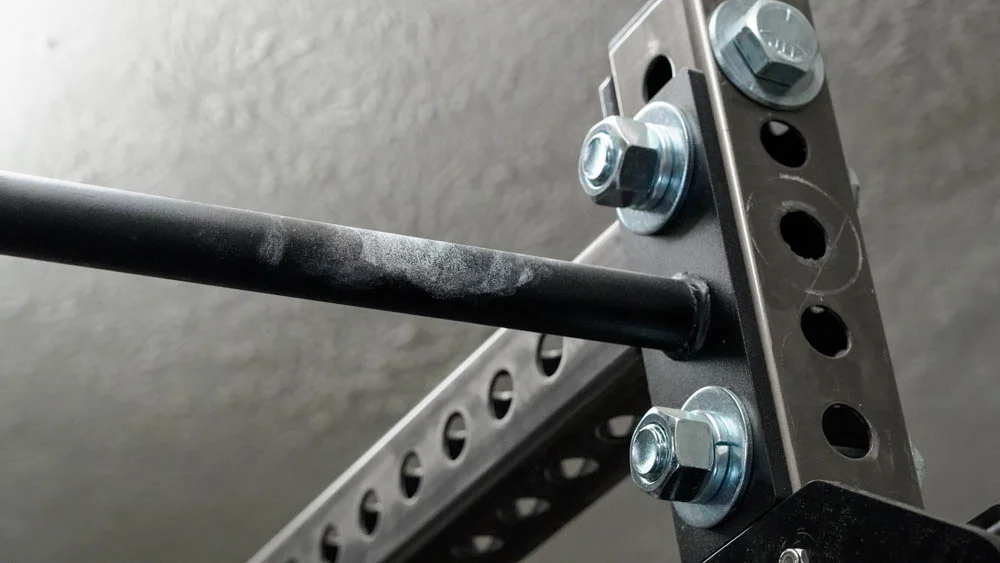
Why it wins: The F35 is engineered for lifters who refuse to compromise. It gives you the rigidity of a power cage, the footprint of a folding rack, and the attachment versatility of a full system — all in one brilliantly designed package.
Setting Up Your Squat Rack
Before installation, check your flooring, ceiling clearance, and stud placement if you're going with a wall-mount. Rubber mats or a dedicated lifting platform will protect both your floor and your equipment. Always follow manufacturer torque specs on all hardware and re-check bolts every few months, especially on folding models.
- Confirm ceiling height accounts for pull-ups and overhead pressing.
- Mark stud locations precisely before drilling for wall-mount installations.
- Use a torque wrench to tighten all hardware to spec.
- Lay down protective flooring to extend the life of your rack and platform.
- Re-inspect bolts and welds every three months under regular use.
Final Thoughts
A squat rack is an investment that pays you back every single training session. Cheap racks wobble, flex, and eventually fail. A well-built rack becomes the silent partner behind every personal record you'll ever hit. Spend a little more upfront and you'll never have to shop for another one.
For most home gym builders, the Major Fitness F35 hits the sweet spot between price, performance, and footprint. It's the rack we recommend most often — and it's the one we believe will serve you for decades.
Ready to Build Your Dream Home Gym?
The Major Fitness F35 All-In-One Folding Power Rack gives you commercial-grade strength training in a footprint that fits any garage. Backed by a heavy-duty build and smart folding design, it's the last rack you'll ever need.
Shop Major Fitness F35