

This Article Covers:
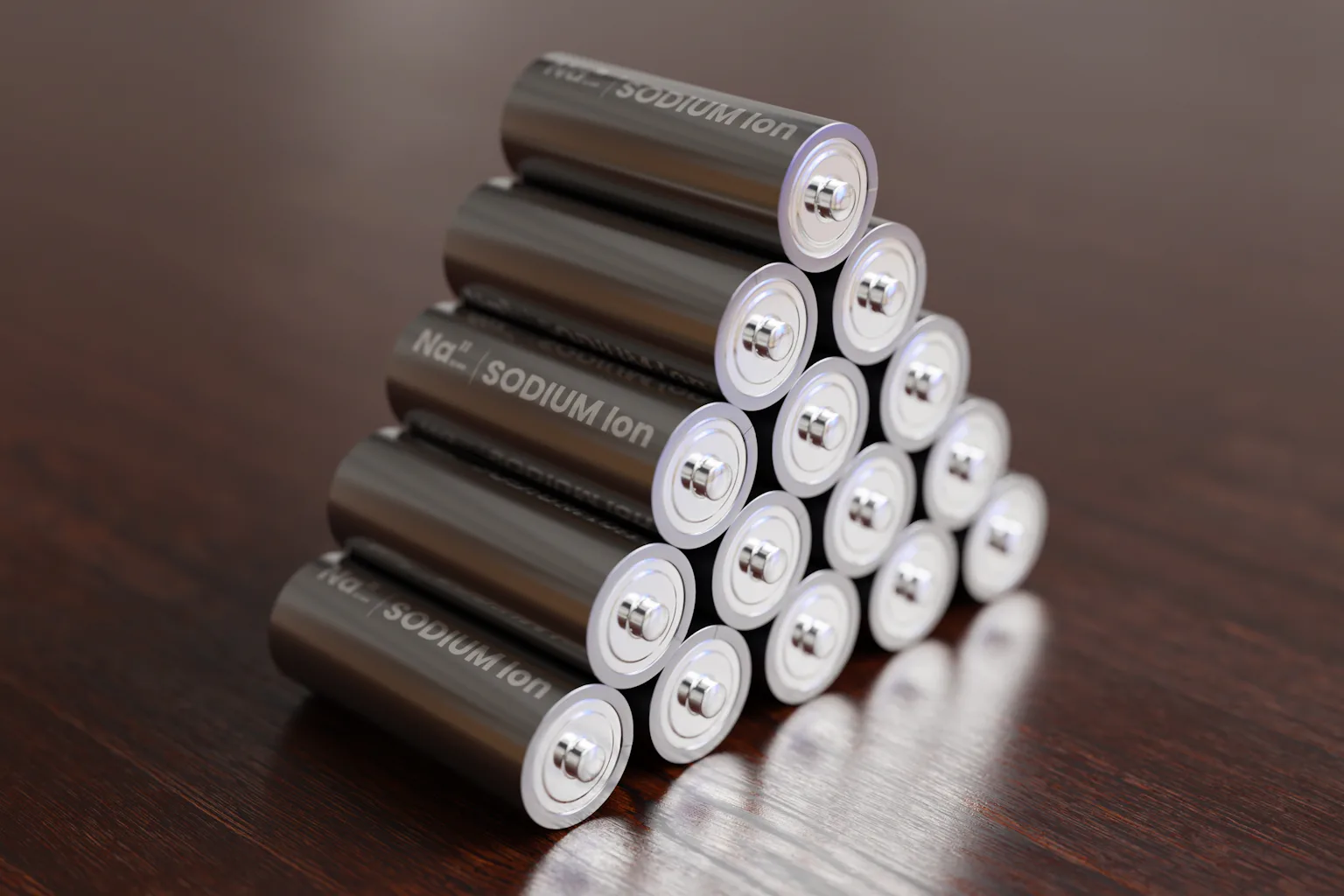
- What are sodium-ion batteries?
- Will they replace lithium-ion as the dominant technology?
- Materials and cost of sodium-ion batteries
- How long do sodium-ion batteries actually last?
- Sodium-ion battery safety
- Are they more sustainable than lithium-ion?
- Meeting battery demand — why sustainability matters most
What Are Sodium-Ion Batteries?
Sodium-ion batteries are a type of rechargeable battery that operates much like the lithium-ion batteries you already know — except they use sodium as the mobile charge carrier instead of lithium. The fundamental working principle is the same: ions shuttle between two electrodes through an electrolyte to store and release energy.
The key difference lies in the anode material. Where lithium-ion batteries use graphite, sodium-ion batteries typically use a hard carbon material derived from organic compounds. On the cathode side, rather than lithium compounds like LFP or NMC, sodium-ion batteries use sodium-based chemistries — for example, Na₂/₃Fe₁/₂Mn₁/₂O₂ or NaMnO₂ variants.

Will Sodium-Ion Batteries Replace Lithium-Ion as the Dominant Technology?
Sodium-ion batteries are unlikely to completely replace lithium-ion batteries across all applications. They are better positioned as a complementary solution — filling roles in large-scale grid storage, stationary energy systems, and low-cost applications where high energy density isn't the primary requirement.
That said, sodium-ion technology will inherit many of the same raw material pressure and supply chain risks that exist in today's lithium battery market. Just because the chemistry changes doesn't mean the challenges disappear. We still need to understand how to handle, recycle, and manage these batteries responsibly. And crucially, cost and lifespan remain real variables in whether sodium-ion makes sense for any given use case.
The conversation around sodium-ion batteries isn't about which chemistry "wins" — it's about matching the right technology to the right application, with a clear-eyed view of cost, lifespan, and supply chain realities.
Materials and Cost of Sodium-Ion Batteries
One of sodium-ion's most frequently cited advantages is that sodium is far more abundant than lithium and is not geographically concentrated in a small number of countries. This theoretically reduces dependence on a handful of battery cell manufacturers and could stabilize pricing over time.

Sodium-ion cells also avoid some of the more expensive critical and toxic materials found in lithium-ion cathodes — including cobalt and nickel in certain chemistries. Analyses of the future sodium-ion battery market suggest this could help reduce the kinds of cost cliffs and supply disruptions the lithium market has experienced in recent years.
Lower Material Cost
Sodium-based cathodes generally use more abundant, lower-value materials compared to lithium NMC or NCA chemistries.
Reduced Supply Risk
Sodium is one of the most ubiquitous elements on Earth, reducing the geopolitical concentration of the supply chain.
End-of-Life Concerns
Questions about recyclability and responsible disposal remain open — legislation similar to lithium-ion recycling policy will be needed.
However, cost per kilowatt-hour on a pack basis remains a meaningful comparison point against lithium. While cell-level costs are promising, consumer and OEM perspectives demand we evaluate total system cost — and on a per-kilogram basis, sodium-ion packs are not yet definitively cheaper at scale. Responsible procurement means looking beyond the headline material cost.
Limitless Lithium NoLi Sodium 50Ah Battery
A next-generation sodium-ion cell built for real-world energy independence — reliable, safe, and designed for demanding off-grid and backup applications.
How Long Do Sodium-Ion Batteries Actually Last?
Much like the early days of lithium-ion, sodium-ion battery lifetime data is still accumulating. The answer to how long they last is genuinely: it depends. Cycle life varies significantly based on battery chemistry, operating conditions, temperature, depth of discharge, and charge rate.
Major companies in the space are now able to model and predict battery degradation across a variety of real-world scenarios — and early data collection during the cycling phase allows manufacturers to build optimal design strategies for high-cycle applications. The key is not just knowing the average lifespan but understanding the failure modes and degradation pathways particular to sodium-ion materials, which behave differently from their lithium counterparts.
Thermal & Mechanical Behavior
Sodium-ion cells experience different internal stresses during charge and discharge cycles than lithium cells, and these differences have implications for long-term structural integrity.
Degradation Modeling
Sophisticated models allow battery developers to design optimal charge strategies — and early real-world data collection accelerates the understanding of real lifetime performance.
Sodium-Ion Battery Safety
A common claim in the market is that sodium-ion batteries are inherently safer than lithium-ion batteries. The reality is more nuanced — very little published safety data exists for sodium-ion at scale, and the electrolytes used carry many of the same flammability risks as conventional lithium cells.
There are meaningful distinctions worth noting, however. Some sodium-ion chemistries — particularly those using layered oxide cathodes — have demonstrated better thermal stability than certain lithium-ion equivalents like NMC. This doesn't make them risk-free, but it suggests specific chemistries may offer safety advantages in particular operating environments.
- Flammable organic electrolytes remain a concern in most commercial sodium-ion cells
- Different cathode and anode materials interact differently under thermal stress
- Solid-state sodium-ion designs are in development and could significantly improve safety profiles
- Battery management system (BMS) design remains critical regardless of chemistry
A promising path forward involves replacing flammable liquid electrolytes with solid-state alternatives. This could dramatically reduce the fire risk profile of sodium-ion cells — but performance trade-offs, electrode-electrolyte stability, and dendrite management need to be resolved before solid-state sodium-ion reaches commercial viability. Realistically, that's a next-decade milestone, not an imminent one.
Are Sodium-Ion Batteries More Sustainable Than Lithium-Ion?
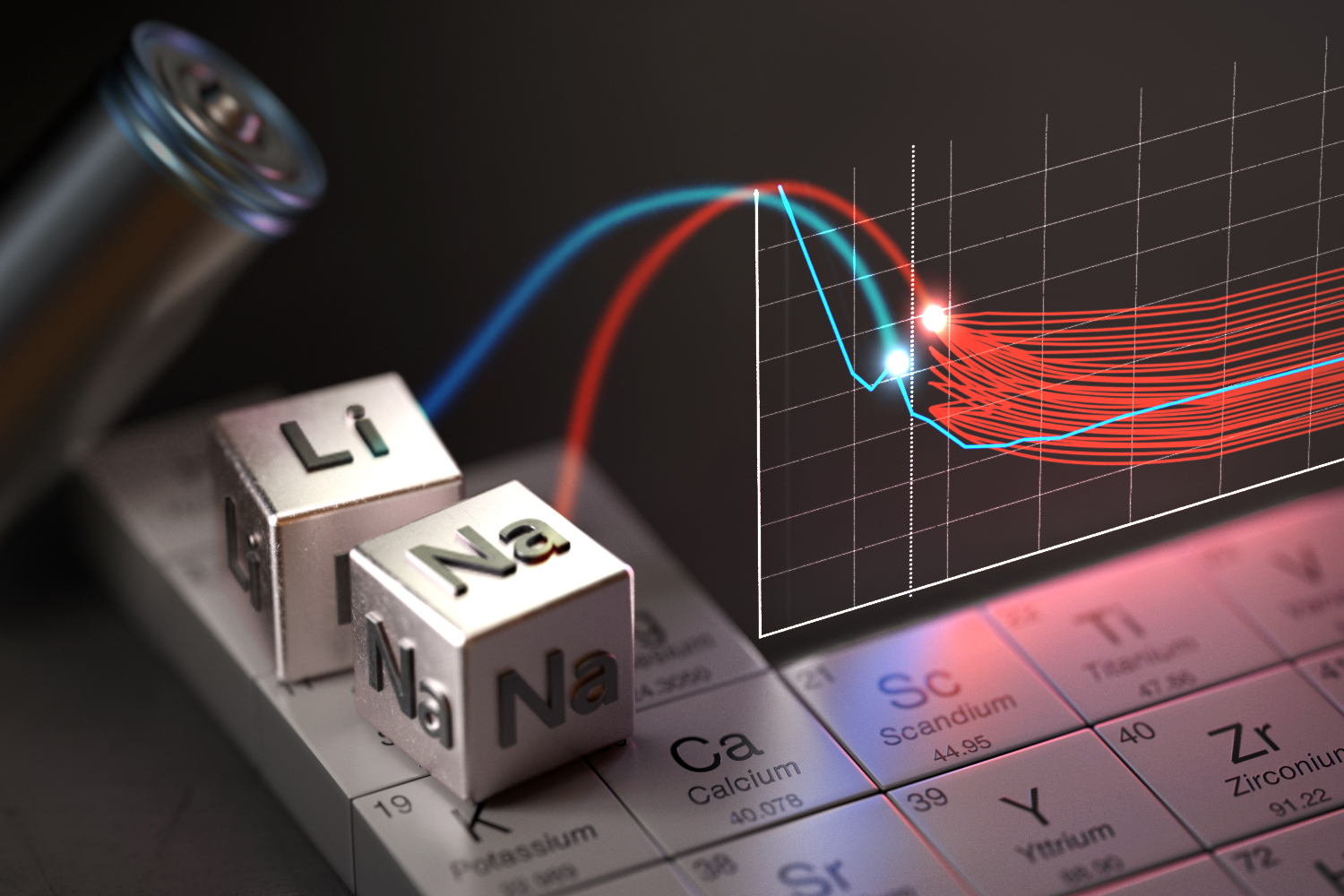
Lithium-ion batteries have faced serious environmental scrutiny — from the energy-intensive mining processes required to produce lithium, cobalt, and nickel, to the hazardous chemicals involved in manufacturing and the difficulties of end-of-life recycling. These are real concerns that the industry continues to grapple with.
Sodium-ion batteries do offer some indirect sustainability improvements. Notably, they can help decarbonize the electricity grid by enabling better renewable energy storage — which is a more impactful lever than switching battery chemistries at the device level. However, many of the manufacturing steps for sodium-based materials are similar in their environmental footprint to lithium-ion production. A switch to sodium-ion is not a sustainability silver bullet.
Reduced Mining Pressure
Sodium's abundance reduces dependence on environmentally sensitive mining operations for lithium and cobalt.
Grid Decarbonization
Enabling more renewable storage infrastructure has a broader sustainability impact than chemistry alone.
Still Maturing
The full environmental lifecycle of sodium-ion production and recycling hasn't yet been comprehensively studied at commercial scale.
Meeting Battery Demand Is Important — But Sustainability Is the Real Prize
As of now, there is no definitive answer on the long-term environmental superiority of sodium-ion batteries over lithium-ion. In-depth studies are underway. What is clear is that we should not assume sodium-ion solves all the issues currently facing lithium-ion technology — the risks are similar, and if we don't start planning for them now, we risk repeating the same mistakes at scale.
For sodium-ion to advance responsibly toward commercialization, industry and academia must work together openly — sharing data, aligning on standards, and most critically, prioritizing safety, recycling, and lifetime performance from the earliest development stages. The batteries that will power the next generation of energy infrastructure deserve nothing less than that level of rigor and collaboration.
The future of energy storage isn't about choosing one chemistry and moving on. It's about building an ecosystem where the right battery goes to the right job — safely, sustainably, and at a cost that makes clean energy accessible to everyone.
Ready to Explore Sodium-Ion Technology?
The Limitless Lithium NoLi Sodium 50Ah Battery brings next-generation sodium-ion chemistry to your off-grid or backup power setup — built tough and designed to last.