

Interest in lithium alternatives is growing fast — and sodium is leading the charge. As supply chain pressures and environmental concerns mount around lithium, sodium-ion battery technology is quietly maturing into a credible, sustainable solution for everyday energy needs.
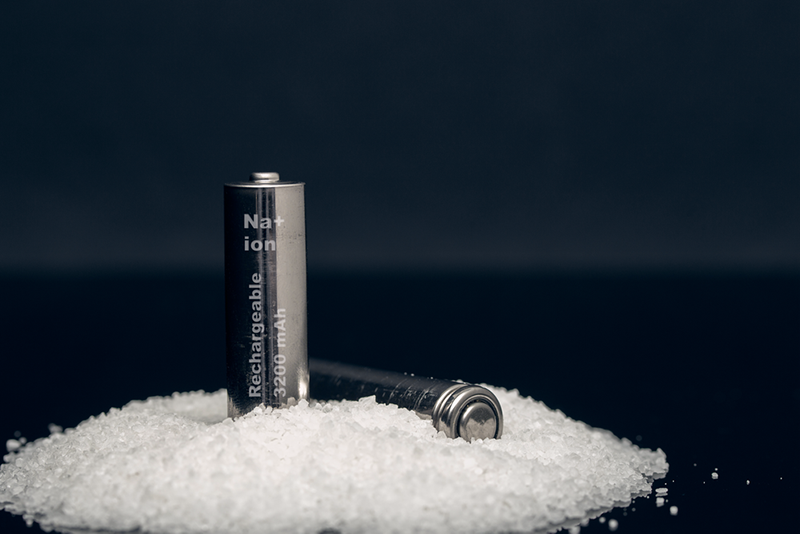
This article is part of a series exploring advances in sustainable battery solutions, drawing on recent reporting from Physics Magazine, which highlighted the growing viability of sodium as a commercially practical replacement for lithium in next-generation batteries. The evidence is compelling, and the real-world implications are significant.
Why Sodium?
In its 2023–2024 report, the Global Battery Alliance identified sodium-powered cells as a high-priority technology. A team of researchers studying the transition has concluded that sodium not only demonstrates competitive electrochemical performance but also opens the door to a far more geographically distributed supply chain — one far less vulnerable to the geopolitical pressures that affect lithium markets.
Sodium is substantially more abundant than lithium, occurs in far greater concentrations in the Earth's crust, and is naturally present in sea water. It is also estimated to weigh less per usable unit of energy output — a characteristic that has important implications for portable and off-grid applications.
"Sodium cells have been studied at the University of Chicago for over 60 years — this is not a new idea. What's new is how well the technology now performs, and that sodium-equipped products could be widely available within just a few years."
There are, of course, trade-offs to acknowledge. Sodium-ion batteries carry lower energy density than their lithium counterparts, meaning that for equivalent storage capacity, they may require a slightly larger form factor. But the cost advantage — potentially 30 to 40% cheaper per kilowatt-hour — is difficult to ignore, and for many off-grid or stationary applications, that trade-off is entirely acceptable.
How a Sodium-Ion Battery Works
Like lithium-ion cells, sodium-ion batteries operate on an intercalation principle: ions shuttle back and forth between anode and cathode through an electrolyte during charge and discharge cycles. What changes is the carrier ion — sodium instead of lithium — which requires different electrode materials to accommodate the slightly larger ion size.
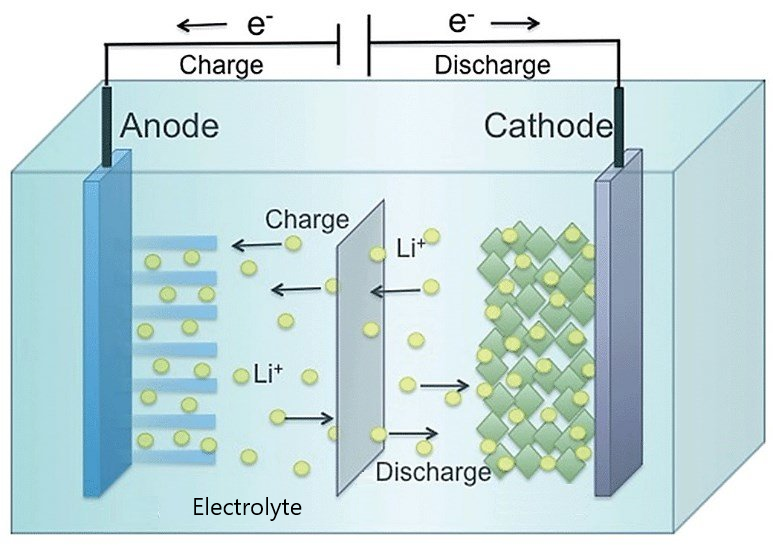
The cathode in a sodium cell is most commonly constructed from sodium-transition-metal oxides or Prussian blue analogs — materials that are low-cost and widely available. On the anode side, researchers have shifted away from graphite (which performs poorly with sodium ions) toward hard carbon — a disordered carbon structure that accommodates larger sodium ions effectively. The electrolyte, too, is reformulated, though it operates on the same broad principles as lithium electrolyte chemistry.
One distinguishing design feature of many sodium-ion cells: they can be safely stored at a zero-volt state of charge without permanent damage. This is a meaningful logistical and safety advantage over lithium cells, which require careful voltage management during shipping and long-term storage.
The Materials Advantage
Perhaps the most compelling commercial argument for sodium is the materials stack. Lithium cells currently rely on cobalt, nickel, and lithium — all of which carry significant supply chain risk. Sodium cells, by contrast, can be manufactured using iron, manganese, sodium, and carbon — elements that are globally common, cheap, and not subject to the same sourcing constraints.
The absence of cobalt is particularly significant. Cobalt extraction has long been associated with labor rights concerns in mining regions, and its price volatility has made it a liability in battery manufacturing cost models. Sodium cell chemistry sidesteps this issue entirely.
Sodium vs. Lithium — A Practical Comparison
Sodium-Ion Advantages
- Globally abundant raw materials
- Lower projected cost per kWh
- No cobalt or nickel dependency
- Safe at zero-volt storage
- Reduced geopolitical supply risk
- Compatible with existing manufacturing lines
Lithium-Ion Advantages
- Higher energy density per kg
- More mature commercial ecosystem
- Wider current product availability
- Extensive field performance data
- Established recycling infrastructure
- Broad compatibility with existing devices
When considering stationary or off-grid applications — solar storage, backup power, cabin systems, recreational setups — the sodium-ion trade-offs look increasingly favorable. The slight density disadvantage matters far less when weight and size constraints are flexible, and the cost and sourcing advantages are real and immediate.

Batteries Worth Watching
The leading framework for evaluating next-generation batteries focuses on four pillars: performance, cost, safety, and sustainability. Current sodium-ion cells score competitively on three of these four — with performance the only area where continued development is needed. Recent research from multiple institutions has demonstrated that cathode engineering improvements can close the remaining energy density gap by a meaningful margin within the next product generation.
Several large manufacturers — including major Chinese battery producers — have already announced commercial sodium-ion products. France's electric vehicle sector has taken an active interest. And in the U.S., startups and established battery makers alike are filing sodium-related patents at record rates. Sodium is no longer a laboratory curiosity. It is fast becoming an industry priority.
It becomes abundantly clear that sodium-ion technology is not simply a backup plan for when lithium runs short — it is an independent, viable path to cleaner, more resilient energy storage for the decade ahead.
A Sociological Shift
Beyond the chemistry, there is a broader transition taking place. Early battery technology was dominated by whoever controlled rare mineral deposits. Sodium flips that equation. Because its feedstocks are everywhere — in soil, in brine, in seawater — sodium-ion production is inherently more democratized. Nations and businesses that lacked a foothold in the lithium supply chain now have a viable path into energy storage manufacturing.
In the near term, sodium will improve, but it will not entirely replace lithium in high-performance applications like premium electric vehicles. The two chemistries will coexist — each serving the applications where it performs best. For the off-grid and energy independence community, sodium represents a meaningful, affordable, and principled option.
Ready to Make the Switch?
Explore our sodium-ion battery solution — engineered for off-grid reliability and built for the long haul.
NoLi Sodium 50Ah BatteryReferences
- Bai, Y. et al. "Sodium-ion batteries: From lab curiosity to commercial reality." Joule, 7(4), 2023.
- Faraj, M. et al. "Electrochemical performance of sodium-ion batteries: a comparative study." J. Mater. Chem. A, 11(8), 2023.
- Tarascon, J. "Is lithium the new gold?" Nature Chemistry, 2023.
- U.S. DOE Battery Innovation Hub. "Sodium-ion battery commercialization roadmap." 2024.
- Global Battery Alliance. "Battery passport sustainability metrics." GBA Annual Report, 2024.