

The race for better battery technology is accelerating. Sodium-ion batteries are emerging as a serious contender to lithium-ion — a technology that has dominated portable energy storage for decades. Here's everything you need to know before choosing the right battery for your setup.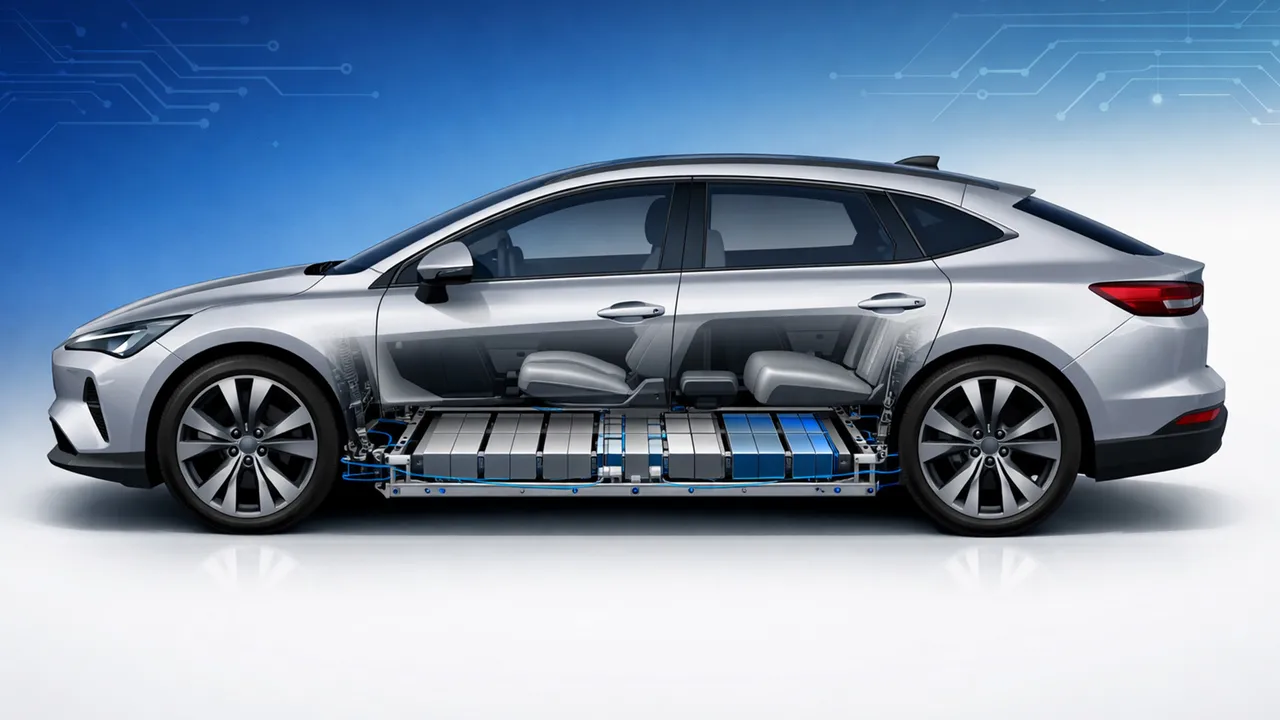
What Are Sodium-Ion Batteries?
Sodium-ion (Na-ion) batteries work on the same fundamental principles as their lithium counterparts — ions shuttle between a cathode and anode during charge and discharge cycles. The key difference lies in the charge carrier: sodium ions instead of lithium ions. Sodium is the seventh most abundant element on Earth, making it far easier and cheaper to source than lithium.
Developed over decades of electrochemical research, sodium-ion technology has only recently matured to the point where it is commercially viable for consumer and industrial energy storage applications. The shift has been driven by advances in electrode materials, electrolyte formulation, and cell architecture — all of which now enable sodium cells to deliver competitive energy density, long cycle life, and excellent thermal stability.
Key Insight: Sodium is roughly 1,000 times more abundant in the Earth's crust than lithium, and it can be extracted sustainably from seawater and salt deposits — meaning sodium-ion batteries are fundamentally less vulnerable to supply chain disruptions and price spikes.
The Elements at the Core
The Technology Behind Sodium-Ion Charging
Inside a sodium-ion cell, sodium ions travel through the electrolyte from the anode to the cathode during discharge, and reverse direction during charging. The cathode is typically made from layered oxide or Prussian blue analogue materials, while the anode commonly uses hard carbon — a disordered form of carbon that accommodates the larger sodium ion effectively.
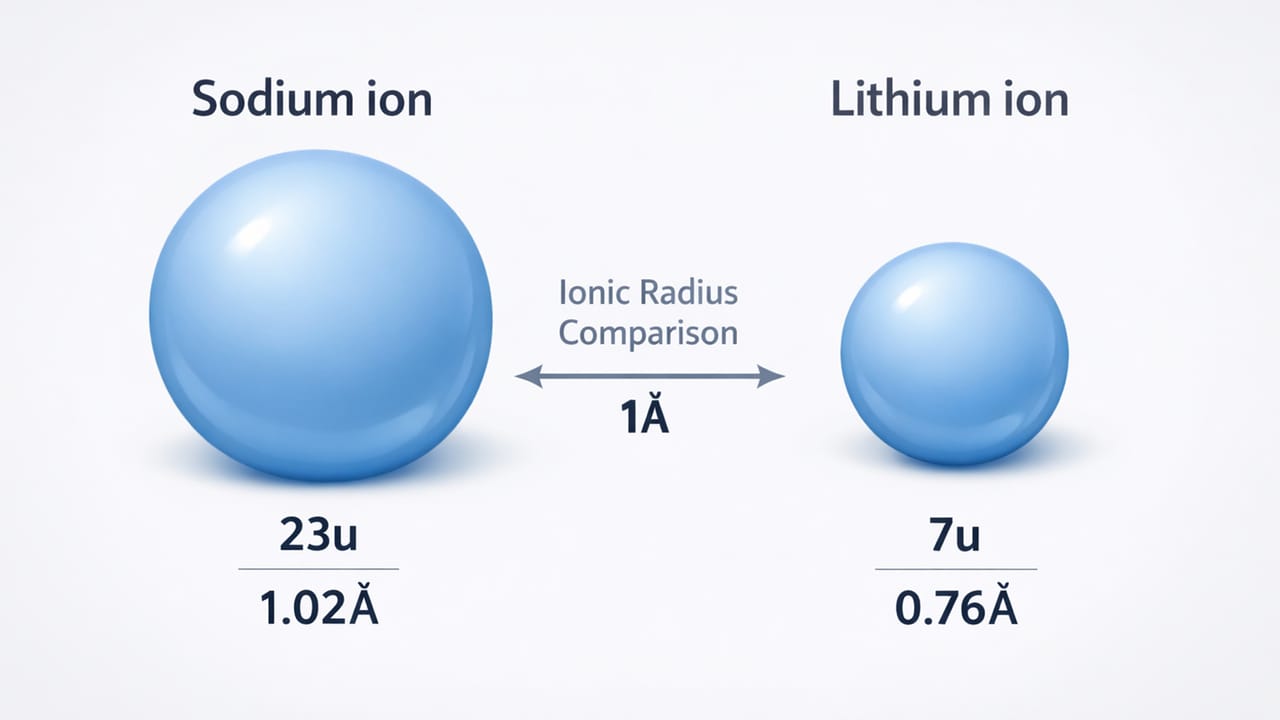
Lithium-ion cells, by contrast, typically use graphite anodes. Sodium's larger ionic radius means it cannot intercalate into standard graphite, which led to years of anode research before hard carbon emerged as the preferred solution. Today, advances in hard carbon manufacturing have made sodium-ion cells commercially practical at scale.
The electrolyte chemistry also differs. Sodium-based electrolyte salts are generally less reactive and more thermally forgiving than lithium counterparts, contributing to the inherently safer operation of sodium-ion systems under stress or abuse conditions such as overcharging or high temperatures.
Key Performance Advantages
Thermal Safety
Sodium-ion cells exhibit superior thermal stability and are far less prone to thermal runaway — a critical safety advantage in outdoor and off-grid environments.
Cold Weather Performance
Unlike lithium-ion, sodium-ion retains usable capacity at sub-zero temperatures, making it ideal for year-round outdoor and remote applications.
Faster Charging
Sodium-ion cells can accept higher charge rates without significant capacity degradation, enabling quicker turnaround times for energy-intensive applications.
Lower Cost Trajectory
With abundant raw materials and no dependency on scarce cobalt or lithium, sodium-ion is positioned to undercut lithium-ion on cost as manufacturing scales.
Sodium-Ion vs. Lithium-Ion: Full Comparison
The table below lays out the critical differences across the parameters that matter most for off-grid users, outdoor energy storage, and long-term reliability.
| Parameter | Sodium-Ion | Lithium-Ion |
|---|---|---|
| Energy Density | Moderate — improving rapidly with new cathode materials | High — industry-leading volumetric and gravimetric density |
| Raw Material Cost | Low — sodium is abundant and inexpensive | Higher — lithium, cobalt, and nickel are price-volatile |
| Thermal Safety | Excellent — lower thermal runaway risk | Moderate — requires Battery Management System safeguards |
| Cold Temperature Performance | Strong — performs well below freezing | Degraded — capacity drops significantly in cold conditions |
| Cycle Life | 3,000–5,000+ cycles depending on chemistry | 500–3,000 cycles depending on chemistry |
| Charge Rate | High — supports aggressive fast-charge protocols | Variable — depends on chemistry and BMS settings |
| Environmental Impact | Lower — no mining-intensive lithium or cobalt | Higher — mining footprint for lithium and cobalt |
| Maturity | Emerging — commercially scaling now | Mature — decades of optimization and supply chain depth |
Where Sodium-Ion Batteries Excel
Sodium-ion technology is not trying to replicate lithium-ion in every use case — it is designed to dominate where lithium falls short. For stationary energy storage, off-grid solar systems, backup power, and cold-climate applications, sodium-ion delivers compelling advantages that lithium simply cannot match at a comparable cost.
Large-scale grid storage is among the most promising near-term applications. Because sodium-ion cells are non-flammable under normal operation and tolerate a wider temperature window, they can be deployed in outdoor enclosures without the expensive thermal management infrastructure required for lithium systems. This dramatically reduces installation cost and complexity for solar farms, wind storage, and microgrid projects.
For individual off-grid users and outdoor power enthusiasts, sodium-ion packs offer peace of mind alongside performance. Whether you are powering a remote cabin, a camping setup, or a job-site tool station in winter conditions, sodium-ion delivers reliable energy without the cold-weather penalty that plagues lithium-ion alternatives.
Outdoor & Off-Grid Advantage: Sodium-ion batteries are particularly suited to environments where temperature swings are wide, safety margins matter, and long calendar life is more important than achieving the maximum energy density in the smallest possible package.
Ready to Experience Sodium-Ion Performance?
The Limitless Lithium NoLi Sodium 50Ah Battery brings sodium-ion technology to everyday outdoor and off-grid power needs — built for real-world conditions and long-term reliability.
NoLi Sodium 50Ah BatteryLeading Manufacturers & Market Adoption
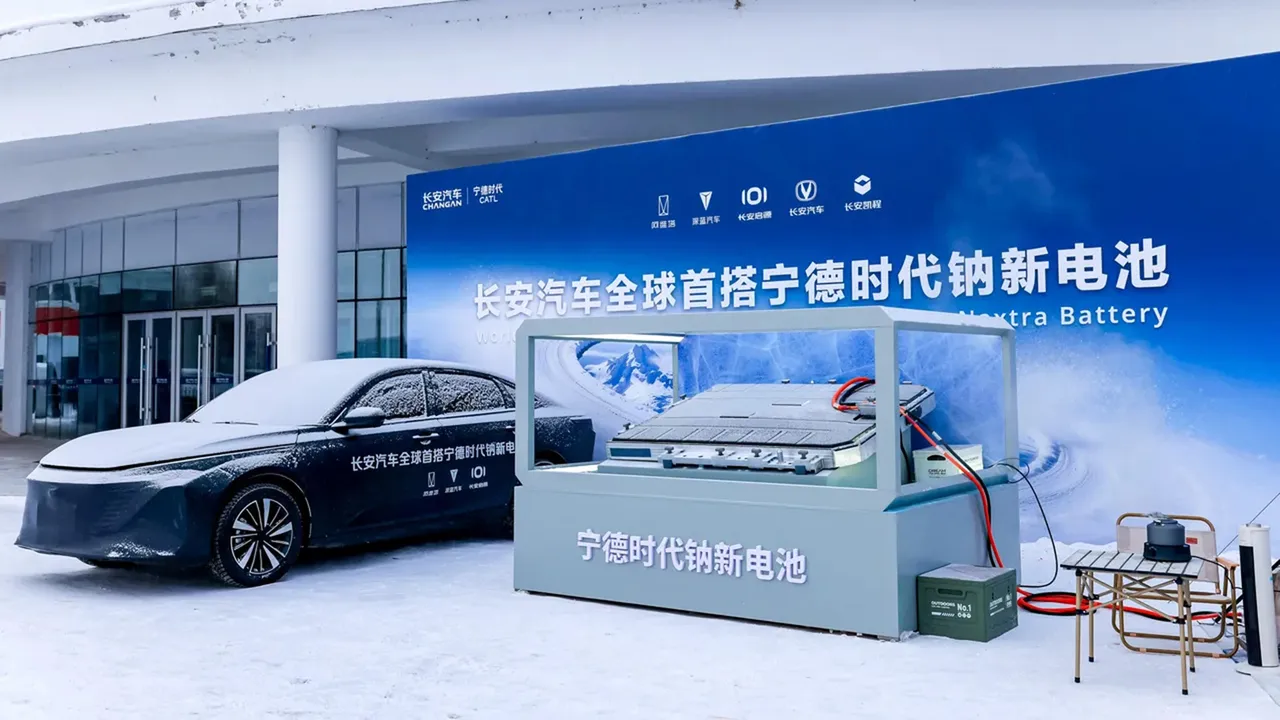
Several major battery manufacturers have committed significant resources to sodium-ion commercialization. CATL, the world's largest battery producer, unveiled its first-generation sodium-ion cell and announced plans for integrated hybrid battery packs combining sodium and lithium cells in a single module — a design that leverages the cold-weather strengths of sodium with the energy density of lithium.
BYD, HiNa Battery Technology, and Faradion (now part of Reliance Industries) have all reached or announced commercial-scale sodium-ion production. In China alone, dozens of startups are racing to develop next-generation cathode and anode materials that could push sodium-ion energy density above 200 Wh/kg — directly competitive with mainstream lithium iron phosphate chemistry.
North American and European markets are following. Investments in sodium-ion startups have surged as battery manufacturers seek to diversify away from lithium supply chain risk and meet growing demand from utilities, fleet operators, and residential storage customers who prioritize safety and long service life over raw energy density.
Industrial Applications for Sodium-Ion Today
Beyond consumer and residential storage, sodium-ion batteries are making inroads across a range of industrial sectors. Telecommunications companies are evaluating sodium-ion packs as backup power for remote cell towers, where cold-climate performance and reduced fire risk are top priorities. Agricultural operations running autonomous equipment in field conditions find sodium-ion's wide operating temperature range a practical advantage over lithium alternatives.
Marine applications are another growth area. Boats and watercraft operated in cold northern climates experience significant lithium performance degradation — sodium-ion cells maintain output across the same conditions with far less capacity loss. For marine electrification projects where safety regulations and fire codes are stringent, the lower thermal runaway risk of sodium-ion is a meaningful compliance advantage.
Electric forklifts, pallet movers, and warehouse transport vehicles represent a high-volume near-term opportunity. These machines operate in temperature-controlled warehouses but require frequent cycling, long calendar life, and low total cost of ownership — exactly the profile where sodium-ion excels versus current lithium iron phosphate solutions.
The Bottom Line
Sodium-ion batteries are not a replacement for every lithium-ion application — but they are a superior choice for a growing range of outdoor, off-grid, and stationary energy storage use cases where safety, cold-climate performance, cycle life, and total cost of ownership matter more than achieving peak energy density.
As manufacturing scales and electrode materials improve, sodium-ion is set to claim an ever-larger share of the global battery market. For outdoor power users, off-grid homesteaders, and anyone who has dealt with the frustrating performance limitations of lithium in cold weather, sodium-ion technology represents a genuinely better solution — available right now.