

The demand for dependable energy storage is growing faster than ever. From off-grid living to large-scale renewable power, choosing the right battery technology is a critical decision for homeowners, builders, and outdoor enthusiasts alike. Sodium-ion batteries have entered the conversation as a compelling alternative — and understanding how they stack up against lithium-ion is essential for making the right choice.
Material Availability & Cost Efficiency
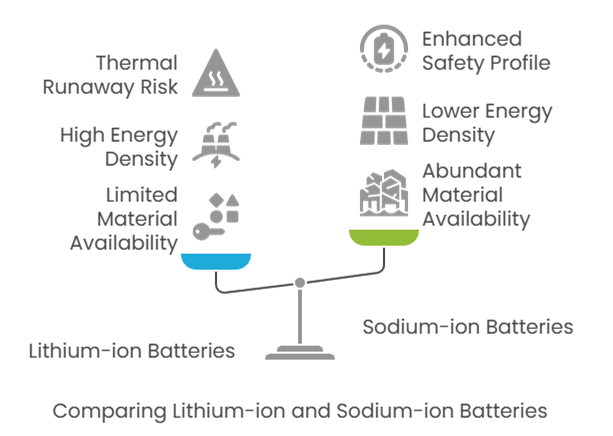
Lithium-ion technology delivers exceptional energy density and has long been the go-to for battery applications. However, its long-term supply chain is a real and growing concern. Lithium deposits are concentrated in just a handful of regions — Australia, Chile, and parts of China — leaving the supply vulnerable to geopolitical pressures and price swings. As global energy demand accelerates, these vulnerabilities will only become more pronounced.
Sodium offers a fundamentally different story. Found abundantly in seawater and the Earth's crust, sodium is essentially everywhere. This wide distribution significantly reduces dependence on concentrated mining operations. Sodium-ion batteries carry a more predictable cost structure and a supply chain far less susceptible to disruption — giving manufacturers and end-users alike greater long-term confidence.
Sodium-ion batteries directly address the material bottlenecks associated with lithium, enhancing supply chain resilience while driving down long-term manufacturing costs.
Lithium-Ion
- High energy density
- Ideal for EVs & mobile devices
- Thermal runaway risk
- Limited material availability
- Higher long-term cost
Sodium-Ion
- Abundant raw materials
- Enhanced thermal safety
- Broad temperature range
- Excellent for stationary use
- Cost-predictable supply chain
Performance & Application Suitability
Performance characteristics between these two technologies differ significantly — and so do their ideal use cases. Lithium-ion batteries are celebrated for their high energy density, typically ranging between 150 and 350 Wh/kg depending on the chemistry and configuration. This makes them the natural choice for applications where weight and size are critical factors, including electric vehicles, smartphones, and portable electronics.

Sodium-ion batteries operate at a lower energy density overall, but they hold meaningful advantages in other areas. They deliver consistent, reliable performance across a wider range of temperatures — including extreme cold — and are particularly well-suited for stationary and large-scale energy storage. For applications like grid stabilization, backup power, and renewable energy storage where space constraints are less of a concern, sodium-ion technology becomes an exceptionally attractive option.
Grid Stabilization
Sodium-ion's stability and broad temperature tolerance make it a leading candidate for utility-scale energy balancing.
Backup Power
Non-flammable chemistry and low maintenance requirements position sodium-ion as a reliable backbone for backup systems.
Renewable Storage
Pairing solar or wind generation with sodium-ion banks offers a cost-effective, sustainable, and scalable solution.
Off-Grid Living
Abundant materials and simpler system design reduce total cost of ownership for remote and off-grid installations.
Lithium-ion remains the preferred choice for mobile, high-performance devices. Sodium-ion excels in stationary and large-scale applications where cost, stability, and environmental conditions matter most.
Safety & Sustainability
Safety has become a defining factor in how batteries are evaluated — especially as energy systems grow in both scale and complexity. Lithium-ion batteries, despite their performance credentials, carry a risk of thermal runaway under certain conditions. This can lead to fire or explosion hazards if systems are improperly managed, and often requires elaborate cooling infrastructure to mitigate.
Sodium-ion batteries present a fundamentally safer profile. Their non-flammable chemistry significantly reduces the likelihood of thermal incidents, and they maintain operational stability across broad temperature extremes. This intrinsic safety advantage simplifies system design and improves reliability — particularly in remote or critical infrastructure environments where servicing is difficult.
When it comes to lifecycle and environmental impact, the differences are equally noteworthy. Early research indicates that sodium-ion cells are easier and less resource-intensive to recycle compared to lithium-based systems. Their manufacturing process involves fewer hazardous materials, aligning more closely with tightening environmental regulations and evolving corporate sustainability standards.
Sodium-ion technology offers a clear pathway to safer, more sustainable battery systems — addressing some of the most pressing concerns surrounding large-scale energy storage deployment.
Ready to Make the Switch?
Explore our sodium-ion battery range and discover high-performance, sustainable energy storage built for the demands of modern off-grid and backyard living.
NoLi Sodium 50Ah BatteryConclusion
The comparison between sodium-ion and lithium-ion batteries points toward a future where both technologies play distinct and complementary roles. Lithium-ion will continue to lead in sectors demanding high energy density and compact form factors. Sodium-ion, meanwhile, is positioned to drive growth in stationary energy storage, renewable integration, and cost-sensitive applications where safety and sustainability are paramount.
For backyard builders, off-grid adventurers, and energy-forward homeowners, understanding this distinction is the first step toward building a smarter, more resilient energy setup. The next generation of battery technology is already here — and it's more accessible than ever.