

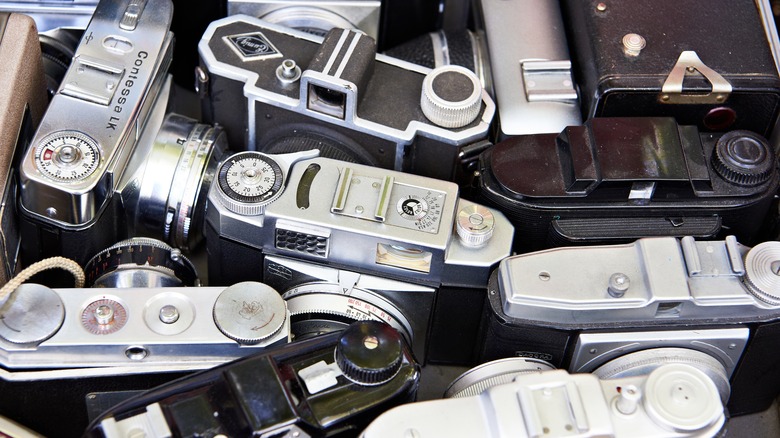
Selecting the right camera for your photography journey can feel overwhelming. The decision goes well beyond simply choosing between a digital body and a film-based system. If you lean toward film, you still need to figure out whether a 35mm format suits your style. And then comes another fork in the road — do you reach for an SLR, or does a rangefinder camera make more sense?
The honest truth — ask ten photographers and you will get ten different opinions. Some swear by digital sensors, while others refuse to shoot anything other than medium-format film. When someone brings up 35mm in conversation, the rangefinder question is never far behind.
Every camera type carries its own set of strengths and compromises, so the wisest approach is to buy what genuinely fits the way you shoot. Just be sure you understand what you are getting into before committing your money — unless trial-and-error with premium gear is your preferred (and admittedly expensive) learning method.
What Sets a Rangefinder Apart From Other Cameras?
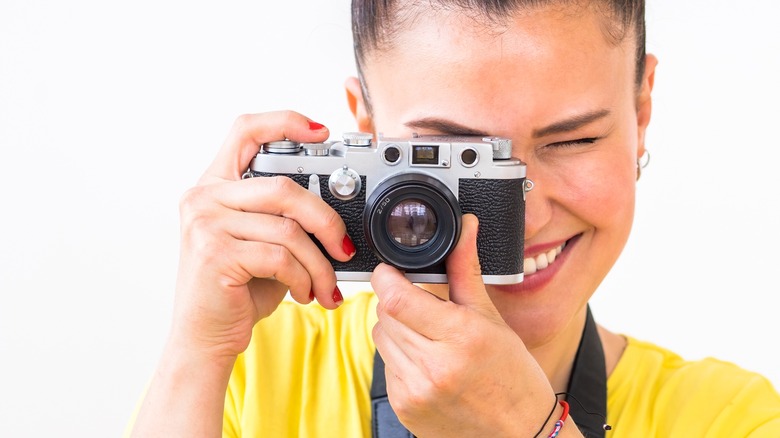
The defining characteristic of a rangefinder is the way it handles framing and focus. Digital SLRs and their film predecessors display exactly what the lens captures, but a rangefinder takes a completely different path. It relies on a dedicated "range-finding" window that sits slightly above the main lens barrel on the camera body.
When you peer through a rangefinder, you are actually looking through a pair of compact windows — one mounted on the front of the body and one positioned near the back, close to your eye. The lens itself sends light straight onto the film plane the moment the shutter fires, and no internal mirror is involved at any stage.
SLR cameras, by contrast, employ a mirror assembly that redirects the image from the lens up into the optical viewfinder. The instant you press the shutter release, that mirror swings out of the light path and snaps back once the exposure is complete.
Key Takeaway — A rangefinder focuses through an external window system, while an SLR bounces the image off an internal mirror. This fundamental difference shapes everything from the shooting experience to the camera's physical size.
Advantages and Trade-Offs
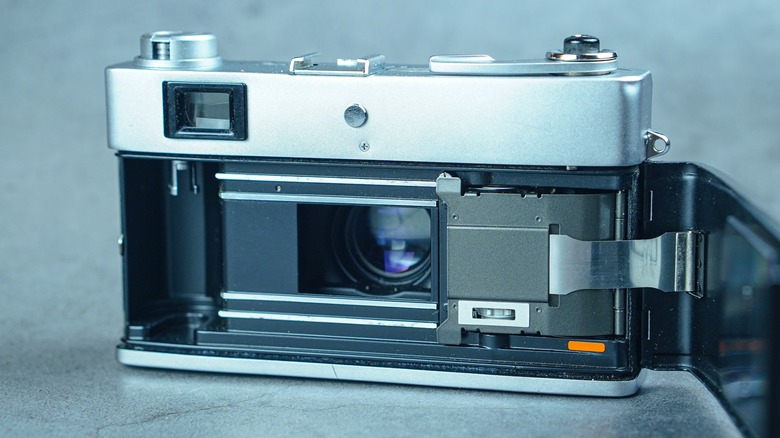
The rangefinder design brings several practical perks to the table. Its viewfinder shows a touch more of the surrounding scene than what ends up in the final frame. That extra sliver of context is genuinely useful when you are trying to capture a subject that is about to move into the composition. Manual focusing, once you have built up the muscle memory, can actually outpace the autofocus systems found on many conventional cameras.
Eliminating the mirror is a bigger deal than most newcomers realize. Without a mirror flipping up and down during every exposure, there is nothing inside the camera creating vibration at the exact moment the shutter opens. That translates into the ability to hand-hold slower shutter speeds without a tripod, and it means the lens can physically sit closer to the film or sensor. The result is often noticeably sharper images. Rangefinder bodies also tend to be more compact than their SLR counterparts, and the shutter mechanism itself runs considerably quieter — a real advantage for street photography and discreet shooting.
On the flip side, not seeing precisely what the lens sees can occasionally lead to framing surprises — a composition that is slightly off from what you expected, or a viewing angle that shifts noticeably with close-up subjects. Rangefinders can also struggle a bit in dim lighting conditions, and most models top out at a slower maximum shutter speed than SLRs. You gain sharpness and depth-of-field control in daylight, but you trade away some versatility when the light drops.
Backyard Provider — Your Trusted Source for Quality Gear