

Rangefinder cameras hold a special place in photography. For many shooters, they represent the pinnacle of simplicity — compact, quiet, and remarkably unobtrusive. Yet for others, they can feel like a confusing departure from what modern cameras have taught us to expect. There is no universal right or wrong answer here; it all boils down to personal preference and the kind of photography you enjoy. Still, strong opinions exist on both sides, and each perspective has its merits. With that in mind, this guide aims to unravel the mystique of the rangefinder camera and help you decide whether one belongs in your hands.
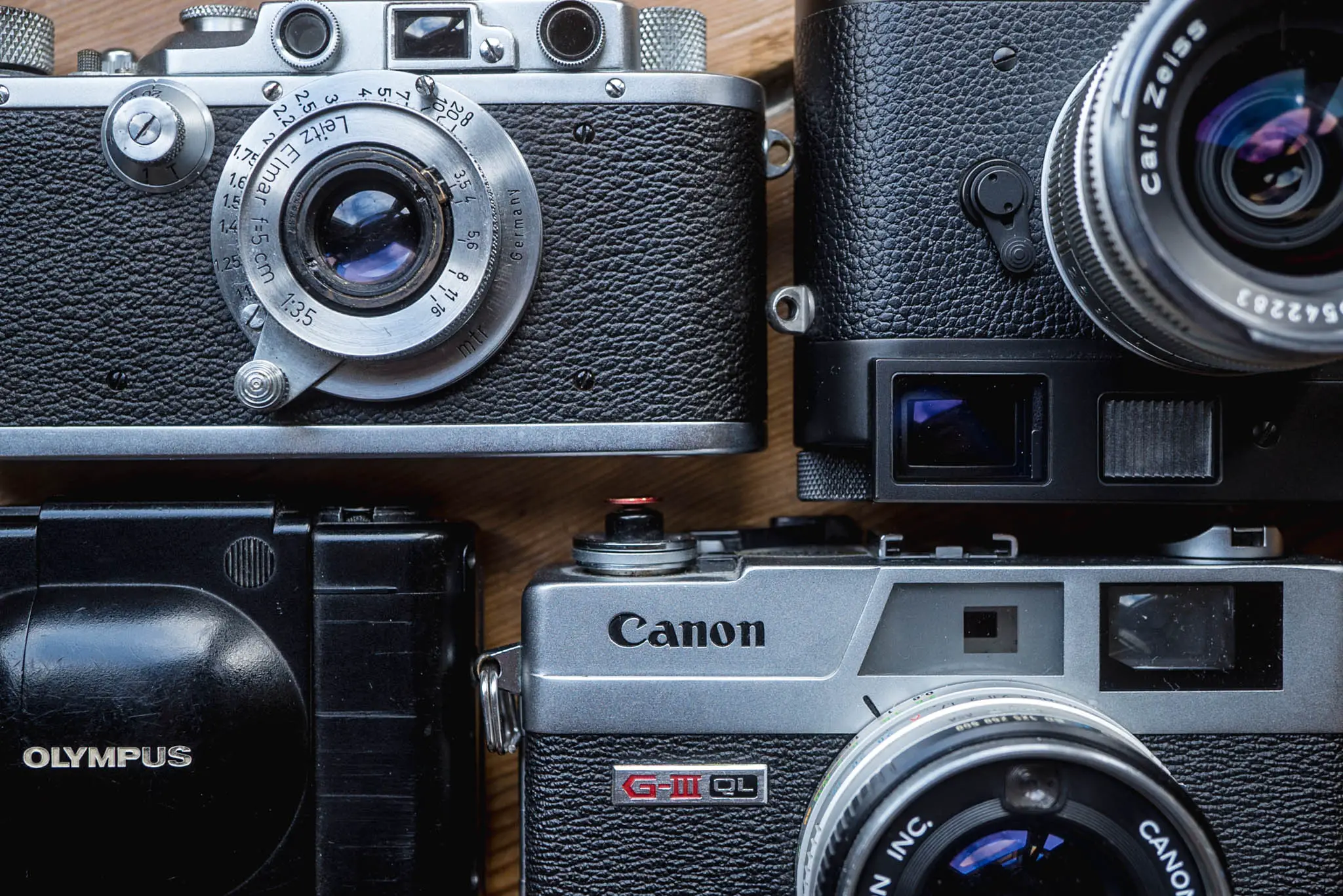
The Core Concept of a Rangefinder
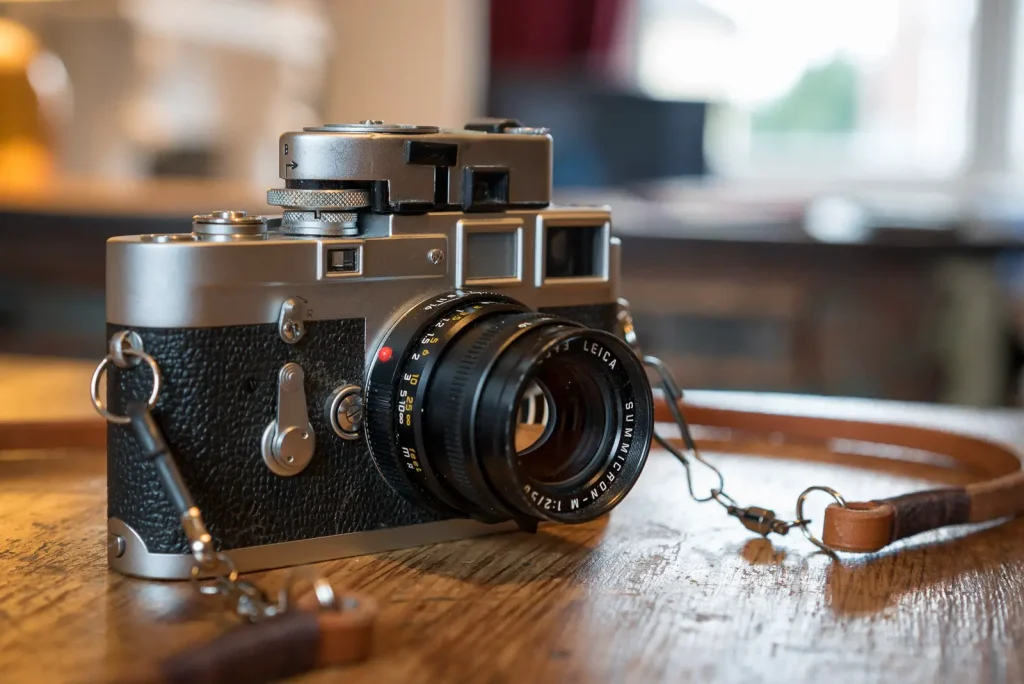
In the simplest terms, rangefinder cameras are manual-focus instruments that rely on a mechanical linkage between the lens and the body. This coupling drives a focusing aid known as the "rangefinder patch" inside the viewfinder. Unlike an SLR, the viewfinder on a rangefinder is offset from the lens — you are not looking directly through the glass. Instead, the viewfinder shows frame lines that correspond to the lens mounted on the camera, with a small focusing patch at the center.
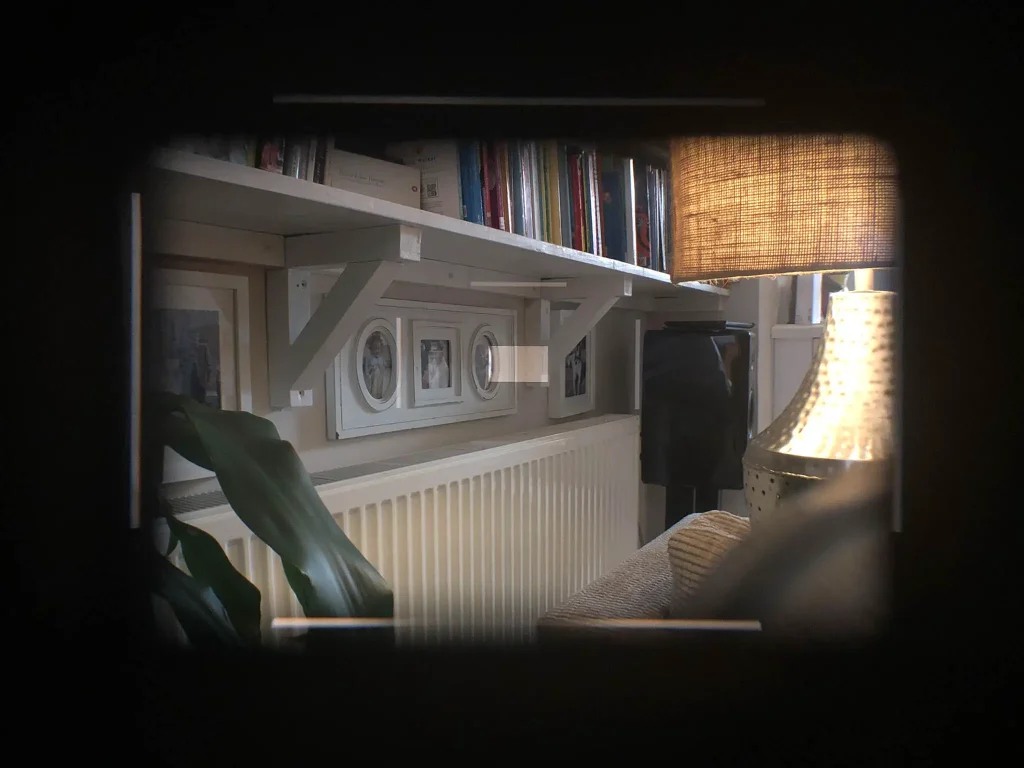
That patch works by overlaying a second image, projected from a separate rangefinder window on the front of the camera. When you adjust the focus ring, the two images in the viewfinder gradually align. Once they merge perfectly, you have achieved accurate focus — essentially triangulating the distance to your subject. It is an elegant system, and the experience of using one feels closer to shooting a high-quality compact camera with an optical viewfinder than it does to using a traditional SLR. We will return to the concepts of "offset viewfinder," "frame lines," and the "rangefinder patch" in more depth throughout this guide.
The Inherent Flaws in the Design
It is worth noting that the rangefinder concept is not without its weaknesses. Because you are never looking through the actual taking lens, any imperfections or miscalibration in the lens or the rangefinder mechanism itself can result in missed focus. The system depends on everything being precisely aligned, and over time, wear and tear can introduce subtle errors. That said, when properly calibrated, the rangefinder mechanism provides an exceptionally accurate method of achieving sharp focus — it simply requires the camera to be kept in good working order.
Weighing the Pros and Cons
Almost every aspect of the rangefinder shooting experience comes down to personal taste. Dividing features neatly into advantages and disadvantages is difficult because what thrills one photographer can frustrate another. Even a camera that sounds perfect on paper may feel wrong in practice until you actually pick one up and use it. That said, certain characteristics are inherent to the rangefinder design and carry qualities that will appeal to some shooters more than others.
Size, Form Factor, and Build
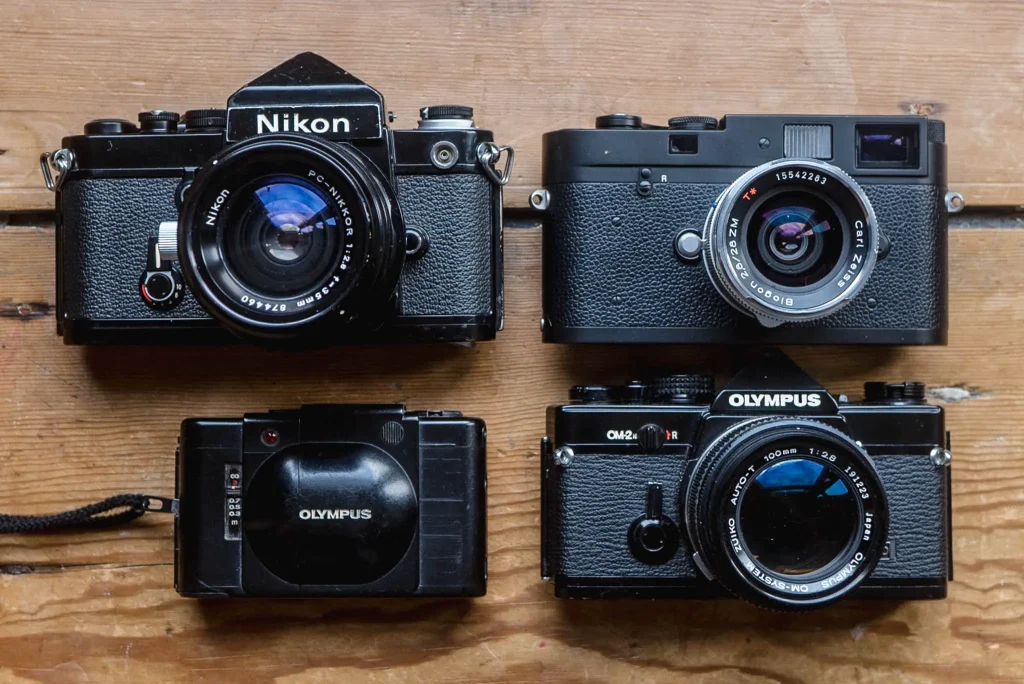
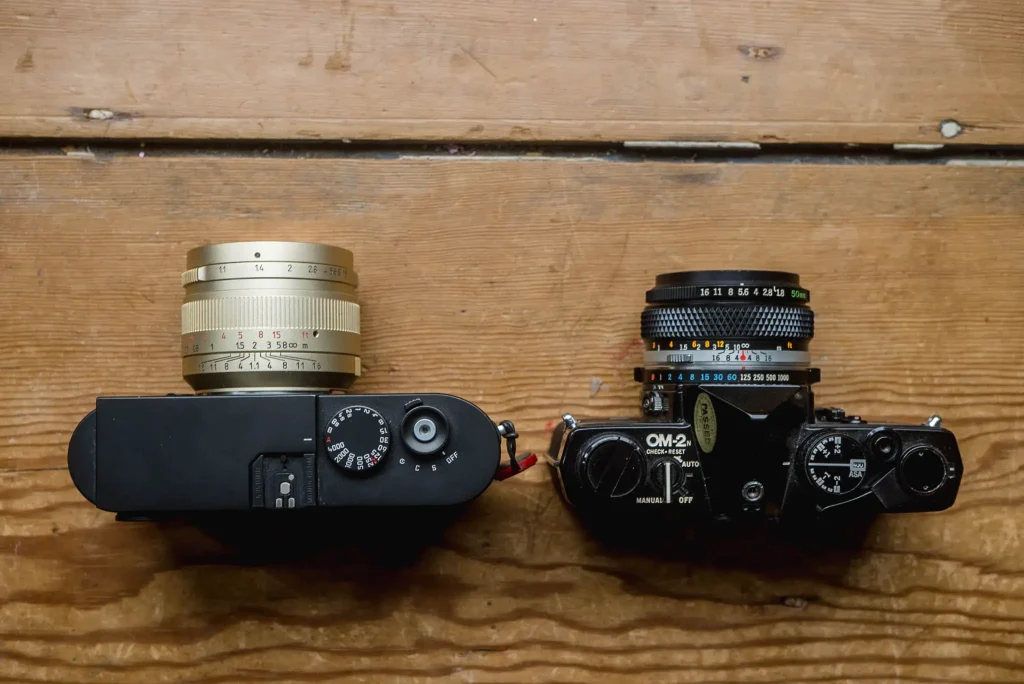
Place a tiny rangefinder like the Olympus XA next to a hulking SLR such as the Nikon F2, and the size difference is immediately obvious. But compare an Olympus OM-series body with a Leica M, and the gap shrinks considerably. The notion that every rangefinder is dramatically smaller than every SLR is a generalization. What is accurate, however, is that the rangefinder design allows manufacturers to create much more compact bodies while retaining a direct, lens-coupled focusing mechanism.
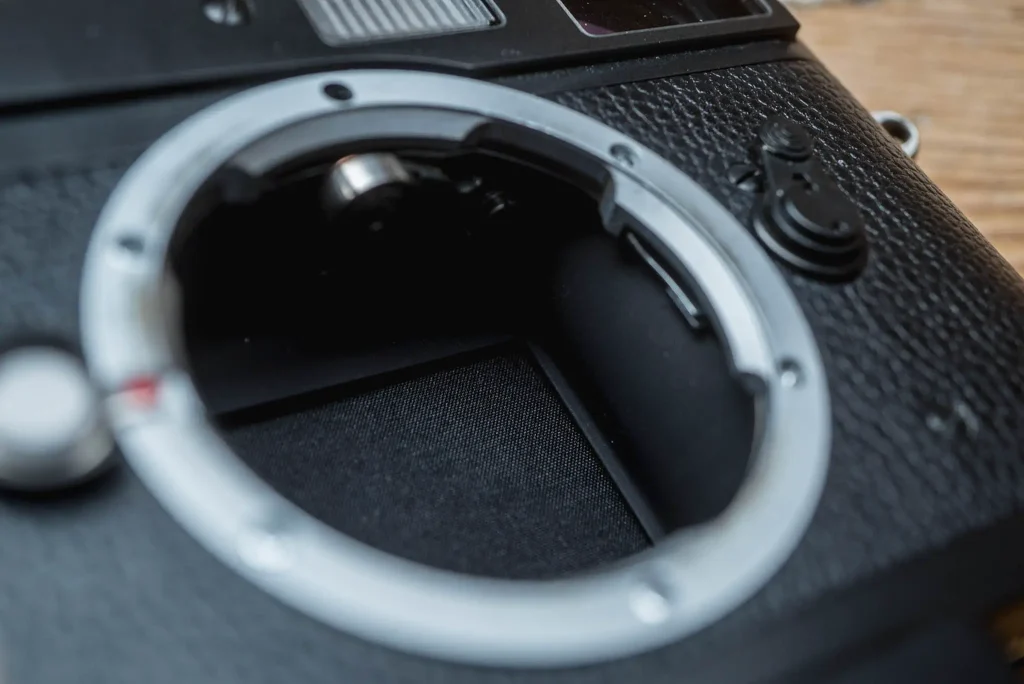
SLR cameras need a mirror box and prism assembly to bounce light from the lens up into the viewfinder. A rangefinder eliminates that entire mechanism — the offset viewfinder has its own window, and the rangefinder coupling takes up far less internal space. This means the camera body can be thinner and lighter, though not always dramatically so. The trade-off is that as the rangefinder mechanism shrinks, focusing precision can decrease slightly, something we will touch on when discussing effective base length.
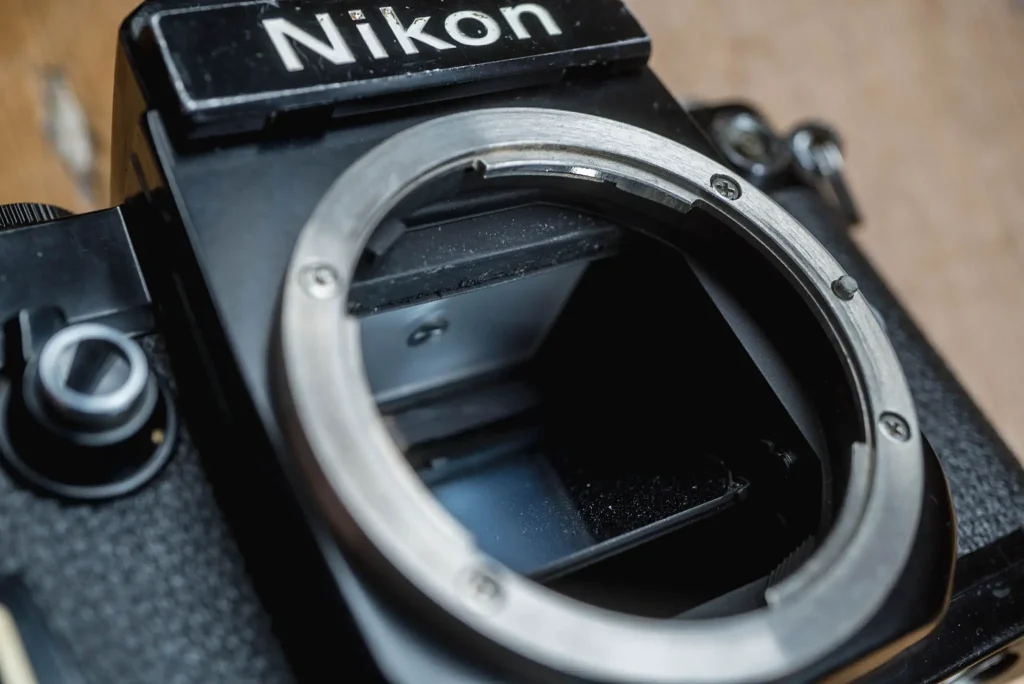
The absence of a mirror also impacts lens design. Without a mirror assembly to clear, rangefinder lenses can feature rear elements that sit much closer to the film or sensor plane. SLR lenses need extra clearance, which often makes them physically larger. This is why rangefinder lenses tend to be more compact, and it directly affects the overall feel of the camera in your hand — many shooters find that the reduced lens weight creates a more comfortable balance, with the bulk centered in the right hand rather than pulling forward from the lens barrel. Compact lenses also mean the whole kit can be tucked into a coat pocket or small bag more easily.
Shooting Discreetly
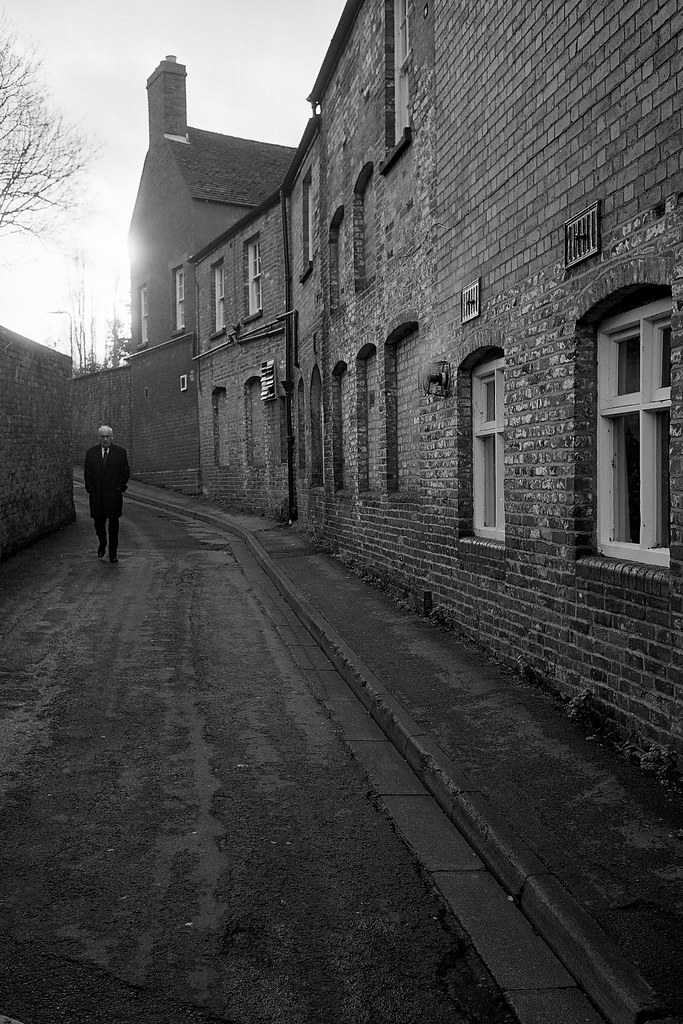
The smaller body and more compact lenses are frequently cited as making rangefinders less conspicuous in use, which is why they have been favorites among street photographers for decades. There is truth to this claim, though it is also fair to say that discretion depends as much on the photographer's demeanor as it does on the camera. A confident shooter can be subtle with any camera; a nervous one will draw attention regardless of gear. That said, the physical compactness of a rangefinder certainly does not hurt when trying to blend into a crowd.
Reduced Shutter Noise
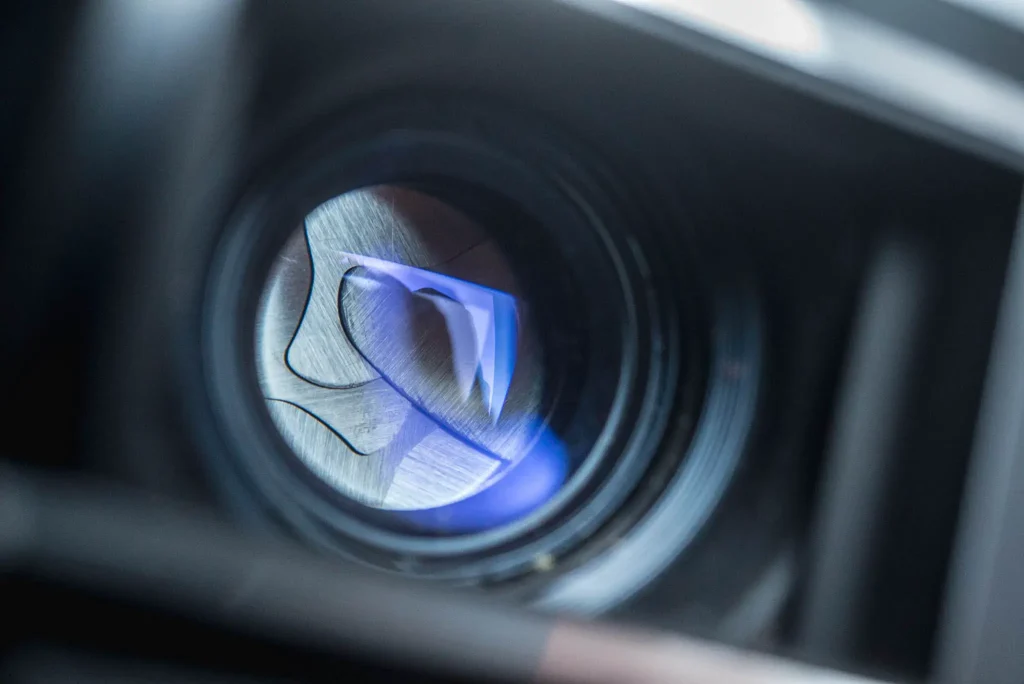
What genuinely makes rangefinder cameras more discreet is how quiet they are. Without a mirror that slaps up and down every time the shutter releases, the mechanical noise is significantly reduced. This is especially pronounced in fixed-lens rangefinders that employ a leaf shutter — the sound produced by some of these cameras is so faint it is practically inaudible unless you are in a silent room. The whisper-quiet operation is a major draw for photographers who work in environments where noise matters, from ceremonies to candid street work.
Less Camera Shake
The reduced internal movement also translates to less vibration when the shutter fires. In an SLR, the rapid upward swing of the mirror can introduce micro-vibrations — camera shake — that may result in slightly softer images at slower shutter speeds. A rangefinder eliminates this entirely. Without a mirror to flap, the only mechanical action is the shutter itself, and the result is less potential for motion-induced blur. Fixed-lens rangefinders with leaf shutters have an even greater advantage here, as leaf shutters produce less vibration than the focal plane shutters found in interchangeable-lens models.
No Viewfinder Blackout
One more benefit of the offset viewfinder design: when the shutter fires, there is no momentary blackout of the viewfinder. With an SLR, the mirror flips up to expose the film or sensor, which briefly blocks the view through the eyepiece. The blackout is fleeting — barely a blink — but when you are in the moment, there is something deeply satisfying about maintaining an uninterrupted view of your subject at the precise instant you make the exposure. It feels as though you are witnessing the photograph being born.
A Word of Caution: The Lens Cap Trap
Because the viewfinder is separate from the lens, it is remarkably easy to forget to remove the lens cap before shooting. With an SLR, a capped lens means a completely dark viewfinder — the mistake is obvious. On a rangefinder, you can happily compose and shoot an entire roll of film without ever realizing the cap is still on. It happens to everyone at least once.
Lenses, Framing, and Focusing
A fixed-lens rangefinder is naturally limited to whatever focal length was built into the camera — its versatility is dictated by how well that particular lens suits your shooting style. What may be less obvious, especially to newcomers, is that even interchangeable-lens rangefinders offer a much narrower selection of focal lengths than SLR systems. Without accessory viewfinders or adapters, the practical range on most 35mm interchangeable-lens rangefinders spans roughly 21mm to 135mm, and even that is pushing the boundaries of the concept.
The Offset Viewfinder Explained
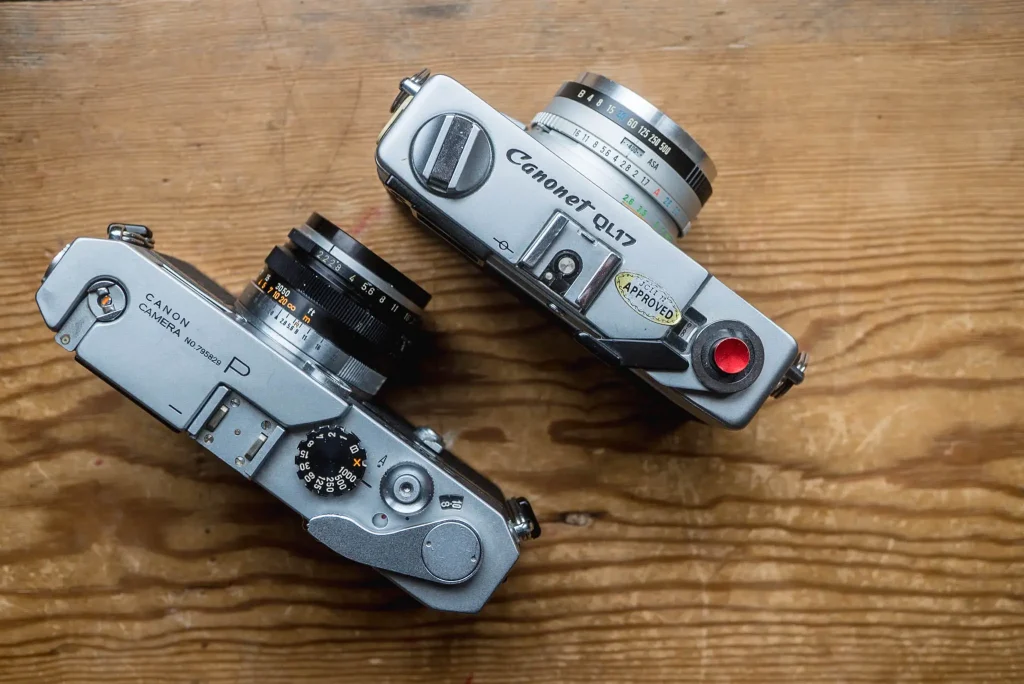
Put simply, an offset viewfinder is positioned apart from the lens, meaning you see through the finder rather than through the optic itself. This is a fundamental difference from an SLR, where the viewfinder shows exactly what the lens sees. On a rangefinder, the viewfinder window typically sits above and to the right of the lens mount, alongside the frame line illumination window and the rangefinder window.
Frame Lines in an Offset Viewfinder
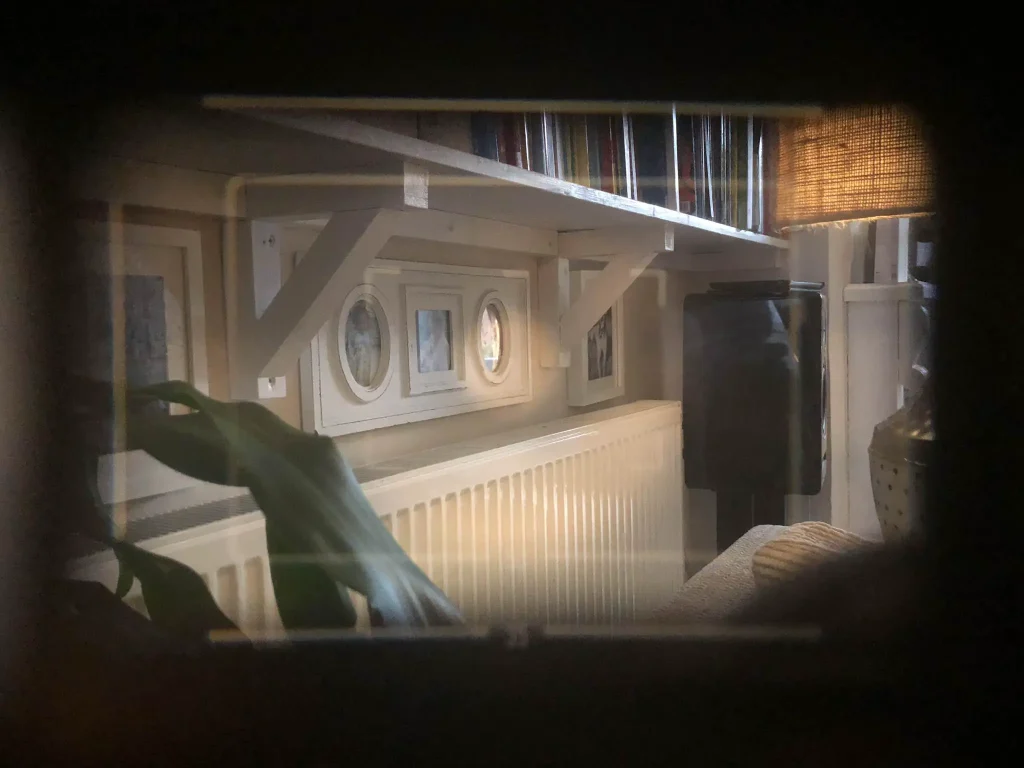
When you peer through the offset viewfinder of a rangefinder camera, you will notice illuminated frame lines — bright edges or corners that outline the approximate field of view captured by the lens. Wide-angle lenses produce larger frame lines that nearly fill the viewfinder, while telephoto lenses show much smaller ones. The frame lines change automatically when you mount a different lens, giving you a quick visual reference for composition.
Using Frame Lines in Practice
One of the most interesting aspects of frame lines is that they show not only what is inside the frame but also what is happening just outside it. Many rangefinder photographers consider this a significant creative advantage — you can see a person walking toward the edge of your composition and time the shot accordingly. It helps you anticipate the decisive moment rather than react to it. The most frequently cited benefit is that seeing beyond the frame boundaries lets you make better decisions about when to press the shutter.
Because of parallax error and other factors such as focus breathing, rangefinder framing is admittedly less precise than the what-you-see-is-what-you-get experience of an SLR. Yet for many photographers, this imprecision does not feel like a disadvantage. Rangefinder framing is more suggestive, more interpretive. Because you are looking through what amounts to a window rather than through the lens itself, the view is not affected by depth of field or dimmed by a small aperture. Composition becomes an act of imagination — combining what the camera settings dictate with the scene as you envision it. For some, this is far more creatively satisfying than the rigid literalism of an SLR viewfinder. Naturally, this is also the point where opinions diverge most sharply.
Viewfinder Magnification and Frame Lines
The size of the frame lines inside the viewfinder is tied to the viewfinder's magnification factor. The most common magnification on Leica M-mount rangefinders, for example, is 0.72x — meaning the view through the finder appears slightly smaller than what the naked eye sees. At this magnification, frame lines for 28mm, 35mm, 50mm, 75mm, 90mm, and 135mm lenses can all fit within the viewfinder. However, there are trade-offs at the extremes: the 28mm lines extend so close to the edges that eyeglass wearers may not see them fully, and the 135mm lines are so small that a viewfinder magnifier becomes nearly essential for accurate composition.
Featured Product
Ready to Experience Rangefinder Photography?
If this guide has piqued your interest, there is no substitute for holding a rangefinder in your hands. Explore our curated selection of premium rangefinder cameras and discover a different way to see the world.
Final Thoughts
Rangefinder cameras are not for everyone, and that is perfectly fine. They demand a willingness to embrace a different workflow, accept certain limitations, and trust a focusing system that can feel foreign at first. But for those who connect with the rangefinder philosophy — the quiet shutter, the compact form, the interpretive viewfinder, and the tactile pleasure of manual focus — these cameras can transform the act of taking photographs into something genuinely meditative. Whether you are a seasoned film shooter exploring a new format or a curious newcomer drawn to the vintage aesthetic, a rangefinder is well worth trying at least once. You may just find it changes the way you see.
Published by Backyard Provider • Your Trusted Source for Outdoor Living and Beyond