

Choosing the right commercial utility sink is about far more than picking a basin that holds water. In professional settings — whether a restaurant kitchen, a healthcare facility, or a busy janitorial room — your utility sink serves as the operational backbone of cleaning and sanitation. It is a piece of equipment that directly affects workflow, hygiene compliance, and the long-term efficiency of your entire operation.
This guide is built to walk you through every consideration that matters, so you can confidently select a sink that satisfies strict health regulations while making your daily cleaning routines faster and more effective.
What Exactly Is a Commercial Utility Sink?
A commercial utility sink is much more than an oversized basin. It is the foundational pillar of sanitation, productivity, and regulatory compliance in any professional workspace. These industrial-strength washing stations are purpose-built to endure the punishing demands of high-volume cleaning — from scrubbing oversized pots and sterilizing equipment to prepping food and rinsing heavy tools. Tasks like these would destroy a standard household sink within weeks.
The hallmarks of a genuine commercial utility sink have been shaped by decades of real-world professional use. They include:
Typically 12–14 inches deep (sometimes more), allowing full submersion of large items while containing splashes from high-pressure faucets.
Heavy-gauge stainless steel is the industry standard, prized for its non-porous surface, corrosion resistance, and ability to fight bacterial growth.
Every element — from leg bracing to drain diameter — is engineered for continuous, intensive use in fast-paced environments.
Specialized faucets and large-diameter drainage systems handle massive water volumes and debris without clogging.
NSF (National Sanitation Foundation) certification is non-negotiable for foodservice and healthcare applications.
Today's heightened focus on hygiene — driven by tighter health department regulations and greater public awareness — means your utility sink is a frontline defense against cross-contamination. The right one streamlines proper cleaning protocols. The wrong one becomes a bottleneck, a safety liability, and a compliance risk.
Whether you are outfitting a high-traffic restaurant kitchen, a mobile food truck, a clinical environment, or a commercial janitorial space, the sink you choose carries lasting consequences. An undersized or poorly built unit will slow your team, create messes, and demand costly early replacement. This comprehensive guide will help you navigate the variety of types, materials, and features available — plus deliver expert installation and maintenance advice to protect your investment for years to come.
Sink Types and Materials: Which Is Right for You?
The world of commercial utility sinks can feel overwhelming, given the sheer range of configurations, materials, and features on the market. The key is to break the decision down by function, environment, and durability requirements. At Backyard Provider, we help customers make this critical choice every day — it is much like selecting a purpose-built vehicle: you need to define the job, the space, and the toughness required for daily use.
Single, Double, or Triple Bowl? Selecting Your Sink Layout
The physical layout of your sink dictates how it meshes with your workspace and daily workflow. Every style is purpose-built for different tasks and space constraints.
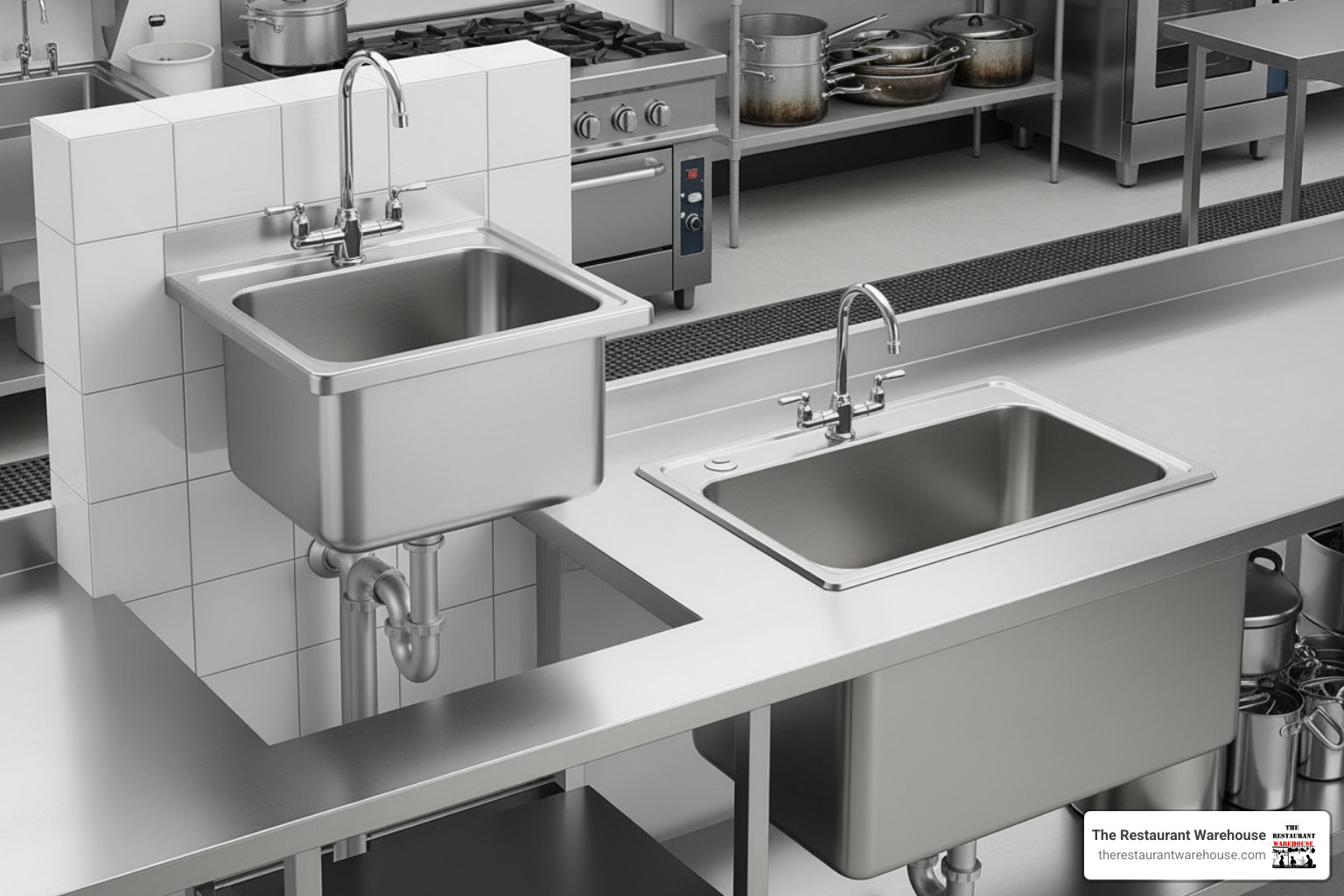
Freestanding Sinks: These are the true workhorses of the commercial world. Self-contained units on their own legs, they offer maximum placement flexibility — requiring only a plumbing connection. Their hallmark is a robust, high-capacity build with deep basins and sturdy construction, making them ideal for heavy-duty jobs like washing oversized pots, cleaning large equipment parts, and bulk food preparation. Stability is essential: look for models with adjustable bullet feet and heavy cross-bracing to prevent wobbling on uneven floors during vigorous use.
Wall-Mounted Sinks: When floor space is at a premium, wall-mounted sinks offer an elegant, space-saving solution. By attaching directly to the wall, they leave the area underneath completely open — simplifying cleaning, boosting hygiene, and improving accessibility. They are popular in smaller kitchens, dedicated handwashing stations, and janitorial closets. The main caveat is wall integrity: the wall must be reinforced with internal blocking or an external carrier system to safely bear the immense weight of a full sink.
Drop-In / Counter-Mounted Sinks: Designed to be installed into a countertop cutout, these sinks create a seamless, integrated work surface. The rim sits on top of the counter for a clean, finished look. They are especially useful in food preparation areas where staff frequently alternate between washing and using adjacent counter space. Proper sealing with quality silicone caulk is crucial to prevent water intrusion beneath the rim.
Mop Sinks (Service Sinks): A specialized but essential category, mop sinks are low-profile, deep-basin units designed for filling mop buckets and disposing of dirty cleaning water. Typically installed at floor level or very low on a wall, a dedicated mop sink is a critical piece of any facility's hygiene plan — it segregates janitorial tasks from food preparation and handwashing zones, preventing dangerous cross-contamination. Many models include a heavy-duty rim guard to resist chipping from heavy bucket impacts.
Multi-Compartment Sinks: For most foodservice operations, multi-compartment sinks are not just recommended — they are legally mandated by health codes to ensure food safety. The number of compartments corresponds to the required warewashing steps:
- Two-Compartment: Supports a basic wash-and-rinse sequence, suitable for prep areas or bars where sanitizing is handled separately.
- Three-Compartment: The universal standard for manual commercial dishwashing — wash with soap and hot water, rinse with clean water, sanitize with a chemical solution or high-temperature water.
- Four-Compartment: Adds an extra basin for pre-soaking heavily soiled items or for scrap disposal before the wash cycle begins, boosting workflow efficiency.
Stainless Steel and Beyond: A Guide to Sink Materials
The material of your commercial utility sink is the single most influential factor in determining its durability, maintenance needs, and long-term value.
Stainless Steel: The undisputed leader in commercial sink materials for very good reason. It is phenomenally durable, non-porous (making it naturally resistant to bacteria), and straightforward to maintain. That said, not all stainless steel is created equal — two key identifiers matter:
- Gauge: This measures the steel's thickness. In a counterintuitive system, a lower gauge number means thicker, stronger steel. 16-gauge stainless steel is the recommended standard for most commercial applications, delivering excellent resistance to dents, dings, and thermal shock. While cheaper, 18-gauge steel is noticeably thinner and more prone to damage in a demanding environment.
- Grade: This indicates the steel's composition and rust resistance. Type 304 stainless steel (often called 18/8) is the preferred foodservice grade, containing generous chromium and nickel content for superior protection against corrosion from food acids, water, and cleaning chemicals. Type 430 is a cheaper alternative with less nickel — suitable for some dry uses, but far more vulnerable to rust and corrosion in wet sink environments.
Thermoplastic and Polypropylene: These industrial-grade plastics are lightweight, impact-resistant, and offer strong resistance to acids and harsh chemicals — making them a cost-effective option for laundry rooms, workshops, art studios, and laboratories. However, they scratch more easily than stainless steel and cannot handle extreme heat from boiling water or hot pans as effectively.
Cast Iron with Enamel Coating: Once a mainstream choice, enameled cast iron is now more of a niche option. It offers incredible durability and superb heat retention, but these sinks are exceptionally heavy, making installation a challenge. The primary risk is the enamel finish itself — a heavy impact from a pot or tool can chip through to the cast iron underneath, exposing it to air and water, which inevitably leads to rust.
| Feature | Stainless Steel (16-ga, T304) | Thermoplastic | Cast Iron / Enamel |
|---|---|---|---|
| Durability | Excellent — resists corrosion, dents, heat | Good — high impact resistance | Excellent — but enamel can chip |
| Weakness | Can dent under extreme force | Scratches more easily | Heavy; enamel chips expose iron to rust |
| Corrosion Resistance | Excellent | Excellent | Moderate (if enamel is intact) |
| Maintenance | Easy — non-porous, wipes clean | Easy — chemical resistant | Moderate — avoid harsh abrasives |
| Weight | Medium | Light | Very Heavy |
| Cost | High | Low | High |
| Best Use Case | Heavy-duty kitchens, healthcare | Labs, workshops, laundry rooms | Residential-grade utility spaces |
When you are ready to explore the specific options that suit your operation, our team at Backyard Provider can offer expert guidance to help you find the ideal commercial utility sink for your needs and budget.
How to Choose the Perfect Commercial Utility Sink
Selecting the right commercial utility sink is not just a purchase — it is a strategic investment in your operation's daily efficiency, safety, and compliance. A well-chosen sink quietly supports your success for years, while a poor choice becomes a source of frustration, workflow disruption, and potential code violations. Taking the time to carefully evaluate your specific requirements against the available features will pay dividends over the entire lifespan of the fixture.
Top Brands and Product Lines to Consider
Once you have identified the type, size, and material you need, it is time to look at specific brands. The commercial sink market features long-established industry leaders alongside newer, specialized brands that focus on delivering value and critical certifications. Legacy manufacturers like Elkay and American Standard have built decades of trust with extensive product lines spanning everything from janitorial closets to high-volume kitchens. Meanwhile, marketplace-focused brands often concentrate on meeting the most vital specifications — NSF certification and high-grade stainless steel — at competitive prices. The key is to look past the brand name and focus on whether the product's specifications genuinely match your operational demands.
Established Manufacturers and Marketplace Brands
Well-known manufacturers like Elkay have earned a reputation for functional, durable designs that serve a broad spectrum of industries. Their sinks are widely regarded as benchmarks for quality in commercial laundry, utility, and service applications. Likewise, American Standard offers a diverse range of commercial service sinks, including healthcare-specific models. For many operators, however, the best value comes from brands that prioritize the features most critical in a professional environment — high-quality NSF-certified 304 stainless steel construction that meets public health standards right out of the box. Brands like KRAUS, for example, are well known for combining premium materials with practical, professional-grade design.
Exploring Different Collections and Finishes
When discussing "finishes" for commercial sinks, function rules over form. The most common and practical finish is brushed or satin stainless steel, which excels at hiding minor scratches, scuffs, and water spots that are inevitable in a busy workspace — keeping the sink looking professional far longer. As for "collections," manufacturers typically group their sinks into product lines based on duty level. You may find a heavy-duty series featuring 14- or 16-gauge steel for primary dishwashing stations and a lighter-duty line using 18-gauge steel for prep or handwashing sinks. Understanding these groupings lets you allocate your budget strategically, investing more in the high-impact areas of your operation.
Navigating the Market: Stock and Availability Challenges
Finding the perfect sink on paper is one thing; finding it in stock and ready to ship is another challenge entirely. Many business owners invest hours researching a specific model, only to discover it is on backorder for months or has been discontinued. This is a particularly common frustration when relying solely on manufacturer websites, which often function more as digital catalogs — showcasing the full range of products a company can produce rather than what is actually available through their distribution network at any given moment. This disconnect can lead to significant delays and force you into unwanted compromises.
Why Manufacturer Websites Can Be Misleading
You might browse a major brand's website, find dozens of commercial service sink models complete with detailed specs and photos, and then discover that many are marked "unavailable" or "discontinued." This happens because these sites are not connected to live inventory systems — they serve as reference tools, not real-time shopping platforms. For a busy operator on a schedule, this is a frustrating waste of valuable time.
The Importance of Direct Communication
This is where partnering with a dedicated equipment supplier makes all the difference. Instead of relying on potentially stale catalog listings, you can communicate directly with a team that has real-time visibility into stock levels and lead times. At Backyard Provider, we maintain direct relationships with manufacturers and have a clear picture of the supply chain. We can tell you quickly what is available for immediate shipment and what is not — eliminating the guesswork and allowing you to make informed decisions without delay.
Key Features You Shouldn't Overlook
When comparing different sink models, picture your operation running at its absolute busiest. Your sink must be able to absorb that peak demand and keep workflows moving — it should relieve pressure, not create bottlenecks.
Basin Size, Capacity, and Dimensions: This is arguably the most critical specification. The basin must comfortably accommodate the largest items you regularly clean. A commercial bakery needs basins wide and long enough for full-size sheet pans (18" × 26"). A high-volume restaurant kitchen needs room for oversized stockpots and mixing bowls. Before you shop, measure your largest pieces of equipment. A common error is buying a sink that is barely big enough — you need extra room to maneuver items during washing. Most commercial utility sinks feature basins 12 to 14 inches deep, with some going as deep as 16 inches. This depth is essential for containing splashes during aggressive scrubbing or when using a high-pressure pre-rinse sprayer, keeping water on the floors to a minimum. Total water capacity often reaches 20 gallons or more per basin, allowing full submersion for effective soaking and sanitizing.
Faucet Configuration and Type: The faucet is the active component of your sink system, and its design has a major impact on daily functionality. Most commercial sinks come with pre-drilled backsplash holes set for an 8-inch center wall-mounted faucet — the industry standard. This configuration keeps the faucet off the sink deck, leaving it clear and easy to clean. Consider these faucet types based on your tasks:
- High-Arc Gooseneck Faucets: Deliver excellent vertical clearance for filling tall pots and large containers.
- Pre-Rinse Sprayers: Indispensable for high-volume dishwashing — these powerful sprayers blast away food debris before the wash stage, saving significant time and effort.
- Swing Spouts: Feature a long, movable spout capable of reaching multiple sink compartments, offering outstanding versatility.
Drainboards and Backsplashes: These integrated features are not optional luxuries — they are essential for sanitation and facility protection. A drainboard provides a dedicated, sanitary surface for air-drying cleaned items. They are grooved and sloped so all water runs back into the basin, preventing pooling and contamination. You can choose configurations with drainboards on the left, right, or both sides depending on your workflow. A backsplash, typically 8 to 10 inches high, protects the wall behind the sink from constant water splashes, preventing water damage, mold, and making the area far easier to clean.
Leg Construction and Stability: For freestanding units, the support structure is paramount. Legs must bear the immense weight of the sink filled with water (water weighs over 8 pounds per gallon). Look for heavy-duty galvanized or stainless steel legs. Adjustable bullet feet are a standard feature for leveling the sink on uneven floors — critical for proper drainage. Cross-bracing between the legs adds vital lateral stability, keeping the sink from swaying or shifting during heavy use.
Commercial vs. Residential Sinks: Know the Difference
It is a costly mistake to assume a residential "laundry" or "utility" sink can substitute for a true commercial model. The differences are significant:
- Material Thickness: Commercial sinks use robust 14 or 16-gauge steel; residential models rely on flimsy 18, 20, or even 22-gauge steel.
- Construction Quality: Commercial sinks feature continuous, fully-welded TIG seams for a seamless, watertight structure. Residential sinks may use spot welds or sealants that fail over time.
- Sanitary Design: Commercial sinks have coved (curved) corners at the basin floor, eliminating sharp angles where bacteria collect.
- Drainage System: A larger 3.5-inch drain opening handles higher volumes, connecting to commercial-grade plumbing.
- Lifespan and ROI: A quality commercial sink is built for 15 to 20 years of constant use. A residential sink in the same environment might last a year or two.
Getting the Size Right: A Look at Dimensions
Think about your kitchen during its most chaotic hour. Is there a backlog of pots waiting to be washed? Is your prep cook fighting for space? Your utility sink should be a tool that relieves pressure, not one that creates it. The basin's dimensions must be large enough to handle the biggest items you use daily. For a bakery, that means comfortably fitting a full-size 18" × 26" sheet pan. For a restaurant, it means having room for your largest stockpots and mixing bowls. Before you even begin browsing, take a moment to measure your most oversized equipment. A common pitfall is choosing a sink that is just barely big enough — you need extra space for effective scrubbing and maneuvering.
Depth is just as important as length and width. Most commercial sinks feature basins between 12 and 14 inches deep, which is essential for containing splashes when using a high-pressure sprayer. This keeps water off your floors, reducing slip hazards and cutting down on cleanup time. A deeper basin also lets you fully submerge equipment for soaking and sanitizing — a critical step in any professional kitchen's hygiene protocol. The generous water capacity, often exceeding 20 gallons per basin, ensures you have the volume to tackle the toughest cleaning jobs without constant refilling.
Beyond the Basin: Internal Component Materials
The material of your sink is the foundation of its performance and longevity. In the commercial world, stainless steel reigns supreme — and for good reason. Its non-porous surface resists bacterial growth, it is incredibly durable, and it is easy to keep clean. But it is vital to know that not every stainless steel product is created equal. The two key identifiers are gauge and grade. Gauge refers to the steel's thickness: a lower number means thicker, stronger steel. For most commercial environments, 16-gauge is the gold standard, providing excellent resistance to the dents and dings that are inevitable in a fast-paced setting.
The grade of the steel reveals its composition and rust-fighting ability. Type 304 stainless steel is the industry benchmark for foodservice because it contains higher levels of chromium and nickel, providing superior defense against corrosion from food acids, cleaning chemicals, and water. Cheaper sinks made from Type 430 steel may look similar but lack the same level of protection and are far more prone to rusting in a wet environment. Investing in a 16-gauge, Type 304 stainless steel sink is one of the smartest long-term decisions you can make when equipping your workspace with quality commercial equipment.
The Fine Print: Cost, Certifications, and Warranties
NSF Certification: For any operation in foodservice or healthcare, NSF certification is absolutely non-negotiable. This mark confirms that the sink's materials, design, and construction have been rigorously tested to meet strict public health and safety standards. Health inspectors actively look for the NSF stamp on your equipment, and operating without it can trigger failed inspections, costly fines, or even forced closure. For comprehensive, science-based sanitation guidance, operators should consult the FDA Food Code, which underpins local health regulations.
Warranties: A manufacturer's warranty is your safety net, covering defects in materials and workmanship. Most reputable commercial sinks come with at least a one-year limited warranty as a baseline. Before committing, read the fine print carefully to understand what is covered (such as weld integrity) and what is excluded (such as rust caused by improper cleaning with harsh chemicals like bleach). A solid warranty is a clear signal that the manufacturer stands behind the quality of their product.
Pricing and Long-Term Value: The price of a commercial utility sink can range from a few hundred dollars for a small, single-basin mop sink to several thousand for a large, four-compartment unit made from 16-gauge Type 304 stainless steel with dual drainboards. It can be tempting to reach for a cheaper model built from thinner 18-gauge or rust-prone Type 430 steel, but this is a classic case of false economy. The superior durability, longevity, and compliance of a properly specified sink mean it will cost far less over its operational life than a budget alternative that demands premature replacement. Investing in quality equipment upfront is simply the smarter financial play.
Understanding the Price Tag
Commercial utility sink pricing varies widely based on size, material quality, and the number of compartments. Smaller, single-basin service sinks start at a few hundred dollars, while fully equipped multi-compartment stations with drainboards can run into the thousands. The most important thing to remember is that cheaper upfront rarely means cheaper long-term. Thinner steel dents and warps. Lower-grade alloys corrode. Poorly welded seams leak. Each of these failures leads to downtime, repair costs, and eventually full replacement — making that "bargain" sink the most expensive one you ever bought.
What to Look for in a Warranty
A manufacturer's warranty acts as your investment's safety net, protecting against defects in materials and craftsmanship. Most reputable commercial sinks include at least a one-year limited warranty. Before purchasing, review the details closely: understand exactly what is covered — such as weld integrity — and what is excluded — such as damage from misuse or cleaning with harsh chemicals like bleach. A strong warranty signals a manufacturer's confidence in their product, giving you peace of mind that you are purchasing a sink built to last.
Using Reviews and Sales Data to Guide Your Purchase
In today's connected world, you have a wealth of information at your fingertips to make a smarter buying decision. Customer reviews are an invaluable resource — they provide real-world feedback from other operators and professionals who have put the sink through its paces in demanding environments. Look for consistent patterns: do multiple reviewers praise the sink's sturdiness and easy-to-clean coved corners? Or are there recurring complaints about sluggish drainage or wobbly legs? These firsthand accounts often reveal performance details that a product listing alone cannot capture.
Beyond individual reviews, pay attention to sales data and bestseller lists. A sink that consistently ranks as a top seller is often popular for a reason — it likely delivers a well-balanced mix of quality, functionality, and price that works across a wide range of operations. While it should not be your sole decision-making factor, it is a valuable starting point for your research. At Backyard Provider, we track which models are consistently chosen by successful operators and curate a selection of equipment that we know to be reliable and excellent value.
Decoding Marketplace Labels and Rankings
When shopping on large online platforms, you will encounter labels such as "Bestseller" or "Top Rated." While helpful, it is important to understand what they represent. These rankings are typically algorithm-driven, factoring in sales volume, review velocity, and conversion rates. They tell you a product is popular with the general public — but not necessarily that it is the best fit for a high-demand commercial application. A sink might earn a bestseller badge because it is popular with homeowners for residential laundry rooms and garages, yet it may lack the NSF certification or 16-gauge steel construction your professional kitchen requires. Always prioritize technical specifications — material grade, gauge, and certifications — over algorithm-generated labels.
Extra Perks of Buying Online
Shopping online for your commercial sink delivers significant advantages: competitive pricing, a far broader selection than you will find locally, and perks like free shipping — which can represent substantial savings on such a large, heavy item. Some retailers also offer hassle-free returns for added confidence. While large general marketplaces provide convenience, buying from a dedicated supplier like Backyard Provider adds another layer of value: you get the benefits of online shopping paired with a team that truly understands commercial equipment and can guide you to the perfect sink for your specific needs.
Who Uses Commercial Utility Sinks? (And Why)
The remarkable versatility of the commercial utility sink makes it an indispensable fixture across a vast spectrum of industries. Its core purpose — providing a robust, hygienic, high-capacity station for washing and cleaning — is a universal need. From the organized intensity of a restaurant kitchen to the sterile environment of a hospital, there is a utility sink specifically engineered for every challenge.
For Restaurants and Commercial Kitchens
In any foodservice establishment, the commercial utility sink is the epicenter of cleaning and sanitation. It is one of the most heavily used pieces of equipment, silently enabling the entire operation to function safely and efficiently.
- Restaurants: The three-compartment sink is the backbone of kitchen sanitation, facilitating the wash-rinse-sanitize process mandated by virtually all health codes. Larger kitchens also maintain separate prep sinks for washing produce, preventing cross-contamination between raw and cooked foods.
- Bars: Beyond the main kitchen sinks, bars depend on specialized underbar sinks — compact units with multiple small basins for washing glassware, a dump sink for leftover drinks, and sometimes integrated ice bins, creating an efficient, self-contained bartender workstation.
- Food Trucks: The mobile nature of a food truck presents unique constraints. A compact yet fully functional multi-compartment commercial utility sink is required to meet health department standards within a very limited footprint. These sinks must also be durable enough to withstand the constant vibrations of road travel.
- Hotels and Catering: Large-scale hospitality operations use utility sinks across multiple departments — high-capacity sinks in the main kitchen for massive warewashing volumes, sinks in housekeeping for cleaning supplies, and durable service sinks for maintenance staff handling various repair and upkeep tasks.
For Healthcare Facilities and Labs
In healthcare and scientific settings, the role of a commercial utility sink goes far beyond simple cleaning — it becomes a critical instrument in the chain of infection control and procedural safety. The standards for hygiene and material performance are exceptionally strict.
- Hospitals and Clinics: Specialized utility sinks (often called clinical service sinks) are used for the safe disposal of liquid medical waste and cleaning non-sterile instruments like bedpans and collection containers. They are strategically placed in utility rooms, patient rooms, and nursing stations. Many are equipped with hands-free controls — foot pedals or electronic sensors — to minimize contact and help prevent the spread of pathogens. Proper sink design, placement, and usage protocols are considered fundamental to preventing healthcare-associated infections (HAIs).
- Research and Pharmaceutical Laboratories: Lab sinks require materials that can endure a barrage of harsh chemicals, solvents, and potent disinfectants. Type 316 stainless steel, which includes molybdenum for enhanced corrosion resistance, is frequently specified for these demanding environments. The sink's design must support strict chemical disposal protocols and thorough decontamination of labware.
Ready to Find Your Ideal Commercial Utility Sink?
Browse our curated selection of professional-grade commercial sinks. Every product is chosen for durability, compliance, and long-term value.
KRAUS Standart Pro 32" Utility Sink