

Wheel balancing is the practice of fixing small calibrated weights onto a wheel's rim so the weight of the wheel is distributed evenly around every axle. When a wheel is properly balanced, the entire circumference of the tyre stays in consistent contact with the road as it rotates, which produces even tread wear across the full width of the tyre. Uneven wear, by contrast, translates into a rough ride and can quickly turn into a genuine safety hazard for everyone in the vehicle.
To balance a wheel, technicians remove it from the vehicle and mount it onto a dedicated balancing machine. The machine spins the wheel at speed and identifies the exact points where corrective weights need to be placed in order to neutralise any imbalance.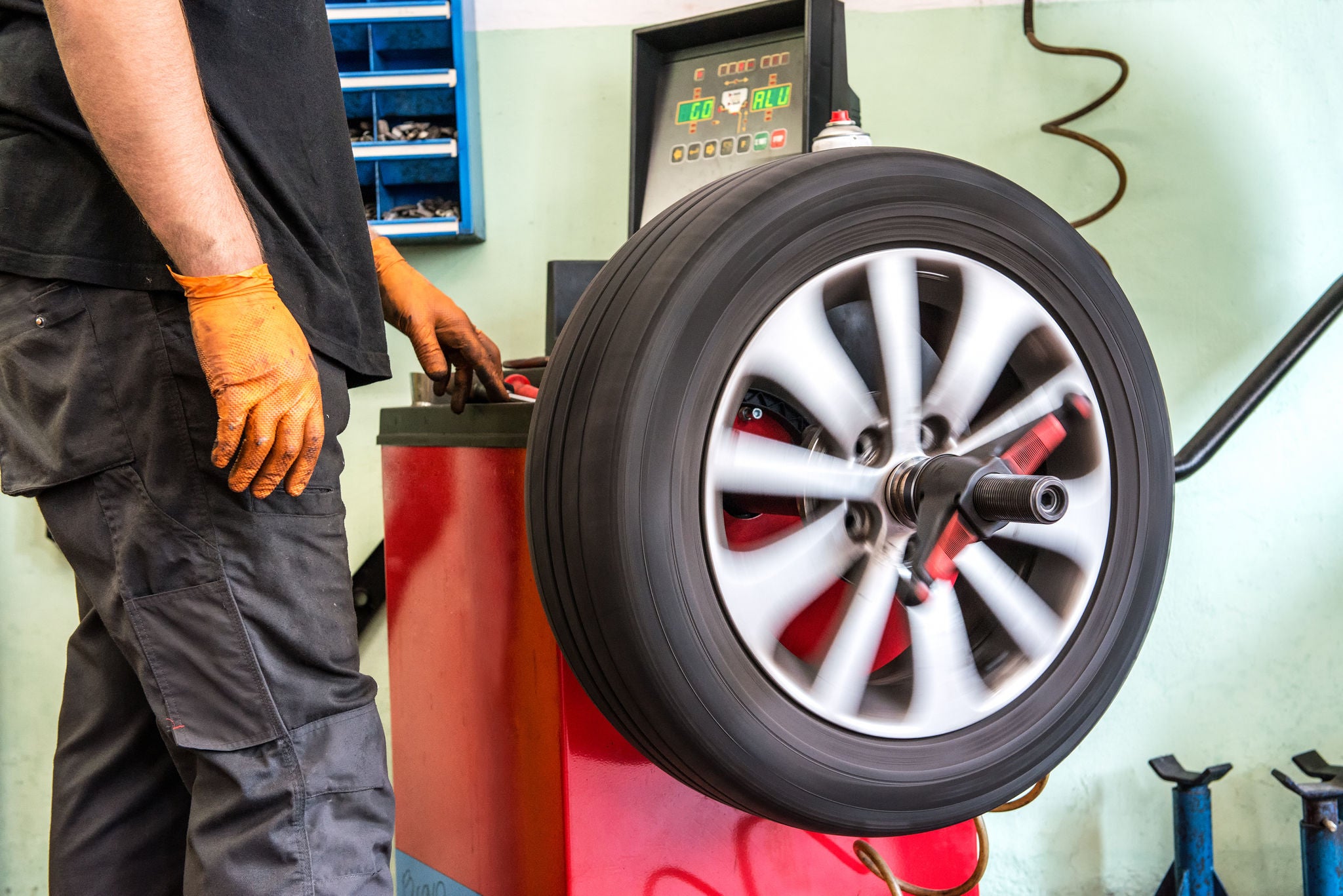
How long can you drive on unbalanced tyres?
There's no fixed window for this, but the recommendation is straightforward: have your wheels checked as soon as you spot any symptoms that they may be out of balance.
Even when no obvious symptoms are present, periodic checks are still worthwhile. When a fresh tyre goes on a wheel, the assembly is balanced around the full 8mm of tread depth. As the tyre is driven on, the tread wears down and the overall composition of the wheel changes, meaning it may need to be rebalanced to compensate. Striking kerbs or dropping into potholes can also knock existing weights out of position.
Unbalanced wheels don't just shorten tyre life — they can also place extra strain on your suspension components and wheel bearings.
That added stress on key vehicle parts leads to poorer fuel economy, and over time it will cost significantly more than the small price of keeping every wheel balanced in the first place.
How much does wheel balancing cost?
Pricing varies by provider, but for shops and service centres running their own equipment, a professional balancer pays for itself quickly. When customers book a new tyre, the balance is almost always folded into the standard fitting workflow so the vehicle leaves the bay in the best possible condition.
Do I need to balance all four tyres?
Wheel balancing is one of the simplest ways to get maximum performance out of a vehicle. The tyres mounted on the outer edge of each wheel are the only parts of the car that ever touch the road, so their performance needs to be at its peak. Balancing fine-tunes how each tyre behaves at speed, which means running all four through the machine in a single visit improves the overall drive and saves money through better fuel economy.
The general rule is that wheels should be balanced any time the wheel and tyre are separated. So if a puncture is being repaired, or a tyre is being swapped for a new one, the wheel should be balanced before it goes back onto the vehicle.
Demount the wheel
The wheel and tyre assembly is lifted off the vehicle and prepared for the balancer.
Spin and measure
The machine spins the wheel and calculates exactly where imbalance is sitting.
Apply weights
Small weights are fitted to the rim to offset the imbalance and restore even rotation.
What is wheel alignment?
Wheel alignment — often called tracking — is a different service to balancing. Alignment deals with the angle and direction that the wheels are pointing on the car. The goal is to get the wheels on each axle both aiming straight ahead rather than toeing-in or toeing-out. Correcting those angles makes sure the tyres meet the road the way they were designed to.
Just like an out-of-balance wheel, a misaligned wheel will chew through tread prematurely and drag down fuel economy. Balance and alignment work together — both contribute to a smooth, comfortable ride.
Should wheels be balanced before alignment?
It isn't strictly required to balance wheels before an alignment is performed, but for ride comfort and — more importantly — for safety, it's strongly advised to make sure the wheels are balanced, the tyres are inflated to the correct pressures, the general condition of the rubber is sound, and the tread sits above the legal minimum for road use.
If there's any uncertainty about any of the points covered here, a trained technician with proper balancing equipment can carry out a full wheel balance check and put any concerns to rest.
Balance Every Wheel With Confidence
Equip your shop with the Hofmann Geodyna 7600P — a touchscreen wheel balancer built for fast, accurate, high-volume balancing work.
Shop Hofmann Geodyna 7600P