

What Is a Guillotine Paper Cutter?
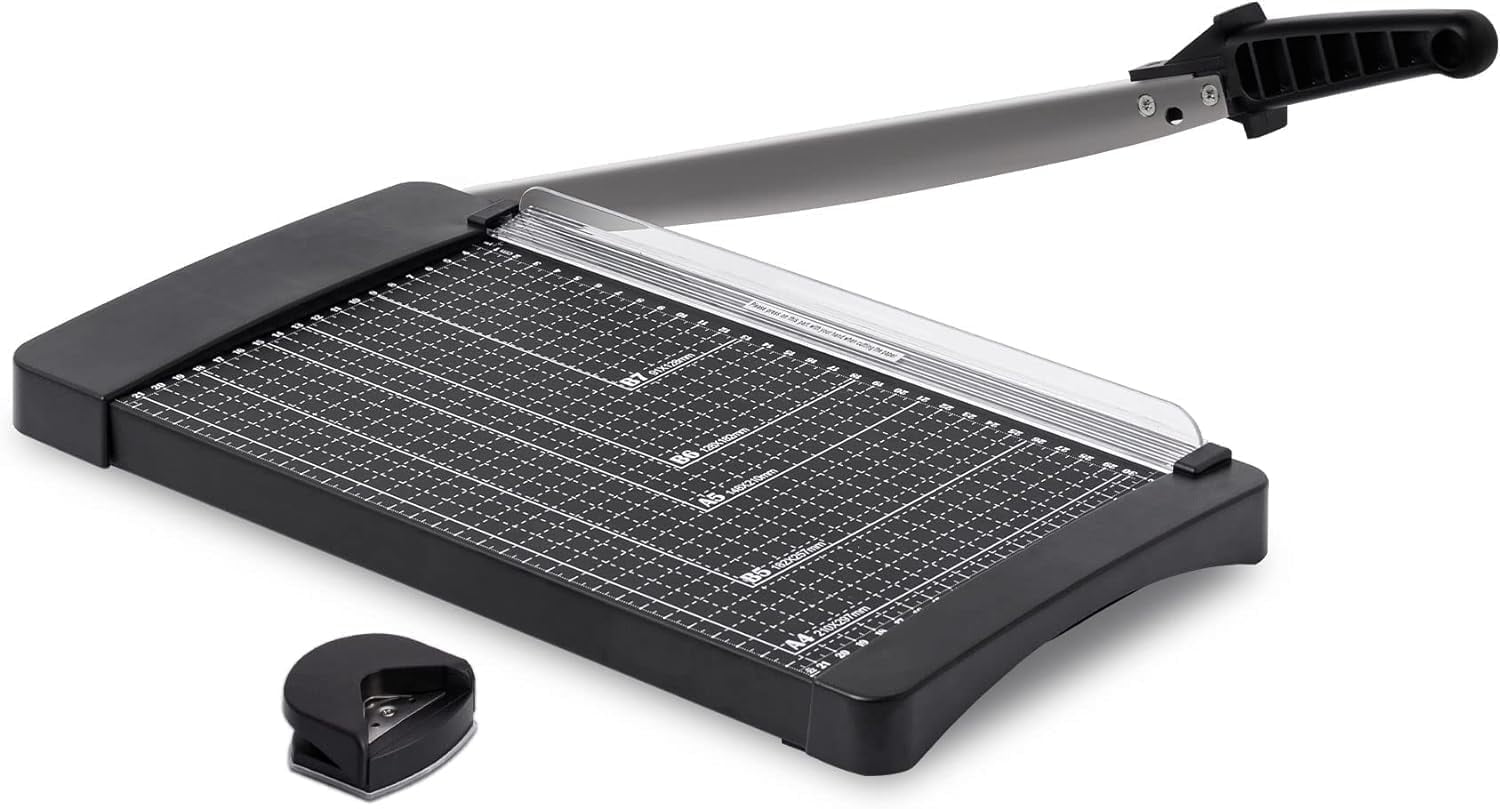
A guillotine paper cutter is a precision cutting tool engineered to slice paper in clean, perfectly straight lines. It takes its name from the French guillotine — a device historically associated with a swift, single-action downward blade — owing to the unmistakable resemblance in the way its blade descends onto paper to produce a precise cut.
Unlike scissors or utility knives that can easily produce uneven edges, the guillotine paper cutter features a fixed cutting surface paired with a measured blade mechanism. This design makes it an indispensable tool in offices, schools, print shops, and any environment where accurate, high-volume paper trimming is a regular task.
Caution should always be exercised when using a guillotine paper cutter. The blade is extremely sharp and can cause injury if handled improperly. Always follow manufacturer safety guidelines and keep the cutter away from children.
Why Is It Called a Guillotine?
The term "guillotine" comes from the 18th-century French execution device invented by physician Joseph-Ignace Guillotin. The guillotine paper cutter borrows this name because of the shared mechanical principle — a weighted or spring-loaded blade that drops in a controlled, vertical motion to make a single clean cut.
Over the centuries, the word "guillotine" has evolved far beyond its original context and is now widely used to describe any device that operates with this downward slicing mechanism. Today it refers broadly to any cutter — paper, photo, cardboard — that uses a descending blade mounted on a hinge or lever to achieve a straight and accurate cut.

Why and How It Was First Invented
The guillotine paper cutter was invented in the late 18th century in France by a man named Jean-Marie Vocher. Vocher was a printer who recognized the need for a more efficient and precise method of cutting large sheets of paper. At the time, paper was typically cut by hand using a knife or scissors, which was a slow and often imprecise process.
Vocher's solution was to design a cutter with a straight blade that could be lowered onto a sheet of paper to make a clean, precise cut. He modeled his design after the French guillotine, which had already been deployed as an execution device. The cutter quickly gained popularity as an accurate, repeatable tool for professional print environments.
How Does a Guillotine Paper Cutter Work?
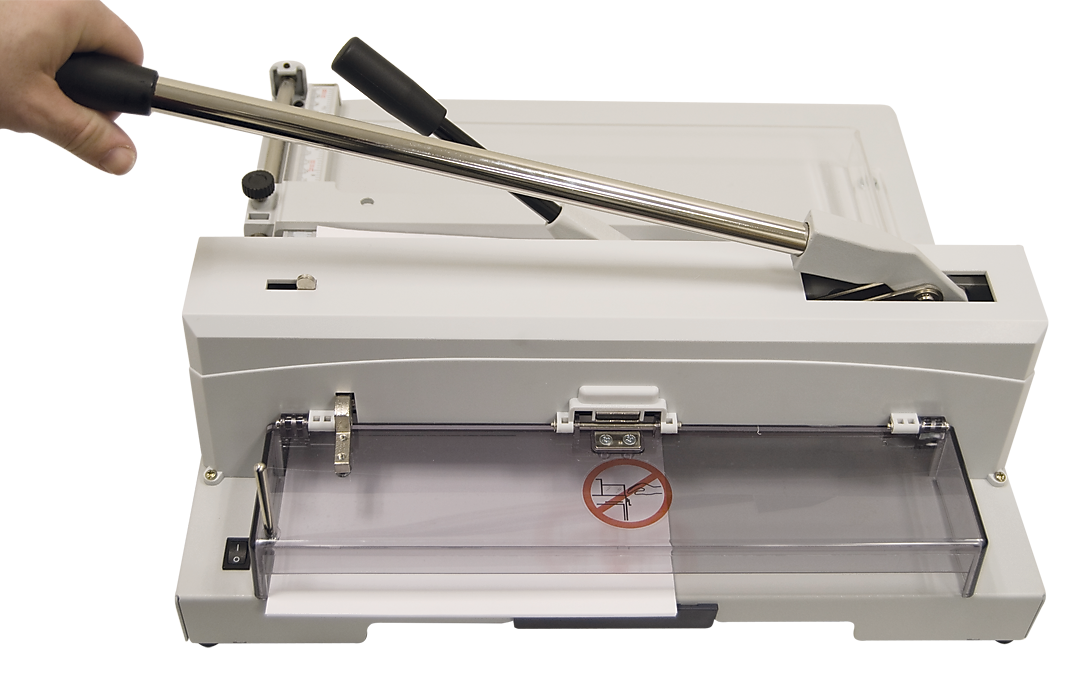
The guillotine paper cutter operates by using a sharp blade mounted on a lever or hinge that can be lowered onto the paper to produce a straight, clean cut. The mechanism follows a simple but effective workflow:
- Place the paper on the cutting surface, aligning it with the desired cutting mark or guide line.
- A clamp or hold-down bar secures the paper firmly in place to prevent any movement during the cut.
- The blade drops through the paper creating a clean and precise cut edge.
- After the cut is complete, the user lifts the lever and removes the trimmed paper with ease.
Guillotine paper cutters are designed to cut through large stacks of paper quickly and accurately. Proper precautions must always be taken when operating one, as the sharp blade can cause serious injury if not handled with care.
What Is a Paper Guillotine Used For?
A paper guillotine, also called a paper cutter or trimmer, is used to cut paper to a specific size or shape. It is regularly found in offices, schools, and print shops for tasks such as:
- Trimming flyers, brochures, and other promotional materials to a specific size or shape.
- Trimming documents or reports to fit into standard binders or folders.
- Cutting paper to make postcards, bookmarks, or other custom-sized items.
- Trimming photos to standard sizes for albums, frames, or photo books.
- Creating handmade cards or invitations with custom-sized paper.
How Many Pages Can a Guillotine Cut?
The number of pages a guillotine paper cutter can cut at once depends on several factors — including the model, the quality of the cutter, the size and type of paper being cut, the sharpness of the blade, and the overall design and construction of the unit. In general, a guillotine paper cutter can cut between 10 and 40 sheets of paper at once, though some professional models may handle significantly more.
The Different Types of Guillotine Paper Cutters
There are several different types of guillotine paper cutters, each designed for specific cutting needs and applications. Here are some of the most common types:
Manual Guillotine Cutters
Operated by hand using a lever or handle that the user pulls down to lower the blade onto the paper. Ideal for light to medium-duty cutting tasks.
Electric Guillotine Cutters
Powered by electricity with a motor that drives the blade. Often faster and more powerful, making them suitable for high-volume office or print shop environments.
Rotary Trimmers
Use a rotary blade that rolls across the paper as it cuts. Ideal for precise cuts on artwork, cardstock, and other materials requiring a very fine, clean edge.
Stack Cutters
Designed to cut large stacks of paper in a single pass. Commonly found in print shops and binderies where high volume precision work is performed daily.
Laser Cutters
Use a laser beam to precisely cut through paper and other materials. Used in professional settings where the highest accuracy and minimal waste are required.
The Benefits of Using a Guillotine Paper Cutter
There are several strong reasons to invest in a quality guillotine paper cutter for your workspace:
How to Choose the Right Guillotine Paper Cutter
When selecting the right guillotine paper cutter, there are several important factors to evaluate:
- Cutting capacity: Consider the maximum number of sheets it can handle per cut. Always choose a model that can manage the volume you typically work with.
- Cutting size: Make sure the unit can accommodate the size of paper you most frequently use, from standard letter to A3 and beyond.
- Blade material: Consider the material of the blade and the ease of sharpening or replacing it when the edge begins to dull.
- Safety features: Look for built-in safety features such as a blade guard, finger guard, and paper clamp to prevent accidents during operation.
- Ease of use: Look for a cutter that is intuitive, with clearly marked guides and comfortable controls.
-
Brand and warranty: Choose a reputable brand with a solid warranty to ensure reliability over years of consistent use.
How to Sharpen Your Guillotine Paper Cutter
Sharpening your guillotine paper cutter blade is an essential maintenance task that keeps the cutter performing at its best. A dull blade leads to ragged edges, paper tearing, and increased effort during every cut. Here is how to sharpen your cutter blade effectively:
- Clean the blade first. Before sharpening, wipe the blade clean with a soft cloth or brush to remove any dust, debris, or paper residue.
- Choose the sharpening method. There are several methods to sharpen a guillotine paper cutter blade, including using a whetstone, a sharpening rod, or a specially designed blade sharpener. Always follow the manufacturer's instructions for the specific sharpening method recommended for your model.
- Apply sharpening strokes. With your chosen tool, apply strokes along the entire length of the blade, keeping the angle consistent.
- Test the blade. Once sharpened, make a test cut on a scrap piece of paper. If the cut is clean and precise, the blade is ready for use.
Note that sharpening a guillotine blade can be dangerous and requires proper technique and tools. If you are not experienced with sharpening tools, it is strongly recommended to seek professional assistance rather than attempt it alone.
Ready to Upgrade Your Cutting Setup?
Explore our top-rated guillotine paper cutter built for precision, reliability, and daily use.
Formax Cut-True 15MConclusion
A guillotine paper cutter is an exceptional tool for any office, school, print shop, or home workspace that demands accurate and efficient paper trimming. From its French-inspired origins to today's range of manual, electric, and professional-grade models, the guillotine paper cutter remains one of the most effective cutting tools available. By understanding how it works, the different types on the market, and how to maintain and sharpen it properly, you can ensure that your cutter delivers clean, precise cuts for years to come. Whether you are trimming a handful of pages or processing a large batch of materials, investing in the right guillotine paper cutter is always a smart decision for the long term.