

A step-by-step walkthrough covering safe operation, proper technique, and essential maintenance tips to keep your guillotine paper cutter performing at its best for years to come.
Safety First — Before You Begin
Guillotine paper cutters are built around an extremely sharp blade and heavy-duty mechanical components. Because of this, the health and safety of every person operating the machine must always be the number one priority. As with any potentially dangerous piece of equipment in a workspace, strict safety precautions must be followed at all times when the machine is in use.
The majority of guillotine paper cutters are equipped with a safety lock mechanism. Whenever the machine is not actively in use, the safety lock must remain engaged at all times. This prevents accidental contact with the blade and ensures no unintended cuts or injuries can occur while the cutter is at rest.
While operating the guillotine, the user must remain fully attentive and verify that the machine is being used exactly as it was designed to be used. Following proper operating procedures at every step will minimize the risk of accidents and keep your workspace safe for everyone nearby.
How To Properly Use a Guillotine Paper Cutter
The correct technique for using a guillotine paper cutter depends largely on the type of model you have. Guillotine cutters come in three main variations — manual, semi-automatic, and fully automatic — and the steps involved differ depending on which type you are working with.
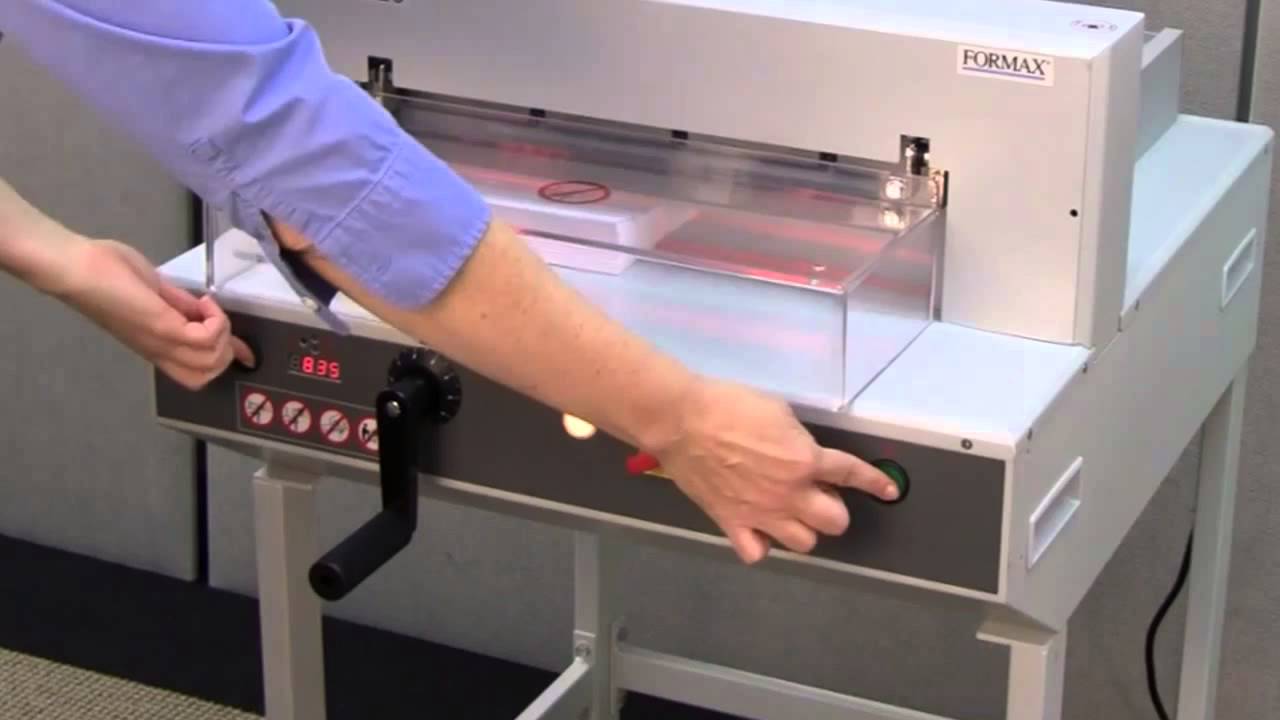
Fully automatic guillotine cutters are the most straightforward to operate. You simply place your stack of sheets into the machine, program the desired cut position using the digital display panel, and bring the blade down to execute the cut. This method consistently delivers the most precise and clean results with minimal effort from the user.
Manual guillotine paper cutters, however, require more hands-on involvement and involve a more detailed step-by-step process. Here is how to use a manual model correctly:
-
Count your sheets
Begin by counting the number of sheets you plan to cut. This will allow you to determine whether or not your machine can handle the full stack in a single pass. If the stack exceeds your cutter's rated capacity, divide the paper into smaller manageable piles before proceeding.
-
Position the paper on the cutting base
Place the sheets flat onto the cutting surface. Use the measurement grid printed on the base to align the paper exactly where the cut needs to be made. If your model includes a paper clamp, engage it now to hold the stack firmly in position and prevent any shifting during the cut.
-
Bring down the blade with care
Begin to lower the blade slowly and deliberately while keeping both hands well clear of the blade's path at all times. Once you are certain your hands are safely away from the cutting area, continue bringing the blade down fully to complete the cut in one smooth and controlled motion.
-
Clear the area and engage the safety lock
After the cut is complete, collect and responsibly recycle any scrap paper trimmings. Before walking away from the machine or leaving it unattended, always re-engage the safety lock to protect against any accidental contact with the blade.
Guillotine Paper Cutter Maintenance Tips
Keeping your guillotine paper cutter in excellent working condition is just as important as using it correctly. Regular maintenance extends the lifespan of the machine, preserves cutting accuracy, and ensures consistent safety during every use. Here are the five most important maintenance practices to follow:
The blade is the heart of any paper-cutting machine. Maintaining a consistently sharp edge is essential because a sharper blade produces smoother, more accurate cuts while requiring less force during operation.
Newer guillotine models often include built-in oiling systems. Older units, however, will require manual oiling on a routine basis. Regular lubrication keeps all moving parts operating smoothly, helps prevent rust, and significantly extends the overall lifespan of the machine.
Cleaning your guillotine paper cutter after each session is crucial. Paper dust, residue, and leftover trimmings can accumulate quickly. If left unchecked, this build-up will begin to affect the machine's accuracy and overall performance over time.
Every user should take the time to thoroughly learn the operating instructions for their specific machine. A lack of familiarity with how the machine works is one of the most common causes of both accidents and inaccurate cuts. Understanding the machine fully helps you stay safe and productive.
Applying excessive clamp pressure might seem like it would improve the accuracy of a cut, but it can actually reduce the force available for the blade to pass through cleanly. Always use the correct amount of clamping pressure — just enough to secure the paper without over-compressing the stack.

Need a Reliable Guillotine Paper Cutter?
The Formax Cut-True 15M delivers professional-grade precision and dependable safety for everyday cutting tasks.
Formax Cut-True 15MFinal Thoughts
Using a guillotine paper cutter correctly and maintaining it properly are two habits that go hand in hand. Whether you are operating a basic manual model or a fully automatic professional unit, following the correct steps and respecting the safety guidelines at every stage will protect you, extend the life of your machine, and ensure that every cut you make is clean, straight, and accurate.
By keeping the blade sharp, oiling the machine regularly, cleaning it after every use, and never applying more clamp pressure than necessary, you will get the maximum value and performance from your guillotine paper cutter for many years to come.