

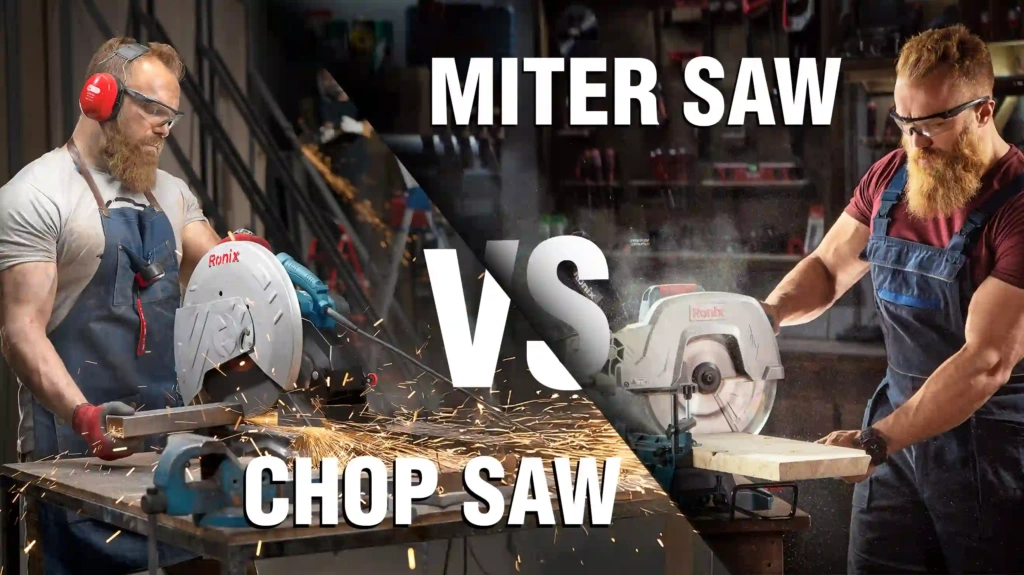
 What really sets a miter saw apart from a chop saw? It's a question that comes up constantly, and for good reason — the two tools share a similar silhouette, and plenty of people use the names interchangeably without realizing they're built for different jobs. I've been there myself. When I first went shopping for a saw to handle my DIY projects, I spent weeks flipping between options before finally landing on the right one. If you're in the same spot, this guide will walk you through everything you need to know about chop saws versus miter saws so you can choose with confidence.
The Core Differences at a Glance
On the surface, these tools share a lot — both rely on a spinning blade mounted on a motorized arm that pulls down onto the material below. Look closer, though, and the differences add up quickly. Grabbing the wrong one for a given project can mean damaged materials, poor cuts, and frustration that could have been avoided. What often catches people off guard is that the two saws originally came from the same family of tools. Before we get into which projects each one handles best, let's break down the materials they're built for and the features that separate them.
| Feature | Miter Saw | Chop Saw |
|---|---|---|
| Function | Angled and beveled cuts along precise lines | Clean straight cuts through dense materials |
| Common Use | Trim, framing, molding, cabinetry | Metal piping, tubing, masonry |
| Blade Size | Smaller blade, typically 10–12 inches | Larger blade, commonly 14 inches |
| Materials | Wood and softer building materials | Metal, stone, and harder materials |
| Weight | Lighter, easier to move around | Heavier, built for industrial workloads |
| Price | Generally more affordable | Usually a higher investment |
| Best For | Projects needing detailed or angled cuts | Projects needing straight, rougher cuts |
Chop Saws Are Built for Straight, Powerful Cuts
The name gives it away. A chop saw drives straight down onto whatever material is beneath it — no beveling, no angling, no mitering. It's a pure cross-cutting tool. The setup is designed to power through dense materials fast and accurately, but its cuts are locked at 90 degrees. These saws typically use larger blades (around 14 inches) with tooth patterns suited for heavy-duty work.
Miter Saws Handle Straight, Miter, and Bevel Cuts
Now for the crowd favorite: the miter saw. If you go looking for a chop saw online, you'll almost always run into miter saws in the results. There's a reason — most shoppers don't realize the two are different. We've already covered how the chop saw operates, so let's zoom in on what makes a miter saw special. Its design allows for accurate cuts at a wide range of angles, and most models use a blade in the 10-to-12-inch range.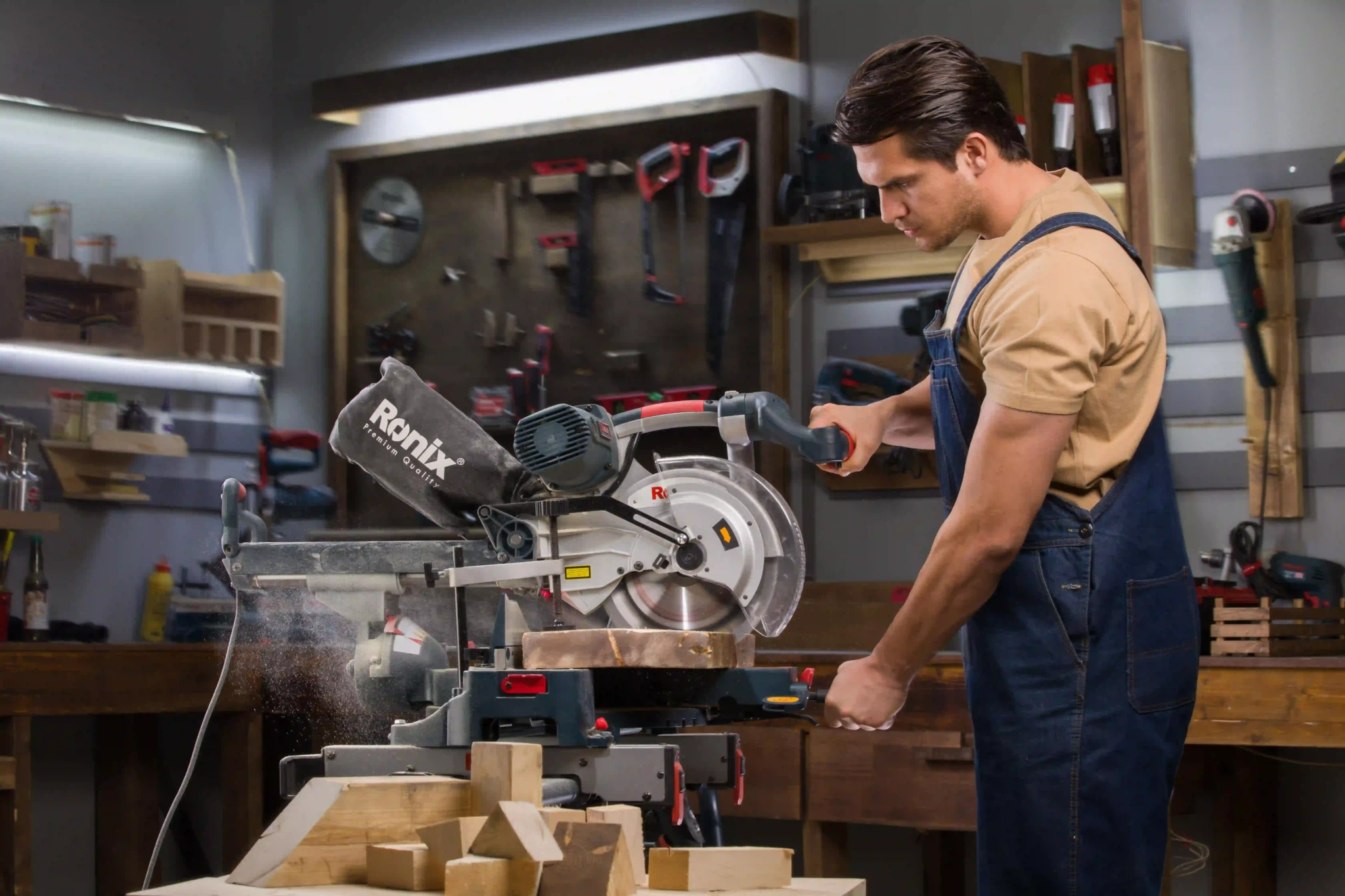
When the Chop Saw Is the Right Choice — Metal
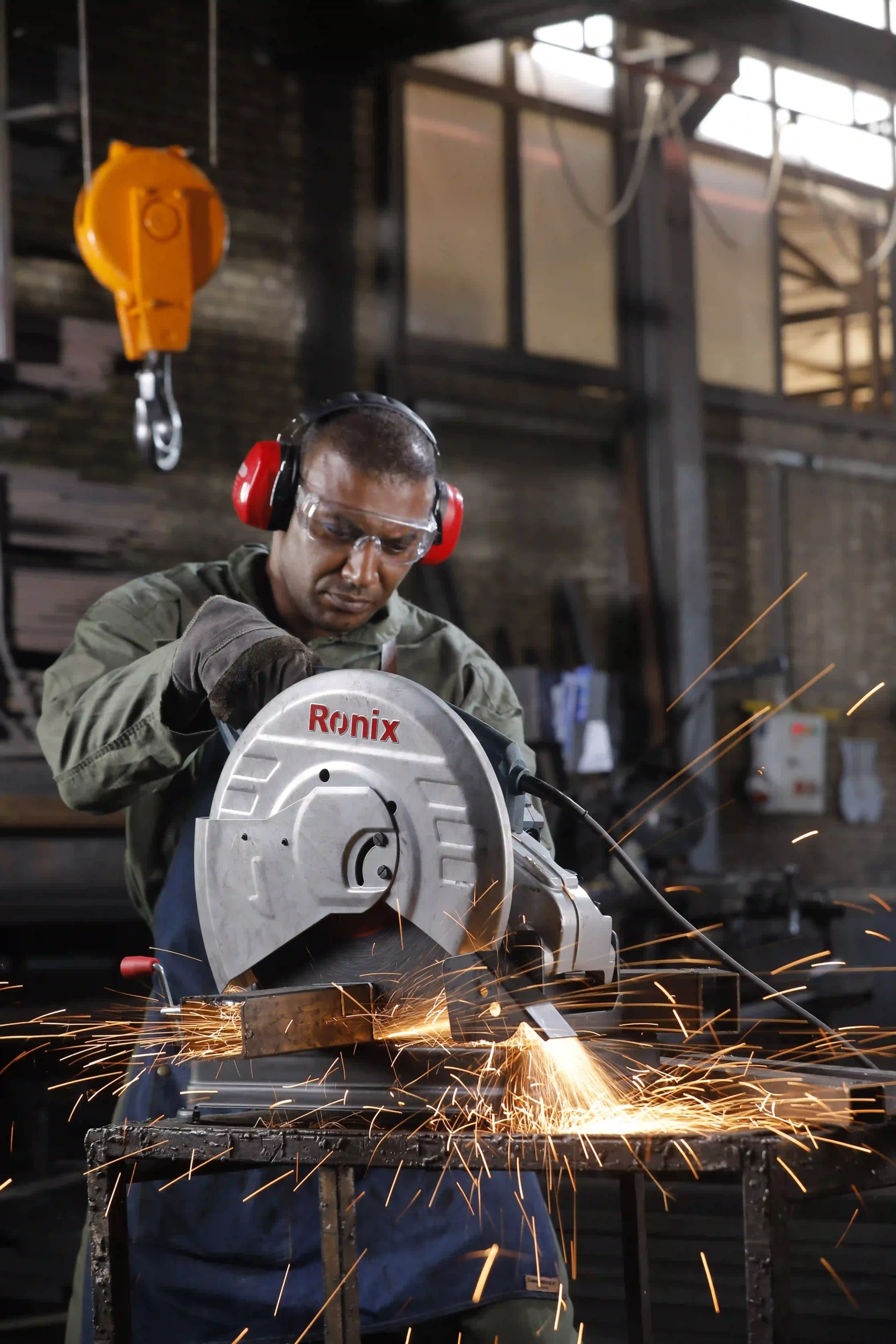
Got a job that involves cutting through metal? This is where the chop saw earns its keep. Its powerful motor and blade design can handle tough materials like steel, aluminum, and iron that would quickly wear out a miter saw.
One of the biggest reasons chop saws dominate metalwork is torque. The motor delivers the rotational force needed to push through hard stock without bogging down or burning out the blade.
Take a closer look at the design and the choice becomes even clearer. An abrasive blade combined with a rugged, blocky body keeps everything locked in place — and that straight, fixed cut is exactly what metalworking demands. So when it's miter saw versus chop saw and metal is on your cutting list, the chop saw is the obvious winner.
Shop the Featured Saw
Evolution S355MCS
 When the Miter Saw Is the Right Choice — Wood
For anyone working with wood, the miter saw is a best friend in the shop. It shines in trim work, framing, molding, and anywhere angled cuts enter the picture. The variety of cut angles it supports makes it perfect for cabinetry, home construction, and detailed DIY projects. So if wood is the main material on your list, the miter saw is the clear call in the chop versus miter debate.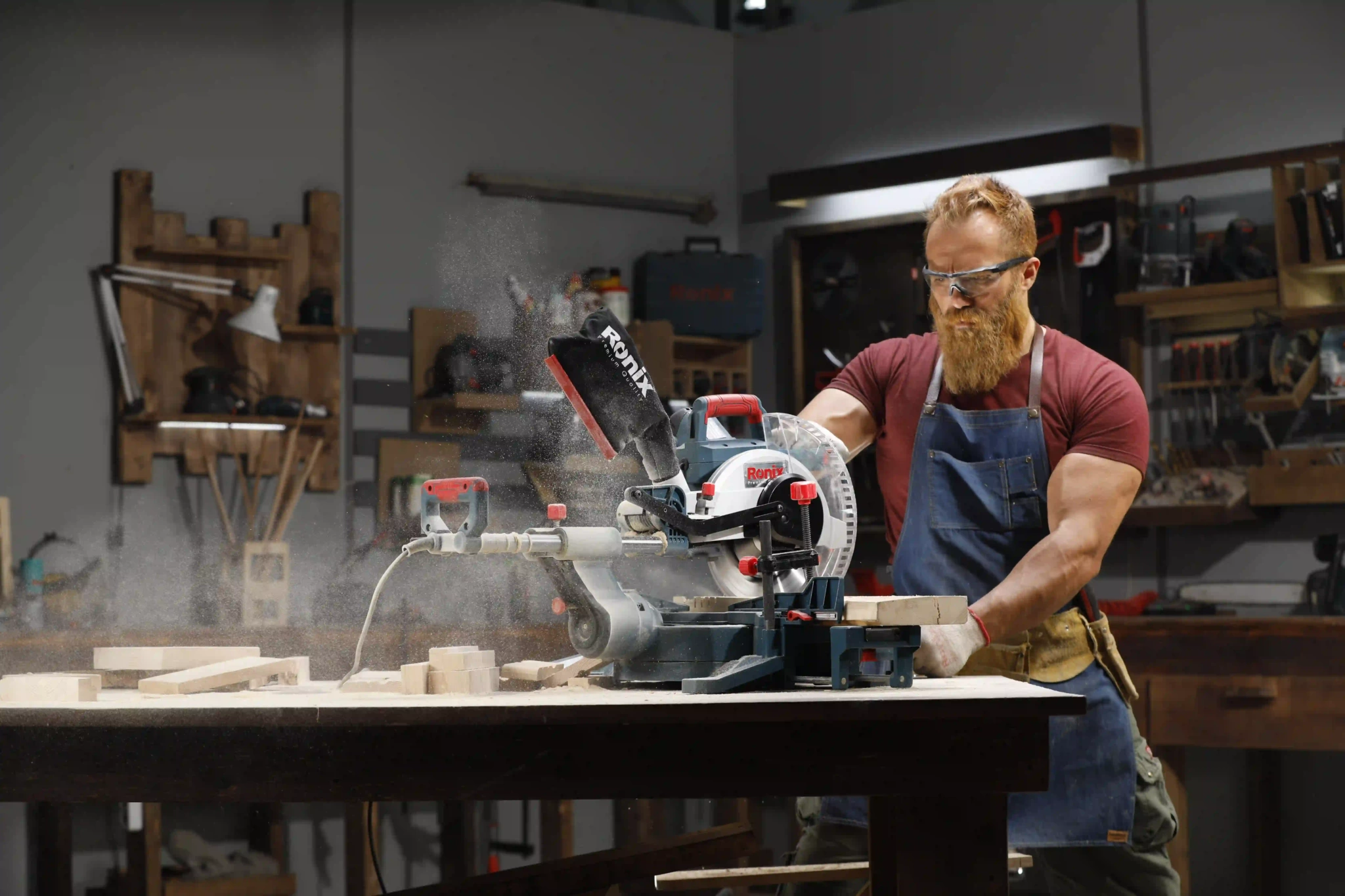
Quick-Glance Feature Breakdown
Chop Saw Features
- Delivers clean, straight cross-cuts
- Driven by a powerful motor, typically around 15 amps
- Purpose-built for metal cutting
- Uses blades in the 13-to-15-inch range
- Often paired with abrasive cutting wheels
- Includes a guard to shield the user from sparks
Miter Saw Features
- Produces both straight and beveled cuts
- Engineered for wood trim, framing, and lumber
- Blades usually measure 10 to 12 inches
- Lighter and more compact for workshop mobility
- Ideal for precision angle work
- Well-suited for finish carpentry
The Bottom Line
Stuck in the middle of the chop saw versus miter saw question — or worried you're about to buy the wrong one? The fix is simple: know what you'll be cutting most.
Woodworking? You've already got the answer — go miter.
Metalwork? The chop saw answers that one without hesitation.
Don't spend another weekend second-guessing. Choose the tool that matches your project, get set up, and finish the job the way it deserves to be finished. The real reward is in the making.
Ready to Upgrade Your Shop?
Evolution S355MCS