

What's the real difference between a miter saw and a chop saw? It's one of the most commonly asked questions among DIY enthusiasts and professional tradespeople alike. Both tools look nearly identical at a glance — a spinning blade mounted overhead, a flat base, a handle you pull downward. But once you understand what each one is designed to do, the choice becomes surprisingly clear.
We've put together this complete breakdown so you can walk away knowing exactly which saw belongs in your workshop — and which one you've been using incorrectly all along.
Key Differences Between the Chop Saw and Miter Saw
At first glance, these two saws share a lot in common — same cutting motion, similar structure, and both found on job sites around the world. But dig a little deeper, and you'll find that the range of cuts they can make, the materials they handle, and the precision they deliver are all quite different.
| Feature | Miter Saw | Chop Saw |
|---|---|---|
| Cut Types | Straight, miter, bevel, compound | Straight cuts only |
| Primary Use | Wood, trim, framing, finish carpentry | Metal, steel, aluminum |
| Blade Size | Typically 10–12 inches | Typically 14–15 inches |
| Angle Capability | Up to 45–60 degrees miter & bevel | No — fixed 90° only |
| Motor Power | Standard to high torque | Very high torque |
| Best For | Precision woodworking, cabinetry | Rough metal fabrication |
Chop Saws Only Make Straight Cuts
Right from the name, you can guess what a chop saw does best — it chops. Straight down, no deviation, no angle. The blade descends in a perfectly vertical arc, making it ideal for jobs where speed and repeatability matter more than precision angles.
The design of the chop saw allows you to make cuts quickly and accurately, but you're limited to strictly 90-degree angles. These tools are typically large and heavy-duty machines — built for demanding, high-volume work. Chop saws often have 14–15 inches of blade capacity, giving them serious cutting power for thick stock.
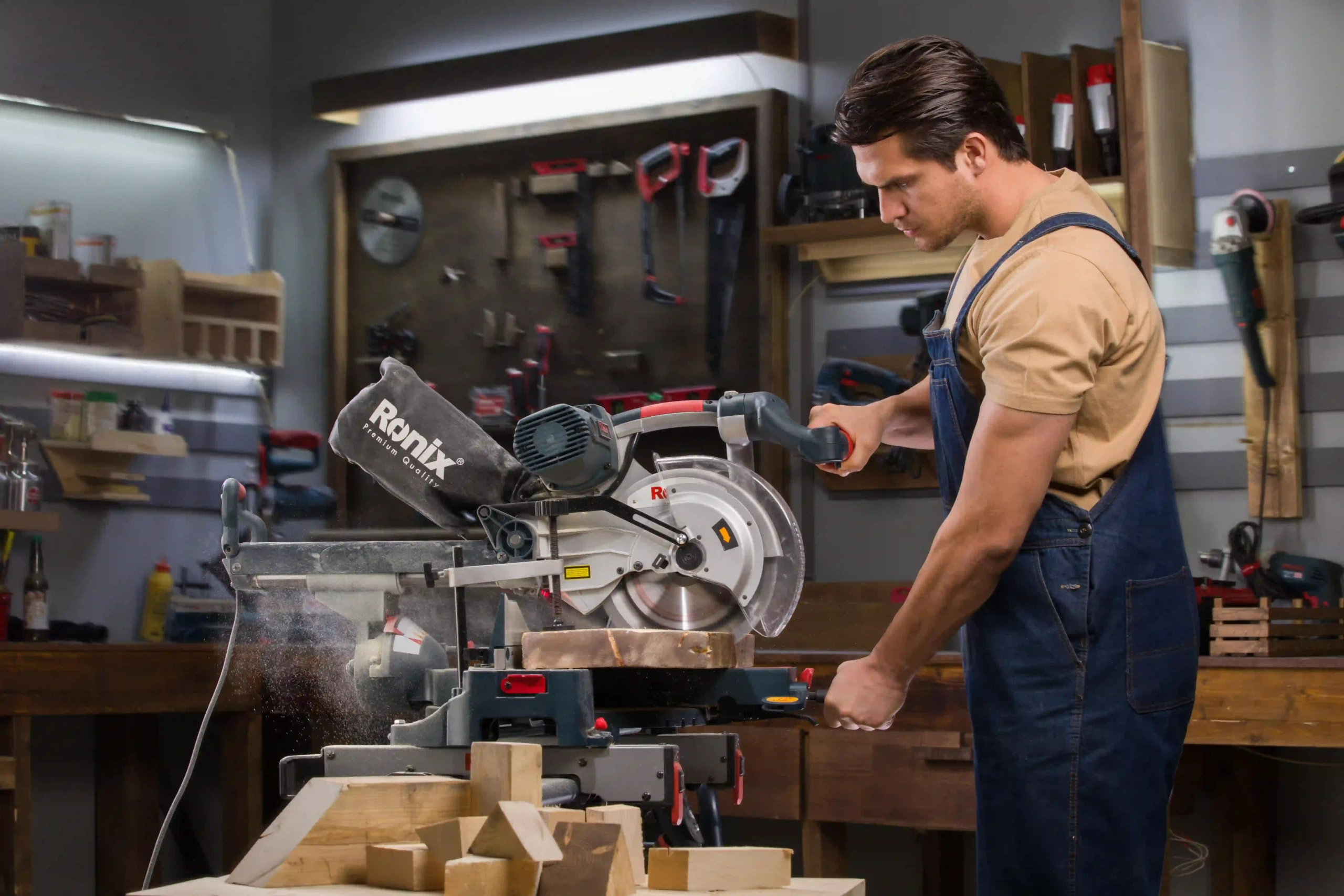
Miter Saws Can Handle Angles and Bevel Cuts
Now let's talk about one of the most versatile tools in the workshop: the miter saw. These saws are wildly popular, so much so that if you search for a chop saw online you'll often find miter saws dominating the results. Many people simply don't know the difference and often reach for a miter saw when they actually need something different.
The miter saw's standout feature is its rotating table — this lets you swing the blade left or right to cut at precise angles. We've thoroughly covered the cutting action of chop saws, so let's talk about miter saws now. The design of a miter saw allows for accurate cuts at a variety of angles. The tool usually comes with a table ranging from 10 to 12 inches in size.
Miter Cuts
Rotate the saw head left or right along the horizontal plane to make precise angled cuts. Perfect for frames, trim, crown molding, and corner joints.
Bevel Cuts
Tilt the blade along the vertical axis to cut through material at a slope. Ideal for complex joinery where flat angles alone won't do the job.
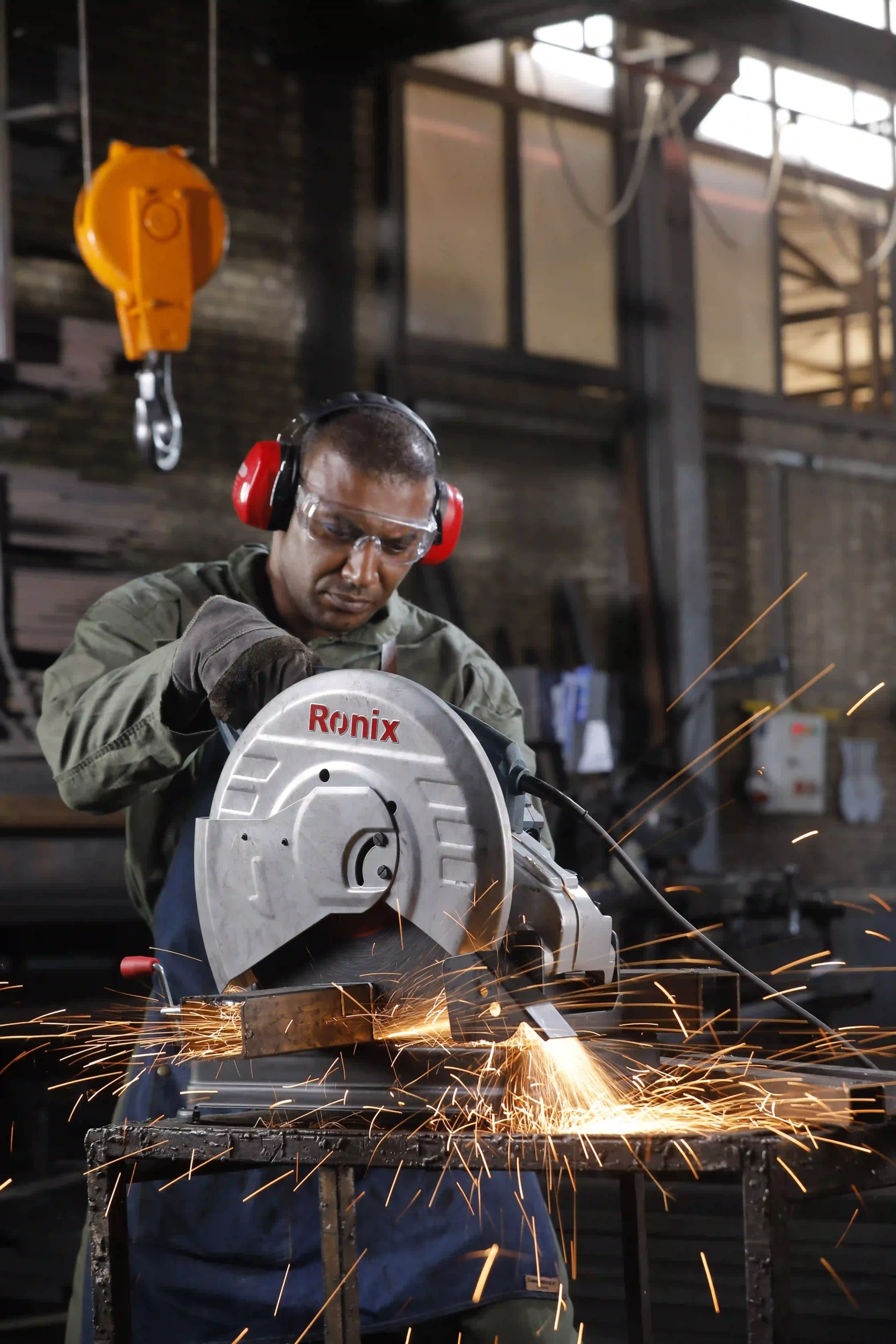
A Chop Saw Is the Right Tool for Cutting Metal
Have a project that involves cutting through tough metal material? Go with the chop saw without hesitation. Chop saws are exceptionally powerful tools built specifically for cutting through demanding materials like steel and aluminum. When you need to get it done quickly and cleanly, the chop saw gets out of your way and delivers.
One of the reasons that makes the chop saw such a solid choice for metal is its powerful motor. The extra torque helps the blade slice through tough, high-density material with control and authority. If you take a close look at a chop saw's design, you'll find that it is designed to keep the blade fixed and material stable — this gives you the straight cut that is ideal for working with metal.
If you're primarily working with metal, the chop saw is the tool you need. It's the right material match.
A Miter Saw Is Your Best Friend for Cutting Wood
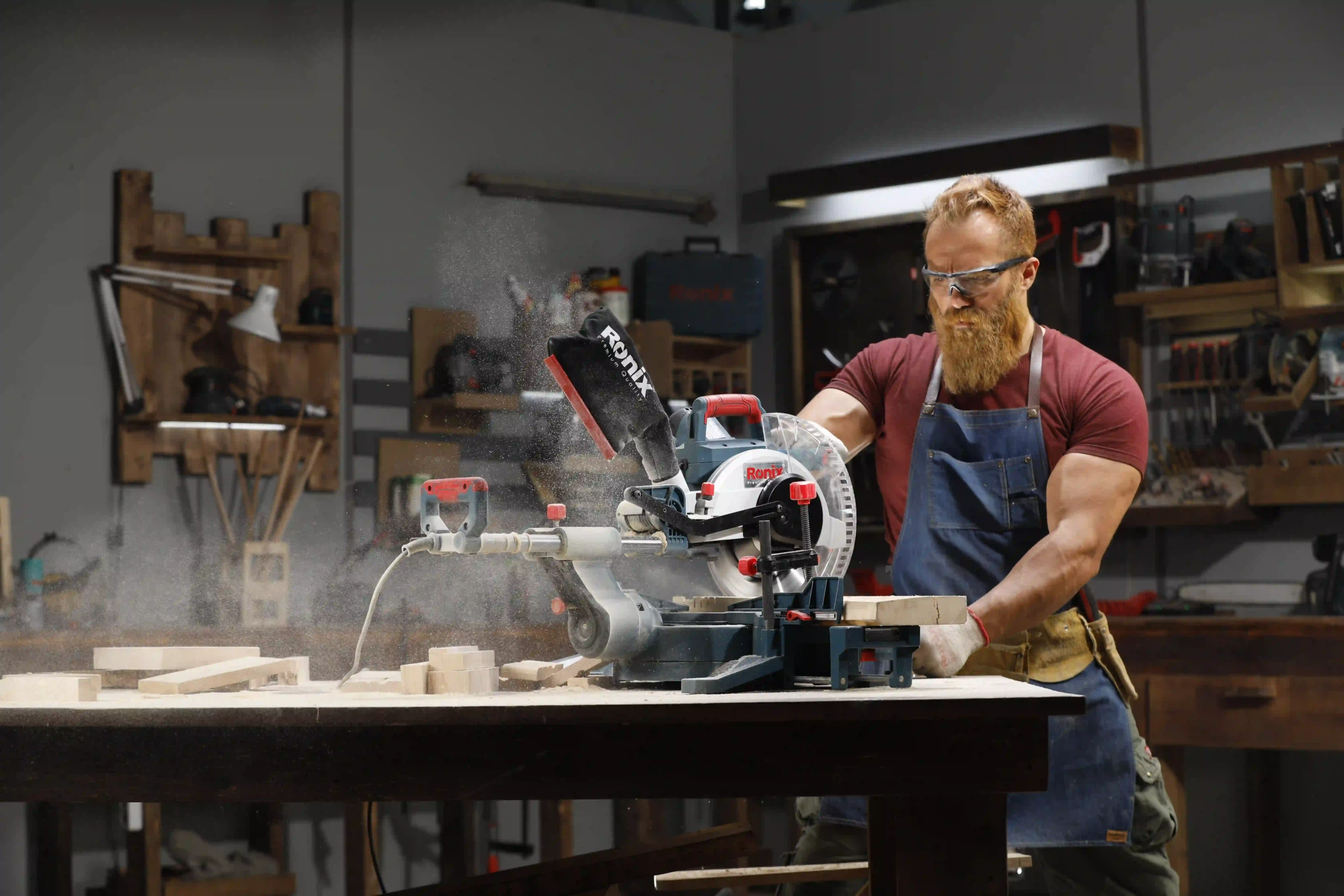
One of the best choices for woodworkers is the miter saw. It can give you the thin, clean cuts that result in smooth framing, accurate molding, and beautifully precise trim. Where angled cuts are involved, the miter saw is the undisputed champion for DIY projects and professional finish carpentry alike.
One other thing worth noting is that there are many different types of cuts, making the miter saw an incredibly flexible option. If you're going to make a comparison between the miter saw and the chop saw, definitely choose the miter saw if you're primarily working with wood. It's simply the better material match — and the better long-term investment for most homeowners.
Feature Breakdown at a Glance
- Lets you make fast, straight-down cuts
- Makes extremely clean 90° passes
- Powered by a very high-torque motor, typically 15 amps
- Designed for tough metalwork and structural materials
- Usually ships with abrasive diamond-style cutting wheels
- Typically includes a guard to protect the user from sparks
- Can produce both straight and beveled cuts
- Designed for cutting wood trim, framing, and lumber
- Table rotates for angled cuts
- Blade sizes typically range from 10 to 12 inches
- Lightweight and compact compared to chop saws
- Available in sliding versions for wider crosscuts
Frequently Asked Questions
Ready to Make the Right Cut?
Whether you're tackling a woodworking build or cutting through structural steel, choosing the right saw makes every difference. Don't settle — start your next project with the right tool in hand.
Evolution 14" Mitering Chop Saw