

Discover Short Throw & Ultra Short Throw Projectors
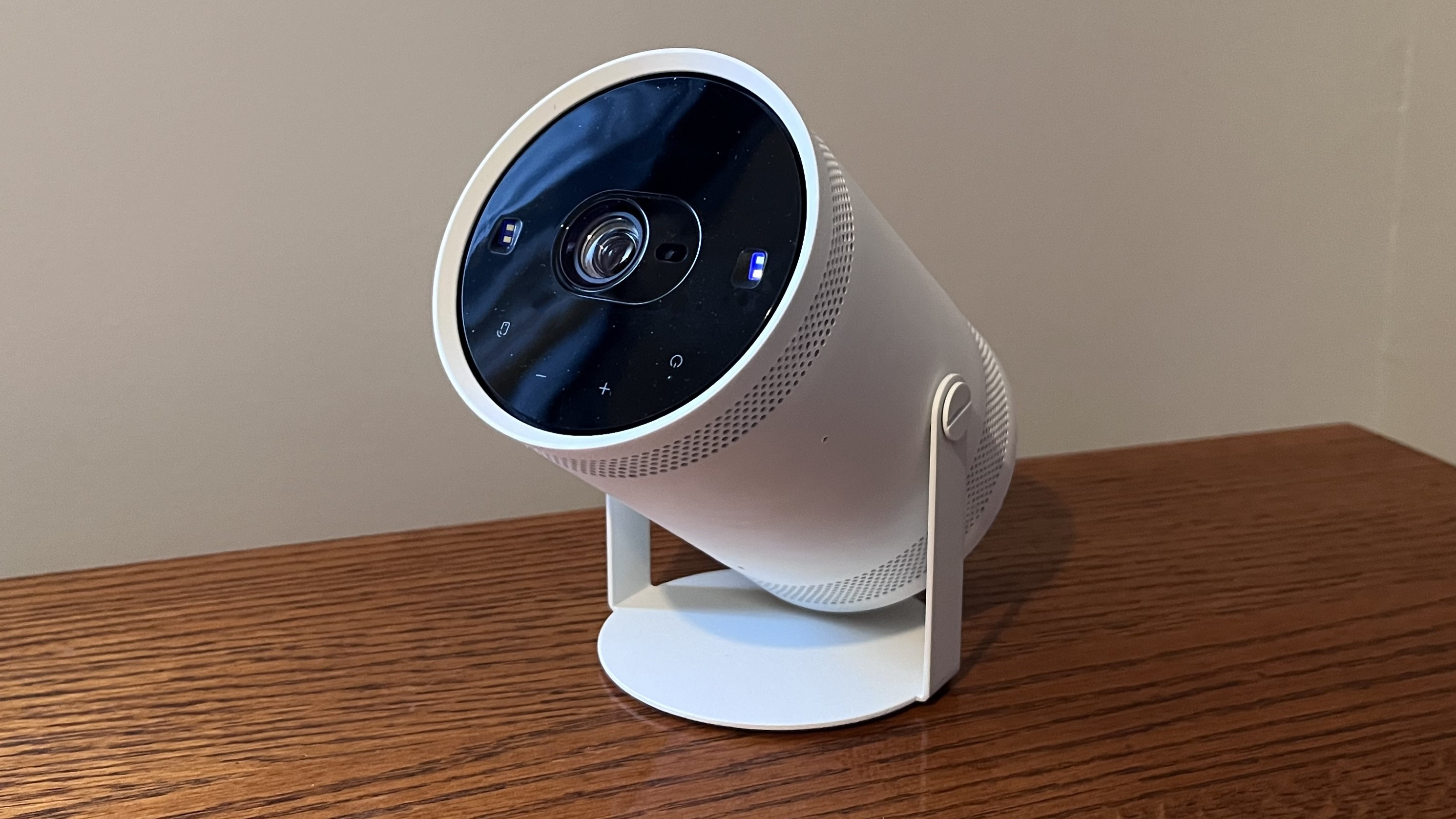
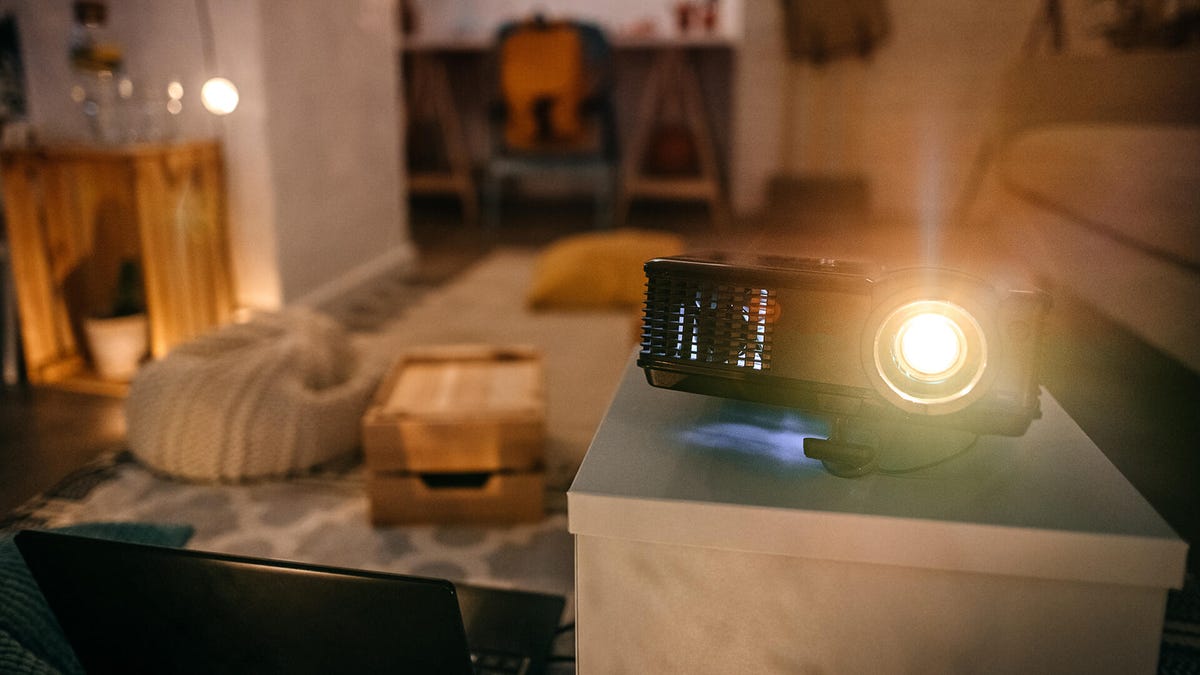
Whether you are outfitting a compact living room, designing an immersive backyard cinema, or building a professional presentation area, short throw and ultra short throw projectors offer the flexibility to project large, brilliant images without the need for a lengthy room. These innovative devices allow you to place the projector just inches or a few feet from the wall and still enjoy a massive, high-quality display.
Explore how these projectors work, what makes them different, and which option is the best match for your space.
What Sets Ultra Short Throw Apart from Short Throw?
Understanding the key distinctions will help you pick the right projector for your environment.
| Feature | Ultra Short Throw (UST) | Short Throw (ST) |
|---|---|---|
| Throw Ratio | 0.25–0.5:1 | 0.5–1:1 |
| Typical Distance | As close as 1 ft (0.3 m) from the screen | Roughly 3–8 ft (0.9–2.4 m) from the screen |
| Best For | Extremely tight spaces, interactive walls, compact venues | Classrooms, meeting rooms, mid-size home theaters |
Ultra Short Throw Projectors
Ultra short throw (UST) projectors are engineered to cast a large image onto a screen or wall from an incredibly short distance — sometimes as little as one foot away. This makes them a perfect fit when your space is severely limited. UST projectors feature a throw ratio between 0.25 and 0.5:1, which means they can produce a massive picture while sitting right beneath the display surface.
Short Throw Projectors
Short throw (ST) projectors share many qualities with their ultra short throw counterparts but are positioned slightly farther from the wall or screen — usually between 3 and 8 feet away, depending on the desired image size. Their throw ratio typically falls between 0.5 and 1:1, which still represents a significant space saving compared to traditional projectors.
Both ultra short throw and short throw projectors greatly minimize shadow interference, allowing presenters and viewers to stand near the screen without blocking the image.
Short Throw & Ultra Short Throw Projectors at Backyard Provider
Our short throw and ultra short throw projectors help you maximize your display area regardless of room size. Many models come equipped with flexible lens options that support both short throw and ultra short throw distances, giving you the freedom to adapt to any setting. Browse our selection to find the ideal projector for your project.


Where Can You Use Short Throw & Ultra Short Throw Projectors?
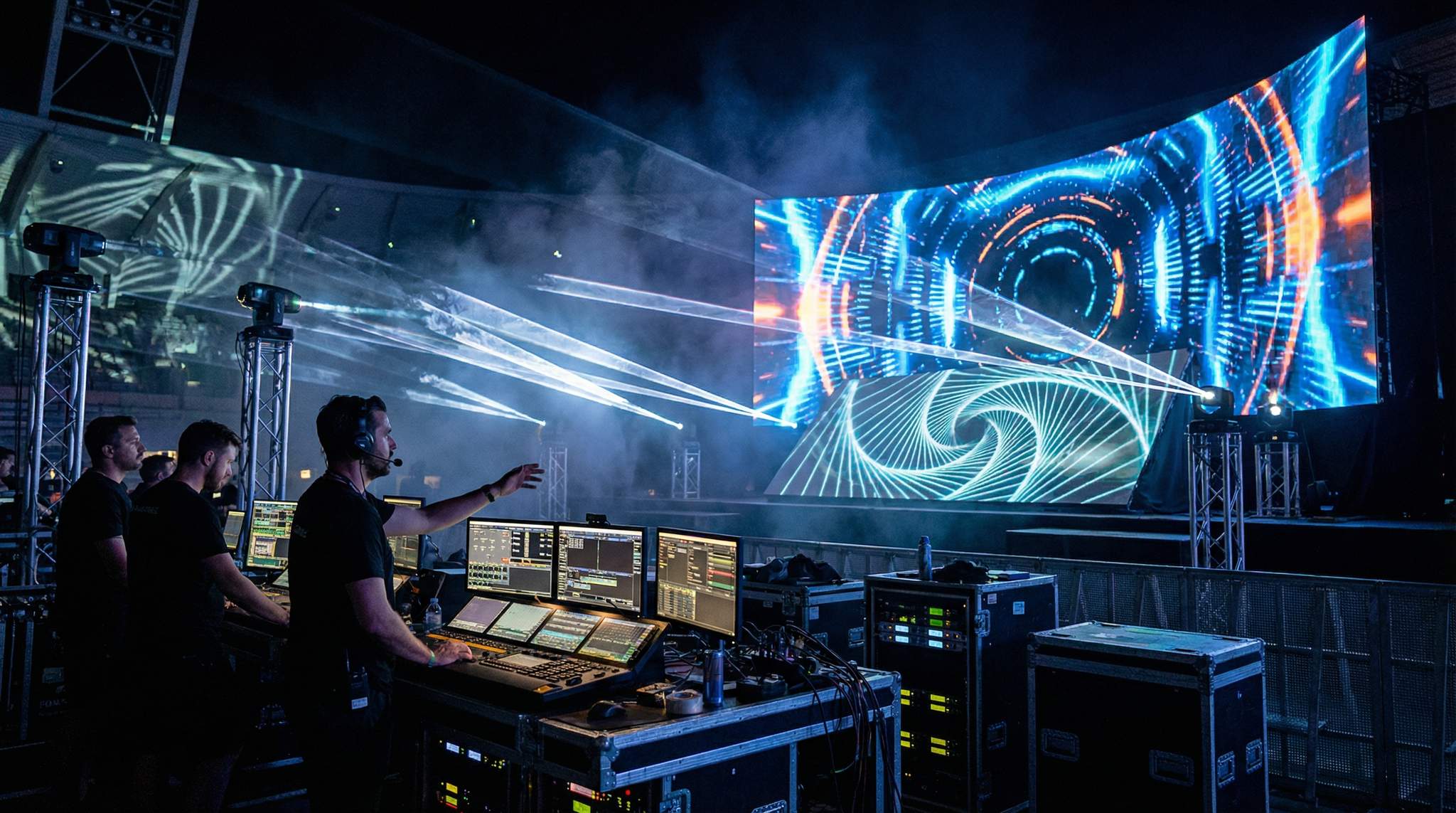
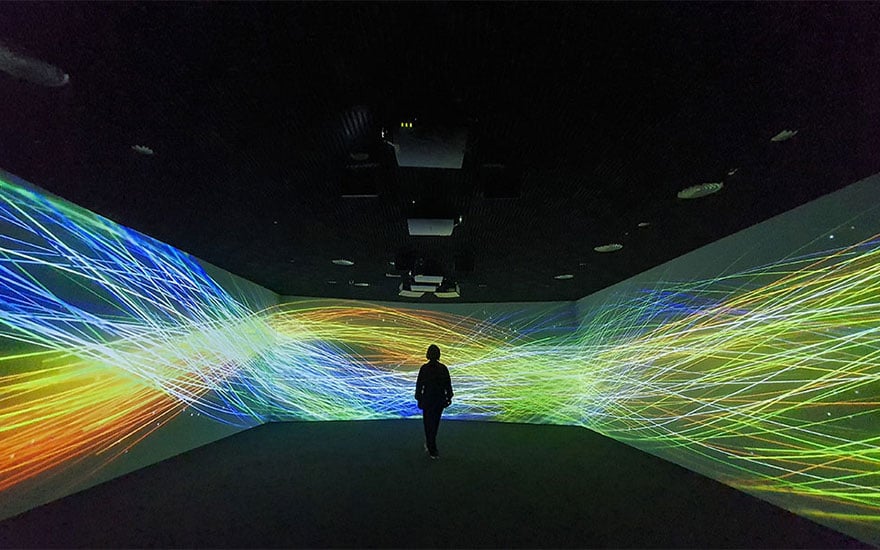
These projectors are suited for a wide variety of settings and installation types. Here are some popular applications where short throw and ultra short throw technology truly shines.


Frequently Asked Questions
What exactly is an ultra short throw projector?
An ultra short throw (UST) projector is built to display an image onto a screen or wall from a much shorter distance than conventional projectors. UST models are typically placed or mounted very close to the display surface and feature a throw ratio of 0.25–0.5:1. To figure out the precise throw ratio for your setup, consult the projector's specifications or use an online throw distance calculator.
How does a laser phosphor projector function?
Laser phosphor projectors rely on blue laser diodes as their main light source. This light strikes a spinning yellow phosphor wheel, which splits the output into red and green, while blue light passes through a dedicated wheel segment. High-end models add a red laser diode to improve red output and deliver more vibrant, true-to-life color.
What distinguishes a short throw projector from an ultra short throw model?
A short throw (ST) projector is designed to display a large image from a relatively close distance, but not as close as an ultra short throw unit. ST projectors work within a throw ratio of 0.5–1:1, while UST models operate between 0.25–0.5:1. Choosing between them comes down to how much room you have between the projector and the screen.
How do ultra short throw projectors work?
Ultra short throw projectors employ L-shaped lens systems that use mirrors and advanced optics to cast large images from very short distances. This clever design permits flexible placement in cramped spaces, making them versatile for many applications. Because the projector sits so close to the screen, the chance of casting shadows is virtually eliminated.
How do short throw projectors work?
Short throw projectors use conventional straight lenses that are specially engineered to project a wide image from a limited distance while still cutting down on shadow interference. They strike a balance between throw distance and image size that works well in classrooms, meeting rooms, and home entertainment areas.
What advantages do UST projectors have over standard models?
In scenarios where rear projection is not an option, a UST projector is an excellent alternative. UST lens technology is specifically designed to minimize shadow interference, making these projectors suitable for interactive environments where people need to stand near the projected image, or any location where space is at a premium.
Do I need a dedicated screen for a short throw projector?
While a screen is typically recommended for the best image quality, many applications allow you to project directly onto a wall, building facade, or even 3D objects. The key is to choose a smooth, light-colored surface that reflects light evenly for the clearest picture.
Can a short throw projector handle 3D content?
Yes, by pairing compatible models, short throw projectors can support 3D applications. When selecting a short throw projector for 3D use, be sure to verify the unit's 3D compatibility, its throw ratio relative to your screen size, and the availability of compatible 3D glasses.
Do short throw projectors perform well in bright rooms?
Both short throw and ultra short throw projectors can operate effectively in well-lit environments. Just like standard projectors, the most critical factor is the unit's brightness specification. Projectors with a higher lumen count will perform significantly better in rooms with ambient light. Your specific installation conditions will determine the ideal brightness level.
Can I mount my projector on a ceiling or wall?
Absolutely. You can mount both short throw and ultra short throw projectors using a standard ceiling mount. Some specialized UST projectors are specifically engineered for wall mounting, which further saves floor space and provides a cleaner, more streamlined installation.
Can I use a short throw or UST projector in portrait orientation?
Yes, both types can be used in portrait mode. When mounting a projector vertically, keep in mind that you may need to account for lens offset to ensure the projected image lands precisely on your intended surface.
Can I adjust the image size with a fixed lens?
Fixed lenses do not offer zoom capability. The only method for adjusting the projected image size when using a fixed lens is to move the projector closer to or farther from the screen. Most manufacturers provide a recommended maximum screen size to help you achieve the best image quality.
How do I select the right projector for my project?
The ideal projector and lens combination depends on your specific installation requirements. Consider the throw distance available, the screen or surface size, the ambient light conditions, and your desired resolution and brightness. Consulting a projector selection guide or reaching out to our team can help you narrow down the perfect fit.
How does the color quality of RGB pure laser projectors compare to laser phosphor models?
The ideal lens for your projector depends on the model you choose and the specifics of your installation environment. Consulting a projector lens calculator or product specification sheet is the most reliable way to match the right lens to your setup and achieve optimal image quality.
Ready to Transform Your Space?
Explore our short throw and ultra short throw projectors and find the perfect model for your home, backyard, or professional setup.
Epson PowerLite L795SE 4K Projector