

Choosing between a television and a projector used to be simple — TVs were for everyday viewing and projectors were reserved for dedicated home theaters. That line has blurred dramatically. Modern projectors now deliver stunning 4K resolution, laser-powered brightness, and ultra-short-throw designs that sit inches from the wall. Meanwhile, televisions keep pushing the envelope with OLED panels, mini-LED backlighting, and razor-thin form factors. So how do you decide which one is right for you? Let's break it all down.
Price vs. Performance
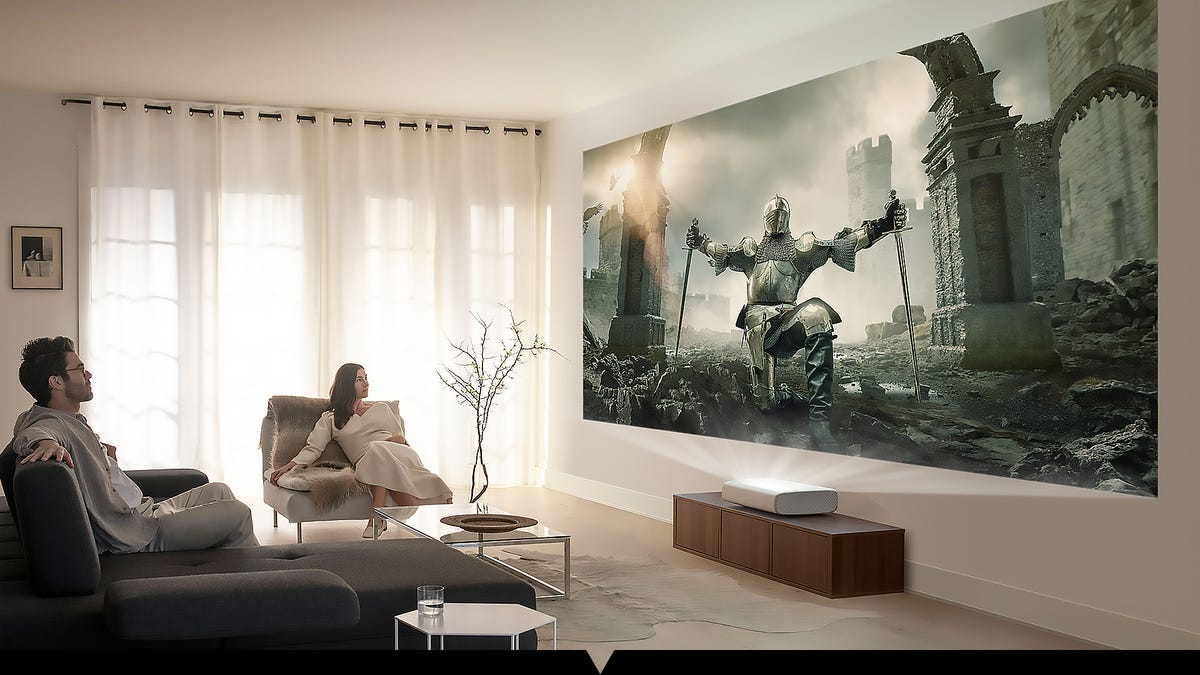
When you stack price against screen size, projectors dominate the value conversation. A quality 4K projector paired with a screen can deliver 100-plus inches of viewing area for a fraction of what a comparable-sized TV would cost — if one even existed at that size. Televisions in the 85-inch range often carry premium price tags well north of $2,000, while a solid laser projector and a dedicated screen can get you to 120 inches for roughly the same investment.
That said, smaller-screen shoppers will find televisions far more budget-friendly. A 55- to 65-inch 4K TV offers exceptional picture quality at price points that projectors can't touch in that size range. The takeaway: if sheer screen size matters most, projectors win on value; if you're happy with 75 inches or less, a TV is usually the smarter buy.
TVs Win the HDR Game
High Dynamic Range content looks spectacular on a premium television. OLED and mini-LED sets routinely hit peak brightness levels above 1,000 nits, with some flagship models pushing past 2,000. That extreme brightness, combined with pixel-level dimming, creates highlights that genuinely pop and deep blacks that feel infinite. The result is an HDR experience that's difficult for any projector to match.
Projectors have made meaningful strides in HDR support — many now accept HDR10 and HLG signals — but they're fundamentally limited by the physics of reflected light. Even the best laser projectors top out around 3,000 to 4,000 lumens, which translates to significantly lower perceived brightness on a screen. If HDR movie nights and vivid gaming visuals are your priority, a TV still holds the advantage here.
Quick Insight
OLED televisions deliver true pixel-level black, meaning each individual pixel can shut off completely. No projector technology on the market today can replicate that level of contrast in a normally-lit room.
A Little Thing Called Light
Ambient light is the great equalizer — and it almost always favors television. Modern TVs are designed to perform beautifully whether your room is pitch dark, casually lit, or flooded with afternoon sunlight. Anti-glare coatings and high peak brightness mean you rarely need to think about closing blinds before pressing play.
Projectors, on the other hand, are light-sensitive by nature. A standard projector needs a relatively dim environment to look its best. Ultra-short-throw (UST) models with ambient light rejecting (ALR) screens have closed the gap considerably, but even the brightest laser projectors lose some punch in a sun-drenched room. If your viewing space has large windows or overhead lighting you can't easily control, a TV is the safer choice. If you can dedicate a darker room — or plan an outdoor movie setup after sunset — a projector can shine.

Understanding Ultrashort-Throw Projectors
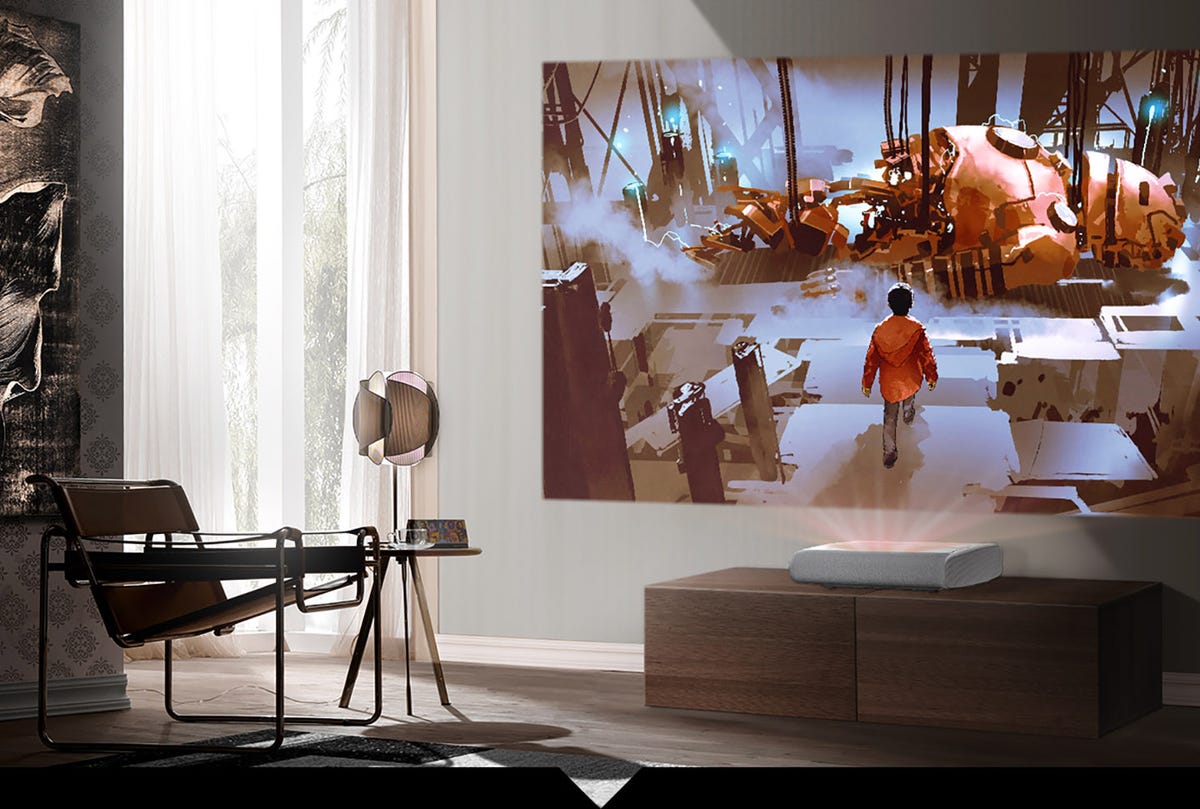
If the traditional projector image in your mind involves a ceiling-mounted box throwing light across a long room, it's time for an update. Ultrashort-throw projectors — often called UST projectors — sit just a few inches from the wall and project upward onto a screen or directly onto a flat surface. They've completely eliminated the need for complicated mounting, long cable runs, and dedicated projection rooms.
A UST projector can produce an enormous 100- to 150-inch image from less than two feet away. Many of today's top models feature triple-laser light engines for superior color accuracy, built-in smart TV platforms, and integrated speaker systems that are surprisingly capable. They're designed to look and feel like a premium piece of furniture rather than a piece of AV equipment bolted to the ceiling.
Brightness Isn't Everything
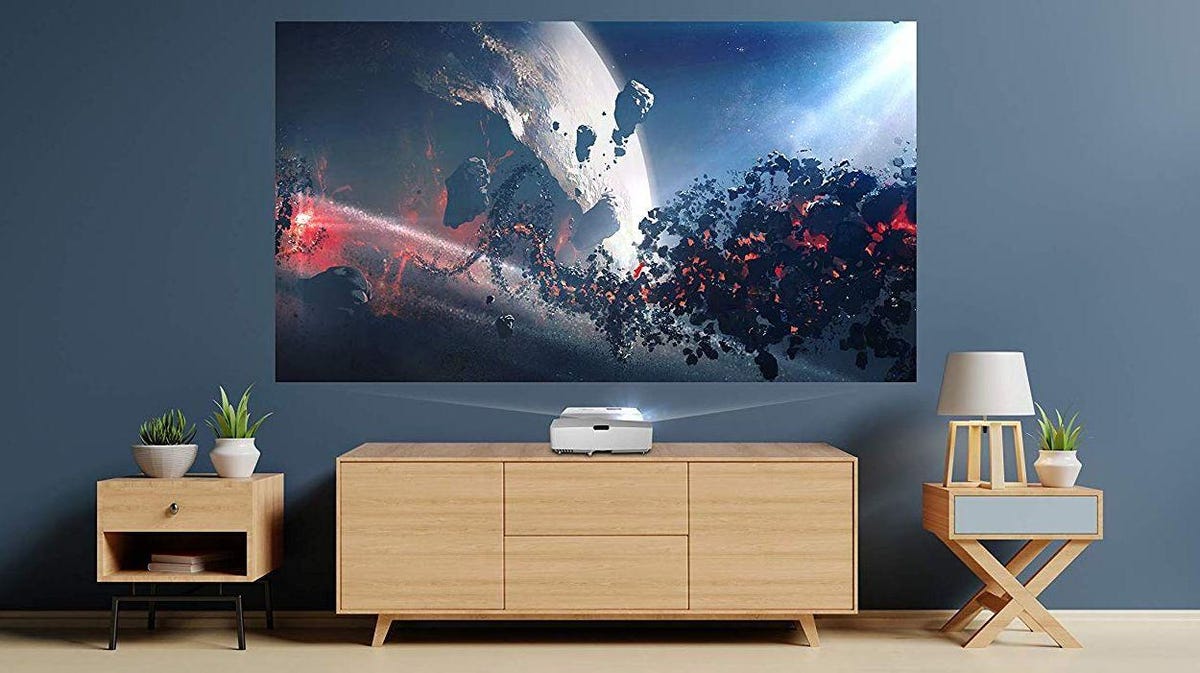
It's tempting to shop for projectors based purely on lumen count, but raw brightness numbers only tell part of the story. A projector rated at 3,000 lumens might appear brighter than a 4,000-lumen competitor depending on the projection technology, color wheel design, and how the manufacturer measures output. ANSI lumens provide a more standardized comparison, but even that metric doesn't capture the full viewing experience.
What matters more in practice is a combination of brightness, contrast ratio, and color accuracy working together. A projector with moderate brightness but excellent contrast will deliver a more satisfying, cinematic image than one with extreme brightness and washed-out blacks. When shopping, consider how the projector will perform in your actual viewing environment rather than chasing the highest spec-sheet number.
Don't Forget the Screen
A projector is only as good as the surface it projects onto. While you can certainly throw an image onto a blank white wall in a pinch, a proper projection screen makes a dramatic difference in picture quality. Ambient light rejecting (ALR) screens are practically essential for ultrashort-throw setups, as they're engineered to direct projected light toward the viewer while rejecting overhead and side light.
Screen choice also affects perceived sharpness, color vibrancy, and overall contrast. Fixed-frame screens generally offer the flattest, most uniform surface, while motorized retractable screens save space when the projector isn't in use. Budget for a quality screen from the start — it's one of the most overlooked components in a projector setup, and skimping here can undermine an otherwise excellent projector.

The Case for Projectors
Projectors bring something to the table that no TV can replicate: the sheer immersive scale of a truly massive image. Watching a movie on a 120-inch screen creates a cinematic experience that even the largest consumer televisions simply can't match. For sports fans, gamers who want to feel like they're inside the action, and film lovers who crave theater-quality presentation at home, projectors deliver an emotional impact that goes beyond specifications.
UST projectors in particular offer practical advantages that traditional projectors lacked. They don't require ceiling mounts, extensive wiring, or large rooms. Many models include Android TV, Google TV, or proprietary smart platforms with full app ecosystems. Built-in Dolby Atmos speakers and HDMI eARC connectivity make them self-contained entertainment hubs. And when paired with the right screen, a modern UST laser projector can hold its own in moderately lit rooms — not just blacked-out theaters.
| Feature | TV | Projector |
|---|---|---|
| Screen Size (typical) | 42″ – 98″ | 80″ – 150″ |
| HDR Performance | Excellent | Good |
| Ambient Light Handling | Superior | Moderate |
| Cost per Inch | Higher | Lower |
| Installation Ease | Plug & Play | Moderate |
| Outdoor Use | Limited | Excellent |
| Immersive Experience | Great | Unmatched |
| Lifespan | 7 – 10 years | 20,000+ hrs (laser) |
Are UST Projectors Worth the Investment?
For the right buyer, absolutely. If you want a massive, wall-filling picture without the complexity of a traditional long-throw projector setup, a UST model is a game-changer. They fit neatly on a media console, pair beautifully with purpose-built ALR screens, and many deliver picture quality that rivals — or exceeds — mid-range televisions at far larger sizes.
The catch? Premium UST projectors aren't cheap. Top-tier models from brands like Epson, Samsung, LG, and Hisense can range from $2,500 to $6,000 or more before adding a screen. And while they've improved significantly in bright rooms, they still can't match the effortless visibility of a television in direct sunlight. But for dedicated media rooms, basement setups, and evening backyard screenings, UST projectors offer an experience that's genuinely hard to beat.
Making Your Decision
The honest answer is that neither a TV nor a projector is universally better. Each excels in different scenarios. If you have a well-lit living room, want hassle-free setup, and prioritize razor-sharp HDR performance, a television is your best bet. If you're building a home theater, want cinema-scale visuals, or dream of backyard movie nights under the stars, a projector — especially a modern UST laser model — will transform your entertainment experience.
Many enthusiasts end up owning both: a TV for daily use in the living room and a projector for the dedicated theater or outdoor space. Whatever you choose, 2026 is a fantastic time to buy. The technology on both sides has never been better, prices are more competitive than ever, and the gap between TVs and projectors continues to narrow in all the right ways.
Featured Product