

Not all electric bikes are built the same way, and not all of them deliver the relaxed, stable experience you want on a paved rail trail. Whether you are commuting on a converted railroad path, exploring scenic routes on the weekend, or simply looking for a comfortable ride that goes the distance, choosing the right e-bike requires careful attention to a handful of key factors.
Your ideal rail trail e-bike should offer a smooth, upright seating position, dependable battery life, solid traction on mixed surfaces, and a frame geometry that keeps you balanced and confident at any speed. This guide walks you through every consideration — from motor output and tire selection to portability and local trail regulations — so you can ride smarter, farther, and more comfortably.
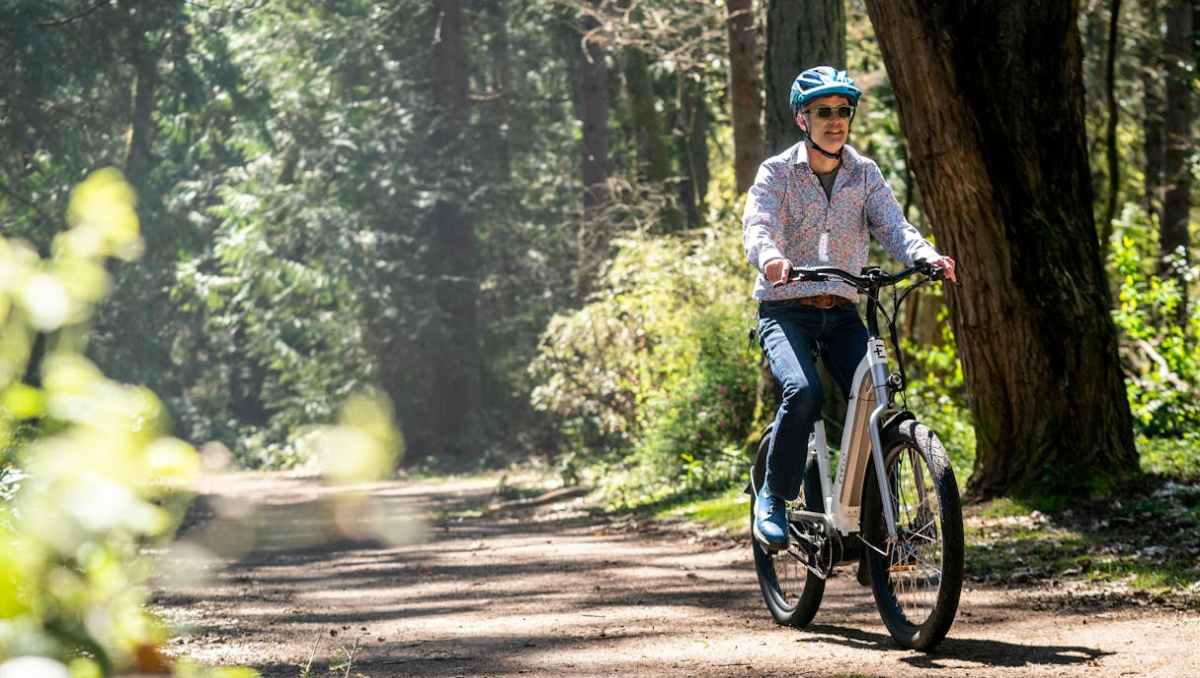
What Are Rail Trail E-Bikes?
Rail trail e-bikes are electric bicycles specifically designed for use on converted railway paths and similar paved or hard-packed recreational trails. These trails tend to be flat or gently graded, which means the bikes built for them prioritize comfort, efficiency, and extended range rather than aggressive off-road capability.
Unlike mountain e-bikes or high-speed commuter models, rail trail bikes feature relaxed frame angles, wider tires for stability, and battery configurations tuned for long, steady rides. They are commonly favored by recreational riders, fitness enthusiasts, older adults, and commuters who travel on multi-use pathways.

What Makes Rail Trail E-Bikes Different?
Relaxed geometry reduces strain on back, neck, and wrists during long rides.
Larger capacity batteries designed for 40–70+ miles on a single charge.
Typically 2.0" to 4.0" tires that handle pavement, gravel, and packed dirt easily.
Multiple assist levels for gentle, consistent power delivery on flat terrain.
Cushioned saddles, suspension forks, and ergonomic grips come standard.
Ideal for beginners, seniors, and experienced cyclists seeking a relaxed ride.
What to Look for in an E-Bike for Rail Trails
Selecting the right rail trail e-bike comes down to balancing several factors: battery capacity, motor type, frame geometry, tire size, weight, and ride comfort. Each of these elements plays a direct role in how far you can ride, how stable you feel, and how much you enjoy the experience mile after mile.
Long-Range Battery and Capacity
A reliable rail trail e-bike should carry a battery rated for at least 40 miles of pedal-assisted riding on a single charge. Look for batteries in the 48V range with a minimum of 14Ah capacity — this combination provides a strong balance between weight and distance. Higher watt-hour ratings (typically 500Wh or more) are even better for extended adventures where recharging is not an option.
Keep in mind that real-world range depends heavily on the assist level you use, your weight, wind conditions, terrain, and tire pressure. Riding in eco mode on a flat trail will always stretch your battery significantly further than using full-power mode on rolling hills.
Motor Type and Power
For flat rail trail riding, a rear hub motor in the 500W to 750W range is more than adequate. Hub motors are quiet, low-maintenance, and deliver smooth, predictable power. Mid-drive motors are another excellent option — they provide better torque efficiency because they work through the bike's gears, making them ideal if your rail trail includes occasional hills or inclines.
You should also consider whether you want a pedal-assist-only setup or a model with a throttle option. Pedal assist gives you a natural cycling feel, while a throttle lets you cruise without pedaling when your legs need a rest. Just be aware that many rail trails have regulations limiting throttle-equipped bikes, so verify the rules for your specific trail before purchasing.
Comfortable Geometry and Frame Design for Stability
Frame geometry directly impacts how comfortable and stable your ride feels. For rail trail use, look for a step-through or semi-step-through frame design that supports an upright riding position. This keeps your back straight, reduces neck and wrist strain, and makes it easy to mount and dismount — especially important for older riders or those with limited mobility.
A longer wheelbase adds stability at cruising speed, and a suspension fork helps absorb small bumps and trail imperfections. Look for adjustable handlebars and seat posts so you can fine-tune the fit to your body.
Tire Type for Traction and Ride Quality
Tires are one of the most important components influencing ride quality. For rail trails that alternate between paved surfaces and packed gravel, tires in the 2.0" to 4.0" width range offer the best compromise between comfort, traction, and rolling resistance. Fat tires (3.0"+) provide excellent cushioning and grip but can feel slightly sluggish on pavement. Standard-width tires (2.0"–2.5") roll faster but may not handle loose gravel as confidently.
Puncture-resistant tires are a smart investment for trail riding. Many rail trails pass through wooded or rural areas where thorns and debris are common. A flat twenty miles from your car is never fun.
Bike Weight and Portability
E-bikes are considerably heavier than traditional bicycles due to the motor, battery, and reinforced frame. Most rail trail e-bikes weigh between 50 and 75 pounds. If you need to load your bike onto a car rack, carry it up stairs, or store it in a tight space, weight becomes a real consideration. Folding e-bikes offer a compact alternative, though they sometimes sacrifice ride stability or battery range to achieve a smaller footprint.
Consider how you will transport the bike to and from the trailhead. A heavy e-bike paired with a sturdy hitch-mounted rack is usually the most practical setup for frequent trail riders.
How to Choose Rail Trail E-Bikes for Comfort and Range

48V+ battery, 500Wh minimum for long rides
500W–750W hub or mid-drive motor
2.0"–4.0" puncture-resistant tires
Step-through frame, upright posture
50–75 lbs; consider transport needs
Check class and throttle rules locally
E-Bike Classes and Local Regulations for Rail Trails
Before purchasing an e-bike for trail use, it is important to understand the three-class system used across most of the United States. These classifications determine where your e-bike is legally permitted to ride.
Class 1 — Pedal-assist only with a maximum assisted speed of 20 mph. No throttle. Accepted on the vast majority of rail trails and multi-use paths nationwide.
Class 2 — Includes both pedal assist and a throttle, with a maximum assisted speed of 20 mph. Permitted on many trails, but some jurisdictions restrict throttle-equipped bikes.
Class 3 — Pedal-assist only with a maximum assisted speed of 28 mph. Generally allowed on roads and bike lanes but often restricted from shared-use trails and pedestrian paths.
Most rail trails are best suited for Class 1 e-bikes, and many explicitly permit them. Class 2 bikes with throttle capability are allowed on a growing number of trails, but rules vary by state, county, and specific trail system. Always check local trail authority guidelines before riding. Getting the right class upfront saves you the frustration of owning a bike you cannot legally ride on your favorite path.
Safety Guidelines for Rail Trail E-Bike Riders
Riding on rail trails is a safe and enjoyable experience when you follow basic precautions. Because these paths are shared with pedestrians, joggers, cyclists, and sometimes equestrians, practicing trail etiquette and basic safety is essential.

Safety Guidelines for Rail Trail E-Bike Riders
A certified helmet is non-negotiable regardless of speed or trail difficulty.
Use a bell or call out "on your left" when overtaking other trail users.
Many trails cap speed at 15 mph. Slow down near crossings and congested areas.
Front and rear lights improve visibility, even during daylight hours.
Check tire pressure, brakes, battery charge, and lights before every ride.
Know the distance, available charging, and any trail closures before you start.
Boosting Range and Comfort for Long Rail Trail Rides
Long rides on rail trails become easier and more enjoyable when you actively manage your bike's efficiency and your own physical comfort. Here are proven ways to squeeze more miles from every charge while keeping your body fresh:
✓ Use lower assist modes on flat sections and save higher power levels for headwinds or slight grades.
✓ Maintain proper tire pressure — under-inflated tires create drag and drain your battery faster.
✓ Carry a second battery or invest in a model with a dual-battery configuration for all-day riding.
✓ Adjust your saddle height and handlebar reach to prevent fatigue and reduce pressure on joints.
✓ Add padded grips and a suspension seat post if your bike does not already include them.
✓ Take planned rest stops to stay hydrated and give your battery time to cool down in warm weather.
When looking for a long-range e-bike that checks all the boxes for rail trail riding, the focus should be on finding a model that blends generous battery capacity with genuine riding comfort and stable handling.

Conclusion: Your Perfect Rail Trail Ride Starts with the Right E-Bike
A great rail trail ride should feel effortless — a steady roll through open scenery, fresh air, and a comfortable saddle beneath you. The right e-bike makes that possible by combining dependable range, smooth power delivery, stable handling, and a frame that fits your body naturally.
Focus on the details that matter most: sufficient battery capacity for your typical ride distance, a motor that delivers consistent assist without surprises, tires suited to the surface conditions on your trails, and a geometry that keeps you comfortable for hours. Check your local trail regulations to make sure your chosen class is permitted, and always ride with safety in mind.
With the right e-bike beneath you, every rail trail becomes an invitation to ride a little further, explore a little more, and enjoy the journey from start to finish.
Frequently Asked Questions
What size battery is best for rail trail riding?
A battery rated at 48V with at least 14Ah (roughly 672Wh) is a solid baseline for most rail trail riders. If your typical rides exceed 40 miles or you frequently ride on higher assist levels, consider a 48V/16Ah or larger configuration. Higher watt-hour ratings translate directly to more distance per charge.
Can I use a fat tire e-bike on a rail trail?
Absolutely. Fat tire e-bikes are an excellent choice for rail trails because they provide superior cushioning and grip on loose gravel, packed dirt, and uneven pavement. The wider contact patch also improves stability, which is a real advantage for newer riders or anyone carrying cargo.
Are throttle e-bikes allowed on most U.S. rail trails?
It depends on the trail and its managing authority. Class 1 pedal-assist-only e-bikes are widely accepted on rail trails. Class 2 bikes with throttle capability are permitted on many trails but restricted on others. Always check with your specific trail's governing body or local parks department to confirm their current policy before riding.
Is a hardtail e-mountain bike a good choice for rail trail riding?
A hardtail e-mountain bike can work well on rail trails, particularly if the surface includes rougher gravel or packed dirt sections. The front suspension fork helps smooth out bumps while the rigid rear keeps pedaling efficient. However, purpose-built comfort or hybrid e-bikes typically offer a more relaxed riding position and features better optimized for flat, extended trail riding.