

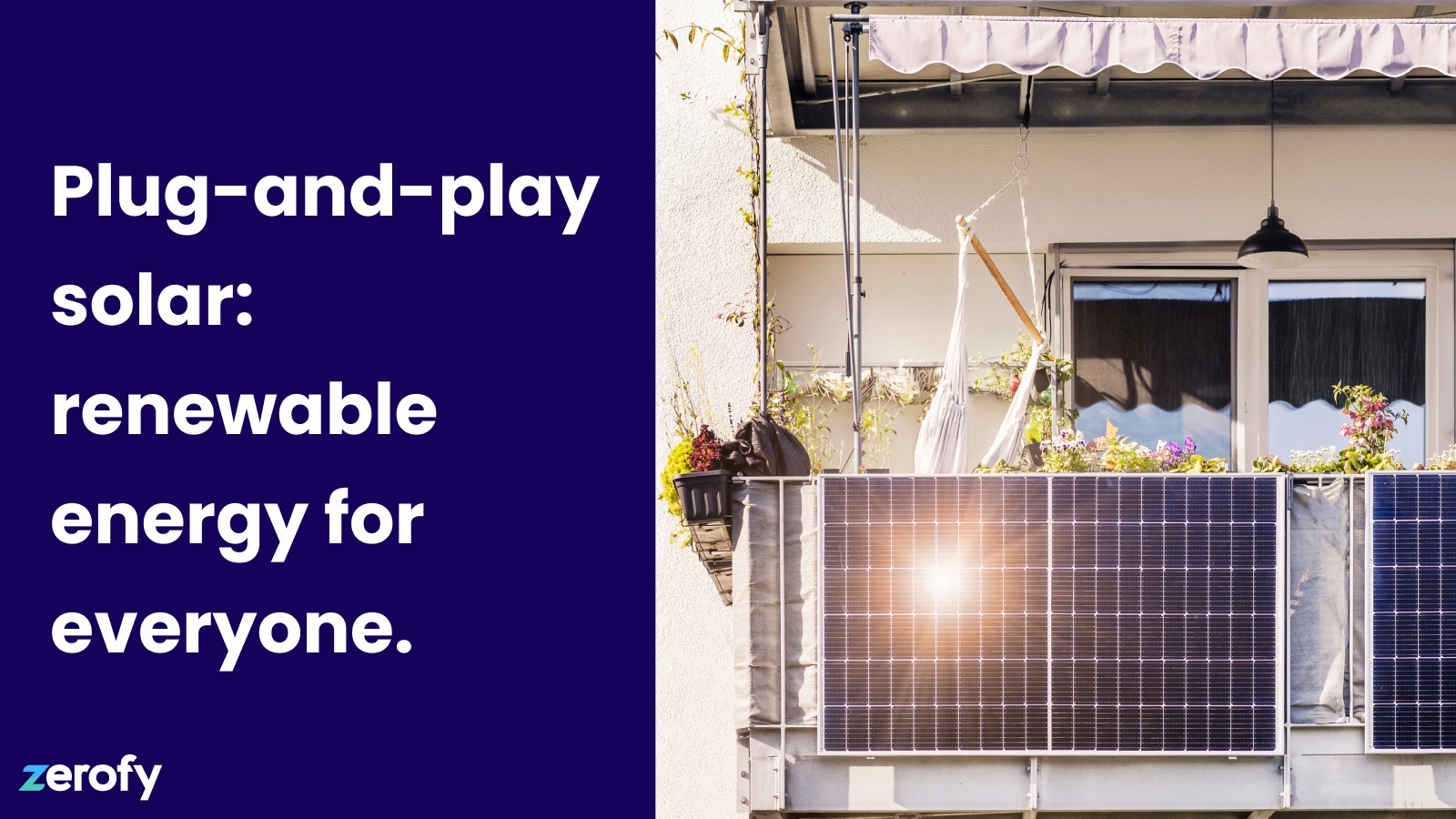
Why is the whole world suddenly talking about mini solar systems? Because plug-and-play solar puts real energy independence within reach — no contractor, no permit headaches, no massive upfront bill. Just clean, free electricity flowing straight into your home.
What Is a Plug-and-Play Solar System?
Plug-and-play solar systems are compact photovoltaic setups designed for quick, tool-free installation on balconies, patios, flat rooftops, or garden spaces. They connect directly to a standard outlet and begin feeding electricity into your home's circuit immediately.
At a time when energy sustainability and environmental awareness are growing worldwide, these systems offer an accessible, affordable entry point into solar generation. They are especially well-suited for renters, apartment residents, or anyone who wants to reduce their electricity bill without committing to a full rooftop installation.
These systems are straightforward: solar panels capture sunlight and convert it directly into usable electricity. Any energy they generate immediately offsets what you would otherwise draw from the grid — and that shows up directly on your utility bill.
Portability is one of their standout advantages. Unlike traditional solar installations, a plug-and-play system moves with you. Take it to a new apartment, a vacation cabin, or a backyard workshop — no permanent fixtures required.
Quick Takeaway
A plug-and-play solar system reduces your dependence on grid-supplied electricity, lowers monthly energy costs, and shrinks your household's carbon footprint — all without a professional installation crew.
Key Benefits of Plug-and-Play Solar
Immediate Energy Savings
Every watt your panels produce is a watt you don't pay for. Savings begin from the very first day of operation, with returns that compound over the system's lifespan.
Lower Carbon Footprint
Solar energy is clean and renewable. By generating your own power, you directly reduce the demand for fossil-fuel electricity from the grid.
No Specialist Required
Standard household outlets are all you need. The system arrives ready to use — connect the microinverter, plug in, and you're generating electricity.
Fully Portable
Move homes? Take your solar system with you. Unlike fixed rooftop arrays, plug-and-play panels can be repositioned or relocated whenever your situation changes.
Renter-Friendly
No drilling, no structural changes, no landlord negotiations. Perfect for renters who want the benefits of solar without altering their property.
Grid Independence
Pair your system with a battery and you can store daytime energy for nighttime use, further reducing what you draw from the utility grid.

Choosing the Right Plug-and-Play System
The most important starting point is available space. Measure your balcony, patio, or rooftop area carefully — your panel size and quantity depend entirely on the footprint you have to work with. A good rule of thumb: the more surface area you can dedicate, the greater your energy output and the faster your return on investment.
Next, consider the type of current your home uses. Most standard homes use alternating current (AC), so you'll need a microinverter included in your system to convert the solar panel's DC output into AC power your appliances can use. A high-quality microinverter also maximizes the efficiency of each panel individually, rather than letting one shaded panel drag down the performance of the whole array.
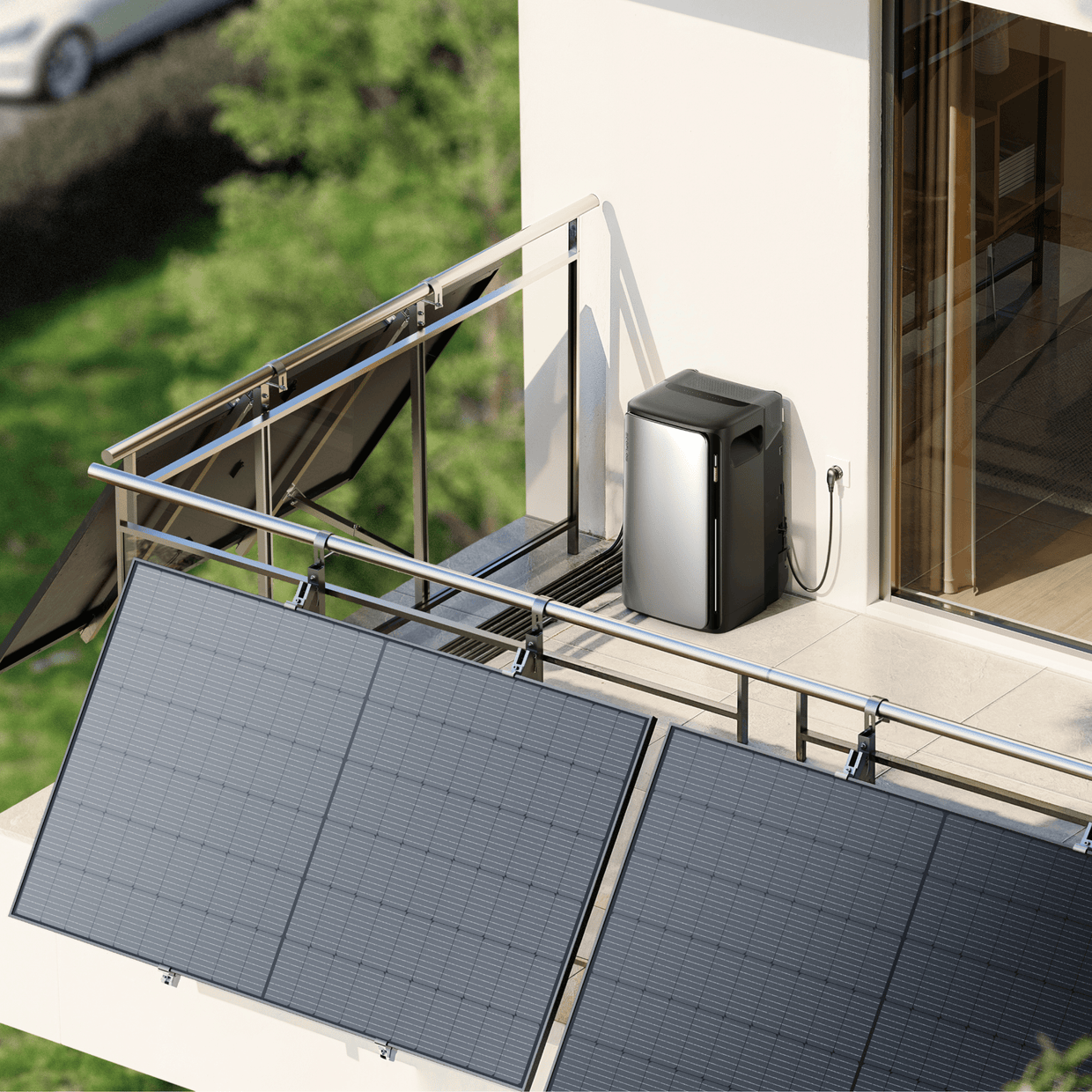
Battery storage is well worth considering. A storage unit allows your system to bank surplus daytime energy for use after sunset — significantly increasing your energy self-sufficiency and helping you get the most from every hour of sunlight.
Finally, look into warranty coverage and after-sales support. A reputable system should come with meaningful guarantees so your investment is protected long after installation.
At Backyard Provider, we recommend visiting a specialist retailer or exploring trusted online stores with certified products and verified customer reviews to compare your options confidently.
Installation: Setup and Connection
One of the defining strengths of plug-and-play solar is how approachable the installation process is. No electricians, no scaffolding, no permits (in most jurisdictions). Most systems can be set up by a single person in under an hour.
Select a Certified System
Choose a plug-and-play solar kit from an approved, safety-tested retailer. Certified products meet electrical standards that protect you and your home.
Mount the Panels
Secure the solar panels in your chosen outdoor location using the included brackets or mounting hardware. Aim for maximum daily sun exposure — south-facing orientation works best in the Northern Hemisphere.
Connect the Microinverter
Attach the microinverter to your panels using the standard cable connectors provided. The inverter converts solar DC electricity into the AC current your home uses.
Plug In and Start Generating
Insert the system plug into a standard household outlet. Your system immediately begins feeding solar-generated electricity into your home's circuit, reducing grid consumption in real time.
4.2 — Essential Safety Guidelines
- Stable Mounting: Always ensure solar panels are mounted securely. Loose panels pose wind and structural hazards, particularly in exposed outdoor locations.
- Electrical Safety: Verify that all cable connections are correct and firmly seated before plugging into the outlet. Never handle connectors with wet hands.
- Routine Inspections: Periodically inspect your system for wear, damage, or loose connections. Early detection of issues prevents costly problems down the line.
- Follow Manufacturer Guidelines: Always adhere to the instructions supplied with your specific unit for safe, warranty-compliant operation.
Optimizing Your Solar Self-Consumption
A plug-and-play solar system delivers its greatest financial value when the electricity it generates is consumed directly in your home rather than fed back to the grid. Here's how to maximize that self-consumption rate:
Use an Energy Management System
A Home Energy Management System (HEMS) monitors all connected devices and intelligently shifts high-consumption loads — like dishwashers, washing machines, or EV chargers — to run during peak solar generation hours.
Run Appliances During the Day
Schedule energy-intensive appliances to operate during daylight hours when your panels are producing at their highest output. Simple timers on common appliances can achieve this automatically.
Add Battery Storage
A compatible storage battery captures excess solar energy produced midday and makes it available in the evening when the panels are no longer generating — maximizing every kilowatt-hour you produce.
Monitor Your Output
Many modern plug-and-play systems include companion apps or monitoring displays. Tracking real-time output helps you identify optimal panel positioning and spot any performance issues early.
Maintenance and Long-Term Performance
Plug-and-play solar systems are admirably low-maintenance, but a small amount of routine care makes a significant difference to long-term performance and efficiency.
The most impactful maintenance task is keeping your panels clean. Dust, pollen, bird droppings, and environmental debris accumulate on the panel surface over time and reduce the amount of sunlight reaching the solar cells. Regular cleaning — typically once a month or after heavy weather — can recover several percentage points of lost output. Always check the back of the panels and the mounting brackets for signs of wear or loosening.
Cable and connector integrity should be inspected at the same time. Damaged cables or poor connections reduce efficiency and, in rare cases, can create safety risks. Replace any degraded components promptly.
Finally, track your energy production data over time. A sustained drop in output that cannot be explained by weather conditions is usually a signal that a panel, inverter, or connection needs attention. Catching these issues early keeps your system performing optimally for its full service life.
Costs, Savings, and Return on Investment
Plug-and-play solar systems are a meaningful investment, but the economics are compelling. Unlike large rooftop installations, the initial outlay is modest — and the ongoing operating costs are essentially zero, since solar fuel (sunlight) is free.
The exact return on investment depends on your local electricity rates, the average hours of sunlight your location receives, and the size of your system. In high-electricity-cost regions, payback periods are considerably shorter — in some cases under five years with optimal conditions.
Households and renters both benefit from plug-and-play systems, since no structural investment is required. The savings begin from day one and accumulate steadily for the life of the panels — typically 20 years or more with quality equipment.
Legal Regulations and Regional Requirements
Before installing a plug-and-play solar system, it's worth familiarizing yourself with the rules that apply in your region. Requirements vary by country and municipality, so checking local guidelines is always a smart first step.
Registration: Systems must be registered with the Federal Network Agency and your energy provider prior to operation.
Output Limit: Balcony solar units are generally capped at 600W (or up to 800W in some updated guidelines).
Technical Requirements: Systems must meet certified electrical safety standards and use approved inverters.
Notification: Systems up to 600W are often permissible with simple notification to your grid operator.
Building Permission: For units in some residential zones, building permit requirements may apply — verify with your local authority.
Grid Operator: Always inform your electricity provider before connecting any generation equipment to the household circuit.
Connection Regulations: Plug-and-play solar units up to a specified wattage can often be connected without a permit, but this varies by state.
Registration: Registration with your local grid operator is typically required regardless of system size.
Fees: Some providers may apply a nominal grid connection fee — confirm terms in advance.
Note: Regulations change frequently and vary by region. Always verify the current requirements with your local grid operator or municipal authority before installation.
Frequently Asked Questions
Bring Clean Solar Energy Home Today
The EcoFlow STREAM Ultra is a premium, plug-and-play-compatible solar power solution built for homeowners and renters who want real energy independence — starting now.
EcoFlow STREAM Ultra