

If you've spent years relying on a traditional storage tank water heater, making the switch to a tankless system opens up a world of energy efficiency and on-demand hot water. But it's not a plug-and-play upgrade. There are six critical factors you and your plumber must align on before the first fitting is tightened.
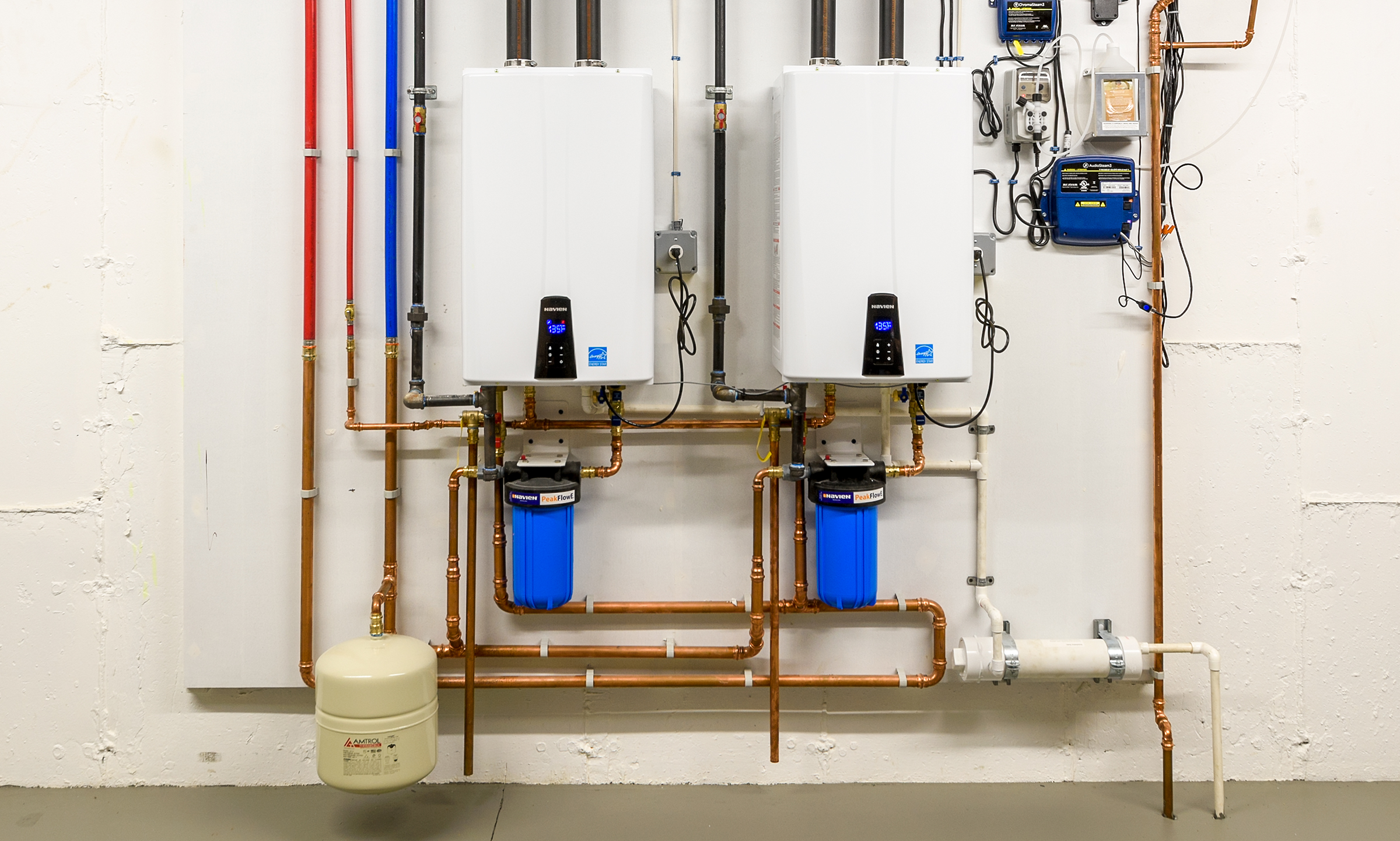
6 Key Considerations At a Glance
Size It Right
Match your unit's capacity to your home's maximum hot-water demand — fixtures running simultaneously included.
Check Gas Supply
Tankless units consume more gas than tank heaters. Your line size, pressure, and supply must be verified.
Meet Air Requirements
Combustion needs fresh air. Ensure your installation plan accounts for proper ventilation or direct outdoor intake.
Dial the Right Temp
Set your heater just above what you need — going too hot increases scalding risk without any real benefit.
Manage Water Quality
Hard water deposits limescale inside your heater, reducing efficiency and shortening its lifespan. Plan ahead.
Handle Condensation
High-efficiency condensing models produce acidic runoff that must be safely neutralized before reaching drains.
Size Your Tankless Unit Correctly
Sizing is the foundation of a successful tankless water heater installation. Your plumber must evaluate two key variables: the coldest incoming ground water temperature your area experiences throughout the year, and your household's water-use habits and peak demand.
The difference between that cold ground temperature and your desired hot water output temperature is known as the "Delta T" — and your unit must be capable of bridging that gap at peak flow. To determine peak flow, your plumber will add up the maximum flow rates of every fixture in your home — showers, dishwashers, faucets — assuming they could all run simultaneously. That sum is the benchmark your heater must meet.
A properly sized unit will never leave you cold — even when every hot-water fixture in your home is running at full capacity at the same time.
Verify Your Gas Supply
One of the most overlooked aspects of going tankless is the increased gas demand. Because tankless heaters heat water instantly on demand rather than maintaining a stored reserve, they draw significantly more gas per burst than conventional tank-style units.
Your plumber must first confirm that your home's gas pressure is adequate. Then, they need to verify that the gas supply line is sized to deliver sufficient volume. Most tankless installations require a ¾-inch gas line. In some situations — where pressure is strong and the run is short — a ½-inch line may work for certain models. Make sure your installer accounts for every gas appliance on the line, not just the water heater, and always checks local codes.
Meet Combustion Air Requirements
Every gas-burning appliance needs a steady supply of fresh air to operate safely and efficiently. Tankless water heaters are no different. Without adequate combustion air, the unit cannot burn fuel cleanly, which reduces efficiency and can introduce safety risks.
Many modern units are designed for direct-vent operation, pulling outdoor air straight into the combustion chamber through a dedicated intake pipe. Others, especially those designed for warmer climates, can be installed entirely outside, eliminating the indoor ventilation question altogether. Discuss your specific climate and installation site with your plumber to determine the best approach.
Don't Push the Temperature Too High
Once your new unit is running, resist the temptation to crank the temperature dial. The setpoint should be only marginally above the highest temperature needed for everyday household use. Pushing it higher doesn't give you any real benefit — it only raises your energy bill and your risk of accidental scalding.
If bacteria are a concern, rest assured — unlike storage-tank heaters, which can harbor Legionella in standing warm water, tankless systems flush all internal water with every use, leaving no stagnant water where bacteria can grow.
Plan for Water Quality Maintenance
Your water heater interacts with every drop of water that passes through your home, making it uniquely vulnerable to water quality issues. The biggest culprit is water hardness — the concentration of dissolved magnesium and calcium minerals in your supply. When heated, these minerals separate from the water and form solid crystals known as limescale, which coat the interior surfaces of your heater's heat exchanger.
Limescale acts as an insulator, slowing heat transfer and forcing the unit to work harder — consuming more energy and generating more thermal stress. Over time, this buildup shortens the heater's lifespan. The fix is a process called descaling: flushing white vinegar through the heat exchanger coils periodically to dissolve the deposits. Depending on your water hardness, this may need to be done annually. If your water is especially hard, consider a whole-home softener or a consistent maintenance schedule.
Handle Condensation Properly
If you're upgrading to a high-efficiency condensing tankless water heater — which extracts additional heat from exhaust gases before they exit the unit — you'll need to deal with a byproduct of that efficiency: acidic condensate. As exhaust gases cool inside the unit, moisture condenses and becomes mildly acidic.
This condensate must be handled safely before it reaches your home's drainage system, as untreated acidic water can corrode pipes over time. Local building codes typically specify how to handle it. In many cases, a neutralizer is required to raise the pH of the condensate to safe levels before disposal. Make sure your plumber is familiar with local code requirements before installation is finalized.
Always check with your local building authority for condensate disposal codes — requirements vary by region and failing to comply can void your permit or warranty.
Ready to Go Tankless?
The Eccotemp 7GB-LP is built for outdoor propane use, delivering up to 7.0 GPM of reliable hot water — sized and designed for real-world demand.
Eccotemp 7GB-LP