

From parallel twins to crossplane cranks, every engine configuration tells a different story. Here's what separates raw horsepower from refined performance.
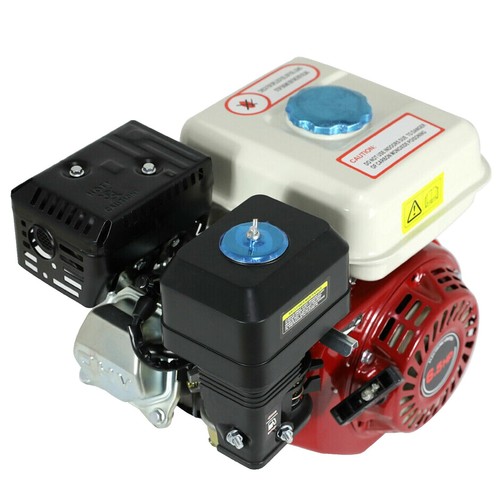
An assortment of modern engine configurations — each engineered for a different purpose and power delivery
Every engine has a personality. Some shake the ground beneath your feet with brute, low-end torque, while others scream toward redline with a hunger that borders on mechanical rage. Whether you are choosing your first power unit or expanding a fleet, understanding the fundamental layout and design of an engine changes the way you work, ride, and compete entirely.
Parallel Twins
ConfigurationFor decades, the parallel twin has stood as one of the most universally trusted engine layouts available to both manufacturers and enthusiasts. Its design is intuitive — two cylinders seated side by side, sharing a single crankcase, working in near-perfect mechanical harmony. That simplicity is precisely what makes it so enduring.
A parallel twin engine stripped to its essential components — compact, efficient, and proven
"The parallel twin doesn't try to impress you with complexity. It simply delivers — reliably, efficiently, and on every single pull."
Compact in dimension and relatively straightforward to service, parallel twins have found their home in a remarkable range of applications — from commuter bikes to outdoor power equipment and portable generators. Their balanced firing intervals produce a smooth power delivery that makes them approachable for operators of every experience level.
The engineering choices made around a parallel twin — bore size, stroke length, and valve timing — dramatically shift the character of the power output. A short-stroke configuration tends to favor high-RPM performance and linear throttle response, while a longer stroke unit produces a deeper, fuller torque curve that pulls hard from low in the rev range.
Parallel Twin — Key Traits
One often overlooked advantage of the parallel twin is its thermal behavior. With both cylinders receiving relatively equal airflow, heat distribution across the engine remains manageable — a meaningful benefit for units that operate for extended periods under load.
For operators running equipment through demanding cycles — repeated starts, sustained high-load runs, or operation in warm climates — thermal stability translates directly into longer service intervals and reduced wear on critical components like valve seats and piston rings.
Crossplane Cranks
Engineering
The crossplane crankshaft — an engineering achievement that fundamentally redefines power delivery
The crossplane crankshaft represents one of the more significant mechanical innovations to emerge from high-performance engine development in recent decades. Unlike a conventional flat-plane crank, where opposing crank pins are arranged 180 degrees apart, a crossplane design staggers the crank pins at 90-degree intervals — fundamentally altering how firing pulses travel through the drivetrain.
The result is an uneven firing interval that, counterintuitively, produces a more natural, tractable power delivery at the wheel. Riders and operators often describe it as a sensation of "pull" rather than "push" — a distinction that becomes especially meaningful when working at the edge of traction limits in wet or loose conditions.
"The crossplane crank turns mechanical engineering into a tactile experience — every pulse communicates directly through your hands."
The trade-off comes in the form of increased rotational mass, which can blunt the engine's initial throttle response compared to a flat-plane counterpart. However, manufacturers have countered this through careful counterbalancer design and optimized flywheel geometry, recovering much of the lost sharpness while retaining the smoother, more predictable mid-range behavior that defines the crossplane experience.
Flat-Plane Crank
Sharp throttle response, high-revving character. Ideal for performance applications demanding instant power delivery with a narrow powerband.
Crossplane Crank
Broad, usable torque across the mid-range. Predictable power pulses improve traction in demanding conditions. Built for real-world usability.
Counterbalanced
Combines the best of both — reduced vibration signature with retained power characteristics. Common in modern multi-use engines.
Opposed & "Boxer" Twins
LayoutWhen the two cylinders of a twin-cylinder engine face opposite directions — horizontally opposed across the crankshaft centerline — the result is a configuration that enthusiasts call the "boxer" layout. The pistons mirror each other's movement with precision, punching outward simultaneously like two fists striking in unison.
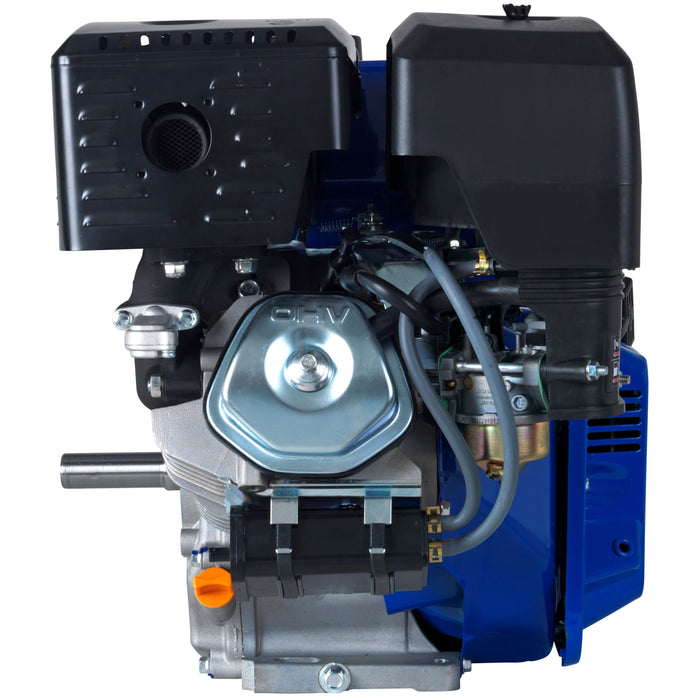
The horizontally opposed twin — inherently balanced, low in profile, and uniquely characteristic in sound
This mechanical symmetry delivers near-perfect primary balance. The opposing piston movements cancel each other's inertial forces almost entirely, resulting in an engine that runs with remarkably little vibration at nearly any RPM. The mechanical refinement this produces is immediately noticeable, particularly during sustained operation at moderate to high engine speeds.
The low-slung profile of the opposed twin also brings meaningful engineering benefits. A lower center of gravity improves the handling and stability of the machinery or vehicle it powers. Less mass concentrated high in the frame or chassis means more predictable behavior under varying load conditions — whether that's traversing uneven terrain or managing dynamic load shifts during operation.
"Balance is not just a mechanical property here — it's the entire philosophy of the design. Everything about the boxer twin is built around equilibrium."
The wider stance of the boxer configuration does require more lateral space within the frame or housing, which can complicate packaging in smaller applications. Designers work around this through careful integration of ancillary components — oil routing, cooling passages, and intake architecture — optimizing the available space while preserving the core mechanical advantages the layout provides.
Tandem Twins
OrientationThe tandem twin places its two cylinders in line with the direction of forward travel — one behind the other along a shared longitudinal axis. This inline orientation creates a distinctive mechanical personality that stands apart from every other twin-cylinder layout available.
Tandem twin configuration — longitudinal cylinder orientation for unique torque and packaging characteristics
Torque reaction in a tandem twin acts differently from its laterally arranged counterparts. As engine speed changes, the rotational momentum of the crankshaft assembly interacts with the chassis or frame in a fore-and-aft direction rather than side to side. Operators attuned to this characteristic can use it as a form of mechanical feedback — a subtle but reliable indicator of power delivery and load conditions during operation.
Maintenance access on a tandem twin can be more demanding than on a parallel configuration, as the rearward cylinder is typically more enclosed by surrounding components. However, engineering advances in modular engine design have significantly reduced service intervals for most modern units, making the tandem's mechanical complexity less of a practical concern for routine ownership.
DuroMax XP35HPE — 999cc Horizontal Shaft Engine
Push-button electric start, 999cc of multi-purpose performance, and a 1.4-inch horizontal shaft built for the demands of real-world equipment. The DuroMax XP35HPE delivers where it counts.