

Whether you're blazing trails on weekends, commuting through rough city streets, or simply craving a more comfortable ride, a full suspension fat tire e-bike could be the single best upgrade you make. Most cyclists who struggle on uneven ground are riding the wrong type of bike — and that's exactly what this guide is here to fix.
Buying an e-bike is a significant investment. You want to be sure you're choosing a machine that matches your riding style, your terrain, and your goals. Full suspension fat tire e-bikes offer something that hardtails and standard e-bikes simply cannot — a combination of raw grip, plush comfort, and genuine off-road capability that makes every ride more enjoyable and more manageable.
📋 Table of Contents
What Is a Full Suspension Fat Tire E-Bike?
Let's start with the basics. A full suspension fat tire e-bike combines two powerful design features — a full suspension system and fat tires — with an electric motor to create a bike capable of handling virtually any surface you can throw at it.
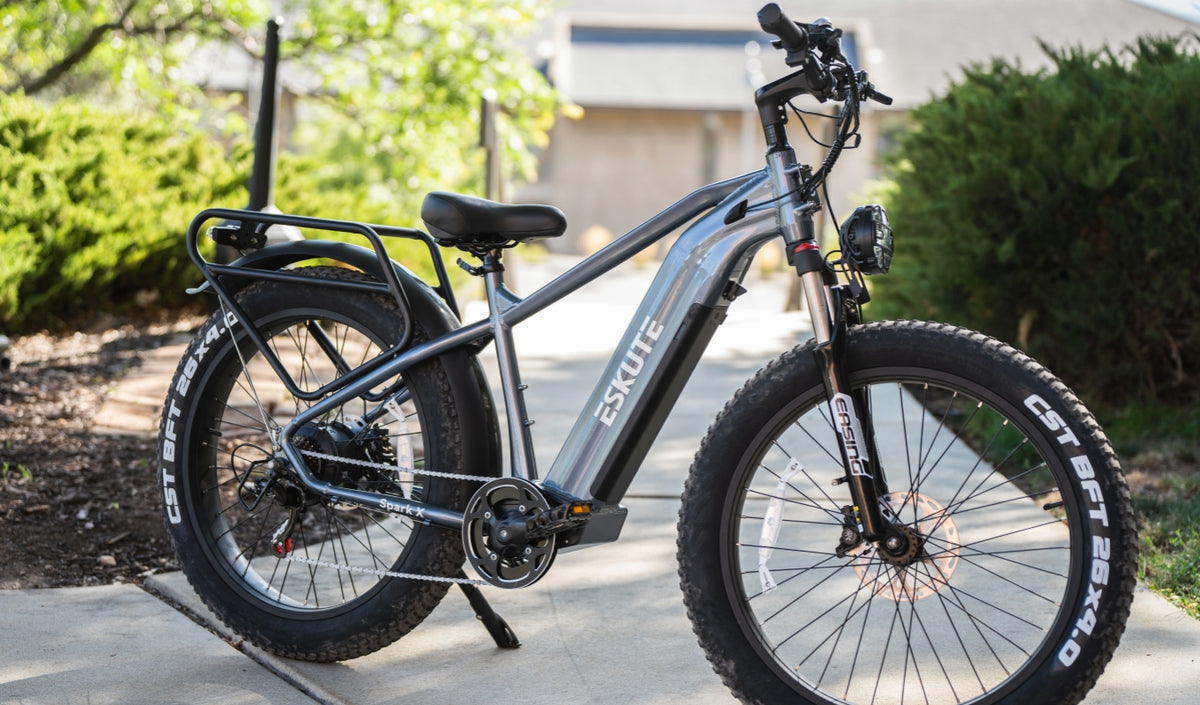
Fat tires typically measure 3.8 inches wide or more, providing a significantly larger contact patch with the ground. This extra surface area translates directly into superior traction, improved floatation on soft terrain, and a naturally cushioned ride feel. Full suspension means the bike has both front fork suspension and a rear shock, meaning bumps, roots, drops, and rocks are absorbed before they reach your body. Together, these elements make a serious difference — especially for riders who want to explore beyond paved paths.
Why They Excel Off-Road
If you've ever talked about mountain biking, gravel riding, or trail riding — full suspension fat tire e-bikes are exactly what those conversations were hinting at. They represent an entirely different category of bike when it comes to performance in challenging environments.
Rocky & Technical Trails
Both the fat tires and suspension work in unison to absorb impacts from rocks and roots, keeping the wheels planted and the rider in control.
Sand & Loose Surfaces
Wide tires at reduced pressure float over sand, dirt, and gravel where narrower tires would sink or slip.
Snow & Mud
Fat tires provide outstanding flotation and grip in soft, wet, or slippery conditions that stop regular bikes completely.
| Terrain | Standard Bike | Full Suspension | Fat Tire Only | Full Suspension + Fat Tire |
|---|---|---|---|---|
| Rocky trails | Difficult | Good | Okay | Excellent |
| Sand / loose dirt | Poor | Poor | Good | Excellent |
| Snow & ice | Not possible | Not possible | Good | Excellent |
| Pavement | Excellent | Excellent | Okay | Good |
| Mud & wet ground | Poor | Okay | Good | Excellent |
Performance: Speed, Power & Range
Don't let the rugged appearance fool you — full suspension fat tire e-bikes are genuine performers. Most quality models feature motors in the 750W–1000W range, which delivers enough torque to climb steep grades and power through technical sections without losing momentum.
The pedal assist system (PAS) on most full suspension fat tire e-bikes ranges from three to nine levels, giving you granular control over how much work you're doing and how far your battery takes you. At lower assist levels, the range extends significantly — ideal for long trail days or cross-country adventures. At higher levels, the bike effortlessly handles steep climbs and challenging sections where human power alone would fall short.
Battery capacity is one of the most important spec factors to consider. Higher voltage packs (48V–52V) paired with larger capacity cells (14Ah–21Ah) deliver both longer range and more consistent power delivery throughout the charge cycle. Avoid comparing watt-hours on paper alone — real-world range depends heavily on terrain, rider weight, assist level, and temperature.

Comfort & Ride Quality
Suspension technology has come a long way, and modern full suspension fat tire e-bikes benefit enormously from those advances. The combined effect of front fork suspension, a rear linkage shock, and wide low-pressure tires creates a ride that is noticeably smoother than any hardtail or rigid e-bike, regardless of the surface you're on.
Front Fork Suspension
Hydraulic or air forks with 80mm–120mm of travel soak up sharp impacts and provide steering stability on loose ground.
Rear Shock
A quality rear coil or air shock smooths out the bumps that the front fork misses, keeping the rider's body isolated from trail chatter.
Fat Tire Cushioning
Run at lower PSI (5–15 psi), fat tires act as natural suspension — dramatically reducing road vibration and impact transmission.
Ergonomic Geometry
Full suspension frames typically feature a relaxed, upright geometry that reduces back and wrist strain during longer rides.
Riding for extended periods on rough terrain causes fatigue through cumulative vibration. Full suspension dramatically reduces this. Riders who have switched from hardtails to full suspension consistently report being able to ride longer, ride faster on technical terrain, and arrive far less fatigued. This matters especially if you plan to use your e-bike for commuting as well as trail riding.
Best Use Cases: Who Should Buy One?
Full suspension fat tire e-bikes are genuinely versatile machines, but they shine brightest in specific scenarios. Here's a breakdown of the riders who will get the most value from one:
Full Suspension vs. Hardtail: Which to Pick?
This is the most common question prospective buyers ask. The honest answer depends on your primary use case, your typical terrain, and your maintenance preferences. Here's a direct comparison:
Full Suspension
- Superior comfort on rough terrain
- Better traction and wheel contact
- More confidence on technical descents
- Reduced rider fatigue over long rides
- Higher carrying capacity stability
- Heavier overall weight
- Requires more maintenance over time
- Higher price point
Hardtail
- Lighter and simpler design
- Lower cost, easier maintenance
- Better energy efficiency on flat terrain
- More responsive pedaling feel
- Ideal for light gravel & paths
- Less comfortable on rough trails
- More fatigue on bumpy surfaces
- Less traction on technical descents
| Feature | Full Suspension | Hardtail |
|---|---|---|
| Durability | Excellent for all terrain | Good for mild terrain |
| Maintenance | Needs regular attention | Easier to maintain |
| Terrain Capability | Ideal for trails, sand, mud, snow | Good for paths and light gravel |
| Rider Comfort | Heavily dampened, plush | Good on smooth surfaces |
| Price | Typically higher | Budget-friendly options available |
A position of simplicity is often better for entry-level or infrequent riders. However, if you're serious about off-road riding or plan to use your e-bike as a primary vehicle across mixed surfaces, full suspension justifies its price premium meaningfully.
Key Specs to Consider Before Buying
Shopping for a full suspension fat tire e-bike can feel overwhelming given the sheer number of options available. Here are the specifications that matter most and what to look for in each:
- Battery Capacity (Wh): Look for at least 672Wh (48V × 14Ah) for solid range. Premium models offer 960Wh or higher for demanding multi-day rides.
- Motor Power: 750W is the sweet spot for most off-road use, providing strong climbing ability without being excessive. 1000W+ is ideal for steep or heavily loaded applications.
- Suspension Travel: Front travel of 80mm–120mm handles most trail conditions. Rear travel of 50mm–80mm adds meaningful comfort on technical terrain.
- Tire Width & Size: 4-inch tires are the standard fat tire benchmark. Look for 26"×4" or 27.5"×4" configurations for the best balance of grip and rolling efficiency.
- Frame Size & Adjustability: A well-fitting frame makes every ride more enjoyable. Look for adjustable stem height and seatpost range to fine-tune fit.
- Brakes: Hydraulic disc brakes are non-negotiable for a bike of this weight and capability. They offer far superior modulation and stopping power compared to mechanical alternatives.
- Display & Connectivity: A clear, readable display with speed, battery level, and PAS control is essential. Bluetooth connectivity and app integration are valuable extras.
- Payload Capacity: Consider total weight capacity carefully — heavy-duty models support 300–400 lbs, accommodating rider plus gear or cargo.
Top Models in the Market (2025 Edition)
The full suspension fat tire e-bike market has matured considerably in 2025. Brands have invested heavily in frame geometry, motor tuning, and component quality. Here is a summary of standout models across price ranges:
| Model | Motor | Battery | Price (Est.) | Best For |
|---|---|---|---|---|
| Cyrusher Ranger 1.0 | 750W | 52V 20Ah | $2,499 | Trail, mud, snow |
| Fat Forge Max 7000 | 1000W | 52V 20Ah | $2,799 | Mountain, all-terrain |
| PowerSurge Tamer | 500W | 48V 14Ah | $1,399 | Beginner, paths |
Of the models listed above, the Cyrusher Ranger 1.0 stands out as a particularly well-rounded performer for serious riders. Its high-voltage battery, capable suspension, and trail-proven geometry make it a compelling option across a wide range of use cases — from daily trail sessions to cross-country adventure rides.
Maintenance Tips for Full Suspension Fat Tire E-Bikes
A quality full suspension fat tire e-bike is a long-term investment, and like any precision piece of equipment, it rewards regular maintenance. Here are the essential routines to keep your bike running at its best:
-
1Clean and inspect the suspension regularly Wipe down the fork stanchions and rear shock body after every muddy or wet ride. Check for oil seep or scratches on the stanchions, which can compromise seal performance. Lubricate pivots and bushings every few months with a quality bicycle-specific lubricant.
-
2Monitor tire pressure consistently Fat tires run at much lower pressures than standard bike tires. Check pressure before every ride — the optimal range is typically 8–15 PSI depending on terrain and rider weight. Running too low causes pinch flats; too high kills the comfort advantage.
-
3Care for the battery properly Store the battery between 20% and 80% charge when not in use for extended periods. Avoid leaving it fully discharged. Keep it away from extreme temperatures. A well-maintained lithium battery retains significantly more capacity over its lifespan.
-
4Keep the drivetrain clean and lubricated The chain, cassette, and chainring accumulate dirt quickly during off-road use. Degrease and re-lube the chain every few rides. A clean drivetrain shifts better, runs quieter, and lasts significantly longer — especially in muddy conditions.
-
5Inspect brake pads and hydraulic fluid Check hydraulic brake pads frequently, especially after hard use on descents. Replace pads before they wear down to the backing. Bleed your hydraulic lines annually or whenever the lever feel becomes spongy.
-
6Tighten bolts and check frame pivots periodically Vibration from off-road riding can loosen fasteners over time. Use a torque wrench to check key bolts — stem, handlebars, seatpost clamp, and suspension pivots — against manufacturer specifications every few weeks of active riding.
-
7Service the suspension annually Even with regular cleaning, suspension forks and rear shocks benefit from a full service once per year. This involves replacing seals, fresh oil, and reconditioning air chambers. Professional service extends the life of suspension components considerably.
Conclusion
Full suspension fat tire e-bikes represent one of the most capable and genuinely versatile options on the market today. They handle terrain that stops other bikes cold, deliver outstanding comfort over long distances, and make the electric assist system significantly more effective in real-world conditions where perfect roads simply don't exist.
If you're ready to experience the difference for yourself, the Cyrusher Ranger 1.0 is a proven, trail-ready machine built for riders who demand performance, comfort, and reliability in every ride.
Shop Cyrusher Ranger 1.0